

Feb . 11, 2026 00:01 Back to list
upvc column pipes service Performance Analysis
Introduction
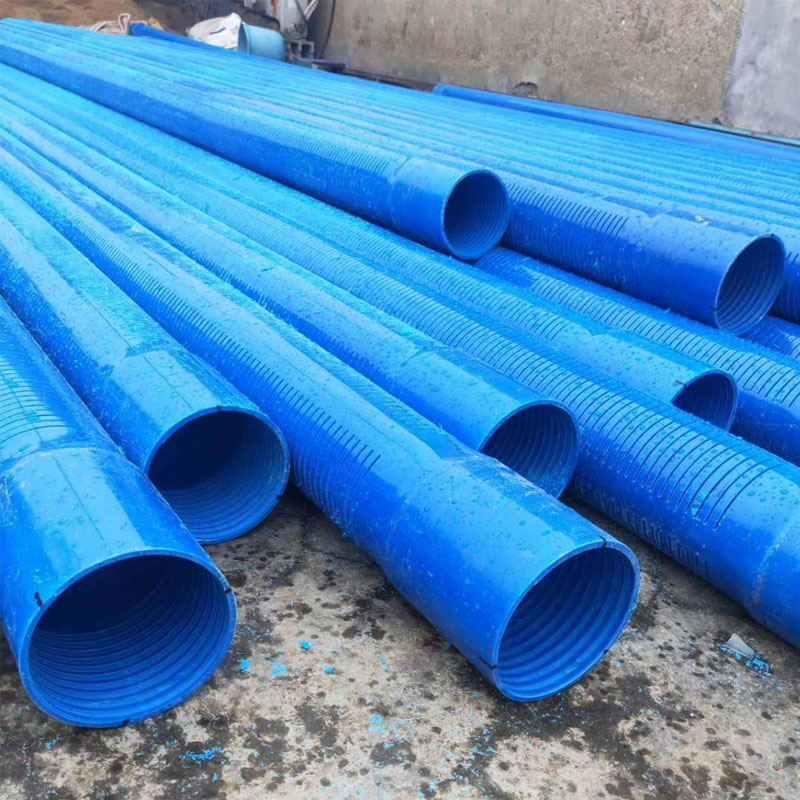
Unplasticized Polyvinyl Chloride (uPVC) column pipes represent a critical component in modern fluid conveyance systems, particularly within architectural drainage, sewage, and water distribution applications. Distinct from standard pressure pipes, column pipes are designed to handle the static head of liquid in vertical installations, requiring specific mechanical and dimensional properties. These pipes occupy a unique position in the building materials supply chain, bridging the gap between raw polymer production and final construction implementation. Their core performance characteristics – encompassing load-bearing capacity, resistance to chemical degradation, and long-term durability – directly impact the reliability and longevity of building infrastructure. The industry currently faces challenges regarding consistent material quality, effective jointing techniques to prevent leakage, and maintaining dimensional accuracy to ensure stable structural performance. This guide provides a comprehensive technical overview of uPVC column pipes, detailing material science, manufacturing processes, performance considerations, failure modes, and relevant industry standards.
Material Science & Manufacturing
uPVC column pipes are primarily manufactured from a rigid polyvinyl chloride compound, formulated with stabilizers, lubricants, and impact modifiers to enhance its inherent properties. The base PVC resin is a thermoplastic polymer produced through the polymerization of vinyl chloride monomer (VCM). Critical material properties include a high tensile strength (typically 55-75 MPa), a flexural modulus (around 3-4 GPa), and a relatively low coefficient of thermal expansion (approximately 8 x 10⁻⁵ /°C). Stabilizers, predominantly calcium-zinc or lead-based compounds (though increasingly phasing out lead due to environmental concerns), are incorporated to prevent thermal degradation during processing and extend the service life of the pipe. Lubricants, such as stearates, facilitate the extrusion process and reduce friction. Impact modifiers, often acrylic-based polymers, enhance the pipe’s resistance to brittle fracture, particularly at low temperatures.
The manufacturing process predominantly utilizes extrusion. PVC compound is fed into a single-screw extruder, where it is heated, melted, and homogenized. The molten PVC is then forced through a die, shaping it into a continuous pipe profile. Critical process parameters include die temperature (180-210°C), extrusion speed, and cooling rate. Precise control of these parameters is vital to ensure consistent wall thickness, dimensional accuracy, and a smooth surface finish. Column pipes often employ a multi-layer extrusion process, incorporating a reinforced layer (typically a spirally wound high-strength PVC strip) to significantly increase the pipe's ring stiffness and load-bearing capacity. Post-extrusion, pipes are cut to length, marked with identification information, and subjected to rigorous quality control testing including hydrostatic pressure testing and dimensional checks conforming to relevant standards.
Performance & Engineering
The performance of uPVC column pipes is dictated by their ability to withstand hydrostatic pressure, resist buckling under axial load, and maintain structural integrity over extended periods. A primary engineering consideration is the calculation of hoop stress, arising from the internal fluid pressure, which dictates the minimum required pipe wall thickness. Buckling analysis is crucial, especially for taller column pipes, to determine the necessary ring stiffness to prevent collapse. Finite Element Analysis (FEA) is increasingly employed to model complex load scenarios and optimize pipe design. Chemical resistance is another key performance attribute. uPVC exhibits excellent resistance to acids, alkalis, and salts, making it suitable for a wide range of fluid applications. However, prolonged exposure to certain organic solvents and chlorinated hydrocarbons can cause swelling and degradation. Temperature fluctuations impact both the mechanical properties and dimensional stability of uPVC. Elevated temperatures reduce the pipe’s strength and stiffness, while low temperatures can increase its brittleness.
Compliance requirements vary depending on the intended application and geographical location. Building codes typically specify minimum pressure ratings, material standards, and installation guidelines. For potable water applications, pipes must comply with regulations regarding lead content and extractable organic compounds. Drainage and sewage systems necessitate resistance to corrosive effluents and prevention of root intrusion. The pipe’s long-term performance is influenced by creep, the gradual deformation under sustained load. Understanding and mitigating creep is crucial for ensuring the pipe’s structural integrity over its design life, often specified as 50 years or more.
Technical Specifications
| Parameter | Unit | Typical Value | Test Standard |
|---|---|---|---|
| Outside Diameter | mm | 110, 160, 200, 250 | ISO 1452-2 |
| Wall Thickness | mm | 3.2, 4.2, 5.8 | ISO 1452-2 |
| Ring Stiffness | kN/m2 | 500, 800, 1000 | EN ISO 9969 |
| Hydrostatic Pressure | MPa | 0.6, 0.8, 1.0 | ISO 11671 |
| Tensile Strength | MPa | 55-75 | ISO 527-2 |
| Impact Strength (Charpy) | kJ/m2 | 5-10 | ISO 145-6 |
Failure Mode & Maintenance
uPVC column pipes are susceptible to several failure modes. Long-term hydrostatic pressure can lead to creep rupture, particularly in pipes with inadequate ring stiffness or exposed to elevated temperatures. UV exposure causes gradual degradation of the PVC material, leading to embrittlement and cracking. Mechanical damage during installation or operation (e.g., impact from falling objects) can result in cracks and leaks. Chemical attack from aggressive substances can cause swelling, softening, and eventual failure. Poorly executed joints are a common point of failure, leading to leakage and structural weakening. Delamination can occur in multi-layer pipes if the bonding between layers is compromised. Fatigue cracking can develop under cyclic loading conditions, particularly around fittings and connections.
Preventative maintenance involves regular visual inspections to identify cracks, leaks, or signs of degradation. Protecting pipes from direct sunlight with coatings or shielding can minimize UV damage. Proper installation techniques, including correct jointing procedures (solvent welding or rubber seal systems), are crucial. Regular cleaning to remove debris and prevent blockages can reduce stress on the pipe system. In the event of minor cracks, epoxy-based repair compounds can provide a temporary fix, but complete replacement is often recommended for significant damage. Ensuring adequate support structures to prevent excessive bending and stress is also paramount. Periodic hydrostatic testing can help identify potential weaknesses before they lead to catastrophic failure.
Industry FAQ
Q: What is the impact of water hammer on uPVC column pipes, and how can it be mitigated?
A: Water hammer, a pressure surge caused by sudden changes in flow velocity, can generate stresses exceeding the pipe’s design limits, leading to cracking or joint failure. Mitigation strategies include installing surge arrestors, utilizing slow-closing valves, and optimizing pipe layout to minimize flow velocity changes. Proper pipe anchoring is also essential to resist the dynamic forces generated by water hammer.
Q: How does the choice of solvent cement affect the long-term performance of solvent-welded uPVC joints?
A: The solvent cement acts as both a solvent and a bonding agent, partially dissolving the pipe and fitting surfaces to create a homogenous weld. Using the incorrect type of solvent cement, or applying it improperly, can result in a weak joint susceptible to leakage and failure. It is crucial to use a solvent cement specifically formulated for uPVC, follow the manufacturer’s instructions regarding application temperature and dwell time, and ensure proper ventilation during application.
Q: What are the key considerations when selecting uPVC column pipes for high-rise buildings?
A: For high-rise buildings, the static head of the fluid column significantly increases the hydrostatic pressure on the pipes. Therefore, selecting pipes with adequate ring stiffness and pressure ratings is crucial. Buckling analysis must be performed to ensure the pipes can withstand the axial load. Furthermore, creep resistance becomes a critical factor for long-term performance. Multi-layer pipes with reinforced layers are often preferred in these applications.
Q: What is the role of stabilizers in uPVC column pipes, and what are the current trends in stabilizer technology?
A: Stabilizers prevent thermal degradation of the PVC material during processing and extend its service life by inhibiting dehydrochlorination. Historically, lead-based stabilizers were widely used, but environmental concerns have driven a shift towards calcium-zinc stabilizers. More recently, organic-based stabilizers are gaining traction, offering improved performance and environmental compatibility, but often at a higher cost. The choice of stabilizer impacts the pipe’s long-term durability and color stability.
Q: How does the soil composition around buried uPVC column pipes affect their lifespan and performance?
A: Corrosive soils containing sulfates or chlorides can accelerate the degradation of uPVC, particularly at the joints. Aggressive root systems can physically damage the pipes. Poorly compacted soil can lead to uneven support and increased stress on the pipe. Protective measures include using corrosion-resistant pipe materials, providing adequate bedding and backfill, and implementing root barriers.
Conclusion
uPVC column pipes provide a cost-effective and durable solution for vertical fluid conveyance, offering resistance to corrosion and long-term reliability. However, their performance is heavily reliant on proper material selection, meticulous manufacturing control, and adherence to established engineering principles. Understanding the material science, potential failure modes, and relevant industry standards is paramount for ensuring the long-term integrity and safety of these systems.
Future developments in uPVC column pipe technology will likely focus on enhancing material properties, improving jointing techniques, and developing more sustainable formulations with reduced environmental impact. The integration of smart monitoring systems to detect leaks and predict potential failures will also play an increasingly important role in optimizing performance and extending service life.
-
DN25 HDPE Compression Fitting-HORON INTERNATIONAL|Reliable Irrigation Solutions
NewsFeb.11,2026
-
china hdpe coupling fittings Performance Analysis
News2026-05-10
-
china hdpe pipe use Performance Analysis
News2026-05-10
-
china hdpe water supply pipe Performance Analysis
News2026-05-10
-
china 1.5 inch pvc pipe Performance Analysis
News2026-05-10
-
china hdpe double wall corrugated pipe Performance Analysis
News2026-05-10
-
china 10mm pvc pipe Performance Analysis
News2026-05-09
-
china ppr pipe for cold water Material Performance
News2026-05-09
-
china type of pvc pipe Material and Manufacturing Analysis
News2026-05-09
-
china hdpe pipe sizes Performance Analysis
News2026-05-09
-
china 50mm pvc pipe Performance Analysis
News2026-05-09
-
china water supply lines under kitchen sink Material Science and Manufacturing
News2026-05-08
-
china green pvc pipe Performance Analysis
News2026-05-08
-
china coupler hdpe pipe Performance Analysis
News2026-05-08
-
china ppr pipe 32mm price Performance Analysis
News2026-05-08
-
china ppr piping system Performance Analysis
News2026-05-08