

Feb . 11, 2026 00:01 Back to list
upvc column pipes manufacturers Performance Analysis
Introduction
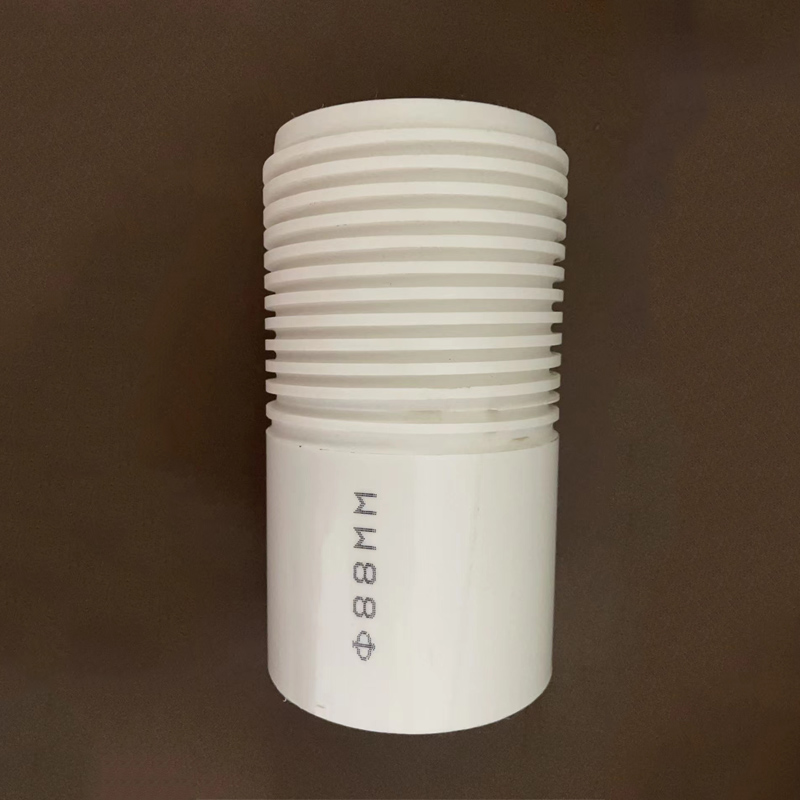
Unplasticized Polyvinyl Chloride (uPVC) column pipes represent a critical component in modern infrastructure, serving a diverse range of applications from structural support in agriculture and horticulture to load-bearing elements in building construction and water management systems. Unlike conventional metallic or concrete columns, uPVC offers a compelling combination of cost-effectiveness, corrosion resistance, and ease of installation. The manufacturing sector surrounding uPVC column pipes is characterized by a focus on precise extrusion processes and formulation control to ensure consistent mechanical properties and long-term durability. This guide provides an in-depth technical overview of uPVC column pipes, encompassing material science, manufacturing techniques, performance characteristics, failure modes, and relevant industry standards. The core performance metrics center around load-bearing capacity, resistance to environmental degradation, and dimensional stability over extended service life, directly addressing concerns related to infrastructure longevity and lifecycle costs.
Material Science & Manufacturing
The primary raw material for uPVC column pipes is polyvinyl chloride (PVC) resin, typically sourced as a white powder. Crucially, the ‘unplasticized’ designation signifies the absence of plasticizers, additives commonly used to enhance flexibility in PVC applications like flooring or cabling. The lack of plasticizers provides uPVC with its inherent rigidity and structural strength. Other essential components include stabilizers (typically calcium-zinc or lead-based, though lead is increasingly restricted due to environmental concerns), lubricants (stearic acid derivatives to facilitate processing), impact modifiers (methyl methacrylate-butadiene-styrene – MBS – to enhance fracture toughness), and pigments (titanium dioxide for opacity and color). The quality and proportion of these additives significantly influence the final product's performance.
Manufacturing primarily involves extrusion. The PVC resin and additives are thoroughly blended and fed into a twin-screw extruder. This extruder heats the mixture, melting and homogenizing the PVC compound. The molten PVC is then forced through a die, shaping it into the desired column profile. Precise control of die temperature, screw speed, and haul-off rate is paramount to maintain dimensional accuracy and prevent warping. Cooling is achieved through water baths or air cooling systems, followed by cutting to length. Post-extrusion operations may include bell-end forming for socket connections and quality control checks, including hydrostatic pressure testing and dimensional measurements. Critical parameters to control are melt temperature (typically 180-220°C), die pressure, and cooling rate. Deviations can result in dimensional inconsistencies, surface defects, and compromised mechanical properties. The crystalline structure of the PVC, influenced by cooling rates, is a key determinant of long-term creep resistance.
Performance & Engineering
The performance of uPVC column pipes is fundamentally governed by their mechanical properties, particularly compressive strength, flexural modulus, and impact resistance. These properties are directly related to the molecular weight of the PVC resin and the type and concentration of impact modifiers. Force analysis under load considers axial compression, bending moments (due to wind or applied loads), and potential buckling. The column's cross-sectional geometry (typically square, rectangular, or circular) significantly influences its buckling resistance. Finite Element Analysis (FEA) is routinely employed to simulate load distribution and identify potential stress concentrations. Environmental resistance is a key advantage; uPVC exhibits excellent resistance to corrosion from soil chemicals, industrial effluents, and UV radiation (although long-term UV exposure can lead to surface chalking and embrittlement if not stabilized appropriately). Compliance requirements dictate adherence to specific load-bearing standards based on the intended application. For example, agricultural applications require resistance to specific soil compositions and irrigation water chemistry, while building construction mandates compliance with local building codes regarding structural integrity and fire resistance (uPVC is inherently flame retardant but may release hydrogen chloride upon combustion).
Technical Specifications
| Parameter | Unit | Typical Value (Nominal 110mm Pipe) | Testing Standard |
|---|---|---|---|
| Outside Diameter | mm | 110 | ISO 1452-2 |
| Wall Thickness | mm | 3.2 – 4.0 | ASTM D1785 |
| Compressive Strength | MPa | 60 – 80 | ISO 3127 |
| Flexural Modulus | GPa | 3.0 – 3.5 | ISO 1413 |
| Impact Strength (Charpy, No Notch) | kJ/m² | 5 – 8 | ISO 145-6 |
| Hydrostatic Pressure Test | MPa | 0.8 – 1.0 (for 30 mins) | ASTM D1598 |
Failure Mode & Maintenance
uPVC column pipes, while durable, are susceptible to specific failure modes. Long-term creep, particularly under sustained compressive loads, can lead to gradual deformation and reduced load-bearing capacity. This is exacerbated by elevated temperatures. Environmental Stress Cracking (ESC) can occur due to exposure to certain chemicals (e.g., solvents, some detergents) which initiate micro-cracks that propagate over time. Impact damage, especially at low temperatures, can cause brittle fracture. UV degradation, as mentioned previously, causes surface chalking and reduces impact resistance. A less common but critical failure mode is thermal expansion/contraction; significant temperature fluctuations can induce stresses at joints or connections if not properly accommodated.
Maintenance primarily involves visual inspection for cracks, deformation, or surface degradation. Regular cleaning to remove dirt and debris is recommended. Connections should be checked for tightness and proper alignment. In applications exposed to harsh chemicals, periodic assessment of chemical compatibility is crucial. For agricultural applications, monitoring for soil settlement and ensuring adequate support is essential. Preventative measures include using UV stabilizers in the PVC formulation, selecting appropriate grades of PVC for the intended application, and implementing proper installation techniques to minimize stress concentrations. Repair is typically not feasible for severely damaged pipes; replacement is usually the most effective solution.
Industry FAQ
Q: What is the long-term creep behavior of uPVC column pipes, and how does it impact structural integrity over a 20-year service life?
A: Long-term creep is a significant consideration. While uPVC possesses high initial strength, sustained compressive loads can cause gradual deformation. The rate of creep is temperature-dependent – higher temperatures accelerate the process. A 20-year service life requires careful calculation of permissible stress levels, factoring in anticipated operating temperatures and load variations. Finite Element Analysis (FEA) incorporating creep models is recommended for critical applications. Choosing higher molecular weight PVC resins and optimizing the stabilizer package can mitigate creep.
Q: How does the type of stabilizer used in uPVC formulation affect the pipe’s resistance to UV degradation and long-term durability?
A: The stabilizer package is crucial for UV resistance. Traditionally, lead-based stabilizers offered excellent long-term performance, but their use is declining due to environmental concerns. Calcium-zinc stabilizers are a viable alternative, but typically require synergistic additives to achieve comparable UV stability. The concentration of the stabilizer and its compatibility with other additives significantly influence the pipe’s resistance to chalking, embrittlement, and discoloration. Regular monitoring of UV exposure levels and the stabilizer's effectiveness is recommended.
Q: What is the impact of soil chemistry on the long-term performance of uPVC column pipes used in agricultural applications?
A: Soil chemistry can significantly impact performance. Certain soil chemicals, such as sulfates and chlorides, can leach into the PVC matrix, potentially causing embrittlement or cracking. High acidity or alkalinity can also accelerate degradation. Selecting a PVC formulation with enhanced chemical resistance and conducting soil analysis to identify potential corrosive elements is essential. Protective coatings or barrier layers may be considered for particularly aggressive soil environments.
Q: What are the typical failure mechanisms observed in uPVC column pipes subjected to cyclical loading (e.g., wind loads on structures)?
A: Cyclical loading can lead to fatigue cracking, particularly at stress concentrations such as joints or areas with geometric discontinuities. Repeated bending or flexing can initiate micro-cracks that propagate over time. Impact resistance, even if initially high, can be reduced by repeated impacts. Careful design to minimize stress concentrations, proper installation to ensure uniform load distribution, and regular inspection for signs of cracking are crucial preventative measures.
Q: How do different manufacturing processes (e.g., twin-screw vs. single-screw extrusion) affect the mechanical properties and quality of uPVC column pipes?
A: Twin-screw extrusion generally provides superior mixing and temperature control compared to single-screw extrusion. This results in a more homogeneous PVC compound with more consistent mechanical properties. Twin-screw extrusion allows for the incorporation of higher filler loadings without compromising processability. Improved mixing translates to better dispersion of stabilizers and impact modifiers, enhancing long-term durability and resistance to degradation. Consequently, pipes produced via twin-screw extrusion typically exhibit higher compressive strength and impact resistance.
Conclusion
uPVC column pipes offer a compelling solution for a wide range of applications demanding corrosion resistance, structural integrity, and cost-effectiveness. Their performance, however, is heavily reliant on precise material selection, meticulous manufacturing control, and a thorough understanding of potential failure modes. The successful deployment of these pipes requires careful consideration of environmental factors, loading conditions, and adherence to relevant industry standards.
Future advancements in uPVC technology will likely focus on developing more sustainable formulations (reducing reliance on lead-based stabilizers), enhancing impact resistance, and improving long-term creep performance. Continued research into novel additives and extrusion techniques will be crucial to expanding the application range of uPVC column pipes and ensuring their longevity in challenging environments.
-
DN25 HDPE Compression Fitting-HORON INTERNATIONAL|Reliable Irrigation Solutions
NewsFeb.11,2026
-
china hdpe coupling fittings Performance Analysis
News2026-05-10
-
china hdpe pipe use Performance Analysis
News2026-05-10
-
china hdpe water supply pipe Performance Analysis
News2026-05-10
-
china 1.5 inch pvc pipe Performance Analysis
News2026-05-10
-
china hdpe double wall corrugated pipe Performance Analysis
News2026-05-10
-
china 10mm pvc pipe Performance Analysis
News2026-05-09
-
china ppr pipe for cold water Material Performance
News2026-05-09
-
china type of pvc pipe Material and Manufacturing Analysis
News2026-05-09
-
china hdpe pipe sizes Performance Analysis
News2026-05-09
-
china 50mm pvc pipe Performance Analysis
News2026-05-09
-
china water supply lines under kitchen sink Material Science and Manufacturing
News2026-05-08
-
china green pvc pipe Performance Analysis
News2026-05-08
-
china coupler hdpe pipe Performance Analysis
News2026-05-08
-
china ppr pipe 32mm price Performance Analysis
News2026-05-08
-
china ppr piping system Performance Analysis
News2026-05-08