

Feb . 11, 2026 00:01 Back to list
upvc column pipes factory Material Performance
Introduction
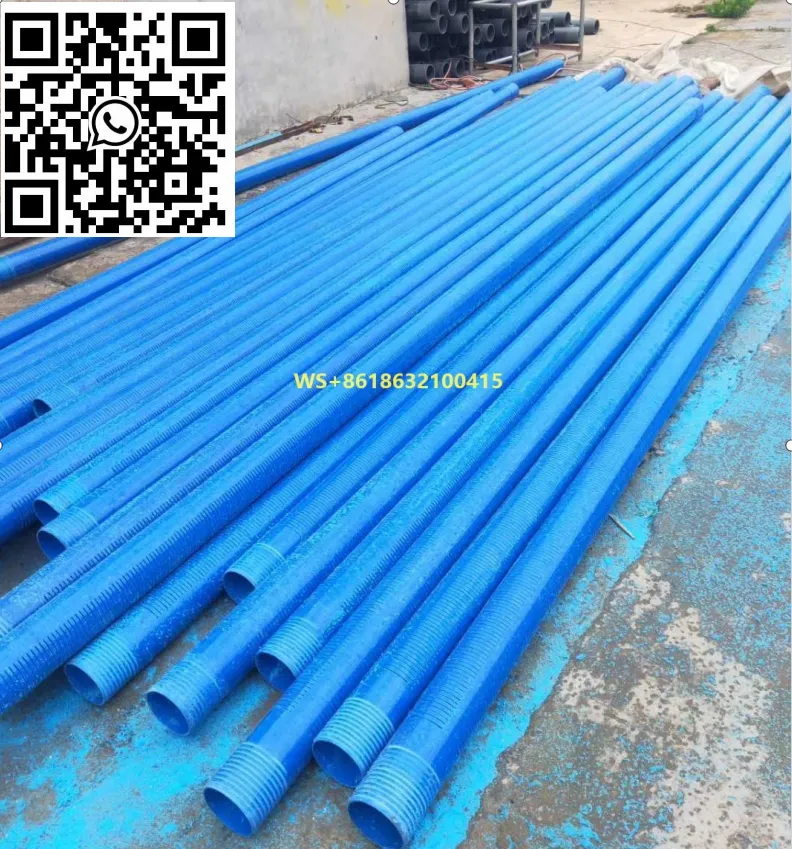
Unplasticized Polyvinyl Chloride (uPVC) column pipes represent a critical component in modern construction and infrastructure, offering a robust and cost-effective solution for structural support, enclosure, and fluid conveyance. Positioned within the broader piping and construction materials industry, these pipes serve as alternatives to traditional materials like concrete, steel, and wood, particularly in applications demanding corrosion resistance and low maintenance. Their core performance characteristics center around compressive strength, load-bearing capacity, weather resistance, and long-term durability. A factory specializing in uPVC column pipe production focuses on extrusion, fabrication, and quality control to meet stringent building codes and project specifications. The rise of uPVC column pipes stems from industry pain points regarding the high lifecycle costs associated with corrosion-prone materials and the weight and installation challenges presented by traditional alternatives.
Material Science & Manufacturing
uPVC column pipes are primarily composed of PVC resin, a thermoplastic polymer produced through the polymerization of vinyl chloride monomer. Key raw materials include PVC resin (typically grades conforming to ISO 1060-1), stabilizers (e.g., tin stabilizers, calcium-zinc stabilizers – increasingly favored for environmental reasons), lubricants (stearic acid, polyethylene wax), impact modifiers (acrylic impact modifiers), and pigments (titanium dioxide for opacity). The manufacturing process typically involves extrusion. PVC resin and additives are thoroughly mixed and fed into a twin-screw extruder. The extruder melts and homogenizes the mixture, forcing it through a die that shapes the pipe. Critical parameters during extrusion include barrel temperature (maintained within a specific range – typically 180-220°C – depending on the PVC formulation), screw speed (influences throughput and melt homogeneity), and die pressure (determines pipe dimensions and wall thickness). Cooling is achieved via water baths or air cooling, followed by dimensional stabilization and cutting to specified lengths. Quality control incorporates continuous monitoring of dimensions, wall thickness, and material properties, alongside periodic testing for impact resistance and tensile strength, according to standards like ASTM D1785 and EN 1452. The selection of stabilizer is critical to prevent degradation from UV exposure and thermal stress during processing and in service. Impact modifiers are added to enhance toughness and prevent brittle failure, especially in colder climates.
Performance & Engineering
The performance of uPVC column pipes is governed by several engineering principles. Structural analysis, based on Euler-Bernoulli beam theory or finite element analysis (FEA), determines the pipe's load-bearing capacity under axial compression, bending moments, and shear forces. Factors of safety are applied to account for material variability and potential dynamic loads (wind, seismic). Environmental resistance is a key consideration. uPVC exhibits excellent resistance to most acids, alkalis, and salts, making it suitable for corrosive environments. However, prolonged exposure to certain organic solvents can cause swelling and degradation. UV resistance is enhanced through the addition of UV stabilizers, preventing embrittlement and discoloration. Thermal expansion and contraction are managed through appropriate joint designs and expansion loops to mitigate stress build-up. Compliance requirements are dictated by local building codes (e.g., IBC in the US, Eurocodes in Europe) and industry standards. These codes specify requirements for material properties, dimensional tolerances, and installation practices. Fire performance is an important consideration; uPVC is inherently combustible, and fire-retardant additives are often incorporated to improve its fire resistance, aiming for classifications such as UL 94 V-0. Long-term creep resistance is crucial for structural applications, and manufacturers conduct accelerated aging tests to predict performance over the pipe’s service life.
Technical Specifications
| Parameter | Unit | Typical Value | Test Standard |
|---|---|---|---|
| Outside Diameter | mm | 110, 130, 160, 200, 250 | ISO 1452-2 |
| Wall Thickness | mm | 3.2, 4.0, 5.0, 6.0 | ASTM D1785 |
| Tensile Strength | MPa | ≥ 55 | ISO 6259 |
| Impact Strength (Charpy) | kJ/m² | ≥ 5 | ISO 145-2 |
| Water Absorption | % | ≤ 0.5 | ASTM D570 |
| Heat Deflection Temperature | °C | ≥ 74 | ASTM D648 |
Failure Mode & Maintenance
uPVC column pipes, while durable, are susceptible to certain failure modes. Long-term exposure to UV radiation can lead to embrittlement and cracking, particularly in areas not adequately protected by pigments or coatings. Mechanical damage during handling or installation (e.g., impact from falling objects, excessive bending) can cause cracking or fracture. Sustained exposure to elevated temperatures (above the heat deflection temperature) can result in creep deformation and loss of structural integrity. Chemical attack from aggressive solvents or concentrated chemicals can cause swelling, softening, or dissolution of the PVC material. Joint failures are common, arising from improper solvent welding, inadequate adhesive bonding, or thermal expansion/contraction stresses. Maintenance typically involves visual inspection for cracks, deformation, or discoloration. Minor surface scratches can be repaired with specialized PVC repair compounds. Damaged sections should be replaced using appropriate solvent welding or mechanical coupling techniques. Regular cleaning to remove dirt and debris can prevent the build-up of corrosive substances. Preventative measures include UV stabilization, proper handling procedures, and adherence to recommended installation practices. Failure analysis often involves microscopic examination of fractured surfaces to identify the root cause of failure (e.g., brittle fracture due to impact, stress cracking due to chemical attack).
Industry FAQ
Q: What is the expected service life of a properly installed uPVC column pipe?
A: A properly installed and maintained uPVC column pipe can have a service life exceeding 50 years. However, this depends significantly on the specific application, environmental conditions, and the quality of the material and installation. Factors like UV exposure, temperature fluctuations, and chemical exposure will influence longevity. Regular inspections are crucial to identify and address potential issues before they escalate.
Q: How does uPVC compare to galvanized steel in terms of corrosion resistance?
A: uPVC offers significantly superior corrosion resistance compared to galvanized steel. Galvanized steel is susceptible to corrosion, especially in humid or saline environments, requiring periodic maintenance and eventual replacement. uPVC is inherently resistant to most common corrosive agents, eliminating the need for protective coatings and reducing lifecycle costs.
Q: What are the limitations of uPVC regarding temperature tolerance?
A: uPVC has a limited temperature range. While it performs well at ambient temperatures, it becomes brittle at low temperatures and softens at high temperatures (above its heat deflection temperature). Extended exposure to temperatures exceeding 60°C can lead to creep and loss of structural integrity. Applications involving high temperatures may require alternative materials.
Q: What types of joints are commonly used with uPVC column pipes?
A: The most common jointing methods for uPVC column pipes are solvent welding (using PVC cement) and mechanical couplings (e.g., rubber ring joints, flanged connections). Solvent welding creates a strong, watertight bond by chemically fusing the pipe and fitting materials. Mechanical couplings offer a quick and easy alternative, particularly for applications requiring frequent disassembly or adjustment.
Q: Are there any environmental concerns associated with the production or disposal of uPVC?
A: The production of PVC involves the use of chlorine, and the incineration of PVC can release harmful dioxins. However, modern PVC production facilities employ advanced technologies to minimize environmental impact. Recycling of uPVC is becoming increasingly prevalent, reducing landfill waste and conserving resources. The use of calcium-zinc stabilizers, instead of tin stabilizers, further minimizes environmental concerns.
Conclusion
uPVC column pipes represent a compelling material choice for a wide range of structural and infrastructural applications, offering a balance of strength, durability, and cost-effectiveness. Their resistance to corrosion, low maintenance requirements, and relative ease of installation contribute to significant lifecycle cost savings compared to traditional materials. However, careful consideration must be given to temperature limitations, UV exposure, and potential chemical attack.
Advancements in PVC formulations, including the development of enhanced impact modifiers and UV stabilizers, are continually expanding the application envelope of uPVC column pipes. The increasing focus on sustainability is driving the development of more environmentally friendly PVC production processes and improved recycling technologies, ensuring that uPVC remains a viable and responsible material choice for the future.
-
DN25 HDPE Compression Fitting-HORON INTERNATIONAL|Reliable Irrigation Solutions
NewsFeb.11,2026
-
china hdpe coupling fittings Performance Analysis
News2026-05-10
-
china hdpe pipe use Performance Analysis
News2026-05-10
-
china hdpe water supply pipe Performance Analysis
News2026-05-10
-
china 1.5 inch pvc pipe Performance Analysis
News2026-05-10
-
china hdpe double wall corrugated pipe Performance Analysis
News2026-05-10
-
china 10mm pvc pipe Performance Analysis
News2026-05-09
-
china ppr pipe for cold water Material Performance
News2026-05-09
-
china type of pvc pipe Material and Manufacturing Analysis
News2026-05-09
-
china hdpe pipe sizes Performance Analysis
News2026-05-09
-
china 50mm pvc pipe Performance Analysis
News2026-05-09
-
china water supply lines under kitchen sink Material Science and Manufacturing
News2026-05-08
-
china green pvc pipe Performance Analysis
News2026-05-08
-
china coupler hdpe pipe Performance Analysis
News2026-05-08
-
china ppr pipe 32mm price Performance Analysis
News2026-05-08
-
china ppr piping system Performance Analysis
News2026-05-08