

Feb . 11, 2026 00:01 Back to list
upvc column pipes factories Performance Analysis
Introduction
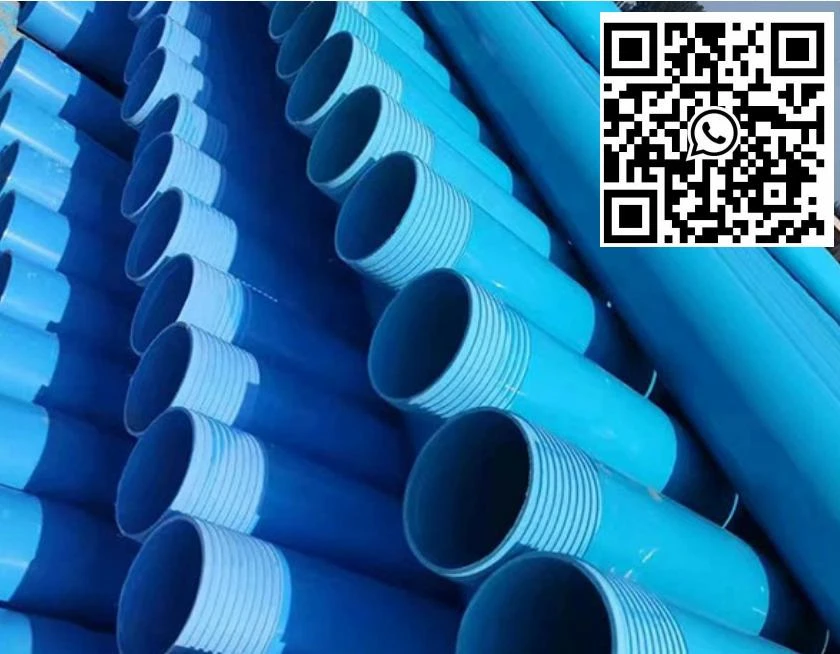
Unplasticized Polyvinyl Chloride (uPVC) column pipes represent a significant component in modern construction, particularly for applications requiring structural support and fluid conveyance. These pipes are distinct from standard PVC pipes due to their higher rigidity and load-bearing capacity, making them ideal for columns, structural supports in greenhouses, and specialized drainage systems. The manufacturing sector encompasses extrusion, molding, and finishing processes, with a growing emphasis on dimensional accuracy and long-term durability. Core performance characteristics include compressive strength, impact resistance, and resistance to environmental degradation. The industry currently faces challenges related to material consistency, maintaining tight tolerances during extrusion, and demonstrating compliance with increasingly stringent building codes related to fire safety and structural integrity. uPVC column pipes are positioned as a cost-effective alternative to traditional materials like steel and concrete, offering advantages in corrosion resistance and ease of installation.
Material Science & Manufacturing
uPVC column pipes are fundamentally constructed from PVC resin, with the “unplasticized” designation denoting the absence of plasticizers which would compromise rigidity. The PVC resin typically used is a copolymer of vinyl chloride monomer (VCM), and its properties are heavily influenced by the molecular weight distribution and the degree of polymerization. Key additives include thermal stabilizers (often based on calcium-zinc or organotin compounds) to prevent degradation during processing, impact modifiers (such as chlorinated polyethylene or acrylic polymers) to enhance toughness, and lubricants (like stearic acid) to facilitate extrusion. The manufacturing process generally involves extrusion. PVC compound is fed into a twin-screw extruder, where it is heated, mixed, and forced through a die to form the desired pipe profile. Critical parameters during extrusion include die temperature (typically 180-220°C), screw speed (optimized for melt homogeneity), and haul-off speed (controlling pipe dimensions). Cooling is accomplished via water baths, followed by precise cutting to length. Post-extrusion, pipes are often subjected to hydrostatic testing to verify pressure resistance and dimensional accuracy. Quality control also includes checks for wall thickness uniformity, ovality, and surface finish. The choice of stabilizers is crucial; organotin stabilizers provide superior clarity and processing stability but are facing increasing regulatory scrutiny due to toxicity concerns, prompting a shift towards calcium-zinc formulations, though they may exhibit lower thermal stability. The impact modifier content significantly influences the notched impact strength, a critical parameter for resisting brittle fracture.
Performance & Engineering
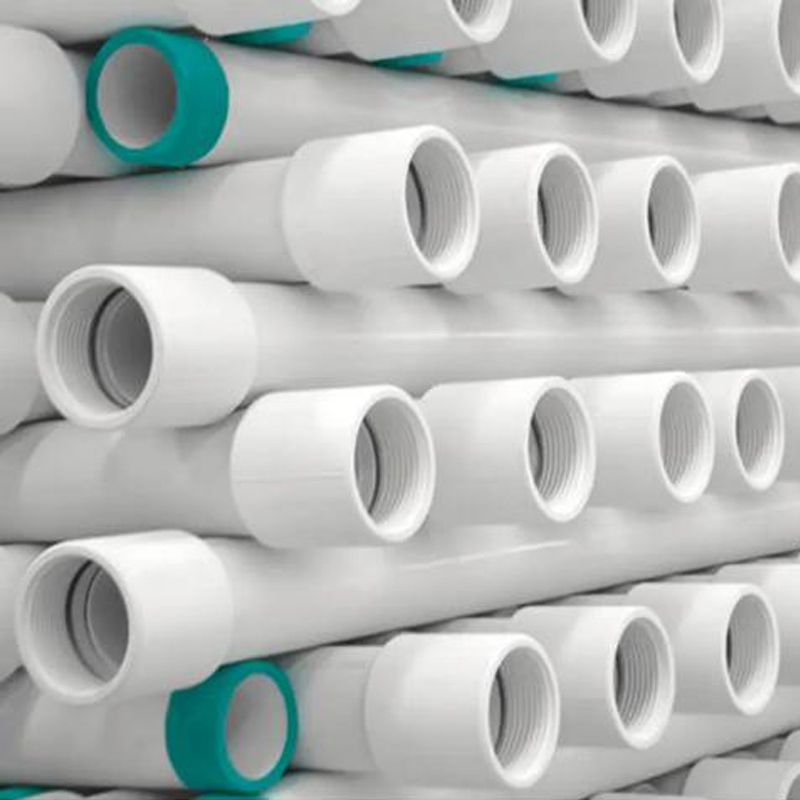
The structural performance of uPVC column pipes is primarily governed by their compressive strength and resistance to buckling. Finite element analysis (FEA) is frequently employed during the design phase to optimize pipe wall thickness and diameter for specific load-bearing requirements. The Modulus of Elasticity for uPVC is approximately 3-4 GPa, significantly lower than steel (around 200 GPa), which necessitates larger cross-sectional areas to achieve equivalent stiffness. Long-term creep behavior is a critical consideration, particularly in load-bearing applications. uPVC exhibits a time-dependent deformation under sustained stress, which must be accounted for in structural design. Environmental resistance is another key performance characteristic. uPVC is inherently resistant to most acids, alkalis, and salts, but prolonged exposure to UV radiation can cause discoloration and embrittlement. UV stabilizers are typically incorporated into the PVC compound to mitigate this effect. Fire resistance is a crucial compliance requirement. uPVC is combustible, and formulations often include flame retardants (typically chlorine-based compounds) to reduce flammability and smoke generation. Building codes often specify limits on flame spread and smoke density, and uPVC pipes must meet these standards. Jointing methods, such as solvent cementing or mechanical couplings, significantly influence the overall system performance. Solvent cement creates a homogeneous bond between the pipe and fitting, but proper application technique is critical to ensure a watertight seal. Mechanical couplings offer a faster and more convenient installation, but they may be more susceptible to leakage if not properly tightened.
Technical Specifications
| Parameter | Unit | Typical Value (Schedule 40) | Typical Value (Schedule 80) |
|---|---|---|---|
| Outside Diameter | mm | 110 | 110 |
| Wall Thickness | mm | 4.2 | 5.6 |
| Minimum Burst Pressure | MPa | 4.8 | 6.9 |
| Compressive Strength | MPa | 60 | 75 |
| Impact Strength (Notched Izod) | J/m | 50 | 65 |
| Thermal Conductivity | W/m·K | 0.15 | 0.15 |
Failure Mode & Maintenance
uPVC column pipes are susceptible to several failure modes in practical applications. Long-term hydrostatic stress can lead to slow crack growth, particularly in areas of stress concentration, such as around fittings or weld points. UV degradation, as mentioned previously, can cause embrittlement and cracking, especially in exposed installations. Mechanical damage, such as impact from falling objects or accidental punctures during construction, can also compromise the pipe's integrity. Chemical attack, while generally resistant, can occur with prolonged exposure to highly concentrated solvents or specific industrial chemicals. A common failure mode is crazing, the formation of fine cracks on the surface, often initiated by tensile stress and exacerbated by environmental factors. Maintenance primarily involves periodic visual inspection for cracks, discoloration, or signs of deformation. Any damaged sections should be replaced immediately. Proper support structures are crucial to prevent excessive bending stress. Joints should be inspected regularly for leaks and resealed if necessary. Protecting pipes from direct sunlight with coatings or shielding can significantly extend their service life. For buried applications, proper backfill compaction is essential to prevent uneven loading and stress concentration. Regular cleaning to remove debris and prevent blockage is also important, particularly in drainage applications.
Industry FAQ
Q: What is the long-term effect of soil acidity on buried uPVC column pipes?
A: While uPVC is generally resistant to most soils, prolonged exposure to highly acidic soils (pH < 5.5) can cause slow degradation of the PVC material, leading to reduced mechanical properties and potential cracking. The rate of degradation depends on the soil composition, moisture content, and temperature. Using a protective barrier, such as a polyethylene wrap, or selecting a uPVC compound with enhanced chemical resistance can mitigate this risk.
Q: How does temperature fluctuation affect the dimensional stability of uPVC pipes?
A: uPVC exhibits a relatively high coefficient of thermal expansion (approximately 8 x 10^-5 /°C). Significant temperature fluctuations can therefore cause dimensional changes, leading to stresses in the pipe system, particularly at joints. Proper allowance for thermal expansion and contraction should be incorporated into the design, using expansion joints or flexible couplings as needed.
Q: What are the key considerations when selecting a solvent cement for joining uPVC pipes?
A: The solvent cement must be specifically formulated for uPVC and compatible with the pipe and fitting materials. The cement's viscosity, setting time, and temperature range are critical parameters. Proper application technique, including surface preparation, cement application, and curing time, is essential to ensure a strong and watertight bond. Using a primer prior to cement application can enhance adhesion.
Q: What fire safety standards must uPVC column pipes meet in building construction?
A: uPVC pipes must typically comply with relevant fire safety standards, such as ASTM E84 (surface burning characteristics) and ASTM D2846 (smoke density). Building codes often specify limits on flame spread index and smoke developed index. Flame retardant additives are commonly used to improve the fire resistance of uPVC formulations.
Q: What is the recommended practice for supporting long runs of uPVC column pipes?
A: Long runs of uPVC pipes should be adequately supported to prevent excessive bending and sagging. Support spacing should be determined based on the pipe diameter, wall thickness, and the expected load. Supports should be non-corrosive and provide uniform support along the pipe length. Avoid point loads that could cause localized stress concentration.
Conclusion
uPVC column pipes offer a compelling combination of cost-effectiveness, durability, and corrosion resistance, making them a viable alternative to traditional materials in a wide range of applications. However, successful implementation requires a thorough understanding of the material’s properties, manufacturing processes, and potential failure modes. Careful consideration must be given to factors such as environmental conditions, load-bearing requirements, and fire safety regulations.
Future developments in uPVC pipe technology are likely to focus on enhancing material performance, improving fire resistance, and reducing environmental impact through the use of more sustainable additives and recycling processes. Continued research and development in polymer chemistry and processing techniques will play a crucial role in expanding the application range of uPVC column pipes and optimizing their long-term reliability.
-
DN25 HDPE Compression Fitting-HORON INTERNATIONAL|Reliable Irrigation Solutions
NewsFeb.11,2026
-
china hdpe coupling fittings Performance Analysis
News2026-05-10
-
china hdpe pipe use Performance Analysis
News2026-05-10
-
china hdpe water supply pipe Performance Analysis
News2026-05-10
-
china 1.5 inch pvc pipe Performance Analysis
News2026-05-10
-
china hdpe double wall corrugated pipe Performance Analysis
News2026-05-10
-
china 10mm pvc pipe Performance Analysis
News2026-05-09
-
china ppr pipe for cold water Material Performance
News2026-05-09
-
china type of pvc pipe Material and Manufacturing Analysis
News2026-05-09
-
china hdpe pipe sizes Performance Analysis
News2026-05-09
-
china 50mm pvc pipe Performance Analysis
News2026-05-09
-
china water supply lines under kitchen sink Material Science and Manufacturing
News2026-05-08
-
china green pvc pipe Performance Analysis
News2026-05-08
-
china coupler hdpe pipe Performance Analysis
News2026-05-08
-
china ppr pipe 32mm price Performance Analysis
News2026-05-08
-
china ppr piping system Performance Analysis
News2026-05-08