

Feb . 11, 2026 00:01 Back to list
underground pvc pipe manufacturers Performance Analysis
Introduction
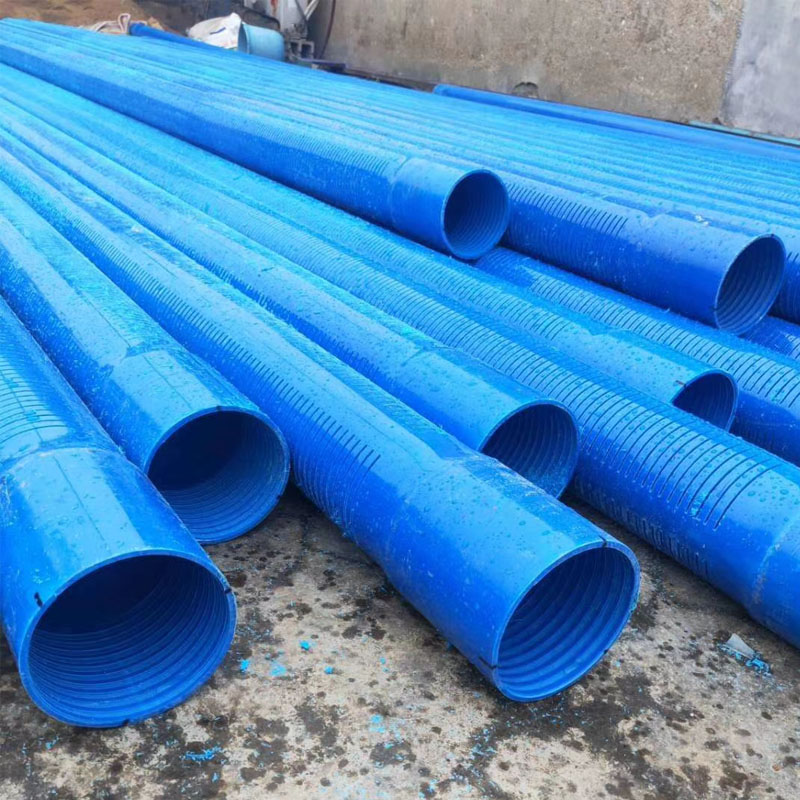
Polyvinyl chloride (PVC) pipe for underground applications represents a critical component of modern infrastructure, encompassing water distribution, sewage conveyance, drainage systems, and increasingly, electrical conduit. Unlike traditional materials such as cast iron, concrete, or ductile iron, PVC offers a compelling combination of cost-effectiveness, corrosion resistance, and ease of installation, driving its widespread adoption globally. This guide provides an in-depth technical overview of underground PVC pipe, covering material science, manufacturing processes, performance characteristics, failure modes, and relevant industry standards. A core industry pain point lies in balancing long-term durability with economic viability, necessitating a thorough understanding of material degradation mechanisms and appropriate installation protocols. The inherent challenges of subterranean environments—including soil corrosivity, fluctuating ground water levels, and external loads—demand specific material formulations and engineering considerations to ensure system longevity and prevent catastrophic failures. This document aims to equip engineers, procurement managers, and installers with the knowledge necessary to select, install, and maintain high-performance underground PVC piping systems.
Material Science & Manufacturing
Underground PVC pipe is predominantly manufactured from PVC resin, typically sourced from vinyl chloride monomer (VCM). The PVC resin is compounded with a variety of additives to enhance its properties, including plasticizers (e.g., phthalates, DINP) to impart flexibility, impact modifiers (e.g., chlorinated polyethylene – CPE, acrylic impact modifiers) to improve toughness, heat stabilizers (e.g., organotin compounds, calcium-zinc stabilizers) to prevent thermal degradation during processing and service, lubricants to aid in extrusion, and UV stabilizers to mitigate degradation from sunlight exposure (though less critical for underground applications). The specific formulation is tailored to the intended application and the governing pressure class.
Manufacturing primarily utilizes extrusion processes. The PVC compound is fed into a single-screw or twin-screw extruder, where it is heated and homogenized. The molten PVC is then forced through a die to create a continuous pipe profile. Key process parameters include extruder temperature profile (barrel and die temperatures), screw speed, die geometry, and puller speed. Precise control of these parameters is essential to ensure consistent wall thickness, dimensional accuracy, and smooth surface finish. Cooling is critical; pipes are typically submerged in water tanks immediately after extrusion to solidify the PVC and maintain dimensional stability. Further processing includes bell-and-spigot forming (for solvent welding) or gasketed joint creation, and quality control checks including hydrostatic pressure testing and dimensional measurements. Proper annealing after cooling is also vital to relieve internal stresses that may develop during rapid solidification. The choice between rigid PVC (PVC-U) and chlorinated PVC (CPVC) depends on the required temperature and chemical resistance, with CPVC offering higher temperature capabilities but also increased cost.
Performance & Engineering
The performance of underground PVC pipe is dictated by its ability to withstand internal hydrostatic pressure, external loads from soil and traffic, and resist chemical attack from surrounding environments. Internal pressure capacity is directly related to the pipe’s pressure class (e.g., PN10, PN16, Class 150, Class 200), determined through short-term hydrostatic testing and long-term creep rupture testing. External load resistance is a critical concern. Soil loading induces hoop stress in the pipe wall, and the pipe’s stiffness (measured by its modulus of elasticity) determines its ability to resist deformation and collapse. The bedding and backfill material significantly impact load distribution. Proper bedding, using granular materials, minimizes stress concentrations and provides uniform support.
Chemical resistance is generally excellent, but prolonged exposure to certain solvents or aggressive chemicals can cause swelling, cracking, or leaching of plasticizers, leading to embrittlement. Specific considerations include the pH of the surrounding soil, the presence of sulfates, and exposure to petroleum products. Geotechnical analysis is paramount to determine soil corrosivity and design appropriate protective measures. Finite element analysis (FEA) is often employed to model stress distributions under various loading conditions and optimize pipe design. Joint integrity is crucial; solvent-welded joints create a homogenous bond, while gasketed joints rely on the compression of elastomeric gaskets to maintain a watertight seal. Proper joint installation is essential to prevent leakage and maintain system performance. Compliance with relevant codes and standards (e.g., AWWA standards for water distribution, ASTM standards for PVC pipe) is mandatory.
Technical Specifications
| Parameter | Units | PVC (Schedule 40) | PVC (Schedule 80) |
|---|---|---|---|
| Pressure Rating | psi | 200 | 300 |
| Density | g/cm³ | 1.40 | 1.40 |
| Tensile Strength | MPa | 62 | 62 |
| Flexural Modulus | GPa | 3.0 | 3.0 |
| Impact Strength (Izod Notched) | J/m | 60 | 80 |
| Water Absorption (24 hr) | % | <0.1 | <0.1 |
Failure Mode & Maintenance
Underground PVC pipe is susceptible to several failure modes. Slow crack growth (SCG) is a primary concern, particularly in environments with residual stresses and aggressive chemicals. SCG is characterized by the slow propagation of cracks perpendicular to the stress axis, often initiated at imperfections or stress concentrations. Another common failure mechanism is soil creep, where the sustained compressive load from the surrounding soil can cause gradual deformation and eventual collapse, particularly in areas with poor bedding support. Mechanical damage during installation (e.g., puncture by heavy equipment) can also lead to immediate failure. Hydrostatic pressure fluctuations, particularly water hammer events, can induce fatigue cracking and joint separation.
Maintenance typically involves periodic inspection for signs of leakage, deformation, or cracking. Leak detection methods include acoustic listening devices and tracer gas techniques. Repair options range from localized patching with PVC cement to full pipe replacement. Proper backfilling and compaction are critical preventative measures. Ensuring adequate bedding support and avoiding excessive point loads during installation significantly reduce the risk of soil creep failure. Regular cathodic protection system monitoring (if applicable, in conjunction with metallic tracing wires embedded in the PVC pipe) is essential to prevent corrosion of metallic components. For SCG prevention, careful material selection and avoidance of aggressive chemicals are paramount. Regular flushing of the pipeline can remove sediment buildup and reduce the risk of internal corrosion or blockage.
Industry FAQ
Q: What is the long-term effect of soil movement on PVC pipe joints?
A: Soil movement, particularly expansive or settling soils, can induce significant stress on PVC pipe joints. Gasketed joints are more susceptible to leakage due to gasket compression and distortion. Solvent-welded joints, if properly executed, offer better resistance to shear stresses, but can still be compromised by excessive angular deflection. Proper joint restraint systems (e.g., thrust blocks, restrainers) are crucial to mitigate these effects, especially in areas with known soil instability.
Q: How does temperature affect the performance of underground PVC pipe?
A: While PVC generally performs well over a wide temperature range, extreme temperatures can affect its properties. Low temperatures can increase brittleness and reduce impact resistance, increasing the risk of cracking during installation or under load. High temperatures can reduce the pipe’s strength and increase creep deformation. Proper material selection, considering the expected operating temperature, is essential. CPVC is preferred for higher temperature applications.
Q: What are the key considerations when selecting bedding material for PVC pipe?
A: The bedding material should be granular, free-draining, and non-corrosive. Sand and gravel are commonly used. Avoid using angular or rocky materials that can create stress concentrations. The bedding should be compacted to provide uniform support and minimize differential settlement. The bedding’s gradation and compaction characteristics should be specified to ensure adequate load-bearing capacity and prevent pipe distortion.
Q: What is the risk of chemical attack from stray electrical currents on PVC pipe?
A: Stray electrical currents, often from nearby DC transit systems or cathodic protection systems on other buried infrastructure, can cause electrochemical degradation of PVC. This results in pitting corrosion and weakening of the pipe wall. Mitigation strategies include using electrically insulating couplings, bonding the PVC pipe to a grounding system, and ensuring proper isolation of the DC source.
Q: What is the recommended hydrostatic testing procedure for newly installed PVC pipelines?
A: Hydrostatic testing involves pressurizing the pipeline with water to a specified test pressure, typically 1.5 times the design operating pressure, and maintaining that pressure for a defined period (e.g., 24 hours). The pipeline is then inspected for leakage. The testing procedure should follow the requirements of relevant standards (e.g., AWWA M55). Accurate pressure measurement and leak detection are critical for ensuring the integrity of the pipeline.
Conclusion
Underground PVC pipe represents a robust and cost-effective solution for a wide range of subterranean infrastructure applications. Its inherent corrosion resistance, ease of installation, and relatively low cost contribute to its widespread adoption. However, successful implementation relies on a comprehensive understanding of material science, manufacturing processes, and potential failure modes. Careful consideration of soil conditions, loading scenarios, and chemical environments is crucial for selecting the appropriate PVC formulation and ensuring long-term durability.
Future advancements in PVC technology are focused on enhancing impact resistance, improving resistance to slow crack growth, and developing more sustainable formulations. The integration of smart technologies, such as embedded sensors for leak detection and structural health monitoring, will further enhance the performance and reliability of underground PVC piping systems. Continued adherence to industry standards and best practices remains paramount for ensuring the safe and efficient operation of these vital infrastructure assets.
-
DN25 HDPE Compression Fitting-HORON INTERNATIONAL|Reliable Irrigation Solutions
NewsFeb.11,2026
-
china corrugated hdpe pipe fittings Performance Analysis
News2026-05-22
-
china ppr pipe for hot water Performance Analysis
News2026-05-22
-
china ppr Technical Performance Analysis
News2026-05-22
-
china corrugated dual wall pipe Performance Analysis
News2026-05-22
-
china sink inlet pipe Material Performance Analysis
News2026-05-22
-
china 1 2 inch pvc Performance Analysis
News2026-05-21
-
china hdpe pipe joint coupler Performance Analysis
News2026-05-21
-
china ppr pipes and fittings price list Technical Analysis
News2026-05-21
-
china 9 inch pvc pipe price Performance Analysis
News2026-05-21
-
china 2 inch borewell column pipe price Performance Engineering
News2026-05-21
-
china hdpe pipe suppliers Performance Analysis
News2026-05-20
-
china submersible pump column pipe Performance Engineering
News2026-05-20
-
china 8 hdpe corrugated pipe Manufacturing Analysis
News2026-05-20
-
china dual wall hdpe pipe Performance Analysis
News2026-05-20
-
china water lines under sink Performance Analysis
News2026-05-20