

Feb . 11, 2026 00:01 Back to list
underground pvc pipe factory Performance Analysis
Introduction
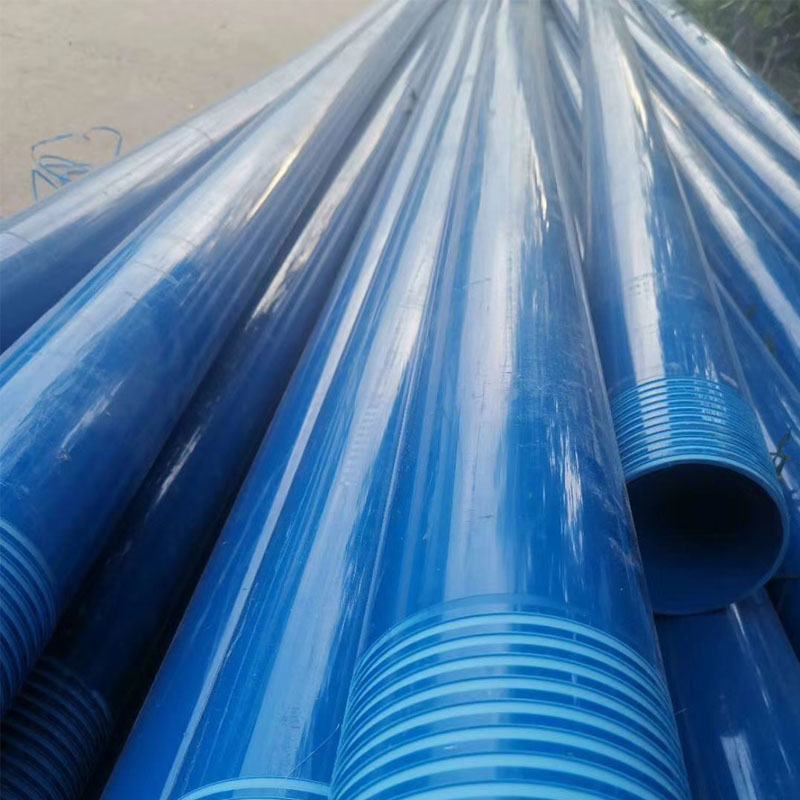
Polyvinyl Chloride (PVC) pipe for underground applications represents a critical component of modern infrastructure, encompassing water distribution, sewer systems, and conduit for electrical and communication lines. Unlike traditional materials like cast iron, ductile iron, or concrete, PVC offers a compelling combination of cost-effectiveness, corrosion resistance, and ease of installation. This technical guide provides an in-depth examination of underground PVC pipe, encompassing its material science, manufacturing processes, performance characteristics, failure modes, and relevant industry standards. The core performance characteristics – pressure rating, structural integrity, and long-term durability – are paramount concerns, directly impacting system longevity and operational reliability. The selection process necessitates careful consideration of soil conditions, anticipated loads, and applicable regulatory requirements. The increasing adoption of PVC is driven by lifecycle cost benefits and reduced environmental impact compared to alternative piping materials, although concerns regarding plasticizers and long-term degradation require vigilant monitoring and adherence to established quality control protocols. The industry faces challenges in maintaining consistent material quality across global supply chains and addressing emerging concerns regarding microplastic release into the environment.
Material Science & Manufacturing
Underground PVC pipe is predominantly manufactured from PVC resin, a thermoplastic polymer created by the polymerization of vinyl chloride monomer (VCM). The PVC resin is rarely used in its pure form; instead, it’s compounded with various additives to enhance its properties. Key additives include plasticizers (typically phthalates or increasingly, bio-based alternatives) to impart flexibility, impact modifiers (e.g., chlorinated polyethylene - CPE) to improve toughness, stabilizers (e.g., calcium-zinc or lead-based – the latter is phasing out due to environmental concerns) to prevent thermal degradation during processing and in-service life, lubricants to aid processing, and pigments for coloration. The selection and concentration of these additives directly affect the pipe’s physical and chemical properties, including tensile strength, elongation at break, impact resistance (measured by Charpy or Izod impact tests), and resistance to chemical attack. Manufacturing typically involves extrusion, where the compounded PVC material is melted and forced through a die to create a continuous pipe profile. Critical process parameters include melt temperature, screw speed, die geometry, and cooling rates. Improper control of these parameters can lead to defects such as dimensional inconsistencies, surface imperfections, and variations in mechanical properties. Further processing may include bell-and-spigot machining, gasket installation, and quality control inspections. The raw material’s molecular weight distribution and the degree of polymerization are critical quality control metrics. Hydrostatic pressure testing is employed to verify the pipe’s ability to withstand internal pressure without failure. Bell-and-spigot dimensions are controlled to ensure proper sealing and prevent leakage.
Performance & Engineering
The performance of underground PVC pipe is governed by a complex interplay of mechanical stresses, environmental factors, and soil conditions. Major stress contributors include external loads from soil overburden and traffic, internal hydrostatic pressure, and thermal expansion/contraction. Soil conditions, including soil type, moisture content, and corrosivity, significantly influence the pipe’s long-term durability. PVC pipe is generally subjected to hoop stress (circumferential stress) due to internal pressure and longitudinal stress due to bending and buckling. Engineering calculations must account for these stresses to ensure the pipe’s structural integrity. Buried PVC pipe requires adequate bedding and backfill materials to provide uniform support and prevent localized stress concentrations. The use of granular bedding materials is recommended to facilitate drainage and minimize the risk of corrosion. Compliance requirements are dictated by regional and national standards, which specify minimum wall thickness, pressure ratings, and material properties. Long-term performance is also affected by creep – the tendency of PVC to deform slowly under sustained stress. Factors influencing creep include temperature, stress level, and material composition. Geosynthetic materials, such as geotextiles, are often used to provide additional support and protection against soil abrasion. The coefficient of thermal expansion for PVC is relatively high compared to metals, necessitating the incorporation of expansion joints or flexible couplings in long pipeline runs to accommodate thermal movements and prevent pipe rupture.
Technical Specifications
| Parameter | ASTM D1785 (Typical Values) | ASTM D2241 (Typical Values) | ASTM D3212 (Typical Values) |
|---|---|---|---|
| Material | PVC (Schedule 40) | PVC (Schedule 80) | CPVC (Schedule 80) |
| Pressure Rating (psi) | Up to 300 | Up to 600 | Up to 400 |
| Temperature Rating (°F) | Up to 140 | Up to 140 | Up to 230 |
| Tensile Strength (psi) | 6,000 - 7,500 | 6,500 - 8,000 | 7,000 - 9,000 |
| Flexural Modulus (psi) | 300,000 - 350,000 | 320,000 - 380,000 | 350,000 - 400,000 |
| Impact Resistance (Izod Notched, ft-lb/in) | 1.0 - 1.5 | 1.5 - 2.0 | 2.0 - 2.5 |
Failure Mode & Maintenance
Underground PVC pipe is susceptible to several failure modes, including cracking due to stress corrosion, fatigue cracking from cyclic loading, deformation due to soil settlement, and joint failure due to improper installation or gasket degradation. Stress corrosion cracking (SCC) is a particularly concerning failure mechanism, especially in aggressive soil environments. It occurs when tensile stress and a corrosive environment combine to initiate and propagate cracks. The presence of residual stresses from manufacturing or installation can exacerbate the risk of SCC. Fatigue cracking can occur in areas subject to repeated loading, such as around bell-and-spigot joints. Soil settlement can induce bending stresses in the pipe, leading to ovalization and ultimately, cracking. Gasket failure can result in leakage at joints. Preventative maintenance involves regular visual inspections, leak detection surveys, and soil analysis to identify potential corrosion risks. Cathodic protection may be considered in highly corrosive environments. Repair options range from localized patching to complete pipe replacement. For minor cracks, epoxy-based repair compounds can be used. However, for significant damage, complete replacement is often the most reliable solution. Proper joint installation, utilizing manufacturer-recommended procedures and ensuring proper gasket seating, is crucial for preventing leakage and prolonging service life. Periodic soil testing for pH levels and sulfate content can help predict potential corrosion risks. Careful backfilling and compaction procedures minimize the risk of soil settlement and associated stresses.
Industry FAQ
Q: What is the primary difference between Schedule 40 and Schedule 80 PVC pipe in terms of underground applications?
A: The primary difference lies in the wall thickness. Schedule 80 pipe has a thicker wall than Schedule 40, providing a higher pressure rating and increased structural strength. For underground applications, Schedule 80 is typically selected when higher internal pressures are anticipated, or when the pipe is subjected to significant external loads from heavy traffic or deep burial depths. Schedule 40 is suitable for lower-pressure and less demanding applications, offering a cost-effective solution where structural demands are moderate.
Q: How does soil corrosivity impact the long-term durability of underground PVC pipe?
A: Soil corrosivity, particularly the presence of sulfates, chlorides, and acidic compounds, can accelerate the degradation of PVC pipe. These substances can promote stress corrosion cracking, especially in areas with residual stress. Highly corrosive soils may require the use of specialized PVC compounds with enhanced chemical resistance or the implementation of protective measures such as cathodic protection or the application of protective coatings. Regular soil testing is crucial for assessing corrosivity levels.
Q: What are the best practices for bedding and backfill to ensure the longevity of a buried PVC pipeline?
A: Proper bedding and backfill are critical. A uniform bedding layer of granular material (e.g., sand or gravel) should be installed to provide complete support along the entire pipe length. The bedding material should be compacted to the specified density. Backfill material should be non-corrosive and free of sharp objects that could damage the pipe. Layered compaction is recommended to avoid uneven loading. Avoiding large rocks directly over the pipe is essential.
Q: What considerations should be given to thermal expansion and contraction of PVC pipe in long underground runs?
A: PVC has a relatively high coefficient of thermal expansion. In long runs, temperature fluctuations can induce significant stress in the pipeline. Expansion joints or flexible couplings should be incorporated at appropriate intervals to accommodate thermal movements and prevent pipe rupture. The spacing of these joints depends on the anticipated temperature range and the pipe’s material properties. Proper anchoring of the pipeline is also important to control axial movement.
Q: How do plasticizers in PVC affect its long-term performance, and what alternatives are available?
A: Plasticizers are added to PVC to increase flexibility, but they can leach out over time, leading to embrittlement and reduced performance. Traditional phthalate plasticizers are facing increasing regulatory scrutiny due to health and environmental concerns. Bio-based plasticizers, such as those derived from vegetable oils, are emerging as more sustainable alternatives. However, their long-term performance characteristics are still under investigation. The selection of plasticizer should be based on the specific application requirements and regulatory compliance standards.
Conclusion
Underground PVC pipe represents a robust and cost-effective solution for a wide range of infrastructure applications. Its inherent corrosion resistance, ease of installation, and favorable lifecycle cost profile contribute to its widespread adoption. However, successful implementation necessitates a thorough understanding of material science, manufacturing processes, and engineering principles. Careful consideration of soil conditions, anticipated loads, and applicable regulatory requirements is paramount. Addressing concerns regarding plasticizer migration and potential environmental impacts through the adoption of innovative materials and sustainable practices will be crucial for ensuring the long-term viability of PVC piping systems.
Continued research and development efforts focused on enhancing PVC’s resistance to stress corrosion cracking, improving its long-term creep performance, and developing more environmentally friendly plasticizers are essential for advancing the technology. Collaboration between manufacturers, engineers, and regulatory agencies is necessary to establish and maintain robust quality control standards and promote the responsible use of PVC in underground infrastructure. A proactive approach to maintenance and monitoring, coupled with the implementation of best practices for installation and backfilling, will maximize the lifespan and reliability of PVC piping systems.
-
DN25 HDPE Compression Fitting-HORON INTERNATIONAL|Reliable Irrigation Solutions
NewsFeb.11,2026
-
china corrugated hdpe pipe fittings Performance Analysis
News2026-05-22
-
china ppr pipe for hot water Performance Analysis
News2026-05-22
-
china ppr Technical Performance Analysis
News2026-05-22
-
china corrugated dual wall pipe Performance Analysis
News2026-05-22
-
china sink inlet pipe Material Performance Analysis
News2026-05-22
-
china 1 2 inch pvc Performance Analysis
News2026-05-21
-
china hdpe pipe joint coupler Performance Analysis
News2026-05-21
-
china ppr pipes and fittings price list Technical Analysis
News2026-05-21
-
china 9 inch pvc pipe price Performance Analysis
News2026-05-21
-
china 2 inch borewell column pipe price Performance Engineering
News2026-05-21
-
china hdpe pipe suppliers Performance Analysis
News2026-05-20
-
china submersible pump column pipe Performance Engineering
News2026-05-20
-
china 8 hdpe corrugated pipe Manufacturing Analysis
News2026-05-20
-
china dual wall hdpe pipe Performance Analysis
News2026-05-20
-
china water lines under sink Performance Analysis
News2026-05-20