

Feb . 11, 2026 00:01 Back to list
PVC Pipe what is pvc pipe used for in plumbing products Performance Analysis
Introduction
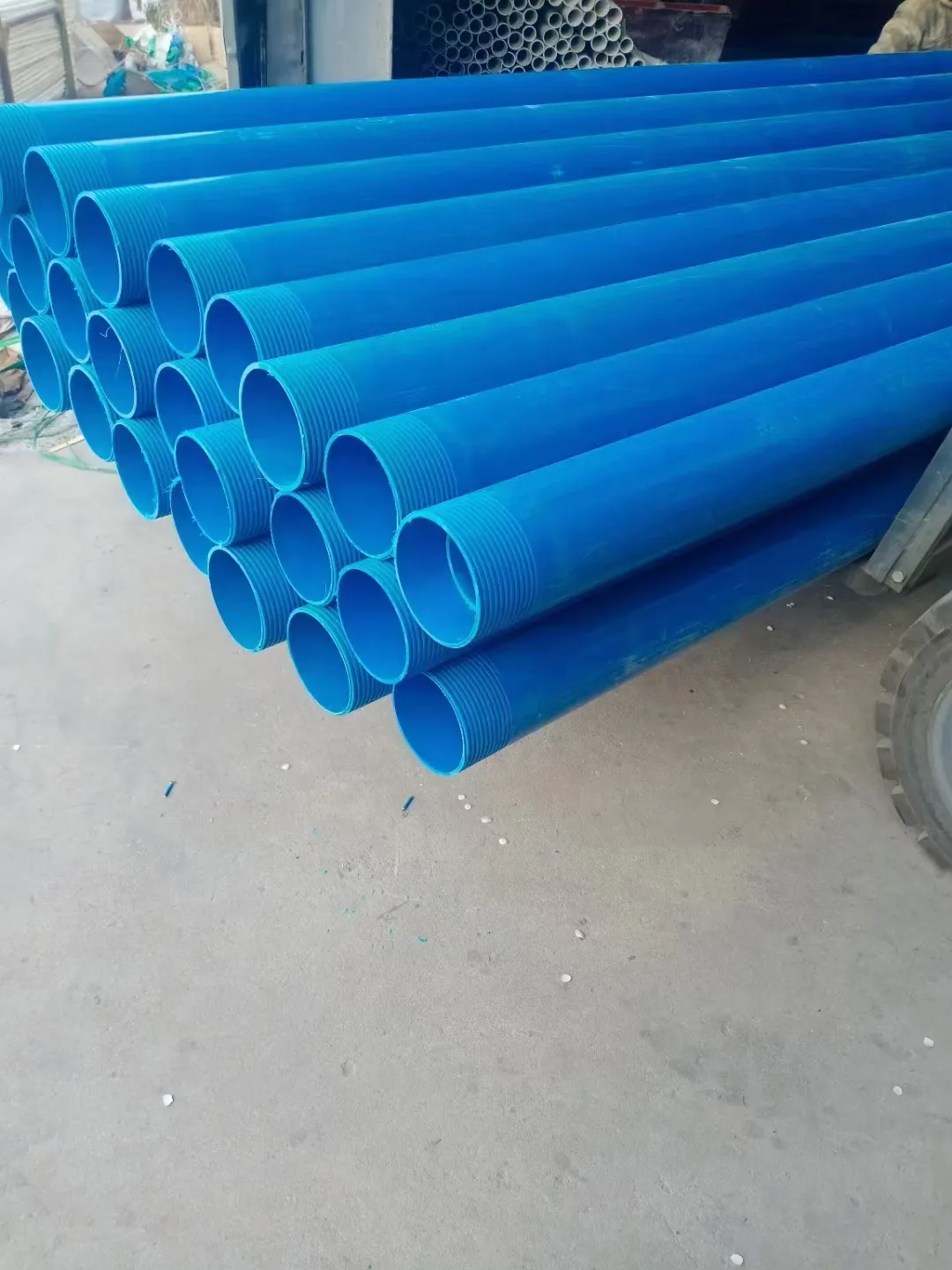
Polyvinyl Chloride (PVC) pipe is a ubiquitous material in plumbing systems, serving as a cost-effective and versatile solution for a wide range of applications. Its technical position within the plumbing industry chain is fundamental; acting as the conduit for potable water, drainage, waste, and vent (DWV) systems, as well as irrigation. Unlike metallic piping materials, PVC exhibits inherent corrosion resistance, mitigating long-term degradation in many common soil and water conditions. Core performance characteristics include its lightweight nature, ease of installation via solvent welding or threading, and a smooth inner surface minimizing flow restriction. However, PVC's temperature sensitivity and susceptibility to UV degradation require careful consideration in design and installation. The industry currently faces challenges related to plasticizer leaching, potential for brittle fracture in colder climates, and growing demand for sustainable alternatives. This guide provides an in-depth analysis of PVC pipe used in plumbing, covering material science, manufacturing, performance, failure modes, and industry standards.
Material Science & Manufacturing
PVC is a thermoplastic polymer produced through the polymerization of vinyl chloride monomer (VCM). The raw material, ethylene dichloride (EDC), is derived from ethylene and chlorine. PVC’s inherent rigidity necessitates the addition of plasticizers, typically phthalates or adipates, to enhance flexibility, particularly in applications requiring bending or compression. The chemical formula of PVC is (C2H3Cl)n. Key physical properties include a density of approximately 1.4 g/cm3, a glass transition temperature (Tg) around 80°C, and a tensile strength ranging from 50-70 MPa depending on formulation. Manufacturing processes for PVC pipe predominantly involve extrusion. The PVC compound (resin, plasticizers, stabilizers, lubricants, and pigments) is fed into an extruder, where it is heated and melted. This molten material is then forced through a die that shapes it into the desired pipe diameter and wall thickness. Critical parameters during extrusion include maintaining consistent temperature profiles along the extruder barrel to prevent degradation, precise control of screw speed to ensure homogeneous mixing, and accurate die sizing to achieve dimensional tolerances. Subsequent cooling, calendaring, and cutting operations complete the process. The selection of stabilizers (typically lead-based until recently, now increasingly calcium-zinc based) is vital to prevent thermal degradation during processing and subsequent service life. PVC pipe is classified into Schedule 40, Schedule 80, and others, denoting wall thickness and corresponding pressure rating.
Performance & Engineering
The performance of PVC pipe in plumbing applications is dictated by its ability to withstand internal hydrostatic pressure, external soil loads, and environmental stresses. Force analysis is crucial in system design, considering the Bernoulli equation to calculate pressure losses due to friction within the pipe and accounting for dynamic loads from water hammer. PVC's modulus of elasticity (approximately 3-4 GPa) determines its resistance to deflection under load. External loads, particularly from soil cover in buried applications, necessitate sufficient pipe stiffness to prevent collapse. Environmental resistance is a key concern. PVC is susceptible to degradation from prolonged UV exposure, which causes embrittlement. Therefore, UV stabilizers are incorporated into the formulation, and pipes should be stored and installed shielded from direct sunlight. Temperature dependence is also significant. At lower temperatures, PVC becomes more brittle, increasing the risk of cracking, especially during installation or impact. Chemical compatibility is another critical factor. While PVC exhibits good resistance to many common chemicals, it can be attacked by strong oxidizing agents, ketones, and aromatic hydrocarbons. Compliance requirements, dictated by building codes and plumbing standards (see footer), specify minimum pressure ratings, dimensional tolerances, and material properties. The allowable working pressure is determined by the pipe’s schedule number, diameter, and temperature.
Technical Specifications
| Parameter | Schedule 40 PVC | Schedule 80 PVC | CPVC (Chlorinated PVC) |
|---|---|---|---|
| Tensile Strength (MPa) | 55-60 | 60-70 | 65-80 |
| Density (g/cm3) | 1.40 | 1.40 | 1.48 |
| Glass Transition Temperature (°C) | 80-85 | 80-85 | 85-90 |
| Maximum Operating Temperature (°C) | 60 | 60 | 93 |
| Pressure Rating (at 23°C, psi) | 400 | 600 | 400-1000 (depending on temp.) |
| Long-Term Hydrolytic Stability | Good | Good | Excellent |
Failure Mode & Maintenance
PVC pipe is susceptible to several failure modes in plumbing applications. Brittle fracture, particularly at low temperatures or due to impact, is a common issue. This is exacerbated by improper installation techniques that introduce stress concentrations. Long-term hydrostatic pressure can lead to creep rupture, especially in pipes operating near their maximum pressure rating. Chemical attack from aggressive substances within the conveyed fluid or surrounding soil can cause degradation and weakening of the pipe material. UV degradation, as previously mentioned, causes surface cracking and embrittlement. Another failure mechanism is crazing, microscopic cracks that propagate through the material, reducing its strength and causing leaks. Plasticizer leaching, though reduced in modern formulations, can still lead to embrittlement over extended periods. Maintenance involves regular inspection for cracks, leaks, and signs of degradation. Minor cracks can often be repaired using PVC cement and appropriate fittings. For more significant damage, pipe replacement is necessary. Proper bedding and backfilling during installation are crucial to prevent external stresses. Avoiding direct sunlight exposure and utilizing UV-resistant coatings can extend the service life. Periodic flushing of the system can remove sediment buildup, reducing the risk of abrasion and corrosion.
Industry FAQ
Q: What is the primary difference between Schedule 40 and Schedule 80 PVC pipe, and when should each be used?
A: The main difference lies in the wall thickness. Schedule 80 has a thicker wall than Schedule 40, resulting in a higher pressure rating and greater resistance to impact. Schedule 40 is typically used for residential drainage, waste, and vent systems, and cold water distribution. Schedule 80 is preferred for industrial applications, high-pressure systems, and situations where increased durability is required, such as chemical processing or exposed piping.
Q: How does CPVC differ from standard PVC, and what are its advantages?
A: CPVC (Chlorinated PVC) is produced by chlorinating PVC resin, increasing its chlorine content. This enhances its heat resistance significantly, allowing it to handle temperatures up to 93°C. CPVC is therefore used for hot water distribution systems, where standard PVC would soften and fail. It also exhibits improved long-term hydrolytic stability and resistance to certain chemicals.
Q: What are the risks associated with solvent welding PVC pipe, and how can they be mitigated?
A: Improper solvent welding can lead to weak joints that are prone to leaks or failure. Risks include insufficient surface preparation, incorrect primer or cement application, and improper curing time. Mitigation involves thoroughly cleaning and drying the pipe and fitting surfaces, using the correct primer and cement combination for the specific PVC formulation, applying the cement evenly and quickly, and allowing sufficient time for the solvent to evaporate and the joint to cure fully. Ambient temperature and humidity influence curing time.
Q: What are the environmental concerns related to PVC, and are there sustainable alternatives?
A: PVC production involves the use of chlorine and plasticizers, some of which have environmental and health concerns. Disposal of PVC waste can also be problematic. Sustainable alternatives include polyethylene (PE), polypropylene (PP), and increasingly, bio-based plastics derived from renewable resources. However, each alternative has its own performance limitations and cost considerations.
Q: What precautions should be taken when installing PVC pipe in colder climates?
A: PVC becomes more brittle at low temperatures. Installation should be avoided during extremely cold weather. If unavoidable, the pipe should be warmed slightly before handling and installation. Proper bedding and backfilling are crucial to protect the pipe from freezing and thawing cycles. Consider using thicker-walled pipe (Schedule 80) or insulation for exposed sections.
Conclusion
PVC pipe remains a dominant material in plumbing systems due to its cost-effectiveness, ease of installation, and corrosion resistance. However, a thorough understanding of its material properties, manufacturing processes, and potential failure modes is critical for ensuring long-term performance and reliability. Careful consideration must be given to environmental factors, temperature extremes, and chemical compatibility to mitigate risks and optimize system design.
Looking forward, ongoing research and development are focused on enhancing PVC formulations with improved plasticizers, UV stabilizers, and impact modifiers, addressing environmental concerns through recycling initiatives, and exploring sustainable alternative materials. Adherence to relevant industry standards and best practices in installation and maintenance will be crucial for maximizing the lifespan and efficiency of PVC plumbing systems.
-
DN25 HDPE Compression Fitting-HORON INTERNATIONAL|Reliable Irrigation Solutions
NewsFeb.11,2026
-
china corrugated hdpe pipe fittings Performance Analysis
News2026-05-22
-
china ppr pipe for hot water Performance Analysis
News2026-05-22
-
china ppr Technical Performance Analysis
News2026-05-22
-
china corrugated dual wall pipe Performance Analysis
News2026-05-22
-
china sink inlet pipe Material Performance Analysis
News2026-05-22
-
china 1 2 inch pvc Performance Analysis
News2026-05-21
-
china hdpe pipe joint coupler Performance Analysis
News2026-05-21
-
china ppr pipes and fittings price list Technical Analysis
News2026-05-21
-
china 9 inch pvc pipe price Performance Analysis
News2026-05-21
-
china 2 inch borewell column pipe price Performance Engineering
News2026-05-21
-
china hdpe pipe suppliers Performance Analysis
News2026-05-20
-
china submersible pump column pipe Performance Engineering
News2026-05-20
-
china 8 hdpe corrugated pipe Manufacturing Analysis
News2026-05-20
-
china dual wall hdpe pipe Performance Analysis
News2026-05-20
-
china water lines under sink Performance Analysis
News2026-05-20