

Feb . 11, 2026 00:01 Back to list
pvc pipe used for service Performance Analysis
Introduction
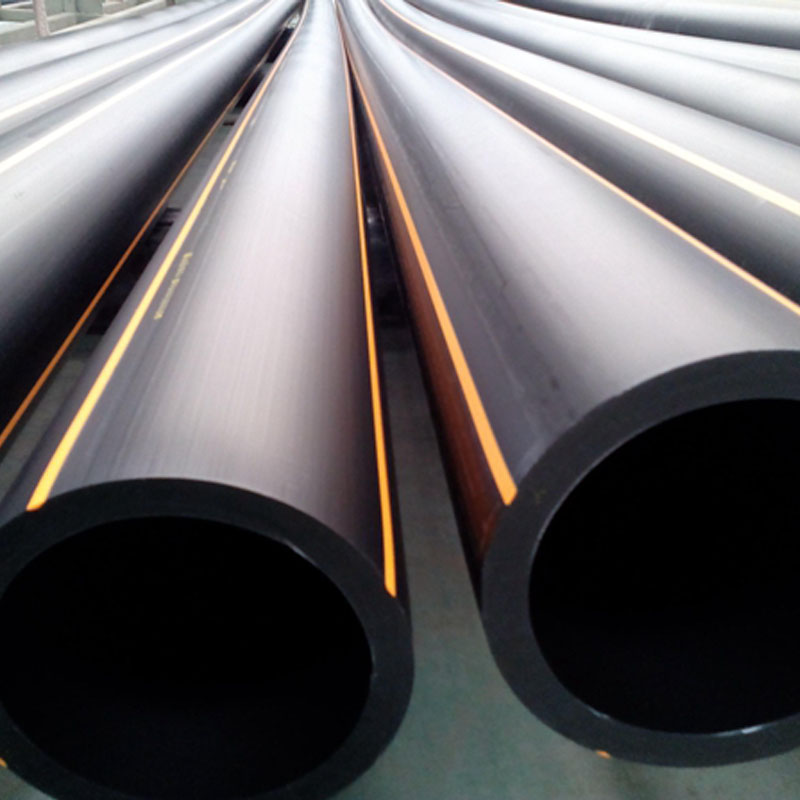
Polyvinyl Chloride (PVC) pipe for service applications represents a critical component within fluid conveyance infrastructure. Unlike drainage, waste, and vent (DWV) PVC, service-rated PVC is engineered to withstand significantly higher pressures and environmental stresses encountered in potable water distribution, irrigation systems, and industrial fluid transfer. Its position in the industry chain is fundamental, bridging the gap between water/fluid sources and end-use points. Core performance characteristics include pressure containment, chemical resistance, durability, and cost-effectiveness. The ongoing trend toward infrastructure rehabilitation and the need for corrosion-resistant piping materials drive demand. A primary industry pain point is ensuring long-term reliability, particularly in aggressive soil conditions or with fluctuating water quality, and maintaining compliance with evolving regulatory standards governing material composition and performance. Understanding the nuances of PVC formulation, manufacturing, and installation is paramount to mitigating premature failures and optimizing service life.
Material Science & Manufacturing
PVC is a thermoplastic polymer produced by the polymerization of vinyl chloride monomer (VCM). The raw material, ethylene dichloride (EDC), is created from ethylene and chlorine. PVC’s inherent properties are modified through plasticizers, stabilizers, lubricants, and processing aids to achieve specific performance characteristics. For service-rated PVC, the formulation typically includes higher molecular weight polymers and enhanced stabilizer packages, specifically calcium-zinc or barium-zinc systems, to maximize long-term durability and resistance to degradation. Manufacturing begins with the suspension or emulsion polymerization of VCM, resulting in PVC resin. This resin is then compounded with additives. Pipe production predominantly utilizes extrusion processes. The compounded PVC is fed into an extruder, where it’s heated and melted, then forced through a die to form a seamless pipe. Critical parameters during extrusion include temperature control (barrel zones, die temperature), screw speed, and pullulation rate. Proper cooling is crucial to prevent deformation. Post-extrusion, pipes undergo hydrostatic testing to verify pressure integrity. Jointing methods include solvent cementing, threading, and mechanical couplings. The quality of the solvent cement and the proper application technique are critical for creating leak-proof joints. Furthermore, the chemical compatibility of the cement with the PVC formulation must be verified to avoid joint failure due to swelling or dissolution.
Performance & Engineering
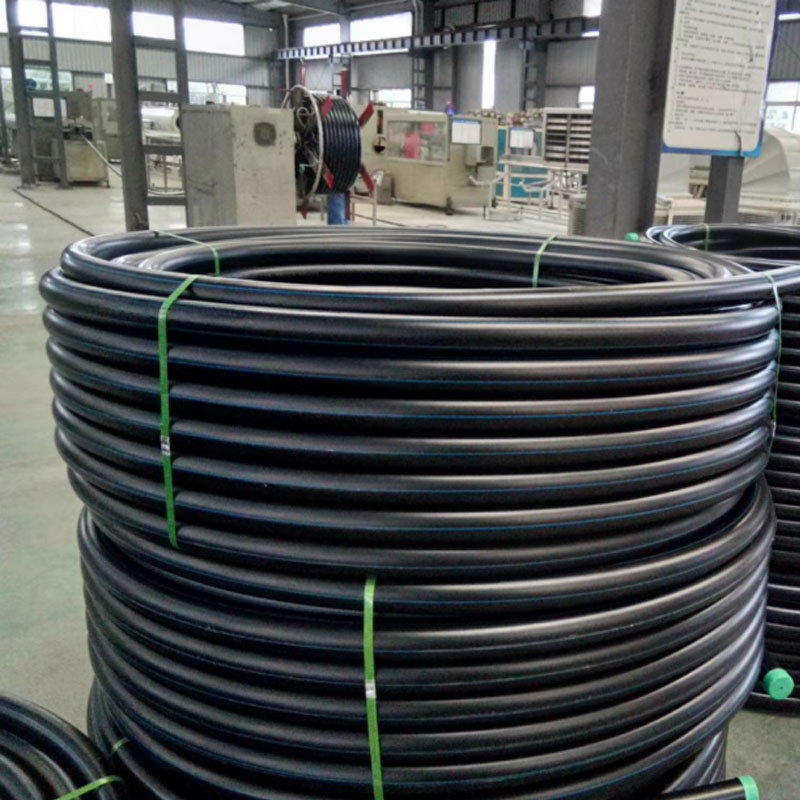
The performance of service-rated PVC pipe is heavily dependent on its ability to withstand internal hydrostatic pressure, external soil loads, and dynamic stresses from water hammer. Force analysis involves calculating hoop stress (resistance to circumferential pressure) and longitudinal stress (resistance to axial pressure). The Barlow's formula (S = P D / 2t, where S=hoop stress, P=internal pressure, D=pipe diameter, t=wall thickness) is fundamental in determining the required wall thickness for a given pressure rating. Environmental resistance is crucial; PVC is susceptible to UV degradation and embrittlement at low temperatures. UV stabilizers are incorporated into the formulation to mitigate this effect. Soil loads must be considered, particularly in burial applications. Bedding and backfill materials significantly influence the distribution of external loads. Compliance requirements are stringent, with standards like NSF/ANSI 61 ensuring that the pipe material does not leach harmful contaminants into potable water. Furthermore, standards such as ASTM D1785 dictate the physical properties and hydrostatic design stress for PVC pipe. Functional implementation extends beyond simply conveying fluids; PVC pipe systems often incorporate valves, fittings, and sensors, requiring careful consideration of material compatibility and system integration. Thermal expansion and contraction must also be accounted for in system design to prevent stress on joints and connections.
Technical Specifications
| Parameter | ASTM D1785 - Schedule 40 | ASTM D1785 - Schedule 80 | ASTM D2241 - C900 (DR18) |
|---|---|---|---|
| Pressure Rating (psi) | 200 psi | 300 psi | 230 psi |
| Hydrostatic Design Stress (HDS) (psi) | 4000 psi | 4000 psi | 4000 psi |
| Typical Wall Thickness (inches) – 4” Diameter | 0.218” | 0.280” | 0.279” |
| Outside Diameter (inches) – All Sizes | 4.068” (Nominal 4”) | 4.068” (Nominal 4”) | 4.068” (Nominal 4”) |
| Material | PVC (Polyvinyl Chloride) | PVC (Polyvinyl Chloride) | PVC (Polyvinyl Chloride) |
| Temperature Range (°F) | -40 to 140 | -40 to 140 | -40 to 140 |
Failure Mode & Maintenance
Several failure modes can affect service-rated PVC pipe. Fatigue cracking can occur due to repeated pressure fluctuations or external loading, particularly at joints or stress concentrators. Delamination, though less common, can result from improper fusion during extrusion or inadequate mixing of additives. Chemical attack, especially from aggressive soil conditions (sulfates, chlorides), can lead to embrittlement and cracking. Oxidation due to prolonged UV exposure can degrade the polymer matrix, reducing its strength and flexibility. Hydrostatic failure, caused by exceeding the pipe's pressure rating, is a catastrophic event. Maintenance involves regular visual inspections for cracks, leaks, or signs of degradation. Soil testing around buried pipes can identify potential corrosive environments. Proper jointing procedures, using appropriate solvent cement and following manufacturer’s instructions, are crucial for preventing joint failures. Pressure testing after installation is recommended to verify system integrity. In cases of minor leaks, repair sleeves or couplings can be used. For significant damage, pipe replacement is often necessary. Preventative maintenance, including cathodic protection in highly corrosive soils, can extend the service life of the pipeline. Periodic cleaning to remove scale or debris can also improve flow efficiency and reduce stress on the system.
Industry FAQ
Q: What is the impact of soil corrosivity on the lifespan of buried PVC pipe?
A: Highly corrosive soils, particularly those with high sulfate or chloride concentrations, can significantly reduce the lifespan of buried PVC pipe. These chemicals can leach into the pipe material, causing embrittlement and cracking. Soil testing is crucial to assess corrosivity levels. Mitigation strategies include using PVC formulations with enhanced chemical resistance, applying protective coatings, or implementing cathodic protection systems.
Q: How does water hammer affect PVC pipe, and what preventative measures can be taken?
A: Water hammer, or pressure surge, occurs when fluid flow is abruptly stopped, creating a shock wave. This can induce significant stress on PVC pipe, potentially leading to cracking or joint failure. Preventative measures include installing surge suppressors (air chambers or pressure relief valves) to dampen the pressure wave, controlling valve closure rates, and ensuring proper pipe anchoring.
Q: What are the key differences between Schedule 40 and Schedule 80 PVC pipe, and when should each be used?
A: Schedule 40 and Schedule 80 refer to the pipe wall thickness. Schedule 80 has a thicker wall than Schedule 40, providing greater pressure-bearing capacity and impact resistance. Schedule 40 is suitable for lower-pressure applications, while Schedule 80 is preferred for higher-pressure systems or applications where increased durability is required.
Q: What role do stabilizers play in the performance of PVC pipe, and what types are commonly used?
A: Stabilizers are essential additives that prevent PVC degradation from heat, UV exposure, and chemical attack. Common types include calcium-zinc (Ca/Zn) and barium-zinc (Ba/Zn) stabilizers. Ca/Zn stabilizers are often preferred for potable water applications due to their lower toxicity compared to lead-based stabilizers historically used. Proper stabilizer formulation and dosage are critical for long-term performance.
Q: What is the importance of proper solvent cementing techniques when joining PVC pipe?
A: Proper solvent cementing is paramount for creating leak-proof, structurally sound joints. Incorrect application – insufficient cement, improper cleaning of surfaces, or exceeding the cement’s open time – can lead to weak joints prone to failure. Surfaces must be clean, dry, and free of contaminants. The correct cement type for the PVC formulation must be used, and manufacturer’s instructions followed precisely.
Conclusion
Service-rated PVC pipe represents a robust and cost-effective solution for a wide range of fluid conveyance applications. Its performance is dictated by a complex interplay of material science, manufacturing processes, and engineering design considerations. Ensuring long-term reliability necessitates a thorough understanding of potential failure modes, proactive maintenance strategies, and strict adherence to industry standards and best practices.
Looking forward, advancements in PVC formulations, incorporating nanotechnology and bio-based stabilizers, promise to enhance durability, reduce environmental impact, and extend service life. Continued research into non-destructive testing methods will improve the ability to assess pipe integrity and predict remaining useful life, optimizing infrastructure management and minimizing costly failures.
-
DN25 HDPE Compression Fitting-HORON INTERNATIONAL|Reliable Irrigation Solutions
NewsFeb.11,2026
-
china 2 inch upvc column pipe price Performance Analysis
News2026-05-30
-
china hdpe to pvc coupling Performance Analysis
News2026-05-30
-
china 2 hdpe to pvc coupling Performance Analysis
News2026-05-30
-
china 48 inch hdpe pipe cost Performance Analysis
News2026-05-30
-
china upvc column pipe price Performance Analysis
News2026-05-30
-
china hdpe pipe to pvc pipe connection Performance Engineering
News2026-05-29
-
china 12 inch pvc pipe Performance Analysis
News2026-05-29
-
china pvc to hdpe pipe connection Performance Analysis
News2026-05-29
-
china types of pipes pvc Performance Analysis
News2026-05-29
-
china 2 hdpe coupling Material Science
News2026-05-29
-
china 48 hdpe pipe for sale Performance Analysis
News2026-05-28
-
china perforated land drainage pipe Performance Analysis
News2026-05-28
-
china clear pvc hose Performance Analysis
News2026-05-28
-
china kitchen sink hot cold water lines Performance Analysis
News2026-05-28
-
china 110 mm pvc pipe Performance Analysis
News2026-05-28