

Feb . 11, 2026 00:01 Back to list
pvc pipe class 7 factory Performance Analysis
Introduction
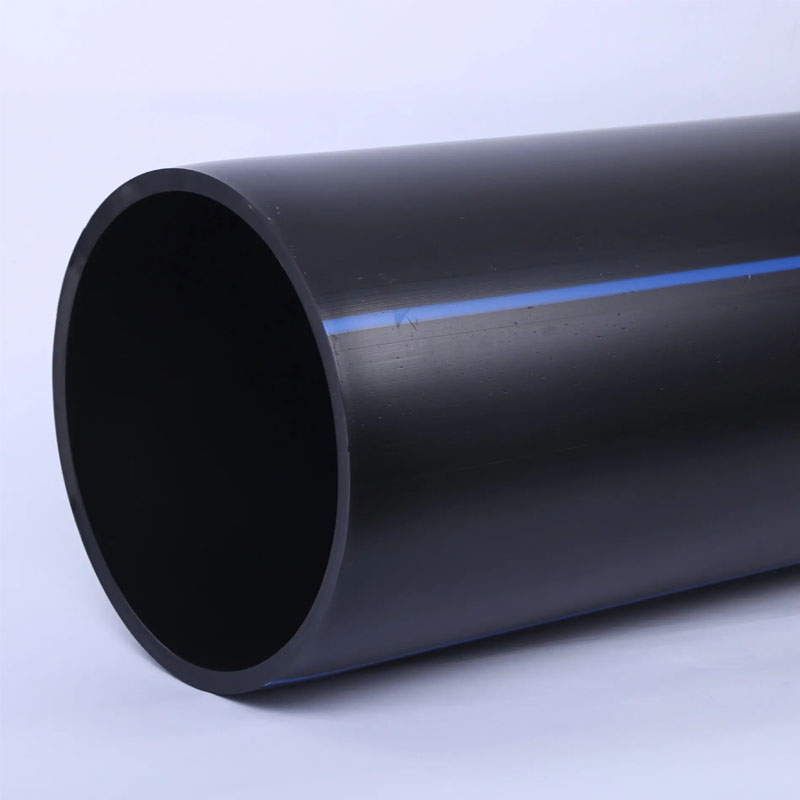
Polyvinyl Chloride (PVC) pipe, specifically Class 7, represents a critical component in fluid conveyance systems across diverse industrial applications. Classified under ASTM D1785, Class 7 PVC pipe distinguishes itself through a heightened pressure-bearing capability, typically rated at 80 PSI at 73°F. This designation dictates its suitability for demanding applications such as potable water distribution, irrigation, industrial process piping, and chemical transfer, where consistent and reliable performance under pressure is paramount. The manufacturing of Class 7 PVC pipe involves extrusion processes, rigorous quality control, and adherence to strict dimensional tolerances. A primary industry pain point lies in maintaining consistent wall thickness and material homogeneity throughout the extrusion process to guarantee pressure ratings and long-term durability. Further challenges include managing the inherent limitations of PVC regarding temperature sensitivity and potential degradation due to UV exposure, necessitating the incorporation of UV stabilizers during compounding.
Material Science & Manufacturing
The foundation of Class 7 PVC pipe lies in the thermoplastic polymer, Polyvinyl Chloride. The raw material is typically a suspension PVC resin, characterized by a particle size distribution optimized for consistent extrusion. Essential additives include stabilizers (typically calcium-zinc or lead-based, though the latter is increasingly restricted due to environmental concerns), lubricants (stearic acid, polyethylene wax) to facilitate processing and reduce friction, impact modifiers (MBS resins – Methyl Methacrylate Butadiene Styrene copolymers) to enhance toughness, and processing aids to improve melt flow. The thermal stability of PVC is inherently limited; therefore, stabilizers are crucial to prevent degradation during high-temperature processing. Manufacturing begins with the dry blending of the PVC resin and additives. This mixture is then fed into a twin-screw extruder, where it is heated and homogenized. Extrusion parameters – barrel temperature profile (typically ranging from 160°C to 210°C), screw speed, and die pressure – are critically controlled to ensure complete fusion and proper melt viscosity. The extruded parison is then sized using a calibrator sleeve and cooled via a water bath. Precise control of cooling rates is vital to prevent warping and ensure dimensional accuracy. Subsequent processes include marking (printing of size, schedule, and manufacturing details) and cutting to length. Wall thickness uniformity and the degree of fusion between layers are continuously monitored through non-destructive testing methods like ultrasonic thickness gauging.
Performance & Engineering
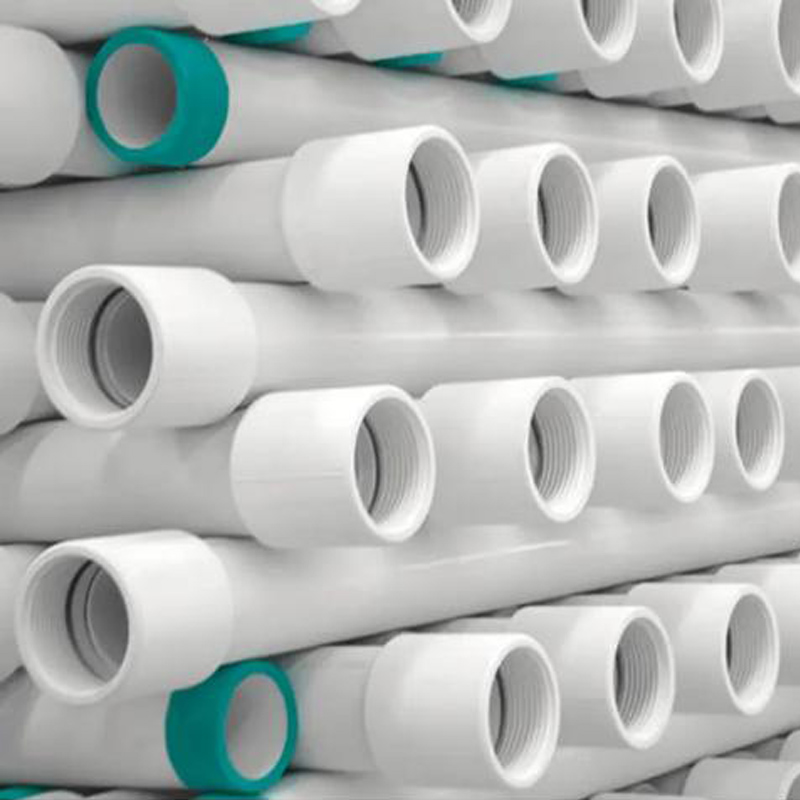
The performance of Class 7 PVC pipe is fundamentally dictated by its ability to withstand internal hydrostatic pressure without failure. This is governed by Barlow’s Formula: P = (2Sσ)/D, where P is internal pressure, S is hoop stress, σ is the tensile strength of the material, and D is the pipe diameter. Engineering considerations include stress concentration at fittings and joints, which can significantly reduce the overall system pressure rating. Proper solvent cementing techniques, utilizing compatible PVC cements and primers, are crucial to achieve strong, leak-proof joints that maintain structural integrity. Furthermore, PVC exhibits limited ductility, meaning it is susceptible to brittle fracture under impact loading, particularly at low temperatures. Impact modification with MBS resins mitigates this risk but doesn't eliminate it entirely. Environmental resistance is another critical aspect. PVC is generally resistant to many acids and bases, but its compatibility with certain organic solvents and chlorinated hydrocarbons is limited. Long-term exposure to UV radiation can cause degradation, leading to embrittlement and discoloration. The addition of UV stabilizers (e.g., hindered amine light stabilizers – HALS) extends the service life of the pipe when exposed to sunlight. Soil loading and external mechanical forces also require consideration, especially in buried applications. ASTM D2412 outlines procedures for determining the pressure rating of PVC pipe, while ASTM F477 details the standard for solvent cementing of PVC pipe.
Technical Specifications
| Parameter | Unit | Class 7 Specification (Typical) | Test Method |
|---|---|---|---|
| Pressure Rating | PSI | 80 @ 73°F | ASTM D1785 |
| Material | - | PVC (Polyvinyl Chloride) | ASTM D1785 |
| Wall Thickness | inch | 0.218 - 0.278 (depending on Schedule) | ASTM D1785 |
| Outside Diameter | inch | Variable (e.g., 4”, 6”, 8”, 10”) | ASTM D1785 |
| Tensile Strength | PSI | > 7,000 | ASTM D638 |
| Impact Strength (Notched Izod) | ft-lb/in | > 1.0 | ASTM D256 |
Failure Mode & Maintenance
Common failure modes in Class 7 PVC pipe include brittle fracture due to impact or overpressure, cracking caused by sustained stress (particularly at fittings), and degradation resulting from UV exposure or chemical attack. Slow crack growth (SCG) is a significant concern, often initiated by pre-existing flaws or stress concentrations and accelerated by exposure to certain chemicals. Failure analysis often reveals evidence of crazing (microscopic cracks) preceding macroscopic failure. Another failure mechanism is thermal distortion, which can occur during periods of elevated temperature, leading to joint leakage. Maintenance primarily focuses on preventative measures. Regularly inspect exposed pipe for signs of UV degradation (discoloration, surface cracking). Ensure proper support and anchoring to prevent excessive stress. Avoid exposing PVC pipe to incompatible chemicals. Periodically examine joints for leaks or evidence of solvent cement failure. If cracks are detected, localized repair using appropriate PVC repair couplings may be possible, but complete replacement is often the preferred solution for significant damage. For buried pipes, cathodic protection may be considered in corrosive soil environments, though PVC is inherently corrosion resistant. Routine pressure testing can help identify potential weaknesses before catastrophic failure occurs.
Industry FAQ
Q: What is the difference between Schedule 40 and Schedule 80 PVC pipe?
A: Schedule 80 PVC pipe has a thicker wall than Schedule 40, resulting in a higher pressure rating. Schedule 40 is suitable for lower-pressure applications, while Schedule 80 is preferred for high-pressure systems or when increased mechanical strength is required. The "Schedule" number refers to the approximate internal diameter for a given nominal pipe size.
Q: How does temperature affect the performance of PVC pipe?
A: PVC becomes more brittle at lower temperatures, increasing the risk of fracture. Elevated temperatures can reduce the pipe's pressure rating and accelerate degradation. Operating temperatures should remain within the recommended range specified by ASTM D1785.
Q: What is the best solvent cement to use for joining Class 7 PVC pipe?
A: Use a solvent cement specifically formulated for PVC and compliant with ASTM D2235. The cement should be compatible with the PVC material and the intended application. Primers (ASTM F493) are also essential to prepare the surfaces for bonding.
Q: Can PVC pipe be used for hot water applications?
A: Generally, no. PVC has a limited temperature resistance, typically around 140°F (60°C). Exceeding this temperature can lead to softening, deformation, and failure. CPVC (Chlorinated Polyvinyl Chloride) is a more suitable material for hot water applications.
Q: What are the main causes of slow crack growth in PVC pipe?
A: Slow crack growth is primarily caused by sustained stress in combination with exposure to certain chemicals (e.g., some chlorinated solvents, hydrocarbons). Pre-existing flaws, notches, or stress concentrations can initiate crack growth. Maintaining proper support and avoiding incompatible chemicals are crucial preventative measures.
Conclusion
Class 7 PVC pipe offers a robust and cost-effective solution for a wide range of fluid conveyance applications. Its performance is intrinsically linked to material selection, precise manufacturing control, and adherence to industry standards. Understanding the material’s limitations – particularly regarding temperature sensitivity, chemical compatibility, and impact resistance – is critical for ensuring long-term reliability and preventing premature failure.
Future developments in PVC pipe technology will likely focus on enhancing impact resistance through advanced polymer blends, improving UV stability with next-generation stabilizers, and developing more environmentally friendly formulations that minimize reliance on lead-based stabilizers. Continuous monitoring of industry standards and best practices is essential for maintaining the integrity and performance of PVC piping systems.
-
DN25 HDPE Compression Fitting-HORON INTERNATIONAL|Reliable Irrigation Solutions
NewsFeb.11,2026
-
china corrugated hdpe pipe fittings Performance Analysis
News2026-05-22
-
china ppr pipe for hot water Performance Analysis
News2026-05-22
-
china ppr Technical Performance Analysis
News2026-05-22
-
china corrugated dual wall pipe Performance Analysis
News2026-05-22
-
china sink inlet pipe Material Performance Analysis
News2026-05-22
-
china 1 2 inch pvc Performance Analysis
News2026-05-21
-
china hdpe pipe joint coupler Performance Analysis
News2026-05-21
-
china ppr pipes and fittings price list Technical Analysis
News2026-05-21
-
china 9 inch pvc pipe price Performance Analysis
News2026-05-21
-
china 2 inch borewell column pipe price Performance Engineering
News2026-05-21
-
china hdpe pipe suppliers Performance Analysis
News2026-05-20
-
china submersible pump column pipe Performance Engineering
News2026-05-20
-
china 8 hdpe corrugated pipe Manufacturing Analysis
News2026-05-20
-
china dual wall hdpe pipe Performance Analysis
News2026-05-20
-
china water lines under sink Performance Analysis
News2026-05-20