

Feb . 11, 2026 00:01 Back to list
ppr pipe 32mm product Performance Analysis
Introduction
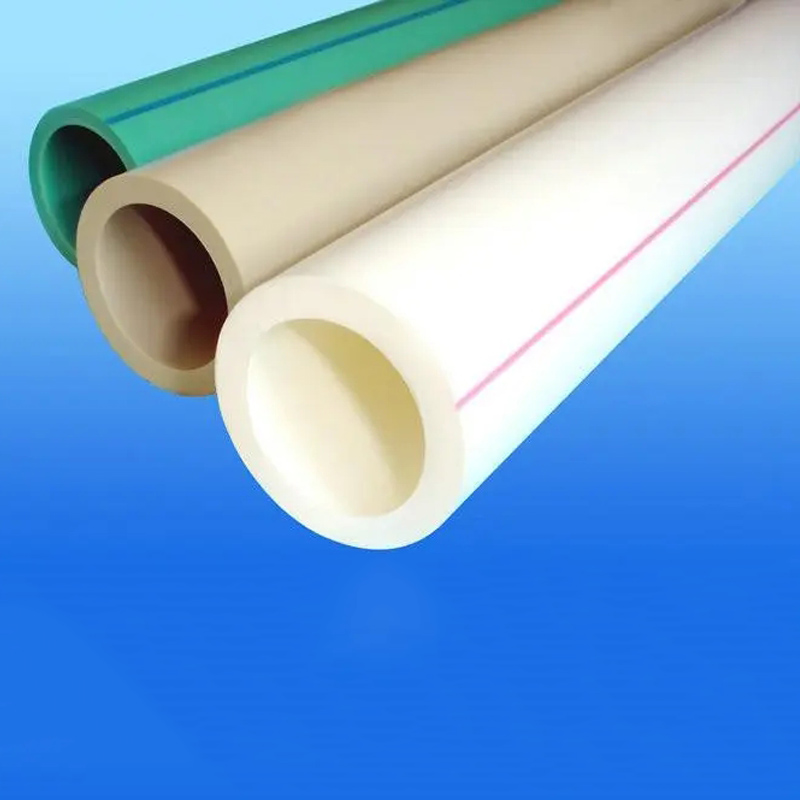
Polypropylene Random Copolymer (PPR) pipe, specifically the 32mm variant, represents a significant advancement in fluid conveyance systems. Positioned within the plumbing and industrial piping chain, PPR pipe serves as a direct replacement for traditional materials like galvanized steel, copper, and CPVC. Its core performance characteristics – including corrosion resistance, thermal stability, and hygienic properties – address critical pain points associated with older piping systems, namely long-term maintenance costs, potential contamination, and weight-related installation challenges. This guide provides an in-depth technical assessment of 32mm PPR pipe, encompassing material science, manufacturing processes, performance engineering, failure analysis, and relevant international standards, intended for procurement managers, engineers, and quality control personnel involved in fluid handling infrastructure projects.
Material Science & Manufacturing
PPR pipe derives its properties from a polypropylene random copolymer, a thermoplastic polymer created through the polymerization of propylene with ethylene. The random arrangement of ethylene monomers introduces amorphous regions within the polypropylene matrix, enhancing impact resistance and flexibility compared to homopolymer polypropylene. The raw material's density typically ranges from 0.905 to 0.92 g/cm³. Key physical properties include a tensile strength of 20-30 MPa, a flexural modulus of 800-1100 MPa, and a Vicat softening temperature of approximately 130-150°C.
Manufacturing involves several critical steps. First, polypropylene granules are melt-extruded into a parison, which is then inflated and cooled against a mandrel to form the pipe shape (extrusion process). Precise control of extrusion temperature (typically 190-230°C), screw speed, and die geometry are vital to ensure uniform wall thickness and dimensional accuracy. Subsequent annealing processes reduce internal stresses, improving long-term creep resistance. Socket fusion welding is the primary joining method, utilizing a controlled heating process to melt and fuse the pipe and fitting materials, creating a homogenous joint. Quality control relies on rigorous testing of hydrostatic pressure, tensile strength, and impact resistance, according to established standards like DIN 8077 and EN ISO 15876. The presence of UV stabilizers, typically carbon black, is critical for outdoor applications to prevent photo-degradation.
Performance & Engineering
The performance of 32mm PPR pipe is fundamentally linked to its ability to withstand hydrostatic pressure and maintain long-term structural integrity. Force analysis, governed by the Barlow’s formula (P = 2St/D, where P is pressure, S is tensile strength, t is wall thickness, and D is outer diameter), dictates the maximum allowable operating pressure. For 32mm PPR pipe with a typical wall thickness of 2.3mm, and a tensile strength of 25 MPa, the calculated pressure rating is approximately 25 bar. This calculation assumes a design safety factor of at least 2.5.
Environmental resistance is another critical factor. PPR exhibits excellent chemical resistance to a wide range of acids, bases, and salts, making it suitable for diverse fluid handling applications. However, prolonged exposure to oxidizing agents like chlorine can lead to degradation. Thermal expansion is significant (approximately 0.15 mm/m/°C), necessitating the use of expansion joints in long pipe runs to prevent stress cracking. Compliance with potable water standards (e.g., NSF/ANSI 61) ensures that the pipe does not leach harmful substances into the water supply. The long-term hydrostatic strength (LTHS) is a crucial parameter determined through accelerated aging tests, predicting the pipe’s service life under constant internal pressure and elevated temperatures. The performance of welded joints is often the limiting factor; therefore, proper welding procedures and operator training are paramount.
Technical Specifications
| Parameter | Unit | Value (Typical) | Test Standard |
|---|---|---|---|
| Outer Diameter | mm | 32 | ISO 15876 |
| Wall Thickness | mm | 2.3 | DIN 8077 |
| Pressure Rating (PN) | bar | 25 | ISO 15876 |
| Tensile Strength | MPa | 25 | ISO 527-2 |
| Vicat Softening Temperature | °C | 140 | ISO 306 |
| Hydrostatic Pressure Test | bar | 48 (for 5 minutes) | DIN 8077 |
Failure Mode & Maintenance
Several failure modes can affect the long-term performance of 32mm PPR pipe. Fatigue cracking, induced by repeated pressure cycles, is a common issue, particularly near welded joints. This is exacerbated by temperature fluctuations and improper installation. Chemical attack, especially from oxidizing agents, can cause gradual degradation of the polymer matrix, leading to reduced wall thickness and eventual failure. Creep rupture, a time-dependent deformation under constant stress, can occur at elevated temperatures over extended periods. Delamination can occur in improperly fused joints due to insufficient heating or contamination during welding. Oxidation, especially in UV-exposed applications without adequate stabilization, leads to embrittlement and cracking.
Preventative maintenance is crucial. Regular visual inspections for cracks, leaks, and discoloration are recommended. Pressure testing should be conducted periodically to identify weaknesses in the system. Avoid exposing the pipe to excessive temperatures or aggressive chemicals. Proper support and anchoring are essential to prevent stress concentrations. For minor leaks at welded joints, re-welding may be possible, but complete replacement is often the most reliable solution. Implement a corrosion monitoring program, especially in chemically aggressive environments. Periodic cleaning to remove scale and debris will maintain flow rates and reduce the risk of blockages.
Industry FAQ
Q: What is the long-term impact of water hammer on PPR pipe systems?
A: Water hammer, or hydraulic shock, can induce significant stress waves within the piping system. While PPR pipe exhibits good impact resistance, repeated water hammer events can lead to fatigue cracking, particularly at welded joints. Implementing surge protection devices, such as air chambers or pressure relief valves, is critical to mitigate the effects of water hammer and prolong the service life of the system.
Q: How does the quality of welding affect the performance of PPR pipe joints?
A: Welding quality is paramount. Insufficient heating results in incomplete fusion, creating a weak joint prone to leakage and failure. Overheating can cause degradation of the polymer, reducing joint strength. Proper operator training, adherence to welding parameters specified by the pipe manufacturer, and the use of calibrated welding tools are essential. Regular non-destructive testing of joints, such as visual inspection and ultrasonic testing, can verify weld integrity.
Q: Can PPR pipe be used for transporting compressed air?
A: Generally, it is not recommended to use standard PPR pipe for compressed air applications. While PPR has pressure ratings, the flexibility of the material and potential for permeation of air through the polymer matrix can lead to leaks and safety concerns. Specialized PPR compounds designed for compressed air, incorporating reinforced layers, are available, but standard PPR is unsuitable.
Q: What is the maximum allowable operating temperature for 32mm PPR pipe?
A: The maximum continuous operating temperature for 32mm PPR pipe is typically 70°C, according to DIN 8077 and ISO 15876. Short-term temperature excursions up to 95°C are permissible, but prolonged exposure to temperatures above 70°C will accelerate creep deformation and reduce the pipe’s service life. Derating the pressure rating at higher temperatures is also recommended.
Q: How does UV exposure affect the lifespan of outdoor PPR pipe installations?
A: Prolonged UV exposure can cause photo-degradation of the polypropylene, leading to embrittlement, discoloration, and cracking. Using PPR pipe formulated with UV stabilizers (typically carbon black) is essential for outdoor applications. Additionally, shielding the pipe from direct sunlight with coatings or insulation can further extend its lifespan. Regular inspections for signs of UV degradation are also recommended.
Conclusion
The 32mm PPR pipe represents a robust and cost-effective solution for a wide array of fluid conveyance applications. Its inherent corrosion resistance, coupled with relatively simple installation via socket fusion welding, offers significant advantages over traditional piping materials. However, realizing these benefits requires a thorough understanding of the material's properties, meticulous adherence to manufacturing and installation standards, and proactive implementation of preventative maintenance procedures.
Future advancements in PPR technology are likely to focus on enhancing UV resistance, improving creep performance at elevated temperatures, and developing more sophisticated welding techniques for increased joint reliability. The continued refinement of PPR formulations and installation practices will solidify its position as a preferred material in plumbing, industrial piping, and infrastructure projects, offering long-term durability and reduced lifecycle costs.
-
DN25 HDPE Compression Fitting-HORON INTERNATIONAL|Reliable Irrigation Solutions
NewsFeb.11,2026
-
china hdpe pipe for drip irrigation Performance Analysis
News2026-05-04
-
china hdpe pipe for agriculture Performance Analysis
News2026-05-04
-
china hdpe sprinkler pipe price Performance Analysis
News2026-05-04
-
china 2 ppr pipe Performance Analysis
News2026-05-04
-
china pvc pipe price per foot Performance Analysis
News2026-05-04
-
china long pvc pipe Performance Analysis
News2026-05-03
-
china plumbing kitchen sink water lines Performance Analysis
News2026-05-03
-
china hdpe drip irrigation Performance Analysis
News2026-05-03
-
china hot water ppr pipe Performance Analysis
News2026-05-03
-
china ppr plumbing Technical Analysis
News2026-05-03
-
china ppr pipe supplier Manufacturing Analysis
News2026-05-02
-
china 50mm ppr pipe Technical Analysis
News2026-05-02
-
china hdpe drip pipe Performance Analysis
News2026-05-02
-
china hdpe pipe 63mm price Performance Analysis
News2026-05-02
-
china hdpe pipe for potable water Performance Engineering
News2026-05-02