

Feb . 11, 2026 00:01 Back to list
ppr pipe 32mm factories Technical Analysis
Introduction
Polypropylene Random (PPR) pipe, specifically the 32mm variant, represents a significant component in modern plumbing and fluid conveyance systems. Its prevalence within manufacturing facilities, often serviced by PPR pipe 32mm factories, stems from its balance of cost-effectiveness, corrosion resistance, and ease of installation. This guide provides an in-depth technical analysis of PPR pipe 32mm, encompassing material science, manufacturing processes, performance characteristics, failure modes, and relevant industry standards. PPR pipes are categorized as thermoplastic pipes, distinguished by their random copolymerization of propylene, resulting in superior properties compared to homopolymer polypropylene. In the context of fluid transport, 32mm PPR pipe is predominantly used for hot and cold water distribution within residential, commercial, and industrial applications, and increasingly for industrial process fluid handling where chemical compatibility is established. The selection of a PPR pipe 32mm supplier requires diligent assessment of quality control protocols and adherence to international standards. The industry faces challenges related to long-term creep resistance at elevated temperatures and ensuring consistent weld integrity in field installations.
Material Science & Manufacturing
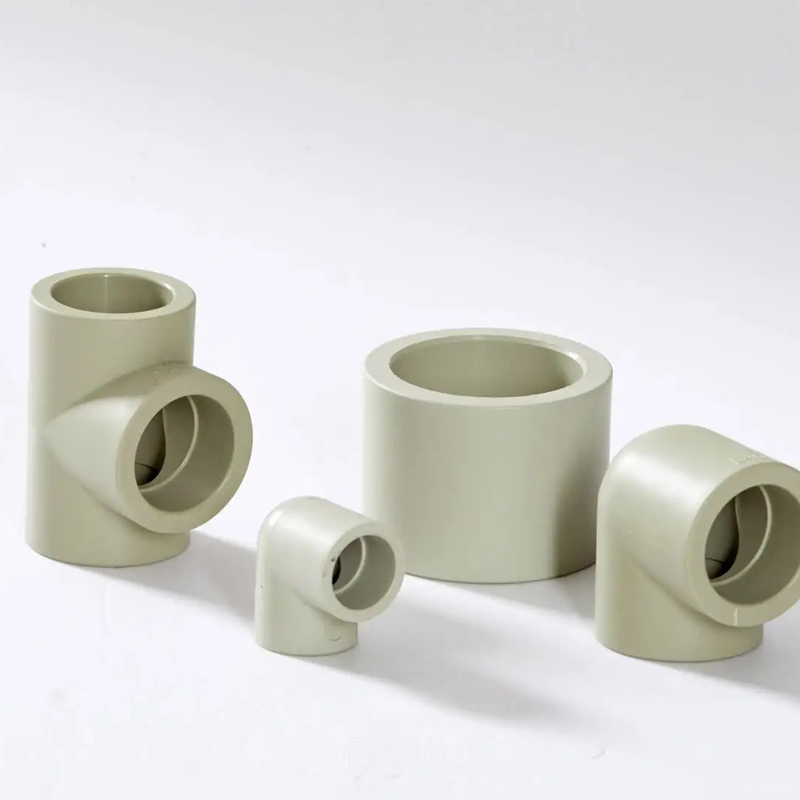
PPR pipe derives its properties from polypropylene random copolymer, composed of propylene monomers with randomly distributed ethylene comonomers. This random copolymerization disrupts the crystallinity of the polymer, enhancing its impact strength and flexibility, crucial for pipe applications. Raw material selection involves specifying a grade with appropriate Melt Flow Index (MFI) – typically between 1.8 and 3.5 g/10min (230°C/2.16 kg) for 32mm pipe – influencing processability. The manufacturing process typically begins with the extrusion of PPR granules. Granules are fed into a single-screw extruder, where they are heated, melted, and homogenized. Extrusion temperature profiles are critical, generally ranging from 180°C to 240°C, with precise control in the die head to ensure dimensional accuracy. The extruded tube is then cooled via water baths, calibrated to maintain the 32mm outer diameter and specified wall thickness, and subsequently cut to length. Socket fusion and electrofusion welding are the primary joining methods. Socket fusion involves heating both the pipe and fitting, then inserting the pipe into the fitting until fusion occurs. Electrofusion uses an electrical current to melt the pipe and fitting simultaneously. Key parameter control during manufacturing includes melt temperature, extrusion speed, cooling rate, and dimensional tolerances. Quality control typically involves hydrostatic pressure testing (typically 1.5 times the maximum operating pressure for a specified duration), impact strength testing (Charpy notched impact), and dimensional verification. Degradation of the polymer during processing can occur if temperatures are excessively high or residence times are prolonged, leading to reduced mechanical properties.
Performance & Engineering
The performance of 32mm PPR pipe is dictated by its mechanical strength, thermal stability, and chemical resistance. Hydrostatic pressure testing, as per ISO 1167, confirms the pipe’s ability to withstand internal pressure without failure. A typical 32mm PPR pipe can withstand sustained pressures exceeding 1.6 MPa at 20°C. Force analysis considers hoop stress (σ = PD/2t, where P is pressure, D is diameter, and t is wall thickness) and longitudinal stress. Long-term creep resistance is a critical design consideration, especially for hot water applications. At elevated temperatures (e.g., 60°C), creep deformation can occur over extended periods, leading to dimensional changes and potential leaks. Finite Element Analysis (FEA) is often used to model stress distribution and predict long-term behavior. Environmental resistance is generally good, with PPR being resistant to many common chemicals. However, prolonged exposure to strong oxidizing agents can cause degradation. Compliance requirements depend on the application. For potable water systems, materials must meet regulations regarding leachables and biocompatibility (e.g., NSF/ANSI 61). For industrial applications, compatibility with the conveyed fluid must be verified. Weld joint integrity is paramount. Proper welding parameters (temperature, time, pressure) must be maintained to achieve a weld strength equivalent to or exceeding that of the base pipe material. Non-destructive testing methods, such as visual inspection and ultrasonic testing, can be employed to assess weld quality. Thermal expansion is also a key consideration; PPR has a coefficient of thermal expansion of approximately 0.15 mm/m°C, necessitating expansion loops or flexible connections to accommodate dimensional changes due to temperature fluctuations.
Technical Specifications
| Parameter | Unit | Typical Value (32mm PPR Pipe) | Test Standard |
|---|---|---|---|
| Outer Diameter | mm | 32.4 | ISO 1587-1 |
| Wall Thickness | mm | 2.0 - 4.2 (depending on pressure rating) | ISO 1587-1 |
| Hydrostatic Pressure (20°C) | MPa | ≥ 1.6 | ISO 1167 |
| Burst Pressure (20°C) | MPa | ≥ 4.8 | ISO 1167 |
| Melt Flow Index (MFI) | g/10min | 1.8 - 3.5 | ISO 1133 (230°C/2.16 kg) |
| Charpy Notched Impact Strength (20°C) | kJ/m² | ≥ 400 | ISO 148-1 |
Failure Mode & Maintenance
Common failure modes in 32mm PPR pipe include fatigue cracking, particularly at weld joints subjected to cyclic pressure and temperature fluctuations. Creep rupture can occur over extended periods at elevated temperatures, especially if the pipe is operating near its maximum service temperature. Slow Crack Growth (SCG) can be initiated by residual stresses and exposure to certain chemicals. Oxidation can lead to embrittlement and reduced mechanical properties over long exposure times, though PPR is generally resistant. Delamination can occur if the weld joint is improperly formed, creating voids or areas of insufficient fusion. Maintenance practices should include periodic visual inspections for cracks, leaks, or deformation. Weld joints should be carefully examined for signs of degradation. Hydrostatic testing can be conducted periodically to assess the integrity of the system. Avoid exposing PPR pipe to direct sunlight for prolonged periods, as UV radiation can cause degradation. If a leak is detected, the affected section of pipe should be replaced. When replacing pipe, ensure proper welding procedures are followed. Preventative measures include using high-quality fittings, ensuring proper welding parameters, and avoiding excessive mechanical stress during installation. Implementing a regular inspection schedule and maintaining records of repairs are vital for long-term reliability. Addressing water hammer (pressure surges) through the use of pressure relief valves and surge suppressors is essential to prevent fatigue failures.
Industry FAQ
Q: What is the maximum operating temperature for 32mm PPR pipe?
A: The maximum continuous operating temperature for typical 32mm PPR pipe is 70°C. Short-term temperature spikes up to 95°C may be tolerated, but prolonged exposure above 70°C can accelerate creep and reduce the pipe's lifespan. Refer to the manufacturer’s specifications for precise limits.
Q: How does the wall thickness of 32mm PPR pipe affect its pressure rating?
A: Increasing the wall thickness directly increases the pipe's ability to withstand internal pressure. Thicker walls reduce hoop stress for a given pressure, resulting in a higher pressure rating. Pipes are classified according to pressure ratings (e.g., PN10, PN16, PN20), with higher PN values corresponding to thicker walls and higher pressure capabilities.
Q: What chemicals are incompatible with 32mm PPR pipe?
A: While PPR exhibits good chemical resistance, it is susceptible to degradation from strong oxidizing agents like concentrated nitric acid, and certain chlorinated solvents. Long term exposure to fuels, oils, and some aggressive industrial chemicals should also be avoided. Refer to chemical compatibility charts for specific fluids.
Q: What are the critical factors for achieving a reliable weld joint in 32mm PPR pipe?
A: Ensuring proper heating temperatures, welding time, and applied pressure are critical. The pipe and fitting must be heated to the correct temperature, then firmly pressed together for the appropriate duration to achieve complete fusion. Using calibrated welding tools and adhering to manufacturer’s recommendations are essential.
Q: How does creep affect the long-term performance of PPR pipe, and what can be done to mitigate it?
A: Creep is the time-dependent deformation of the pipe under sustained stress, particularly at elevated temperatures. It can lead to dimensional changes and potential leaks. Mitigating creep involves operating the pipe within its recommended temperature limits, avoiding excessive stresses, and selecting a PPR grade with enhanced creep resistance.
Conclusion
The 32mm PPR pipe represents a versatile and cost-effective solution for a wide range of fluid conveyance applications. Its performance characteristics are intrinsically linked to the properties of the polypropylene random copolymer used in its manufacture, requiring meticulous control of the extrusion process and welding parameters. Understanding the potential failure modes, such as fatigue cracking and creep rupture, alongside the implementation of preventative maintenance practices, is paramount for ensuring long-term system reliability and minimizing the risk of costly failures.
The continued development of PPR materials with improved creep resistance and enhanced weldability will further solidify its position in the plumbing and industrial fluid handling sectors. Adherence to relevant international standards and diligent quality control throughout the manufacturing process remain critical for maintaining the integrity and longevity of PPR pipe systems. Properly installed and maintained, 32mm PPR pipe offers a durable and dependable solution for diverse applications.
-
DN25 HDPE Compression Fitting-HORON INTERNATIONAL|Reliable Irrigation Solutions
NewsFeb.11,2026
-
china hdpe pipe for drip irrigation Performance Analysis
News2026-05-04
-
china hdpe pipe for agriculture Performance Analysis
News2026-05-04
-
china hdpe sprinkler pipe price Performance Analysis
News2026-05-04
-
china 2 ppr pipe Performance Analysis
News2026-05-04
-
china pvc pipe price per foot Performance Analysis
News2026-05-04
-
china long pvc pipe Performance Analysis
News2026-05-03
-
china plumbing kitchen sink water lines Performance Analysis
News2026-05-03
-
china hdpe drip irrigation Performance Analysis
News2026-05-03
-
china hot water ppr pipe Performance Analysis
News2026-05-03
-
china ppr plumbing Technical Analysis
News2026-05-03
-
china ppr pipe supplier Manufacturing Analysis
News2026-05-02
-
china 50mm ppr pipe Technical Analysis
News2026-05-02
-
china hdpe drip pipe Performance Analysis
News2026-05-02
-
china hdpe pipe 63mm price Performance Analysis
News2026-05-02
-
china hdpe pipe for potable water Performance Engineering
News2026-05-02