

Feb . 11, 2026 00:01 Back to list
ppr 14 pipe product Performance Analysis
Introduction
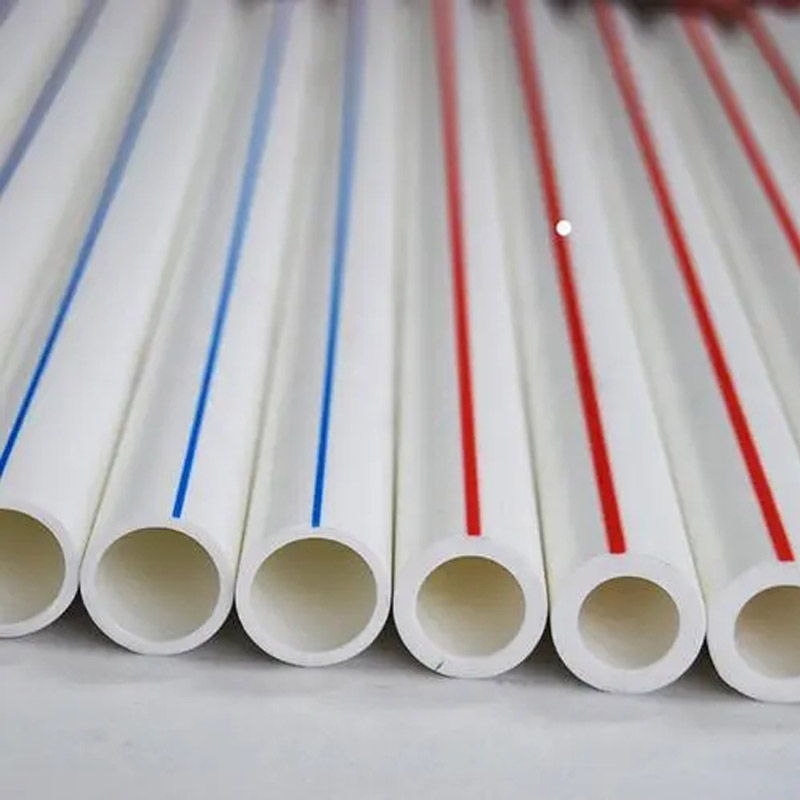
Polypropylene Random (PPR) pipe, specifically the 14 mm variant, represents a significant advancement in fluid transport systems across diverse industrial and residential applications. Positioned within the broader polymer piping landscape – competing with PVC, CPVC, and metal alternatives – PPR 14 pipe distinguishes itself through a unique combination of properties: high temperature resistance, chemical inertness, and a smooth inner surface minimizing friction loss. Its core function is the conveyance of potable water, industrial liquids, and heating/cooling systems. The '14' designation refers to the nominal outer diameter in millimeters. Understanding the nuances of its material composition, manufacturing processes, and performance characteristics is critical for ensuring long-term system reliability and adherence to relevant industry standards. A key industry pain point is the improper installation and selection of PPR pipe for applications exceeding its operational limits, leading to premature failure and costly repairs.
Material Science & Manufacturing
PPR 14 pipe is manufactured from polypropylene random copolymer. The 'random' designation signifies the random distribution of comonomers (typically ethylene) within the polypropylene chain. This randomization disrupts the polymer's crystallinity, resulting in enhanced flexibility, impact resistance, and weldability compared to homopolymer polypropylene. The raw material, polypropylene resin, is derived from propylene monomer produced via catalytic cracking of crude oil. Key physical properties include a density of approximately 0.905 g/cm³, a glass transition temperature around 0°C, and a melt flow index (MFI) tailored to optimize processing. Manufacturing typically involves extrusion. Polypropylene granules are fed into an extruder, heated to a molten state, and forced through a circular die to form the pipe. Critical parameters during extrusion include barrel temperature profiling (typically ranging from 180°C to 240°C), screw speed, and die pressure. Cooling is achieved via water baths, ensuring dimensional stability. Socket fusion and electrofusion welding are the primary joining techniques, requiring precise temperature control to achieve homogeneous, leak-proof joints. Quality control measures include hydrostatic pressure testing, impact resistance testing, and dimensional checks according to international standards.
Performance & Engineering
PPR 14 pipe exhibits excellent performance characteristics crucial for fluid transport applications. Its tensile strength, typically around 20-30 MPa, provides sufficient mechanical robustness for withstanding internal pressures and external loads. The pipe’s pressure rating is directly correlated to its wall thickness; standard SDR (Standard Dimension Ratio) values, such as SDR 6 and SDR 11, dictate the pressure-bearing capacity at different temperatures. A core engineering consideration is thermal expansion and contraction. PPR exhibits a relatively high coefficient of thermal expansion (approximately 1.5 x 10⁻⁴ /°C). This necessitates the inclusion of expansion loops or flexible connectors within the piping system to prevent stress build-up and potential cracking due to temperature fluctuations. Chemical resistance is another key performance attribute. PPR is largely inert to a wide range of chemicals, including acids, bases, and salts, making it suitable for various industrial applications. However, it exhibits limited resistance to certain organic solvents. Compliance requirements, specifically relating to potable water systems, necessitate adherence to standards ensuring the absence of harmful leachates. Furthermore, the smooth internal surface minimizes frictional losses, reducing pumping energy requirements and improving system efficiency. Force analysis under hydrostatic pressure requires consideration of hoop stress and longitudinal stress, calculated using established formulas (e.g., Barlow’s formula).
Technical Specifications
| Parameter | Value (Typical) | Test Standard | Unit |
|---|---|---|---|
| Nominal Diameter | 14 | ISO 15876 | mm |
| Standard Dimension Ratio (SDR) | 6, 11 | DIN 8077 | - |
| Pressure Rating (at 20°C) – SDR 6 | 16 | ISO 15876 | bar |
| Pressure Rating (at 20°C) – SDR 11 | 10 | ISO 15876 | bar |
| Tensile Strength | 25 | ISO 527 | MPa |
| Elongation at Break | 300 | ISO 527 | % |
Failure Mode & Maintenance
PPR 14 pipe, while durable, is susceptible to several failure modes. Fatigue cracking can occur due to repeated pressure fluctuations or mechanical stress, particularly at joints. This is exacerbated by improper installation or excessive stress during handling. Delamination, a separation of layers within the pipe wall, can result from inadequate welding parameters or material defects. Chemical degradation, though less common, can occur upon prolonged exposure to incompatible solvents. Oxidation, particularly at elevated temperatures, can lead to embrittlement and reduced mechanical properties. A critical failure mode is ‘slow crack growth’ (SCG), initiated by stress concentrations and accelerated by the presence of certain chemicals or contaminants. Maintenance primarily focuses on preventative measures. Regular visual inspections should identify any signs of cracking, discoloration, or leakage. Proper support and anchoring of the piping system are crucial to prevent excessive stress. Joints should be inspected periodically for leaks. If repairs are necessary, only qualified personnel should perform socket fusion or electrofusion welding, adhering strictly to manufacturer’s recommendations. Avoid using abrasive cleaning agents or solvents that could damage the pipe material. When dealing with leaks, depressurize the system before attempting any repairs. Periodic hydrostatic testing can help identify potential weaknesses before they escalate into major failures.
Industry FAQ
Q: What is the maximum operating temperature for PPR 14 pipe, and how does this affect pressure ratings?
A: The maximum continuous operating temperature for standard PPR 14 pipe is typically 70°C. However, short-term temperature spikes up to 95°C are permissible. Crucially, pressure ratings decrease with increasing temperature. For example, a pipe rated for 16 bar at 20°C may only be rated for 8 bar at 70°C. Refer to the manufacturer’s derating tables for precise values.
Q: Can PPR 14 pipe be used for compressed air systems?
A: Generally, no. PPR is not recommended for compressed air due to its susceptibility to permeation and potential for brittle failure under pressure cycling. Compressed air requires materials with significantly higher impact resistance and lower permeability, such as polyethylene or metal.
Q: What is the impact of water quality on the long-term performance of PPR 14 pipe?
A: Highly acidic or alkaline water, or water with high mineral content, can potentially accelerate degradation. While PPR is generally resistant, prolonged exposure can lead to leaching or embrittlement. Water treatment to maintain neutral pH and control mineral content is recommended.
Q: How does the choice of welding technique (socket fusion vs. electrofusion) impact joint integrity?
A: Electrofusion welding generally creates stronger and more reliable joints compared to socket fusion. Electrofusion utilizes precise temperature and pressure control, resulting in a more homogeneous weld. However, electrofusion requires specialized equipment and operator training. Socket fusion is simpler but demands careful adherence to heating times and insertion depths.
Q: What are the common causes of leakage at PPR pipe joints?
A: Common causes include insufficient heating during socket fusion, improper alignment of pipe and fitting, contamination of the welding surface, and excessive stress on the joint. Ensuring clean surfaces, correct heating parameters, and proper support are crucial for leak prevention.
Conclusion
PPR 14 pipe offers a compelling solution for a wide range of fluid transport applications, characterized by its balance of mechanical strength, chemical resistance, and ease of installation. However, realizing its full potential necessitates a thorough understanding of its material properties, manufacturing nuances, and potential failure modes. Proper design, installation, and maintenance – informed by adherence to established industry standards – are paramount to ensuring long-term system reliability and preventing premature failures.
Looking ahead, advancements in PPR formulation, such as the incorporation of UV stabilizers and enhanced impact modifiers, will further broaden its application scope. Moreover, the development of intelligent piping systems incorporating sensors for leak detection and condition monitoring will enhance operational efficiency and reduce maintenance costs. Continued research into the long-term effects of various fluid chemistries on PPR pipe will also be essential.
-
DN25 HDPE Compression Fitting-HORON INTERNATIONAL|Reliable Irrigation Solutions
NewsFeb.11,2026
-
china 3 4 ppr pipe in mm Performance Analysis
News2026-04-28
-
china hdpe couplings Performance Analysis
News2026-04-28
-
china 75mm pvc pipe Performance Analysis
News2026-04-28
-
china pvc pipe price per meter Technical Analysis
News2026-04-28
-
china hdpe pipe for drinking water Performance Analysis
News2026-04-28
-
china 24 inch diameter pvc pipe price Performance Engineering
News2026-04-27
-
china 4 hdpe drain pipe Performance Analysis
News2026-04-27
-
china 12 hdpe pipe Performance Analysis
News2026-04-27
-
china hdpe reducing coupling Performance Analysis
News2026-04-27
-
china hdpe corrugated sewer pipe Performance Analysis
News2026-04-27
-
china pvc pipe cost per foot Technical Analysis
News2026-04-26
-
china double walled corrugated pipe Performance Analysis
News2026-04-26
-
china hdpe sprinkler pipe price list Performance Analysis
News2026-04-26
-
china water pipe in kitchen Performance Analysis
News2026-04-26
-
china hdpe to pvc pipe coupling Performance Analysis
News2026-04-26