

Feb . 11, 2026 00:01 Back to list
hdpe sprinkler pipe fittings manufacturer Performance Engineering
Introduction
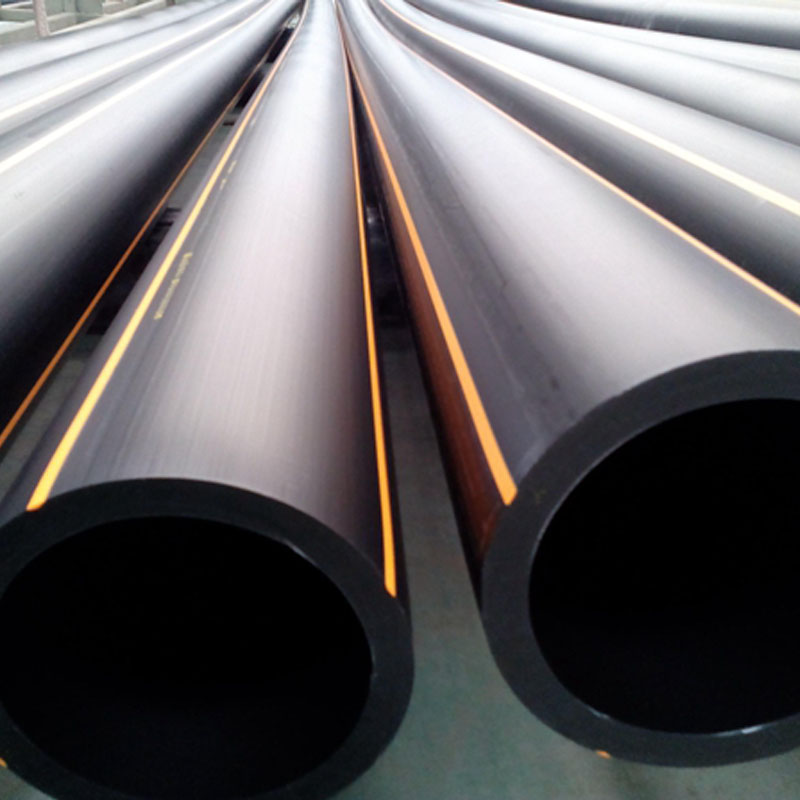
High-Density Polyethylene (HDPE) sprinkler pipe fittings are critical components in irrigation systems, particularly in agricultural, commercial landscaping, and residential applications. Positioned within the broader fluid conveyance industry, these fittings connect HDPE sprinkler pipes to create a network for efficient water distribution. They represent a significant advancement over traditional metallic fittings, offering advantages in corrosion resistance, weight, and installation ease. Core performance characteristics center around pressure rating, flow capacity, UV resistance, and long-term durability. The increasing demand for water conservation and efficient irrigation practices drives the growing market for HDPE sprinkler pipe fittings, placing an emphasis on fittings that minimize leaks, maintain consistent pressure, and withstand environmental stressors. This guide provides an in-depth technical overview of HDPE sprinkler pipe fittings, covering material science, manufacturing, performance engineering, failure modes, and relevant industry standards.
Material Science & Manufacturing
HDPE sprinkler pipe fittings are predominantly manufactured from high-density polyethylene resin, typically grades meeting or exceeding ASTM D3350 standards. The resin’s key physical properties include a density ranging from 0.93 to 0.97 g/cm³, a tensile strength between 20-30 MPa, and a relatively high elongation at break (typically >500%). Crucially, HDPE exhibits excellent chemical resistance to commonly used irrigation chemicals like fertilizers and pesticides. The manufacturing process commonly employed is injection molding. This involves melting HDPE pellets and injecting them into a mold cavity shaped to the desired fitting configuration (elbows, tees, couplings, etc.). Critical parameters during injection molding include melt temperature (180-220°C), mold temperature (30-50°C), injection pressure (70-100 MPa), and cooling rate. Proper control of these parameters is essential to prevent warping, shrinkage, and internal stresses within the fitting. Extrusion is also used for producing larger diameter fittings. Following molding, fittings undergo quality control checks for dimensional accuracy, hydrostatic pressure testing (to verify leak-proof integrity), and visual inspection for defects. The molecular weight distribution of the HDPE resin significantly impacts the fitting's long-term creep resistance and resistance to slow crack growth, influencing its service life. Additives like UV stabilizers (carbon black or hindered amine light stabilizers - HALS) are incorporated into the resin to enhance resistance to degradation from sunlight exposure. Colorants are added for identification purposes and aesthetic considerations, but should not compromise the HDPE’s core properties.
Performance & Engineering
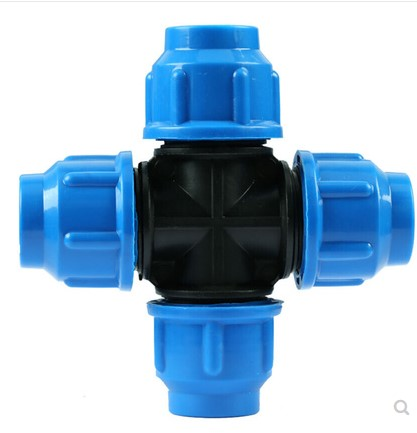
The performance of HDPE sprinkler pipe fittings is heavily influenced by their ability to withstand hydrostatic pressure and maintain structural integrity under varying environmental conditions. Force analysis reveals that fittings are subjected to both internal pressure from the water flow and external loads due to soil cover, pipe weight, and potential impact. The burst pressure of a fitting is typically several times higher than the operating pressure, providing a significant safety factor. Environmental resistance is critical. HDPE is inherently resistant to many chemicals, but prolonged exposure to strong oxidizers or certain solvents can cause degradation. UV exposure can lead to embrittlement, necessitating the use of UV stabilizers. Temperature fluctuations cause expansion and contraction of the HDPE material. This is accounted for in the fitting design through flexible joints or appropriate allowance for thermal movement. Compliance requirements are dictated by regional and national standards, including NSF/ANSI 61 for potable water safety and various fire safety regulations depending on the application. The specific functional implementation of a fitting (e.g., threaded connection, solvent weld, compression fitting) influences its installation procedures and long-term reliability. Threaded connections require proper thread sealing to prevent leaks, while solvent weld connections rely on the chemical bonding of HDPE surfaces to create a monolithic joint. The impact resistance of HDPE fittings, measured by methods like the Charpy impact test, is another key performance indicator, particularly in applications where accidental damage is a concern. Creep resistance, or the tendency to deform under sustained load, is also a significant factor in long-term performance, particularly for fittings subjected to continuous pressure.
Technical Specifications
| Parameter | Unit | Typical Value | Testing Standard |
|---|---|---|---|
| Material | - | HDPE (ASTM D3350) | ASTM D3350 |
| Pressure Rating | PSI | 100-200 | ASTM D1597 |
| Operating Temperature Range | °C | -40 to 60 | - |
| UV Resistance | Hours (to 50% tensile strength loss) | >1000 | ASTM G154 |
| Tensile Strength | MPa | 20-30 | ASTM D638 |
| Elongation at Break | % | >500 | ASTM D638 |
Failure Mode & Maintenance
HDPE sprinkler pipe fittings, while durable, are susceptible to several failure modes. Slow Crack Growth (SCG) is a primary concern, particularly in fittings exposed to sustained tensile stress and aggressive chemicals. SCG initiates at stress concentrators (e.g., mold parting lines, scratches) and propagates slowly over time, leading to brittle failure. Another common failure mode is fatigue cracking, caused by repeated pressure cycles or vibrations. UV degradation can cause embrittlement and cracking, especially in fittings lacking adequate UV stabilization. Joint failures can occur due to improper installation (e.g., insufficient solvent welding, inadequate thread sealing) or material incompatibility. Impact damage, from accidental strikes, can cause cracking or complete rupture. Maintenance involves regular visual inspections for cracks, leaks, or signs of degradation. Periodic hydrostatic pressure testing can help identify fittings with reduced pressure capacity. For solvent-welded joints, proper cleaning and priming of surfaces are essential. If cracks are detected, the fitting should be replaced immediately. Preventative measures include protecting fittings from direct sunlight exposure, avoiding excessive tensile stress during installation, and using compatible materials for all connections. Proper backfilling procedures during installation are also crucial to prevent mechanical damage to buried fittings. The use of surge suppressors in irrigation systems can minimize pressure fluctuations and reduce the risk of fatigue cracking.
Industry FAQ
Q: What is the impact of soil corrosivity on the long-term performance of HDPE sprinkler pipe fittings?
A: While HDPE is inherently corrosion-resistant, highly corrosive soils can indirectly affect the fittings. Corrosive soils can accelerate the degradation of surrounding metallic components (e.g., sprinkler heads, valves) and potentially create stress concentrations on the HDPE fittings. Additionally, certain soil compositions can contribute to creep deformation over time. Proper bedding and backfilling procedures, including the use of inert materials around the fittings, can mitigate these effects.
Q: How does the choice of fitting connection method (solvent weld vs. threaded) affect the overall system reliability?
A: Solvent welding generally provides a stronger and more reliable joint compared to threaded connections, as it creates a homogenous bond between the fitting and the pipe. However, successful solvent welding requires careful surface preparation and adherence to proper procedures. Threaded connections are easier to install and disassemble, but are more susceptible to leaks if not properly sealed with thread sealant. The choice depends on the specific application and installation expertise.
Q: What is the significance of the PEAK resistance when selecting HDPE fittings for agricultural use with fertilizers?
A: PEAK resistance refers to a fitting’s ability to withstand prolonged exposure to chemical environments without experiencing stress cracking. Agricultural fertilizers often contain aggressive chemicals that can induce SCG in HDPE. Fittings with high PEAK resistance, as determined by standardized testing, are recommended for such applications to ensure long-term reliability.
Q: How do I determine the appropriate pressure rating for HDPE fittings in a specific irrigation system?
A: The pressure rating of the fittings must exceed the maximum operating pressure of the irrigation system, including any surge pressures. Consider the pump capacity, elevation changes, and the number of sprinkler heads served by the system. A safety factor of at least 2:1 is recommended to account for pressure fluctuations and potential water hammer effects.
Q: Are there any specific considerations for installing HDPE fittings in cold climates?
A: In cold climates, HDPE fittings can become brittle at low temperatures. Proper installation techniques, such as allowing for thermal expansion and contraction, are crucial. Avoid over-tightening threaded connections, as this can induce stress and increase the risk of cracking. Burying the fittings below the frost line can provide additional protection.
Conclusion
HDPE sprinkler pipe fittings represent a robust and reliable solution for modern irrigation systems. Their inherent corrosion resistance, ease of installation, and cost-effectiveness have made them the preferred choice over traditional metallic fittings in a wide range of applications. Understanding the material science, manufacturing processes, and performance characteristics of these fittings is critical for ensuring long-term system integrity and maximizing water use efficiency.
Future advancements in HDPE technology will likely focus on enhancing UV resistance, improving creep resistance, and developing new fitting designs that minimize stress concentrations. Continued adherence to relevant industry standards and best practices will be essential for maintaining the high levels of performance and reliability expected from HDPE sprinkler pipe fittings. Selecting the appropriate fitting for the specific application, coupled with proper installation and maintenance, will result in a long-lasting and efficient irrigation system.
-
DN25 HDPE Compression Fitting-HORON INTERNATIONAL|Reliable Irrigation Solutions
NewsFeb.11,2026
-
discount ppr for hot water Performance Analysis
News2026-06-25
-
discount bulk pvc pipe Material Performance
News2026-06-25
-
discount pvc pipes price list Material Science and Manufacturing
News2026-06-25
-
discount 20 ft pvc pipe Performance Analysis
News2026-06-25
-
discount ppr cold water pipe Performance Analysis
News2026-06-25
-
discount 24 inch diameter pvc pipe price Performance Analysis
News2026-06-24
-
discount 4 hdpe drain pipe Performance Analysis
News2026-06-24
-
discount 12 hdpe pipe Performance Analysis
News2026-06-24
-
discount hdpe reducing coupling Performance Analysis
News2026-06-24
-
discount hdpe corrugated sewer pipe Performance Engineering
News2026-06-24
-
discount pvc pipe cost per foot Material and Performance Analysis
News2026-06-23
-
discount double walled corrugated pipe Performance Analysis
News2026-06-23
-
discount hdpe sprinkler pipe price list Performance and Engineering
News2026-06-23
-
discount water pipe in kitchen Technical Analysis
News2026-06-23
-
discount hdpe to pvc pipe coupling Performance Engineering
News2026-06-23