

Feb . 11, 2026 00:01 Back to list
dn500 hdpe double wall corrugated pipe for sewage drain factory Technical Specifications and Perform
Introduction
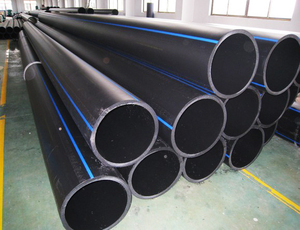
DN500 High-Density Polyethylene (HDPE) double-wall corrugated pipe represents a significant advancement in subsurface drainage infrastructure. This pipe system is specifically engineered for sewage drain applications, addressing critical needs for efficient, durable, and environmentally sound wastewater management. Positioned within the broader civil engineering and construction materials supply chain, DN500 HDPE corrugated pipe offers a compelling alternative to traditional materials like concrete, PVC, and steel. Its core performance characteristics – encompassing high ring stiffness, excellent flow capacity, resistance to corrosion, and lightweight installation – make it particularly well-suited for gravity-fed sewer systems, stormwater management, and industrial effluent discharge. A key pain point in the industry is the longevity and resistance to root intrusion of drainage systems. DN500 HDPE pipe directly addresses this through its smooth interior, minimizing blockage and ensuring consistent flow, ultimately reducing maintenance frequency and associated costs. This guide provides a comprehensive technical overview, detailing material science, manufacturing processes, performance engineering, specifications, failure modes, and industry standards associated with this critical infrastructure component.
Material Science & Manufacturing
The foundation of DN500 HDPE double-wall corrugated pipe lies in the properties of high-density polyethylene (HDPE). HDPE is a thermoplastic polymer known for its high strength-to-density ratio, chemical inertness, and excellent resistance to environmental stress cracking. Raw material selection is paramount; typically, HDPE resin conforming to ASTM D3350 or equivalent international standards (ISO 4455, GB/T 7553) is employed. Key properties include a density ranging from 0.93 to 0.97 g/cm³, a tensile strength of 20-30 MPa, and a Rockwell hardness between 55 and 65. The manufacturing process begins with HDPE resin being melted and extruded through a die to form two layers: a smooth inner layer and a corrugated outer layer. Critical process parameters include extrusion temperature (typically 180-220°C), die speed, and cooling rate. The corrugated profile is formed using specialized corrugating rollers, and the two layers are immediately joined using co-extrusion techniques. Precise control of the corrugation geometry (height, pitch, and wall thickness) is essential for achieving the desired ring stiffness and structural integrity. Post-extrusion, the pipe undergoes rigorous quality control checks, including dimensional accuracy, hydrostatic pressure testing (ASTM F894), and impact resistance testing (ASTM F2412). The weld seam between layers is a critical area, and non-destructive testing methods like ultrasonic inspection are frequently employed to ensure weld integrity. The pipe’s ability to withstand external loads is heavily influenced by the density of the HDPE used and the geometry of the corrugated structure.
Performance & Engineering
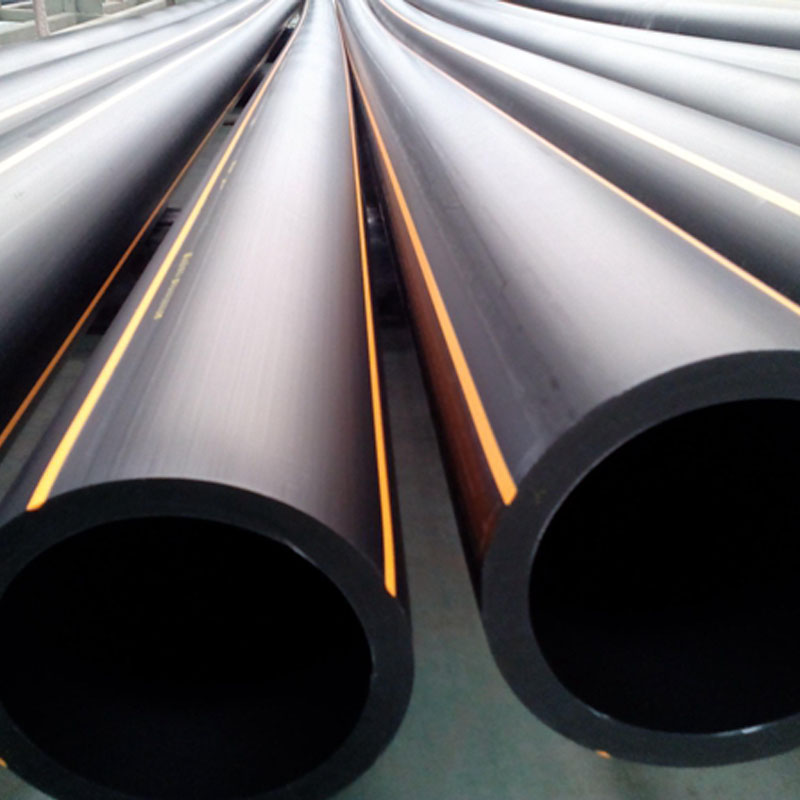
The performance of DN500 HDPE corrugated pipe is dictated by its structural integrity, hydraulic capacity, and long-term durability in the harsh subsurface environment. A critical engineering consideration is the pipe’s ability to withstand external loads – soil overburden, traffic loads, and hydrostatic pressure. This is quantified by the pipe’s Ring Stiffness, measured in PSI or kPa, and determined by a deflection test (ASTM D2412). Higher ring stiffness values indicate greater resistance to deformation. Force analysis, utilizing finite element modeling (FEM), is routinely employed during design to predict pipe deflection under various loading scenarios. Hydraulic performance is assessed through flow capacity calculations, considering the Manning’s roughness coefficient for HDPE (typically 0.011-0.015), pipe diameter, and slope. The smooth inner surface of the HDPE pipe minimizes friction loss, enhancing flow efficiency. Long-term durability is a paramount concern. HDPE exhibits excellent resistance to most chemicals commonly found in sewage and stormwater, but prolonged exposure to specific compounds (e.g., concentrated solvents) should be avoided. Environmental factors, such as UV radiation and temperature fluctuations, can also impact performance. UV stabilizers are typically incorporated into the HDPE resin to mitigate degradation from sunlight exposure. Compliance with relevant standards, such as ASTM F894 for pipe stiffness and ASTM D3212 for joint tightness, is essential to ensure acceptable performance. The pipe’s performance under cyclical loading (fatigue) must also be considered, particularly in applications subject to heavy traffic or seismic activity.
Technical Specifications
| Parameter | Units | Specification (DN500) | Test Method |
|---|---|---|---|
| Nominal Diameter | mm | 500 | Dimensional Measurement |
| Ring Stiffness | PSI | ≥ 60 | ASTM D2412 |
| Hydraulic Conductivity | m³/s/m² | Typically > 0.001 | Calculated based on Manning’s Equation |
| Minimum Tensile Strength | MPa | ≥ 20 | ASTM D3350 |
| Longitudinal Reversion | % | ≤ 2.0 | ASTM F894 |
| Joint Leakage | L/m | ≤ 0.1 | ASTM D3212 |
Failure Mode & Maintenance
While DN500 HDPE corrugated pipe offers exceptional durability, several potential failure modes must be considered. One common issue is ovalation, or deformation of the pipe cross-section, typically caused by excessive external loads or improper installation. This can reduce flow capacity and increase the risk of joint failure. Another failure mode is cracking, which can occur due to stress concentration at defects in the pipe wall or at joints. Environmental Stress Cracking (ESC) can also occur, especially in the presence of aggressive chemicals. Root intrusion is a significant concern, although the smooth inner surface of HDPE pipe mitigates this compared to concrete. Corrosion is not a concern with HDPE, but degradation due to UV exposure can occur if the pipe is not adequately protected. Maintenance typically involves periodic inspection using CCTV cameras to identify blockages, deformation, or joint leakage. Jetting and rodding are common methods for clearing blockages. For minor deformation, localized soil support can be added to improve stability. If significant cracking or joint failure is detected, localized repair or pipe replacement may be necessary. Preventive maintenance, such as ensuring proper backfill compaction and avoiding the use of harsh chemicals, can significantly extend the service life of the pipe. Regular inspection and proactive maintenance are crucial for minimizing long-term costs and ensuring the reliable performance of the drainage system. Understanding the soil conditions is paramount to preventing failures related to pipe deflection and instability.
Industry FAQ
Q: What is the expected service life of DN500 HDPE corrugated pipe in a typical sewage application?
A: Under normal operating conditions, DN500 HDPE corrugated pipe is expected to have a service life exceeding 50 years. However, this depends on factors such as soil conditions, loading intensity, chemical exposure, and maintenance practices. Proper installation and adherence to recommended loading limits are critical for maximizing service life.
Q: How does DN500 HDPE corrugated pipe compare to concrete pipe in terms of installation cost and time?
A: HDPE pipe is significantly lighter than concrete pipe, resulting in lower transportation costs and reduced installation time. The pipe sections are typically longer, requiring fewer joints, and can be installed using simpler equipment. This translates to lower labor costs and faster project completion.
Q: What level of chemical resistance does DN500 HDPE corrugated pipe offer?
A: HDPE exhibits excellent resistance to a wide range of chemicals commonly found in sewage and stormwater, including acids, alkalis, and salts. However, it is susceptible to degradation by strong oxidizing agents and certain solvents. A chemical compatibility assessment should be conducted if exposure to unusual chemical compounds is anticipated.
Q: What are the key considerations for backfilling around DN500 HDPE corrugated pipe?
A: Proper backfilling is crucial for providing adequate support and preventing deformation. Granular materials, such as sand or gravel, are recommended for backfilling within the pipe’s haunch zone. Compaction should be performed in layers, avoiding excessive compaction that could damage the pipe. Bedding requirements must be strictly adhered to.
Q: What is the impact of temperature fluctuations on the performance of DN500 HDPE corrugated pipe?
A: HDPE exhibits a relatively low coefficient of thermal expansion, minimizing dimensional changes due to temperature fluctuations. However, extreme temperature variations can affect the pipe’s flexibility and impact resistance. The pipe is designed to withstand typical temperature ranges encountered in subsurface environments.
Conclusion
DN500 HDPE double-wall corrugated pipe represents a robust and cost-effective solution for modern sewage drain infrastructure. Its inherent properties – high ring stiffness, chemical resistance, lightweight construction, and ease of installation – address key challenges faced by municipalities and engineers in designing and maintaining reliable drainage systems. The selection of appropriate HDPE resin, stringent quality control during manufacturing, and adherence to relevant industry standards are essential for ensuring long-term performance and minimizing the risk of failure.
Looking forward, continued innovation in HDPE resin technology and pipe manufacturing processes will further enhance the performance and sustainability of these systems. Emphasis on sustainable materials, reduced carbon footprint, and extended service life will be crucial for meeting the evolving demands of the infrastructure sector. Proper installation techniques, regular inspection, and proactive maintenance are paramount to maximizing the benefits of DN500 HDPE corrugated pipe and ensuring the long-term integrity of our critical drainage infrastructure.
-
DN25 HDPE Compression Fitting-HORON INTERNATIONAL|Reliable Irrigation Solutions
NewsFeb.11,2026
-
china 32mm ppr pipe price Performance Analysis
News2026-05-14
-
china hdpe pipe for sale Performance Analysis
News2026-05-14
-
china ppr pipe 32mm Performance Analysis
News2026-05-14
-
china pvc pipes Manufacturing and Performance Analysis
News2026-05-14
-
china hdpe n 12 corrugated dual wall pipe Performance Analysis
News2026-05-14
-
china hdpe corrugated pipe sizes Performance Analysis
News2026-05-13
-
china ppr pipe for hot and cold water Technical Overview
News2026-05-13
-
china 150mm pvc pipe Performance Analysis
News2026-05-13
-
china 60mm pvc pipe Performance Analysis
News2026-05-13
-
china 12 inch diameter pvc pipe Performance Analysis
News2026-05-13
-
china sprinkler pvc pipe Performance and Engineering
News2026-05-12
-
china ppr pipe 3 4 Performance Analysis
News2026-05-12
-
china hdpe sprinkler pipe Performance Analysis
News2026-05-12
-
china hdpe irrigation pipe fittings Performance Analysis
News2026-05-12
-
china whole sale pvc pipe Performance Analysis
News2026-05-12