

Feb . 11, 2026 00:01 Back to list
12 double wall corrugated pipe products Performance Analysis
Introduction
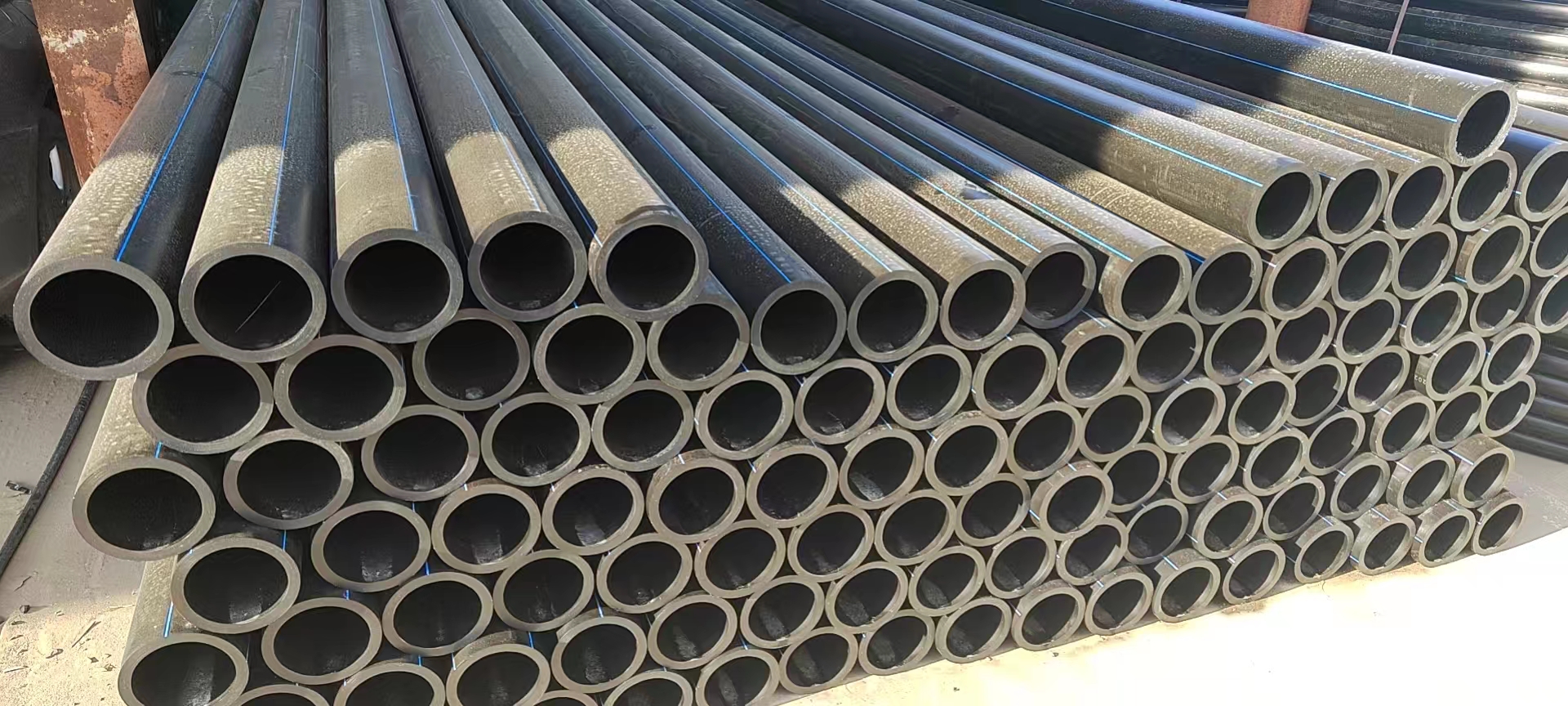
12” double wall corrugated pipe (DWCP) represents a significant advancement in subsurface drainage and infrastructure solutions. Positioned within the broader realm of stormwater management, culvert systems, and trenchless technology, DWCP provides a lightweight, high-strength alternative to traditional materials like reinforced concrete or corrugated metal pipe. Its primary function is the conveyance of water, wastewater, and other fluids in gravity-fed systems. Core performance characteristics center around load-bearing capacity (soil cover and live loads), long-term durability against corrosion and chemical attack, and hydraulic efficiency. DWCP’s growing adoption is driven by ease of installation, reduced lifecycle costs, and increasingly stringent environmental regulations regarding runoff management. This guide provides an in-depth analysis of the material science, manufacturing processes, engineering considerations, failure modes, and industry standards pertinent to 12” DWCP.
Material Science & Manufacturing
The composition of 12” DWCP typically involves a dual-layer construction. The inner layer, in direct contact with conveyed fluids, is generally manufactured from polyethylene (PE), specifically High-Density Polyethylene (HDPE) due to its superior chemical resistance and abrasion resistance. HDPE exhibits a density ranging from 0.941 to 0.965 g/cm³, a tensile strength of 20-30 MPa, and a relatively low coefficient of friction. The corrugated outer layer is commonly composed of polypropylene (PP), chosen for its high impact strength and rigidity. PP’s density falls between 0.90 and 0.91 g/cm³, with a flexural modulus of approximately 1.5-2.0 GPa.
Manufacturing begins with the extrusion of both PE and PP resins. The PE is extruded into a smooth, cylindrical liner. Simultaneously, the PP is extruded through a corrugated die, forming the characteristic ridged profile. Critical process parameters include extrusion temperature (maintained within a narrow range to optimize melt flow and prevent degradation), die geometry (influencing the corrugation profile and its pitch), and cooling rate (affecting the crystallinity and structural integrity of the PP layer). Following extrusion, the PE liner is inserted into the PP corrugations. A hot-ring welding process or similar bonding technique is employed to create a permanent, structurally sound connection between the layers. Quality control measures include dimensional checks (corrugation height, pitch, diameter), hydrostatic pressure testing to verify weld integrity, and material property verification (using techniques like Differential Scanning Calorimetry (DSC) to assess crystallinity and tensile testing to confirm mechanical properties). The selection of appropriate stabilizers and UV inhibitors during resin compounding is paramount for long-term performance, particularly in exposed applications.

Performance & Engineering
The performance of 12” DWCP is dictated by its ability to withstand applied loads and maintain hydraulic functionality. Load-bearing capacity is the primary engineering concern, considering both soil cover load and potential live loads (traffic, equipment). The corrugated structure provides exceptional ring stiffness, resisting deformation under compressive forces. The Manning’s equation governs hydraulic flow capacity, which is dependent on pipe diameter, slope, and the roughness coefficient of the inner PE liner (typically around 0.011-0.015). Finite Element Analysis (FEA) is routinely employed to model stress distribution under various loading conditions and optimize the corrugation profile for maximum load capacity.
Environmental resistance is also critical. PE and PP are generally resistant to a wide range of chemicals commonly found in stormwater and wastewater. However, prolonged exposure to aggressive solvents or highly concentrated acids can lead to degradation. UV exposure can cause embrittlement of the PP outer layer, necessitating the incorporation of UV stabilizers. Compliance requirements vary by region, but generally adhere to standards defined by ASTM (American Society for Testing and Materials) and AASHTO (American Association of State Highway and Transportation Officials). These standards specify minimum ring stiffness requirements, hydrostatic pressure testing protocols, and material property specifications. Proper installation, including adequate bedding and backfill compaction, is crucial for achieving the designed performance characteristics. Insufficient bedding can lead to localized stress concentrations and premature failure.
Technical Specifications
| Parameter | Units | Typical Value (12" DWCP) | Test Method |
|---|---|---|---|
| Nominal Diameter | inches | 12 | ASTM D2412 |
| Ring Stiffness | psi | 60-80 | ASTM D2412 |
| Minimum Tensile Strength (HDPE) | MPa | 25 | ASTM D638 |
| Hydrostatic Pressure Resistance | psi | 50 | ASTM F894 |
| Manning’s Roughness Coefficient | - | 0.012 | Calculated |
| Maximum Soil Cover | feet | 15 | Manufacturer’s Specification |
Failure Mode & Maintenance
Common failure modes for 12” DWCP include ovalation (distortion of the circular cross-section) due to inadequate bedding or excessive load, cracking of the PP outer layer due to impact damage or UV degradation, and joint failure (delamination) due to insufficient welding or material incompatibility. Fatigue cracking can occur under cyclic loading conditions, particularly at points of stress concentration. Chemical attack, although less frequent, can lead to material embrittlement and reduced mechanical properties. Blockage due to sediment accumulation or root intrusion can compromise hydraulic capacity and contribute to increased internal pressure, potentially leading to failure.
Preventative maintenance includes regular visual inspections to identify signs of ovalation, cracking, or joint separation. Maintaining proper vegetation control around pipe inlets and outlets can minimize the risk of root intrusion. Periodic flushing with high-pressure water can remove accumulated sediment. In the event of a detected failure, repair options range from localized patching (for minor cracks) to complete pipe replacement (for severe damage or joint failures). Proper installation techniques, adhering to manufacturer’s specifications and industry best practices, are the most effective means of mitigating failure risks. Furthermore, a comprehensive site investigation, including soil analysis and groundwater assessment, should be conducted prior to installation to ensure the selected DWCP material is compatible with the environmental conditions.
Industry FAQ
Q: What is the expected service life of 12" DWCP under typical soil conditions?
A: Under normal soil conditions, with proper installation and adequate UV protection (where exposed), 12” DWCP is generally expected to have a service life exceeding 50 years. However, this is dependent on factors such as soil corrosivity, groundwater chemistry, and the magnitude and frequency of applied loads.
Q: How does the corrugated profile affect the pipe’s structural performance?
A: The corrugated profile dramatically increases the pipe's ring stiffness, allowing it to withstand significant compressive loads from soil cover and live loads. The corrugations act as arches, distributing the load more effectively than a smooth-walled pipe of the same diameter and wall thickness.
Q: What are the advantages of using DWCP compared to concrete pipe?
A: DWCP offers several advantages over concrete pipe, including lower weight (easier handling and installation), reduced material costs, and superior resistance to corrosion. It also exhibits greater flexibility, making it more suitable for applications involving differential settlement or seismic activity.
Q: Is DWCP suitable for use in high-sulfate soil environments?
A: HDPE and PP are generally resistant to sulfate attack. However, the long-term effects of prolonged exposure to high sulfate concentrations should be carefully evaluated. Utilizing a pipe with enhanced chemical resistance properties and ensuring proper backfill selection can mitigate potential risks. Soil testing is critical.
Q: What bedding materials are recommended for DWCP installation?
A: Granular materials, such as gravel or crushed stone, are recommended for bedding DWCP. The bedding material should be well-compacted to provide uniform support and prevent localized stress concentrations. Geotextile fabric is often used to separate the bedding material from the surrounding soil and prevent migration of fines.
Conclusion
12” double wall corrugated pipe represents a robust and cost-effective solution for a diverse range of drainage and infrastructure applications. Its combination of lightweight construction, high strength-to-weight ratio, and resistance to chemical degradation positions it as a viable alternative to traditional materials. A thorough understanding of the material science, manufacturing processes, and engineering principles governing DWCP performance is crucial for successful implementation.
Future developments in DWCP technology are likely to focus on enhancing material properties (e.g., increasing UV resistance, improving impact strength), optimizing corrugation profiles for improved load capacity, and integrating smart sensors for real-time monitoring of pipe integrity. Continued adherence to industry standards and best practices will ensure the long-term reliability and sustainability of DWCP installations.
-
DN25 HDPE Compression Fitting-HORON INTERNATIONAL|Reliable Irrigation Solutions
NewsFeb.11,2026
-
discount ppr for hot water Performance Analysis
News2026-06-25
-
discount bulk pvc pipe Material Performance
News2026-06-25
-
discount pvc pipes price list Material Science and Manufacturing
News2026-06-25
-
discount 20 ft pvc pipe Performance Analysis
News2026-06-25
-
discount ppr cold water pipe Performance Analysis
News2026-06-25
-
discount 24 inch diameter pvc pipe price Performance Analysis
News2026-06-24
-
discount 4 hdpe drain pipe Performance Analysis
News2026-06-24
-
discount 12 hdpe pipe Performance Analysis
News2026-06-24
-
discount hdpe reducing coupling Performance Analysis
News2026-06-24
-
discount hdpe corrugated sewer pipe Performance Engineering
News2026-06-24
-
discount pvc pipe cost per foot Material and Performance Analysis
News2026-06-23
-
discount double walled corrugated pipe Performance Analysis
News2026-06-23
-
discount hdpe sprinkler pipe price list Performance and Engineering
News2026-06-23
-
discount water pipe in kitchen Technical Analysis
News2026-06-23
-
discount hdpe to pvc pipe coupling Performance Engineering
News2026-06-23