

Feb . 11, 2026 00:01 Back to list
12 double wall corrugated pipe manufacturers Performance Analysis
Introduction
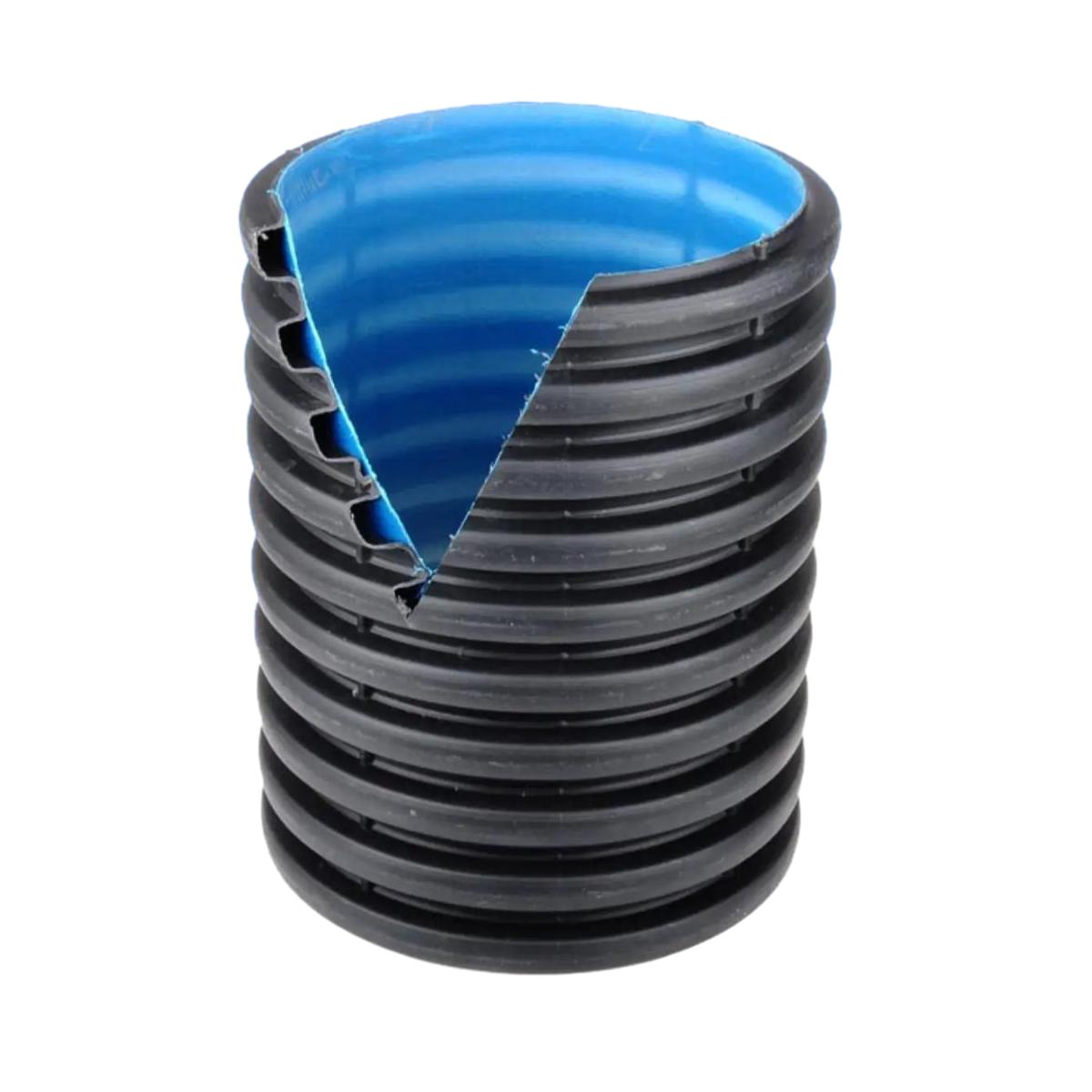
Double wall corrugated pipe, specifically high-density polyethylene (HDPE) corrugated pipe, represents a critical component in modern infrastructure systems for subsurface drainage, conduit, and stormwater management. Globally, 12 double wall corrugated pipe manufacturers are key players, supplying a diverse range of project requirements. These manufacturers are responding to increasing demands driven by urbanization, aging infrastructure, and stricter environmental regulations. The technical position of this product lies between traditional solid-wall PVC piping and larger diameter reinforced concrete pipes, offering a balance of cost-effectiveness, ease of installation, and structural integrity. Core performance characteristics center around load-bearing capacity (crush resistance), hydraulic flow efficiency (smooth interior), and long-term durability against soil corrosion and environmental stressors. The industry is currently facing challenges related to raw material price volatility (HDPE resin), maintaining consistent quality control across manufacturing processes, and adapting to evolving standards for sustainability and recyclability. This guide provides an in-depth technical analysis of double wall corrugated pipe, covering material science, manufacturing processes, performance parameters, failure modes, and relevant industry standards.
Material Science & Manufacturing
The primary material used in double wall corrugated pipe production is high-density polyethylene (HDPE), chosen for its excellent chemical resistance, high strength-to-weight ratio, and flexibility. HDPE resin grades vary in molecular weight and density, directly impacting the pipe’s performance. Key properties include a density range of 0.941-0.965 g/cm³, tensile strength of 20-35 MPa, and elongation at break of 300-700%. The manufacturing process begins with HDPE resin pellets fed into an extruder. This process melts the resin and forms it into a continuous sheet. The sheet is then corrugated using a series of rollers, creating the outer wall structure. Simultaneously, another extrusion process creates a smooth inner liner. This liner serves to minimize friction loss and enhance flow capacity. The corrugated outer wall and smooth inner liner are then combined, often using a continuous welding process (butt fusion or socket fusion). Critical parameters during manufacturing include extrusion temperature (180-220°C), roller gap (determining corrugation profile), wall thickness consistency (monitored via ultrasonic testing), and weld strength (verified through destructive testing). Quality control is paramount; variations in these parameters can lead to structural weaknesses and premature failure. Further, the inclusion of UV stabilizers within the HDPE resin is vital for long-term performance in exposed applications. The outer wall’s geometry significantly influences the pipe's ring stiffness and load-bearing capacity. Variations in corrugation profile (shape, height, pitch) are tailored to specific load requirements.

Performance & Engineering
The performance of double wall corrugated pipe is fundamentally governed by its ability to withstand external loads, maintain hydraulic flow, and resist environmental degradation. Force analysis centers on ring stiffness, a measure of the pipe’s resistance to flattening under external pressure. Ring stiffness is calculated using the formula: RS = (D ΔP) / (8 h^2), where D is the pipe diameter, ΔP is the applied pressure, and h is the wall thickness. Greater ring stiffness translates to a higher load-bearing capacity. Environmental resistance is a crucial factor, particularly concerning long-term soil corrosion and UV exposure. HDPE exhibits excellent resistance to most chemicals found in soil, but prolonged exposure to certain aggressive compounds (e.g., concentrated acids or solvents) can lead to material degradation. UV stabilizers incorporated into the HDPE resin mitigate the effects of sunlight exposure, preventing embrittlement and cracking. Compliance requirements vary based on geographical location and application. North American standards (ASTM F894, ASTM F2306) specify requirements for physical properties, performance testing, and installation guidelines. European standards (EN 13476) address similar aspects, with a focus on structural design and safety factors. Proper installation is critical. Bedding and backfill materials must be appropriately compacted to provide uniform support and prevent excessive stress on the pipe. The pipe’s hydraulic performance is determined by the Manning’s equation, which relates flow rate, pipe diameter, slope, and roughness coefficient. The smooth inner liner minimizes friction loss, maximizing flow capacity.
Technical Specifications
| Parameter | Unit | ASTM F894 Specification | Typical Value (12 double wall corrugated pipe manufacturers) |
|---|---|---|---|
| Pipe Diameter | in | 4 - 60 | 12-48 |
| Ring Stiffness | psi | ≥ 22 | 30-70 (depending on size) |
| Tensile Strength (HDPE) | psi | ≥ 2500 | 3500-4500 |
| Elongation at Break (HDPE) | % | ≥ 300 | 400-600 |
| Crush Resistance | lb/ft | Varies by diameter/profile | 1500-3000 (depending on size/profile) |
| Manning’s Roughness Coefficient | - | 0.012 - 0.015 | 0.011-0.014 |
Failure Mode & Maintenance
Double wall corrugated pipe, while durable, is susceptible to several failure modes. Fatigue cracking, particularly in areas subjected to repeated loading or stress concentrations (e.g., joints, impact zones), is a common issue. This can be exacerbated by poor installation practices, such as inadequate bedding or improper joint assembly. Delamination, separation of the inner liner from the corrugated outer wall, can occur due to manufacturing defects or prolonged exposure to harsh chemicals. Oxidation, caused by exposure to UV radiation and oxygen, leads to material embrittlement and cracking, particularly in HDPE resins lacking sufficient UV stabilizers. Soil corrosion, while HDPE is generally resistant, can occur in the presence of aggressive soil conditions (e.g., high acidity, sulfate content). Creep, the gradual deformation of the pipe under sustained load, can occur over extended periods, potentially leading to ovalization and reduced flow capacity. Preventative maintenance includes regular inspections for signs of cracking, delamination, or deformation. Proper installation according to manufacturer’s specifications and relevant industry standards is crucial. Addressing issues promptly, such as repairing damaged sections or improving bedding support, can significantly extend the pipe’s service life. For minor cracks, HDPE welding or specialized repair sleeves can be employed. For significant damage, replacement of the affected pipe section is typically required. Periodic cleaning to remove debris and sediment buildup can maintain optimal hydraulic flow.
Industry FAQ
Q: What is the impact of soil corrosivity on the long-term performance of HDPE corrugated pipe?
A: Soil corrosivity, particularly from sulfate attack or high acidity, can degrade HDPE over extended periods. While HDPE is generally resistant, aggressive soil conditions can lead to embrittlement and cracking. Selecting HDPE resins with enhanced chemical resistance and employing protective coatings or wrappings in corrosive environments is crucial. Regular soil testing is recommended to assess corrosivity levels.
Q: How does the corrugation profile affect the load-bearing capacity of the pipe?
A: The corrugation profile directly influences the pipe’s ring stiffness and load-bearing capacity. Higher corrugations with a steeper pitch generally provide greater rigidity and resistance to flattening under external pressure. However, the specific profile must be engineered to balance structural performance with hydraulic flow efficiency.
Q: What are the key differences between single-wall and double-wall corrugated pipe in terms of application suitability?
A: Single-wall pipe is typically suitable for lighter loads and shorter spans, such as agricultural drainage. Double-wall pipe, with its enhanced ring stiffness and structural integrity, is designed for heavier loads, deeper burial depths, and applications requiring greater durability, such as stormwater management and road culverts.
Q: What quality control measures are employed during the manufacturing process to ensure consistent product quality?
A: Rigorous quality control measures include monitoring extrusion temperatures, wall thickness consistency (using ultrasonic testing), weld strength testing (destructive testing of joints), dimensional accuracy checks, and regular material testing (tensile strength, elongation at break). Statistical process control (SPC) is often used to identify and address process variations.
Q: What is the recommended bedding and backfill material for optimal pipe performance?
A: Bedding material should consist of granular material (e.g., gravel, crushed stone) that provides uniform support to the pipe. Backfill material should be non-corrosive, well-compacted, and free of sharp objects that could damage the pipe. Compaction levels should adhere to manufacturer’s specifications and industry standards to prevent excessive stress on the pipe.
Conclusion
Double wall corrugated HDPE pipe represents a sophisticated drainage and conduit solution, engineered to address the demands of modern infrastructure. Its performance relies on a complex interplay of material science, precise manufacturing processes, and adherence to stringent engineering principles. Understanding the nuances of ring stiffness, load-bearing capacity, environmental resistance, and potential failure modes is paramount for ensuring long-term reliability and minimizing life-cycle costs.
Moving forward, advancements in HDPE resin technology, coupled with increasingly sophisticated manufacturing techniques, will likely lead to even higher-performing and more sustainable corrugated pipe solutions. The continued development of standardized testing methods and installation guidelines will further enhance the industry's ability to deliver robust and reliable infrastructure systems. Focus on improving recyclability and reducing the environmental footprint of HDPE production will also be critical for long-term sustainability.
-
DN25 HDPE Compression Fitting-HORON INTERNATIONAL|Reliable Irrigation Solutions
NewsFeb.11,2026
-
discount ppr for hot water Performance Analysis
News2026-06-25
-
discount bulk pvc pipe Material Performance
News2026-06-25
-
discount pvc pipes price list Material Science and Manufacturing
News2026-06-25
-
discount 20 ft pvc pipe Performance Analysis
News2026-06-25
-
discount ppr cold water pipe Performance Analysis
News2026-06-25
-
discount 24 inch diameter pvc pipe price Performance Analysis
News2026-06-24
-
discount 4 hdpe drain pipe Performance Analysis
News2026-06-24
-
discount 12 hdpe pipe Performance Analysis
News2026-06-24
-
discount hdpe reducing coupling Performance Analysis
News2026-06-24
-
discount hdpe corrugated sewer pipe Performance Engineering
News2026-06-24
-
discount pvc pipe cost per foot Material and Performance Analysis
News2026-06-23
-
discount double walled corrugated pipe Performance Analysis
News2026-06-23
-
discount hdpe sprinkler pipe price list Performance and Engineering
News2026-06-23
-
discount water pipe in kitchen Technical Analysis
News2026-06-23
-
discount hdpe to pvc pipe coupling Performance Engineering
News2026-06-23