

Feb . 11, 2026 00:01 Back to list
china hdpe pipe jain irrigation Performance Analysis

Introduction
High-Density Polyethylene (HDPE) pipe, specifically as utilized in Jain Irrigation systems originating from China, represents a critical component in modern agricultural water management. These pipes function as the core of efficient irrigation delivery, enabling precise water distribution to crops, minimizing waste, and enhancing agricultural yields. Positioned within the broader irrigation infrastructure supply chain, Chinese HDPE pipes serve both domestic and international markets, offering a cost-effective alternative to traditional piping materials like PVC, ductile iron, and steel. Their prevalence stems from HDPE's inherent properties – including flexibility, corrosion resistance, and ease of installation – directly addressing key pain points in irrigation system longevity and performance. Core performance characteristics include pressure rating, flow capacity, UV resistance, and compliance with international standards for potable water transport. This guide provides a detailed technical overview of these pipes, encompassing material science, manufacturing processes, performance parameters, failure modes, and maintenance protocols.
Material Science & Manufacturing
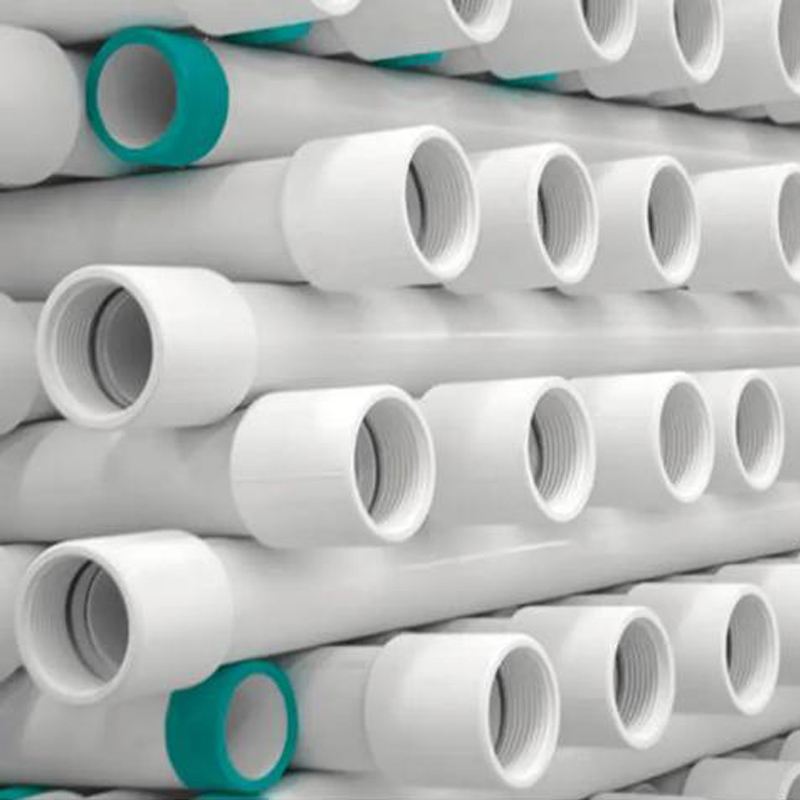
The foundation of these pipes lies in High-Density Polyethylene (HDPE), a thermoplastic polymer produced from the polymerization of ethylene. HDPE is selected for its high strength-to-density ratio, resulting in a robust yet lightweight material. Raw material quality is paramount; typically, HDPE resins conforming to PE100 or PE80 standards are employed, dictating long-term hydrostatic strength (LTS) and minimum required resistance to slow crack growth (SCRG). The manufacturing process commonly utilizes extrusion. Polyethylene pellets are fed into an extruder, where they are heated and melted, then forced through a die to form a continuous pipe profile. Critical parameters during extrusion include melt temperature (typically 180-210°C), die pressure, and cooling rate. Variations in these parameters directly influence pipe dimensions, crystallinity, and subsequent mechanical properties. Pipe wall thickness, determined by the extrusion die, is critical for pressure handling capability. Fusion welding, utilizing techniques like butt fusion, electrofusion, or socket fusion, is prevalent for joining pipe sections, creating a homogeneous joint with strength comparable to the base material. Quality control at this stage involves rigorous testing of weld integrity via hydrostatic pressure testing and visual inspection for weld defects such as incomplete fusion or burn marks. The addition of UV stabilizers (typically carbon black) during the compounding stage is crucial for outdoor applications, extending the pipe's lifespan by mitigating degradation from ultraviolet radiation.
Performance & Engineering
The performance of HDPE pipes in irrigation systems is governed by several key engineering considerations. Firstly, hydrostatic pressure resistance is vital. Pipes are designed and tested to withstand specified internal pressures based on their intended application and burial depth, adhering to standards like ISO 1167 and GB/T 32618. Stress analysis, utilizing Finite Element Analysis (FEA) software, is employed to model pressure distribution within the pipe wall and ensure structural integrity. Secondly, soil loading impacts pipe performance. The pipe must withstand external loads imposed by soil cover, traffic, and other environmental factors. Burial depth and surrounding soil conditions dictate the required pipe stiffness, measured as a deflection under a specified load. Thirdly, chemical compatibility is a critical aspect. Irrigation water can contain various chemicals (fertilizers, pesticides, chlorine) which may interact with HDPE. While HDPE exhibits excellent resistance to many chemicals, prolonged exposure to specific compounds can lead to degradation. Fourthly, UV resistance, as mentioned previously, is crucial for above-ground installations. The addition of carbon black provides UV protection, but its concentration must be optimized to balance UV resistance with other material properties. Finally, flow characteristics are critical for efficient irrigation. The smooth inner surface of HDPE pipes minimizes friction loss, reducing energy consumption for pumping. Darcy-Weisbach equation and Manning’s formula are used to calculate flow rates and pressure drops within the pipeline network.
Technical Specifications
| Parameter | Unit | PE80 (Typical) | PE100 (Typical) |
|---|---|---|---|
| Minimum Required Strength (MRS) | MPa | 8.0 | 10.0 |
| Hydrostatic Design Pressure (HDP) | MPa | 12.5 | 15.0 |
| Slow Crack Growth Resistance (SCRG) | Hours | 8760 | >10,000 |
| Density | kg/m³ | 950 - 965 | 950 - 965 |
| Melt Flow Index (MFI) | g/10min | 0.5 – 1.0 | 0.3 – 0.8 |
| Service Temperature Range | °C | -40 to +60 | -40 to +60 |
Failure Mode & Maintenance
HDPE pipes, while durable, are susceptible to several failure modes. Slow Crack Growth (SCG) is a common issue, particularly in older PE80 pipes or those exposed to sustained stress and aggressive chemicals. SCG initiates from surface flaws and propagates slowly through the material, eventually leading to brittle failure. Fatigue cracking can occur under cyclic pressure fluctuations, particularly in systems with pump surge or water hammer. Oxidation, especially at elevated temperatures or in the presence of oxygen, can degrade the polymer matrix, reducing its strength and flexibility. UV degradation, though mitigated by carbon black, can still occur over extended periods of exposure. Mechanical damage, such as impact from excavation equipment or sharp objects, can cause localized stress concentrations and initiate cracks. Maintenance primarily focuses on preventative measures. Regular inspection for surface cracks, deformation, or leaks is crucial. Proper jointing techniques and adherence to welding procedures are essential to prevent weld failures. Soil cover should be sufficient to protect the pipe from UV radiation and mechanical damage. Backfilling material should be properly compacted to provide uniform support. For repairs, electrofusion welding is often preferred for its ability to create strong, reliable joints in the field. If SCG is detected, replacing the affected pipe section is the most effective solution.
Industry FAQ
Q: What is the difference between PE80 and PE100 HDPE pipe, and why is PE100 generally preferred for irrigation?
A: PE80 and PE100 refer to the Minimum Required Strength (MRS) of the HDPE material. PE100 has a higher MRS (10 MPa) compared to PE80 (8 MPa), meaning it offers superior long-term hydrostatic strength and resistance to slow crack growth. This translates to a longer lifespan and reduced risk of failure, especially in demanding irrigation applications involving higher pressures, fluctuating temperatures, and potentially aggressive water chemistry. While PE80 is more cost-effective, the increased reliability and longevity of PE100 often outweigh the initial cost difference.
Q: How does UV exposure affect HDPE pipe, and what are the best practices for mitigating its impact?
A: UV radiation causes chain scission in the polyethylene polymer, leading to embrittlement and a reduction in mechanical properties. Carbon black is the primary UV stabilizer used in HDPE pipes, absorbing UV radiation and dissipating it as heat. However, the concentration of carbon black needs to be optimized. Best practices include ensuring adequate soil cover (at least 300mm) for buried pipes, using UV-resistant coatings for exposed sections, and selecting pipes with a sufficient carbon black content (typically 2-2.5%).
Q: What are the common causes of leaks in HDPE irrigation pipe joints, and how can they be prevented?
A: Common causes include improper welding techniques (incomplete fusion, excessive burn marks), inadequate surface preparation prior to welding, contamination of the welding area, and mechanical stress on the joint. Prevention involves thorough training of welders, strict adherence to welding procedures specified by the pipe manufacturer, careful cleaning and preparation of the pipe ends, and proper support of the pipeline to minimize stress on the joints.
Q: What is the significance of the SDR (Standard Dimension Ratio) in HDPE pipe specifications?
A: The SDR is the ratio of the pipe's outside diameter to its wall thickness (D/t). A lower SDR indicates a thicker wall and therefore a higher pressure rating. SDR is a crucial parameter for selecting the appropriate pipe for a specific application, as it directly influences the pipe’s ability to withstand internal pressure. Different irrigation system designs and operating pressures require different SDR values.
Q: What chemicals commonly found in irrigation water can degrade HDPE pipe, and how can this be addressed?
A: While HDPE has excellent chemical resistance, prolonged exposure to strong oxidizing agents (like high concentrations of chlorine) and certain organic solvents can cause degradation. The extent of degradation depends on the concentration of the chemical, exposure duration, and temperature. Mitigation strategies include minimizing chlorine levels, using alternative disinfectants, and selecting HDPE formulations with enhanced chemical resistance for specific applications.
Conclusion
China-manufactured HDPE pipe for Jain Irrigation systems provides a cost-effective and reliable solution for modern agricultural water management. Its superior physical and chemical properties, combined with efficient manufacturing processes, offer a durable alternative to traditional piping materials. Understanding the material science, engineering considerations, and potential failure modes is critical for ensuring long-term system performance and minimizing operational costs. Careful attention to installation techniques, water chemistry, and regular inspection will maximize the lifespan and efficiency of these irrigation pipelines.
Looking ahead, advancements in HDPE formulation, welding technology, and non-destructive testing methods will continue to enhance the performance and reliability of these systems. The integration of smart sensors and data analytics for pipeline monitoring will also play an increasingly important role in proactive maintenance and leak detection. Ultimately, a holistic approach encompassing material selection, proper installation, and diligent maintenance is essential for optimizing the long-term value of HDPE irrigation infrastructure.
-
DN25 HDPE Compression Fitting-HORON INTERNATIONAL|Reliable Irrigation Solutions
NewsFeb.11,2026
-
china 3.5 inch pvc pipe Performance Analysis
News2026-06-03
-
china 75mm plastic pipe Performance Analysis
News2026-06-03
-
china use of ppr pipe Performance Analysis
News2026-06-03
-
china hdpe corrugated subsoil drainage pipe Performance Analysis
News2026-06-03
-
china ppr quick connector Performance Analysis
News2026-06-03
-
china hdpe pipe sizes and dimensions Performance Analysis
News2026-06-02
-
china pvc pipe supplier Performance Analysis
News2026-06-02
-
china flexible water line for kitchen sink Performance Analysis
News2026-06-02
-
china blue pvc pipe Performance Analysis
News2026-06-02
-
china hdpe pipe jain irrigation Performance Analysis
News2026-06-02
-
china hdpe coupling price Performance Analysis
News2026-06-01
-
china dual wall perforated corrugated pipe Performance Analysis
News2026-06-01
-
china ppr pipe 63mm Performance Analysis
News2026-06-01
-
china 63mm hdpe pipe price Performance Analysis
News2026-06-01
-
china ppr water pipe Performance Analysis
News2026-06-01