

Feb . 11, 2026 00:01 Back to list
china hdpe pipe dimensions Technical Analysis
Introduction
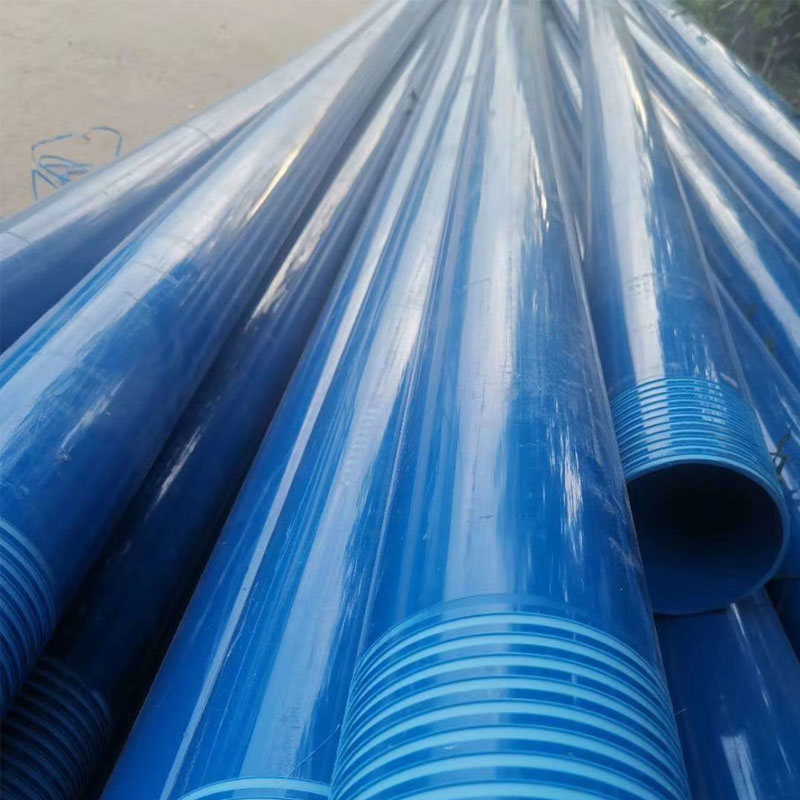
High-Density Polyethylene (HDPE) pipe, manufactured in China, represents a significant segment of the global thermoplastic piping market. These pipes are utilized extensively in diverse applications including water distribution, gas transportation, sewage systems, and industrial piping due to their durability, chemical resistance, and cost-effectiveness. This technical guide provides an in-depth exploration of HDPE pipe dimensions, manufacturing processes, performance characteristics, failure modes, and relevant industry standards. Understanding these factors is critical for engineers, procurement managers, and operators involved in infrastructure projects. The dimensional aspects, governed by international and national standards, dictate pressure handling capabilities, installation procedures, and long-term system performance. Incorrect dimensional specifications can lead to system failures, increased maintenance costs, and potential environmental hazards. This document focuses on the technical nuances relating to the dimensions of HDPE pipes produced in China, addressing specific quality control concerns and material variations encountered in the region.
Material Science & Manufacturing
HDPE pipes are manufactured from high-density polyethylene resin, typically produced via the Ziegler-Natta or metallocene catalyst processes. The raw material’s molecular weight distribution and density are key determinants of pipe performance. Higher density (typically ranging from 0.93 to 0.97 g/cm³) contributes to increased stiffness and tensile strength. The manufacturing process commonly employed is extrusion. In this process, HDPE granules are melted and forced through a die to create a continuous pipe profile. Critical parameters include melt temperature (typically 180-210°C), die pressure, and cooling rate. Precise control of these parameters ensures dimensional accuracy and prevents material degradation. Extrusion can be either conventional or using a crosshead die for larger diameters. Chinese manufacturers often utilize a co-extrusion process to create multi-layered pipes, incorporating different HDPE grades or adding a reinforcing layer. The polyethylene resin used must adhere to standards like ISO 4455, which outlines the requirements for the material used in pressure pipes. Furthermore, the quality of the carbon black additive, used for UV protection, significantly impacts the pipe’s long-term durability. Variations in carbon black dispersion and concentration can lead to localized degradation. Pipe wall thickness is particularly important, and controlled by extrusion parameters and subsequent quality control checks using ultrasonic thickness gauging.
Performance & Engineering
The performance of HDPE pipes is heavily influenced by their dimensional characteristics and the operating environment. Key engineering considerations include hydrostatic pressure resistance, tensile strength, impact strength, and creep resistance. Hydrostatic pressure testing, as per ISO 1167, is crucial to verify the pipe’s ability to withstand internal pressure. The dimensions (specifically wall thickness) directly impact the pressure rating. HDPE pipes exhibit excellent chemical resistance, making them suitable for transporting corrosive fluids. However, prolonged exposure to oxidizing agents can lead to degradation. The long-term performance is assessed through hydrostatic stress rupture testing, which determines the time to failure under a constant stress level. The design of HDPE pipeline systems requires careful consideration of thermal expansion and contraction. HDPE has a relatively high coefficient of thermal expansion (approximately 0.0002 mm/m°C). Therefore, expansion loops or flexible joints must be incorporated into the design to accommodate temperature fluctuations and prevent stress buildup. Soil loading and external pressure are also important design factors, especially for buried pipelines. The pipe’s dimensions and the surrounding soil conditions determine the resistance to buckling. Furthermore, compliance with local building codes and environmental regulations is paramount. In China, specific regulations govern the use of HDPE pipes in water supply and sewage systems, often referencing national standards like GB/T 5817.
Technical Specifications
| Nominal Pipe Size (DN/inches) | Outside Diameter (OD) (mm) | Wall Thickness (mm) | Pressure Rating (PN) (bar) |
|---|---|---|---|
| DN63 / 2.5” | 63 | 2.3 | 10 |
| DN90 / 3.5” | 90 | 3.7 | 10 |
| DN110 / 4.3” | 110 | 4.4 | 12.5 |
| DN125 / 5” | 125 | 5.8 | 16 |
| DN160 / 6.3” | 160 | 6.4 | 16 |
| DN200 / 8” | 200 | 8.7 | 16 |
Failure Mode & Maintenance
HDPE pipes, while durable, are susceptible to various failure modes. Slow Crack Growth (SCG) is a common failure mechanism, particularly in pipes subjected to sustained tensile stress and aggressive environments. This initiates at stress concentrations, often around fittings or imperfections, and propagates slowly through the polymer matrix. Another failure mode is Environmental Stress Cracking (ESC), caused by the combined effects of stress, environment, and material properties. Oxidation, resulting from UV exposure and high temperatures, can lead to embrittlement and cracking. Fatigue cracking can occur in pipes subjected to cyclic pressure or bending loads. Delamination can occur in multi-layer pipes due to poor adhesion between layers. Proper installation is crucial to prevent failures. Incorrect joining techniques (e.g., insufficient fusion during butt welding) can create weak points. Inadequate bedding and backfill can lead to excessive stress on the pipe. Regular inspection and maintenance are essential to detect and address potential problems. Visual inspection can identify cracks, deformation, or leaks. Non-destructive testing (NDT) methods, such as ultrasonic testing, can assess wall thickness and detect internal defects. For minor leaks, patching with HDPE repair sleeves is a common solution. For major failures, pipe replacement is typically necessary. Preventative maintenance includes UV protection (e.g., applying protective coatings) and regular cleaning to remove debris that could contribute to corrosion or abrasion.
Industry FAQ
Q: What are the key dimensional tolerances for HDPE pipes manufactured in China?
A: Dimensional tolerances are specified in standards like GB/T 5817. Typically, tolerances for outside diameter are ±0.5% and for wall thickness ±10% of the nominal value. However, quality control practices within Chinese manufacturing can vary, so verifying adherence to these tolerances through independent testing is recommended.
Q: How does the SDR (Standard Dimension Ratio) affect the pressure rating of HDPE pipe?
A: The SDR is the ratio of the outside diameter to the wall thickness (OD/WT). A lower SDR indicates a thicker wall and a higher pressure rating. For instance, SDR 17 pipes are designed for higher pressures than SDR 26 pipes of the same nominal size.
Q: What are the common joining methods for HDPE pipes, and how do they impact dimensional accuracy?
A: Common joining methods include butt fusion, socket fusion, and electrofusion. Butt fusion provides the strongest and most reliable joint but requires precise alignment and temperature control. Socket and electrofusion are easier to perform but can introduce slight dimensional variations if not executed correctly. Improper fusion can lead to misalignment or reduced wall thickness at the joint.
Q: What are the typical quality control checks performed on HDPE pipe dimensions during manufacturing in China?
A: Quality control checks typically include visual inspection for defects, measurement of outside diameter and wall thickness using calipers and ultrasonic thickness gauges, hydrostatic pressure testing, and impact resistance testing. However, the frequency and rigor of these checks can vary between manufacturers. It's essential to request detailed QC reports and consider third-party inspection.
Q: How do different HDPE grades (e.g., PE80, PE100) affect the dimensional stability and long-term performance of the pipe?
A: PE100 has a higher molecular weight and density than PE80, resulting in improved creep resistance, impact strength, and dimensional stability. PE100 pipes exhibit less deformation under sustained stress and are more suitable for demanding applications, such as high-pressure water distribution systems. While dimensions are largely determined by manufacturing, the material grade affects how well those dimensions are maintained over time.
Conclusion
Understanding the dimensions of HDPE pipes manufactured in China is paramount to ensuring the integrity and longevity of pipeline systems. Precise adherence to international and national standards, coupled with rigorous quality control measures, is essential to mitigate potential failure modes and optimize performance. The selection of appropriate pipe dimensions, joining techniques, and material grades, based on specific application requirements, is critical for successful project outcomes.
Future trends in HDPE pipe technology include the development of advanced materials with enhanced properties, improved manufacturing processes for greater dimensional accuracy, and the implementation of smart monitoring systems for real-time performance assessment. Continued research and development are essential to address emerging challenges and further enhance the reliability and sustainability of HDPE pipeline infrastructure.
-
DN25 HDPE Compression Fitting-HORON INTERNATIONAL|Reliable Irrigation Solutions
NewsFeb.11,2026
-
china 1 2 inch pvc Performance Analysis
News2026-05-21
-
china hdpe pipe joint coupler Performance Analysis
News2026-05-21
-
china ppr pipes and fittings price list Technical Analysis
News2026-05-21
-
china 9 inch pvc pipe price Performance Analysis
News2026-05-21
-
china 2 inch borewell column pipe price Performance Engineering
News2026-05-21
-
china hdpe pipe suppliers Performance Analysis
News2026-05-20
-
china submersible pump column pipe Performance Engineering
News2026-05-20
-
china 8 hdpe corrugated pipe Manufacturing Analysis
News2026-05-20
-
china dual wall hdpe pipe Performance Analysis
News2026-05-20
-
china water lines under sink Performance Analysis
News2026-05-20
-
china ppr pipe used for Material Performance
News2026-05-19
-
china hdpe pipe for sewer line Performance Analysis
News2026-05-19
-
china pvc pipe used for plumbing Technical Analysis
News2026-05-19
-
china hdpe pipe dimensions Technical Analysis
News2026-05-19
-
china kitchen sink water plumbing Performance Analysis
News2026-05-19