

Feb . 11, 2026 00:01 Back to list
china 10 hdpe corrugated pipe Performance Analysis
Introduction
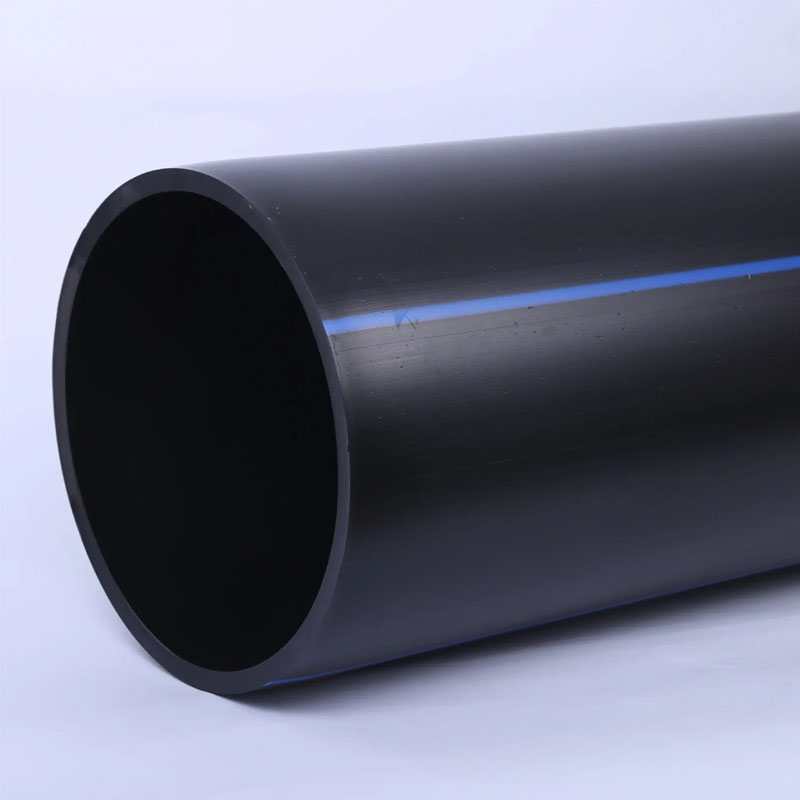
China 10 HDPE corrugated pipe represents a critical component in modern infrastructure, specifically within drainage, sewerage, and subsurface water management systems. Defined by its nominal diameter of 10 inches (250mm) and manufactured from high-density polyethylene (HDPE), this piping solution offers a lightweight, durable, and cost-effective alternative to traditional materials like concrete, PVC, and ductile iron. Its position within the supply chain is primarily as a finished product supplied to civil engineering contractors, municipalities, and agricultural businesses. Core performance characteristics revolve around high flow capacity due to the corrugated structure’s smooth inner bore, excellent chemical resistance, and exceptional long-term structural integrity resisting both external loads and internal pressure. A key industry pain point is achieving consistent ring stiffness and ensuring long-term joint integrity in varying soil conditions, directly impacting operational lifespan and maintenance costs. Furthermore, sourcing compliant materials meeting stringent international standards presents a continual challenge for procurement managers.
Material Science & Manufacturing
The foundation of China 10 HDPE corrugated pipe lies in the properties of HDPE resin. HDPE is a thermoplastic polymer derived from ethylene, characterized by a high degree of linearity, resulting in high tensile strength and resistance to environmental stress cracking. Raw material selection is paramount; resin must conform to standards like ISO 4455, ensuring consistent molecular weight distribution and density (typically 0.941-0.965 g/cm³). Manufacturing typically employs a double-wall corrugated extrusion process. HDPE resin is melted and extruded through a circular die, forming a pipe profile. Simultaneously, a corrugated outer layer is formed using a specialized corrugated die. These two layers are combined, cooled, and cut to length. Critical process parameters include melt temperature (180-210°C), extrusion speed (directly affecting wall thickness and corrugation profile), and cooling rate (influencing crystallinity and dimensional stability). Ring stiffness, a measure of the pipe’s resistance to flattening, is heavily influenced by the corrugation geometry (height and pitch) and wall thickness. Welding of fittings is typically accomplished via butt fusion, requiring precise temperature control (130-160°C) and pressure application to ensure homogenous joining and prevent weld defects. Chemical compatibility considerations include resistance to acids, bases, and hydrocarbons commonly found in waste water and soil environments. The presence of UV stabilizers within the HDPE formulation is crucial for outdoor applications to mitigate degradation from prolonged sun exposure.
Performance & Engineering
Performance of China 10 HDPE corrugated pipe is heavily dictated by its structural capacity under various loading conditions. Key considerations include soil load (vertical pressure from overburden), live load (traffic or surface loads), and hydrostatic pressure (internal fluid pressure). Force analysis involves calculating hoop stress (stress in the circumferential direction) and longitudinal stress, ensuring these stresses remain below the yield strength of HDPE. Bury depth is a critical engineering factor; deeper burial increases soil load but also provides greater protection from temperature fluctuations. Environmental resistance is significant; HDPE exhibits excellent resistance to corrosion, chemical attack, and abrasion. However, long-term creep (slow deformation under sustained load) is a potential concern, particularly in high-temperature environments. Compliance requirements are stringent, with adherence to standards like ASTM F894 (Standard Specification for Corrugated Polyethylene (PE) Pipe and Fittings) being essential. Functional implementation necessitates proper installation procedures, including adequate bedding and backfill compaction to prevent deformation and ensure load distribution. Joints must be properly fused to maintain watertight integrity and prevent infiltration. The Manning’s equation is used to calculate flow capacity, factoring in pipe diameter, slope, and roughness coefficient.
Technical Specifications
| Parameter | Value (Typical) | Test Standard | Units |
|---|---|---|---|
| Nominal Diameter | 10 | ASTM F894 | inches (250 mm) |
| Material | High-Density Polyethylene (HDPE) | ISO 4455 | - |
| Ring Stiffness | 225 | ASTM D2412 | psi |
| Tensile Strength | 4000 | ASTM D638 | psi |
| Elongation at Break | 300 | ASTM D638 | % |
| Hydrostatic Design Pressure | 150 | ASTM F894 | psi |
Failure Mode & Maintenance
Failure modes in China 10 HDPE corrugated pipe are diverse and often interconnected. Fatigue cracking, initiated by repeated stress cycles from soil movement or traffic loads, can lead to circumferential or longitudinal fractures. Delamination, separation of the inner and outer layers, typically occurs due to improper fusion during manufacturing or inadequate bedding support. Environmental degradation, particularly UV exposure and oxidation, can reduce the pipe's mechanical properties over time, causing brittleness and cracking. Creep, as mentioned previously, causes slow deformation under sustained load, potentially leading to collapse or joint misalignment. Joint failure is a common issue, often stemming from inadequate butt fusion parameters (temperature, pressure, dwell time) or contamination during the welding process. Maintenance solutions involve regular visual inspections for signs of cracking, deformation, or joint leakage. Soil settlement around the pipe should be monitored and corrected to prevent excessive stress. For minor cracks, HDPE repair sleeves can provide a localized reinforcement solution. Complete replacement may be necessary for severely damaged sections. Preventative measures include proper installation practices, adequate bedding compaction, and the use of UV stabilizers in the HDPE formulation. Detailed records of installation and maintenance activities are crucial for long-term performance assessment.
Industry FAQ
Q: What is the expected service life of China 10 HDPE corrugated pipe, and what factors most significantly affect it?
A: The expected service life typically ranges from 50 to 100 years, but this is heavily influenced by several factors. Soil corrosivity, burial depth, quality of installation (bedding and backfill compaction), UV exposure (for exposed sections), and the magnitude and frequency of applied loads are all critical. Regular inspection and preventative maintenance can significantly extend the lifespan.
Q: How does the corrugated structure contribute to the pipe’s performance, and what are the limitations of this design?
A: The corrugated structure provides a high strength-to-weight ratio, increasing resistance to external loads while minimizing material usage. The smooth inner bore reduces friction loss, improving flow capacity. However, the corrugations create stress concentrations, making the pipe more susceptible to fatigue cracking under repeated loading. Proper corrugation profile design is crucial to mitigate this risk.
Q: What are the key differences between HDPE and PVC corrugated pipe, and when would one material be preferred over the other?
A: HDPE offers superior impact resistance, flexibility, and chemical resistance compared to PVC. It’s also more resistant to environmental stress cracking. PVC is typically less expensive. HDPE is preferred for applications with high impact loads, challenging soil conditions, or where exposure to aggressive chemicals is expected. PVC is suitable for less demanding applications where cost is a primary concern.
Q: What specific testing procedures are used to ensure the quality and compliance of China 10 HDPE corrugated pipe with industry standards?
A: Testing includes hydrostatic pressure testing (ASTM F894), ring stiffness testing (ASTM D2412), tensile strength and elongation testing (ASTM D638), impact resistance testing (ASTM D2444), and environmental stress crack resistance testing (ESCR). Incoming raw material testing (HDPE resin) is also critical to verify compliance with ISO 4455.
Q: What are the best practices for ensuring a watertight seal at the joints of HDPE corrugated pipe during installation?
A: Proper butt fusion welding is paramount. This requires qualified welders, clean and dry fusion surfaces, precise temperature control (130-160°C), appropriate pressure application, and a sufficient dwell time. Following the manufacturer’s recommendations for fusion parameters is essential. Post-fusion inspection (visual and non-destructive testing) is crucial to identify any weld defects.
Conclusion
China 10 HDPE corrugated pipe stands as a robust and versatile solution for a broad spectrum of drainage and subsurface infrastructure applications. Its inherent material properties—high strength, chemical resistance, and lightweight nature—coupled with the efficiency of the corrugated design, offer significant advantages over traditional piping materials. However, realizing the full potential of this technology requires meticulous attention to detail throughout the entire lifecycle, from raw material selection and manufacturing process control to proper installation practices and ongoing maintenance.
Future development trends will likely focus on enhancing the long-term creep resistance of HDPE formulations, incorporating advanced non-destructive testing methods for joint inspection, and developing more sustainable manufacturing processes. Adoption of digital monitoring systems for tracking pipe performance and predicting potential failures will further optimize infrastructure management and extend service life, providing a cost-effective and reliable solution for evolving drainage challenges.
-
DN25 HDPE Compression Fitting-HORON INTERNATIONAL|Reliable Irrigation Solutions
NewsFeb.11,2026
-
china 25mm ppr pipe price Technical Analysis
News2026-05-11
-
china hdpe pipe pdf Performance Analysis
News2026-05-11
-
china 12 double wall corrugated pipe Performance Analysis
News2026-05-11
-
china water pipes under kitchen sink Performance Analysis
News2026-05-11
-
china 10 hdpe corrugated pipe Performance Analysis
News2026-05-11
-
china hdpe coupling fittings Performance Analysis
News2026-05-10
-
china hdpe pipe use Performance Analysis
News2026-05-10
-
china hdpe water supply pipe Performance Analysis
News2026-05-10
-
china 1.5 inch pvc pipe Performance Analysis
News2026-05-10
-
china hdpe double wall corrugated pipe Performance Analysis
News2026-05-10
-
china 10mm pvc pipe Performance Analysis
News2026-05-09
-
china ppr pipe for cold water Material Performance
News2026-05-09
-
china type of pvc pipe Material and Manufacturing Analysis
News2026-05-09
-
china hdpe pipe sizes Performance Analysis
News2026-05-09
-
china 50mm pvc pipe Performance Analysis
News2026-05-09