

Feb . 11, 2026 00:01 Back to list
water supply hdpe pipe factories Performance Analysis
Introduction
High-Density Polyethylene (HDPE) pipe represents a significant advancement in water supply infrastructure, increasingly replacing traditional materials like ductile iron, concrete, and PVC. Water supply HDPE pipe factories specialize in the production of these thermoplastic pipes, designed for the conveyance of potable water, irrigation, and other fluids. Positioned as a crucial component within the broader water management supply chain, these factories operate at the intersection of petrochemical engineering, polymer science, and civil engineering. Core performance characteristics defining this product include its inherent corrosion resistance, flexibility allowing for trenchless installation techniques, lightweight nature reducing installation costs, and long service life minimizing lifecycle costs. The industry currently faces pressure to optimize production processes for cost-effectiveness while maintaining stringent quality controls to meet evolving regulatory demands and ensure long-term performance reliability in demanding environments.
Material Science & Manufacturing
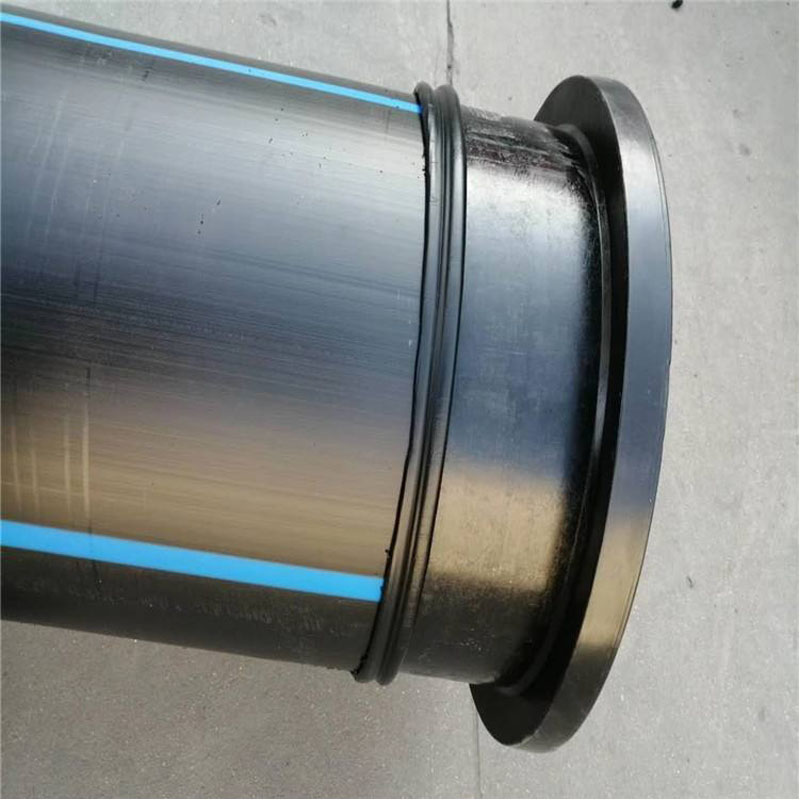
The raw material for HDPE pipes is polyethylene, a thermoplastic polymer produced from the monomer ethylene. HDPE’s high density (typically 0.941 to 0.965 g/cm³) contributes to its strength, rigidity, and resistance to chemical degradation. Manufacturing typically involves a melt extrusion process. Virgin HDPE resin is blended with additives – typically carbon black for UV protection and antioxidants to enhance thermal stability – and fed into an extruder. The extruder melts the plastic and forces it through a die, shaping the pipe to the desired diameter and wall thickness. Critical parameters during extrusion include maintaining precise temperature control (melt temperature typically between 180-210°C) to prevent degradation and ensure consistent material properties. Cooling is accomplished using water baths, carefully controlled to prevent warping or deformation. Subsequent processes include belling (expanding one end of the pipe for socket joint connections), marking, and quality control. The choice of HDPE grade (e.g., PE32, PE40, PE63, PE80, PE100) dictates the pipe’s Minimum Required Strength (MRS) and suitability for specific applications. Proper mixing of additives is crucial; uneven distribution can lead to localized weaknesses. Extrusion speed must be optimized to balance throughput with material quality. Failure to control these parameters results in pipes with inconsistent wall thickness, compromised strength, or susceptibility to environmental stress cracking.
Performance & Engineering
The performance of HDPE pipes is primarily governed by their ability to withstand hydrostatic pressure, soil loads, and external forces. Force analysis involves calculating hoop stress (stress acting circumferentially around the pipe) and longitudinal stress (stress acting along the length of the pipe) under internal pressure. The Barlow formula (S = P D / 2t, where S = hoop stress, P = internal pressure, D = pipe diameter, and t = wall thickness) is fundamental to these calculations. Environmental resistance is critical; HDPE exhibits excellent resistance to most chemicals encountered in soil and water, but long-term exposure to concentrated oxidizing agents should be avoided. Compliance requirements vary by region and application, typically referencing standards like AWWA C906 (for potable water transmission and distribution), ASTM D3350 (for polyethylene pipe and fittings), and EN 12201 (European standard for water supply pipelines). Engineering considerations include proper jointing techniques (butt fusion, electrofusion, socket fusion) to maintain the pipe’s structural integrity. Trenchless installation methods, such as horizontal directional drilling (HDD), leverage HDPE's flexibility but require careful stress management to prevent over-bending and potential cracking. Backfilling procedures are also crucial to evenly distribute external loads and avoid pipe deformation. Thermal expansion and contraction must be accounted for in long pipeline runs using expansion joints or flexible connections.
Technical Specifications
| Parameter | PE63 | PE80 | PE100 | Units |
|---|---|---|---|---|
| Minimum Required Strength (MRS) | 6.3 | 8.0 | 10.0 | MPa |
| Hydrostatic Pressure (at 20°C, 50 years) | 8.0 | 10.0 | 12.5 | MPa |
| Density | 0.941-0.959 | 0.941-0.965 | 0.941-0.965 | g/cm³ |
| Operating Temperature Range | -20 to +40 | -20 to +40 | -20 to +60 | °C |
| Pipe Diameter (Common Sizes) | 20-630 | 20-1200 | 20-2000 | mm |
| Wall Thickness | 2.3 – 12.5 | 2.3 – 20.9 | 2.3 – 31.5 | mm |
Failure Mode & Maintenance
Common failure modes in HDPE water pipes include slow crack growth (SCG) due to environmental stress cracking, particularly from exposure to aggressive soils or sustained mechanical stress. Fatigue cracking can occur from cyclic pressure fluctuations or repeated bending. UV degradation can embrittle the pipe material if not adequately protected by carbon black. Joint failures, specifically at fusion joints, are often attributed to improper welding parameters or inadequate surface preparation. Catastrophic failures, though rare, can result from sudden pressure surges (water hammer) exceeding the pipe’s pressure rating. Preventive maintenance involves regular pressure testing to identify leaks, visual inspections for cracks or deformation, and soil analysis to assess potential corrosive elements. For SCG, reducing stress concentrations through proper installation practices and selecting appropriate HDPE grades is paramount. For UV degradation, ensuring sufficient soil cover or applying UV-resistant coatings is crucial. Damaged sections should be repaired using compatible HDPE fittings and appropriate fusion techniques. A robust cathodic protection system can mitigate corrosion risks in aggressive soil environments. Periodic cleaning to remove sediment buildup can improve flow rates and reduce internal pressure, extending service life. Accurate record-keeping of installation details, repair history, and material specifications is essential for effective long-term maintenance.
Industry FAQ
Q: What is the impact of soil corrosivity on HDPE pipe lifespan?
A: Highly corrosive soils containing chlorides, sulfates, or organic acids can accelerate environmental stress cracking in HDPE. Selecting a higher-grade HDPE with increased MRS, implementing a protective layer (e.g., a polyethylene sleeve), and employing cathodic protection are essential mitigation strategies. Soil analysis prior to installation is crucial to assess corrosivity levels and inform material selection.
Q: What are the key differences between butt fusion, electrofusion, and socket fusion jointing methods?
A: Butt fusion is suitable for larger diameter pipes, creating a homogenous weld between pipe ends using heat and pressure. Electrofusion uses electrodes to generate heat within the fitting, offering greater control for smaller diameters. Socket fusion involves heating both the pipe and fitting socket before insertion, suitable for smaller diameters and quick connections. Each method requires trained operators and adherence to specific temperature and pressure parameters to ensure joint integrity.
Q: How does temperature affect the performance of HDPE pipes?
A: HDPE expands and contracts with temperature fluctuations. This thermal movement must be accommodated in pipeline design using expansion joints or flexible connections. Elevated temperatures reduce the pipe’s strength and creep resistance. Operating temperatures should remain within the specified range for the selected HDPE grade to maintain long-term performance.
Q: What quality control measures are critical during HDPE pipe manufacturing?
A: Critical quality control measures include raw material testing (density, MRS), dimensional checks (diameter, wall thickness), hydrostatic pressure testing, and impact resistance testing. Monitoring and controlling extrusion parameters (temperature, speed) are essential. Regular audits of the manufacturing process and adherence to relevant industry standards are crucial to ensure consistent product quality.
Q: Can HDPE pipes be used for potable water applications, and are there leaching concerns?
A: Yes, HDPE is widely used for potable water applications. HDPE is considered inert and does not leach harmful chemicals into the water. However, it is essential to use HDPE materials that comply with NSF/ANSI Standard 61, which certifies the material's suitability for contact with drinking water. Regular water quality monitoring is also recommended.
Conclusion
HDPE pipe technology represents a robust and reliable solution for modern water supply systems, offering a compelling combination of durability, cost-effectiveness, and environmental sustainability. Understanding the nuances of material science, manufacturing processes, and engineering principles is paramount to ensuring optimal performance and long-term reliability. The selection of appropriate HDPE grades, meticulous jointing techniques, and proactive maintenance practices are crucial factors contributing to the longevity and efficiency of these vital infrastructure components.
Future advancements in HDPE pipe technology are likely to focus on developing enhanced materials with improved creep resistance and higher temperature capabilities, refining non-destructive testing methods for quality control, and optimizing installation techniques to minimize environmental impact. Continued adherence to stringent industry standards and a commitment to innovation will be critical to unlocking the full potential of HDPE pipe systems in meeting the evolving demands of global water infrastructure.
-
DN25 HDPE Compression Fitting-HORON INTERNATIONAL|Reliable Irrigation Solutions
NewsFeb.11,2026
-
china corrugated hdpe pipe fittings Performance Analysis
News2026-05-22
-
china ppr pipe for hot water Performance Analysis
News2026-05-22
-
china ppr Technical Performance Analysis
News2026-05-22
-
china corrugated dual wall pipe Performance Analysis
News2026-05-22
-
china sink inlet pipe Material Performance Analysis
News2026-05-22
-
china 1 2 inch pvc Performance Analysis
News2026-05-21
-
china hdpe pipe joint coupler Performance Analysis
News2026-05-21
-
china ppr pipes and fittings price list Technical Analysis
News2026-05-21
-
china 9 inch pvc pipe price Performance Analysis
News2026-05-21
-
china 2 inch borewell column pipe price Performance Engineering
News2026-05-21
-
china hdpe pipe suppliers Performance Analysis
News2026-05-20
-
china submersible pump column pipe Performance Engineering
News2026-05-20
-
china 8 hdpe corrugated pipe Manufacturing Analysis
News2026-05-20
-
china dual wall hdpe pipe Performance Analysis
News2026-05-20
-
china water lines under sink Performance Analysis
News2026-05-20