

Feb . 11, 2026 00:01 Back to list
pvc pipe for sale factory Performance Analysis

Introduction
Polyvinyl chloride (PVC) pipe represents a ubiquitous solution for fluid conveyance across diverse industrial, construction, and agricultural sectors. A PVC pipe for sale factory specializes in the manufacturing and distribution of these thermoplastic pipes, typically extruded from a PVC resin compound. Within the broader piping industry chain, PVC pipe occupies a critical middle ground, converting raw petrochemical feedstocks into finished products ready for installation in potable water systems, irrigation networks, sewer lines, and industrial process piping. Core performance characteristics defining its utility include chemical resistance, durability, cost-effectiveness, and ease of installation. However, performance is heavily reliant on formulation, manufacturing quality control, and adherence to relevant industry standards. This guide provides an in-depth technical overview of PVC pipe, covering material science, manufacturing processes, performance parameters, failure modes, and essential maintenance considerations for effective application and longevity.
Material Science & Manufacturing
PVC is a thermoplastic polymer synthesized from the polymerization of vinyl chloride monomer (VCM). The resulting PVC resin, in its pure form, is rigid and brittle. Therefore, plasticizers – typically phthalates or more recently, bio-based alternatives – are added to enhance flexibility and impact resistance. Other crucial additives include stabilizers (to prevent degradation from heat and UV exposure – commonly calcium-zinc or lead-based formulations, though lead is increasingly restricted due to environmental concerns), lubricants (to aid processing and reduce friction during extrusion), and impact modifiers (like chlorinated polyethylene or acrylic polymers) to further improve toughness. The selection of these additives directly influences the final pipe properties. Manufacturing predominantly employs extrusion. PVC resin, plasticizers, stabilizers, and other additives are thoroughly mixed and fed into a single-screw extruder. The extruder melts and homogenizes the mixture, forcing it through a die to create a continuous pipe profile. Critical process parameters include barrel temperature (affecting melt viscosity and degradation), screw speed (governing throughput and mixing), die pressure (influencing pipe dimensions), and cooling rate (controlling crystallinity and dimensional stability). Post-extrusion, pipes are calibrated, cut to length, and undergo quality control testing, including hydrostatic pressure testing and dimensional checks. The inherent chemical composition and control of these manufacturing parameters dictate the pipe's long-term performance and resistance to environmental factors.
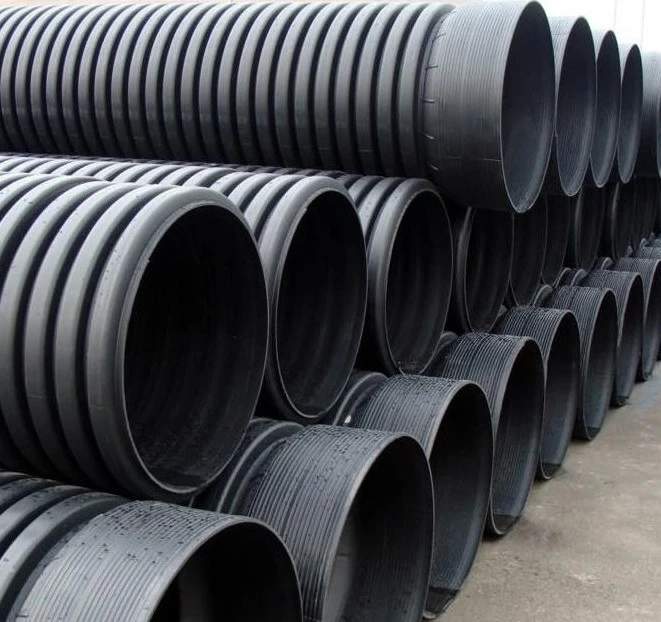
Performance & Engineering
The performance of PVC pipe is primarily assessed through several key engineering metrics. Tensile strength, measured according to ASTM D2412, dictates the pipe's resistance to cracking under longitudinal stress. Impact strength (ASTM D2561) evaluates the ability to withstand sudden shocks, particularly important in burial applications. Modulus of elasticity (ASTM D790) quantifies stiffness and resistance to deformation under load. Crucially, PVC's resistance to chemical corrosion is a major advantage. It exhibits excellent compatibility with acids, bases, and salts, making it suitable for a wide range of industrial applications. However, prolonged exposure to certain aromatic hydrocarbons or chlorinated solvents can induce swelling and degradation. Long-term hydrostatic strength is determined by performing hydrostatic pressure tests at elevated temperatures (ASTM D1597), simulating decades of continuous internal pressure. Environmental resistance includes UV exposure, which can lead to embrittlement and discoloration. Stabilizers mitigate this effect, but pipe designed for prolonged outdoor exposure should utilize formulations with high UV stabilizer content. Compliance requirements are dictated by regional and international standards (see section 7). Installation practices are also critical; proper bedding and backfill are essential to prevent stress concentrations and ensure long-term structural integrity. Force analysis during installation and operation must account for soil loading, traffic loads, and internal fluid pressure.
Technical Specifications
| Parameter | Units | Schedule 40 PVC | Schedule 80 PVC |
|---|---|---|---|
| Outside Diameter | inches | 1.063 | 1.063 |
| Inside Diameter | inches | 0.840 | 0.625 |
| Wall Thickness | inches | 0.111 | 0.218 |
| Pressure Rating (at 73°F) | psi | 400 | 600 |
| Tensile Strength | psi | 6,895 | 6,895 |
| Impact Strength (Izod Notched) | ft-lb/in | 1.0 | 1.2 |
Failure Mode & Maintenance
PVC pipe, while durable, is susceptible to several failure modes. Long-term hydrostatic stress can lead to slow crack growth (SCG), particularly in stressed pipe joints or areas with pre-existing defects. UV degradation causes embrittlement and discoloration, reducing impact resistance. Chemical attack, as previously noted, can induce swelling and degradation. Soil stress, especially from heavy loads or improper bedding, can cause ovalization and cracking. Thermal expansion and contraction, if not accommodated through expansion joints or flexible couplings, can induce stress concentrations. Fatigue cracking can occur under cyclical loading conditions, such as those experienced in pumping systems. Delamination, although less common, can result from poor manufacturing practices or incompatible material combinations. Maintenance primarily involves visual inspection for cracks, discoloration, and deformation. Periodic hydrostatic testing can assess the pipe's structural integrity. Proper jointing techniques are crucial to prevent leaks and SCG. For buried pipes, ensure adequate bedding and backfill compaction. Avoid exposing PVC pipe to excessive temperatures or incompatible chemicals. When repairing damaged pipe, utilize appropriate PVC cement and fittings, ensuring proper surface preparation and curing times. Preventive maintenance, including regular inspections and addressing minor issues promptly, significantly extends the service life of PVC piping systems.
Industry FAQ
Q: What are the key differences between Schedule 40 and Schedule 80 PVC pipe, and when should each be used?
A: Schedule 40 and Schedule 80 PVC pipes differ primarily in their wall thickness and pressure-bearing capacity. Schedule 80 has a thicker wall, offering higher pressure ratings and greater resistance to impact. Schedule 40 is suitable for lower-pressure applications, such as irrigation and drainage, while Schedule 80 is preferred for higher-pressure systems like industrial process piping or applications where increased durability is required. The choice depends on the specific system requirements and operating conditions.
Q: How does temperature affect the performance of PVC pipe?
A: Elevated temperatures reduce the pressure-bearing capacity of PVC pipe. The pressure rating is typically specified at 73°F (23°C). As temperature increases, the pipe becomes more flexible and susceptible to creep, reducing its long-term hydrostatic strength. Conversely, low temperatures can increase brittleness, making the pipe more prone to cracking under impact. Thermal expansion and contraction must also be considered during installation to prevent stress.
Q: What are the environmental concerns associated with PVC, and what alternatives are available?
A: Traditional PVC formulations often utilize phthalate plasticizers and lead-based stabilizers, both of which pose environmental and health concerns. Phthalates can leach into the environment and disrupt endocrine systems, while lead is a neurotoxin. Manufacturers are increasingly adopting bio-based plasticizers and calcium-zinc stabilizers to mitigate these risks. Alternatives to PVC include polyethylene (PE), polypropylene (PP), and high-density polyethylene (HDPE), each with its own set of advantages and disadvantages.
Q: What is slow crack growth (SCG) in PVC pipe, and how can it be prevented?
A: Slow crack growth (SCG) is a time-dependent failure mechanism in PVC pipe caused by sustained tensile stress and the presence of aggressive chemicals. It manifests as microscopic cracks that propagate slowly over time, eventually leading to catastrophic failure. Prevention involves minimizing sustained stress through proper installation, avoiding incompatible chemicals, utilizing high-quality pipe materials, and employing stress-relieving techniques at joints.
Q: What are the best practices for joining PVC pipe to ensure a leak-proof connection?
A: Proper jointing is critical for preventing leaks. Ensure surfaces are clean, dry, and free from grease or contaminants. Use the correct PVC cement and primer, applying them evenly and in accordance with the manufacturer's instructions. Maintain adequate ventilation during application. Allow sufficient curing time before pressurizing the system. Use appropriate fittings and ensure they are fully seated. Follow recommended torque specifications when tightening threaded connections.
Conclusion
PVC pipe remains a dominant force in fluid conveyance due to its balance of cost-effectiveness, durability, and chemical resistance. However, its performance is heavily dependent on material selection, manufacturing quality, and adherence to established engineering principles. Understanding the nuances of PVC’s material science, recognizing potential failure modes, and implementing proper maintenance practices are paramount to maximizing its service life and ensuring the reliability of piping systems. The increasing focus on sustainability is driving innovation in PVC formulations, with a shift towards bio-based plasticizers and alternative stabilizers, further enhancing its long-term viability.
Looking ahead, advancements in PVC compounding and extrusion technologies will continue to refine pipe properties and expand application possibilities. Enhanced stress analysis techniques and non-destructive testing methods will enable more accurate assessment of pipe integrity. Further research into SCG mechanisms and mitigation strategies is crucial for ensuring the long-term reliability of PVC piping infrastructure. Ultimately, a holistic approach encompassing material science, engineering design, and diligent maintenance will solidify PVC’s position as a vital component of modern infrastructure.
-
DN25 HDPE Compression Fitting-HORON INTERNATIONAL|Reliable Irrigation Solutions
NewsFeb.11,2026
-
china 3.5 inch pvc pipe Performance Analysis
News2026-06-03
-
china 75mm plastic pipe Performance Analysis
News2026-06-03
-
china use of ppr pipe Performance Analysis
News2026-06-03
-
china hdpe corrugated subsoil drainage pipe Performance Analysis
News2026-06-03
-
china ppr quick connector Performance Analysis
News2026-06-03
-
china hdpe pipe sizes and dimensions Performance Analysis
News2026-06-02
-
china pvc pipe supplier Performance Analysis
News2026-06-02
-
china flexible water line for kitchen sink Performance Analysis
News2026-06-02
-
china blue pvc pipe Performance Analysis
News2026-06-02
-
china hdpe pipe jain irrigation Performance Analysis
News2026-06-02
-
china hdpe coupling price Performance Analysis
News2026-06-01
-
china dual wall perforated corrugated pipe Performance Analysis
News2026-06-01
-
china ppr pipe 63mm Performance Analysis
News2026-06-01
-
china 63mm hdpe pipe price Performance Analysis
News2026-06-01
-
china ppr water pipe Performance Analysis
News2026-06-01