

Feb . 11, 2026 00:01 Back to list
pvc pipe for sale factories Performance Analysis
Introduction
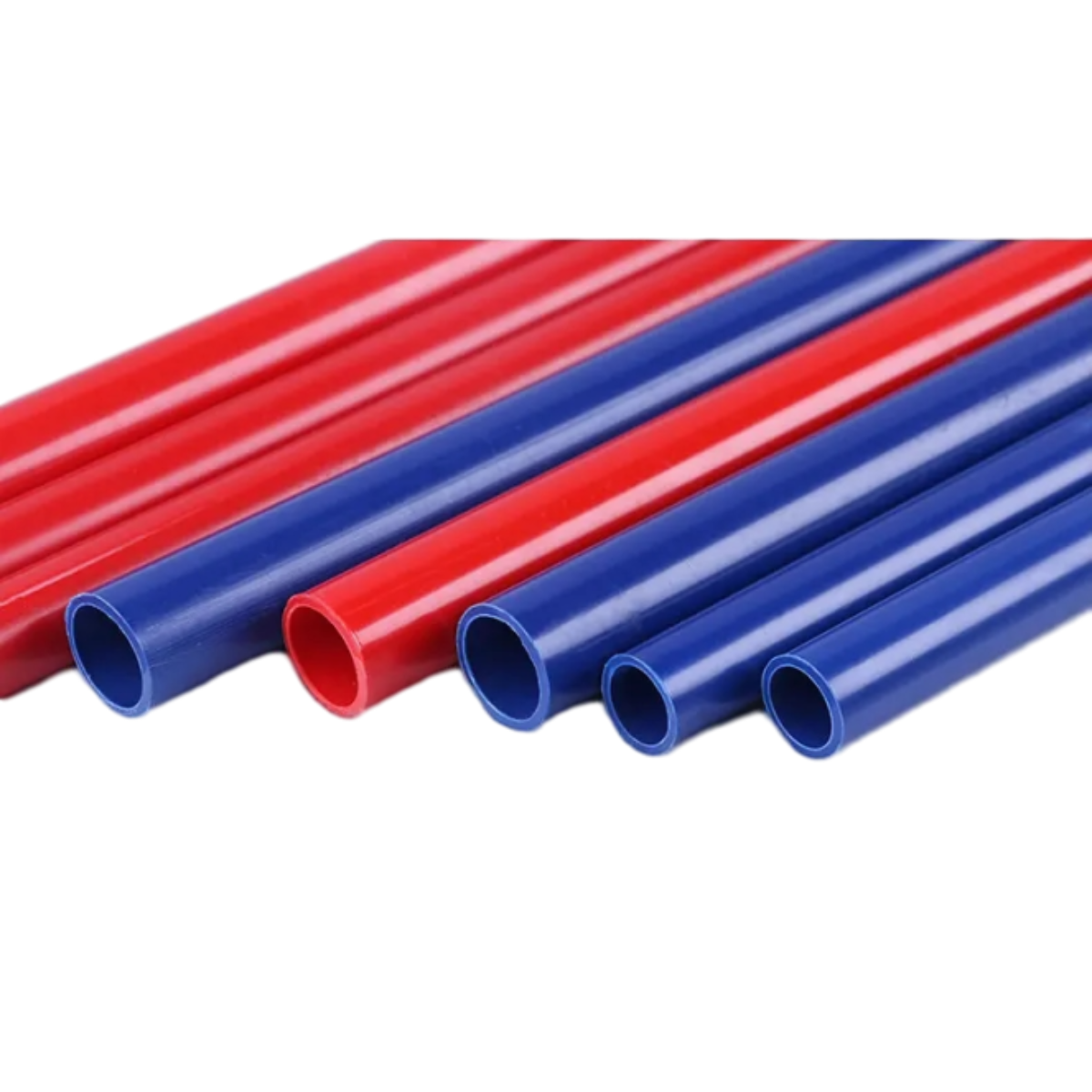
Polyvinyl chloride (PVC) pipe represents a ubiquitous material in modern infrastructure, spanning applications from potable water distribution and sewage conveyance to irrigation and industrial fluid transport. Its prominence stems from a combination of cost-effectiveness, durability, and ease of installation. PVC pipe for sale factories represent a critical link in the global supply chain, necessitating a thorough understanding of its material properties, manufacturing processes, performance characteristics, and potential failure modes. This guide provides an in-depth technical overview of PVC pipe, targeting procurement managers, engineers, and quality control personnel involved in the selection, specification, and implementation of PVC piping systems. Core performance attributes include tensile strength, impact resistance, chemical inertness, and long-term hydrostatic pressure capacity. The increasing demand for PVC pipe is driven by ongoing infrastructure development, particularly in emerging economies, and the replacement of aging metallic piping systems prone to corrosion.
Material Science & Manufacturing
PVC is a thermoplastic polymer synthesized from the polymerization of vinyl chloride monomer (VCM). The resultant polymer, in its pure form, is a rigid and brittle material. Therefore, plasticizers, stabilizers, lubricants, and other additives are incorporated to modify its properties, achieving the desired flexibility, impact resistance, and processing characteristics. Common plasticizers include phthalates (DINP, DIDP), adipates, and trimellitates, each imparting different degrees of flexibility and low-temperature performance. Stabilizers, typically based on organotin compounds or calcium-zinc formulations, prevent thermal degradation during processing and prolong the service life of the pipe by inhibiting the release of hydrochloric acid (HCl). Manufacturing processes primarily involve extrusion. PVC compound is fed into a single or twin-screw extruder, where it is heated, melted, and forced through a die to create a continuous pipe profile. Key process parameters include barrel temperature profiles, screw speed, die pressure, and cooling rates. Precise control of these parameters is crucial to ensure consistent wall thickness, dimensional accuracy, and material homogeneity. Subsequent operations include cutting to length, bell-end forming (for solvent welding), and quality inspection. The molecular weight distribution of the PVC resin, the type and concentration of additives, and the extrusion process parameters significantly impact the final properties of the pipe.

Performance & Engineering
The performance of PVC pipe is dictated by its mechanical properties and resistance to environmental factors. Tensile strength, typically ranging from 55-75 MPa, dictates its ability to withstand axial loads. Impact resistance, measured by Charpy or Izod impact tests, determines its susceptibility to fracture under sudden shock. Hydrostatic pressure rating, a critical parameter for pressure applications, is determined by conducting long-term hydrostatic pressure tests according to ASTM D1597 or ISO 1167. PVC exhibits excellent chemical resistance to a wide range of acids, bases, and salts, making it suitable for corrosive environments. However, it is susceptible to degradation by certain organic solvents and hydrocarbons. Environmental stress cracking (ESC) is a common failure mode in PVC piping systems exposed to sustained tensile stress in the presence of certain chemicals. Furthermore, PVC’s thermal expansion coefficient is significantly higher than that of metallic pipes, necessitating the incorporation of expansion joints or flexible connections to accommodate thermal movements and prevent stress buildup. Finite element analysis (FEA) is frequently employed in engineering design to optimize pipe dimensions, wall thickness, and support spacing to ensure structural integrity under various loading conditions, including internal pressure, external loads, and thermal stresses. Compliance with relevant standards, such as ASTM D1785 (for schedule 40 pipe) and ASTM D2466 (for schedule 80 pipe), is paramount.
Technical Specifications
| Parameter | Schedule 40 (ASTM D1785) | Schedule 80 (ASTM D2466) | Units |
|---|---|---|---|
| Tensile Strength | 62 MPa | 69 MPa | MPa |
| Impact Strength (Charpy, 23°C) | 5 kJ/m² | 7 kJ/m² | kJ/m² |
| Hydrostatic Pressure Rating (23°C, 50 year) | 4.14 | 6.20 | MPa |
| Density | 1.40 | 1.40 | g/cm³ |
| Thermal Conductivity | 0.15 | 0.15 | W/m·K |
| Coefficient of Linear Thermal Expansion | 8 x 10⁻⁵ | 8 x 10⁻⁵ | /°C |
Failure Mode & Maintenance
PVC pipe, while durable, is susceptible to several failure modes. Environmental stress cracking (ESC) is a prevalent issue, particularly when exposed to prolonged stress in the presence of aggressive chemicals. This manifests as slow crack propagation, leading to eventual rupture. UV degradation, caused by prolonged exposure to sunlight, results in surface embrittlement and loss of impact resistance. Mechanical damage, such as impact from external forces or improper installation practices, can cause cracking or puncture. Long-term creep, the gradual deformation under sustained load, can lead to dimensional changes and loss of structural integrity. Microbial Influenced Corrosion (MIC) is also observed in specific environments. Regular inspection is crucial for identifying potential problems. Visual inspection should focus on identifying cracks, discoloration, or deformation. Hydrostatic testing can be employed to assess the pressure-bearing capacity of the pipe. Maintenance primarily involves protecting the pipe from UV exposure (e.g., painting or using UV-resistant coatings), avoiding excessive mechanical stress during installation and operation, and implementing a preventative maintenance program to address potential issues proactively. For minor cracks, repair sleeves or wraps can provide temporary solutions, but replacement is generally recommended for significant damage.
Industry FAQ
Q: What is the impact of plasticizer migration on the long-term performance of PVC pipe?
A: Plasticizer migration, the gradual leaching of plasticizers from the PVC matrix, can lead to embrittlement and reduced flexibility over time. The rate of migration is influenced by temperature, exposure to solvents, and the type of plasticizer used. Higher quality PVC formulations utilize plasticizers with lower migration rates, such as trimellitates, to enhance long-term durability.
Q: How does water hammer affect PVC piping systems?
A: Water hammer, the pressure surge caused by sudden changes in flow velocity, can generate significant stresses in PVC pipes. These stresses can exceed the pipe’s pressure rating, leading to cracking or rupture. Mitigation strategies include installing surge suppressors, air chambers, or slow-closing valves to dampen the pressure transients.
Q: What are the limitations of using PVC pipe in high-temperature applications?
A: PVC exhibits a relatively low glass transition temperature (Tg), typically around 80°C. Exposure to temperatures exceeding this limit can result in softening, deformation, and loss of mechanical strength. Therefore, PVC pipe is not recommended for high-temperature applications, such as hot water distribution or industrial processes involving elevated temperatures.
Q: What is the difference between Type I and Type II PVC pipe, and when should each be used?
A: Type I PVC pipe is formulated for pressure applications and meets the requirements of ASTM D1785 or D2466. Type II PVC pipe is designed for non-pressure applications, such as drainage and gravity flow systems, and conforms to ASTM D2241. Using Type II pipe in pressure applications is not recommended due to its lower strength and pressure rating.
Q: How does soil corrosivity impact the longevity of buried PVC pipe?
A: While PVC is inherently corrosion-resistant, highly corrosive soils can accelerate degradation. Factors such as pH, chloride content, and sulfate concentration can contribute to chemical attack. Protective measures include using corrosion-resistant bedding materials, applying protective coatings, and conducting soil analysis to assess the risk of corrosion.
Conclusion
PVC pipe continues to be a dominant material in piping systems due to its advantageous combination of cost, performance, and versatility. A comprehensive understanding of its material science, manufacturing processes, and potential failure modes is critical for ensuring the long-term reliability and safety of PVC piping infrastructure. Proper selection of PVC compounds, adherence to industry standards, and implementation of appropriate installation and maintenance practices are essential for maximizing service life and minimizing the risk of failures.
The future of PVC pipe development focuses on enhancing its sustainability through the use of bio-based plasticizers, recycled content, and improved manufacturing processes to reduce its environmental footprint. Ongoing research is also aimed at improving its resistance to environmental stress cracking and UV degradation, further extending its service life and expanding its range of applications. Careful consideration of these aspects will position PVC pipe as a continued solution for infrastructure needs globally.
-
DN25 HDPE Compression Fitting-HORON INTERNATIONAL|Reliable Irrigation Solutions
NewsFeb.11,2026
-
china 3.5 inch pvc pipe Performance Analysis
News2026-06-03
-
china 75mm plastic pipe Performance Analysis
News2026-06-03
-
china use of ppr pipe Performance Analysis
News2026-06-03
-
china hdpe corrugated subsoil drainage pipe Performance Analysis
News2026-06-03
-
china ppr quick connector Performance Analysis
News2026-06-03
-
china hdpe pipe sizes and dimensions Performance Analysis
News2026-06-02
-
china pvc pipe supplier Performance Analysis
News2026-06-02
-
china flexible water line for kitchen sink Performance Analysis
News2026-06-02
-
china blue pvc pipe Performance Analysis
News2026-06-02
-
china hdpe pipe jain irrigation Performance Analysis
News2026-06-02
-
china hdpe coupling price Performance Analysis
News2026-06-01
-
china dual wall perforated corrugated pipe Performance Analysis
News2026-06-01
-
china ppr pipe 63mm Performance Analysis
News2026-06-01
-
china 63mm hdpe pipe price Performance Analysis
News2026-06-01
-
china ppr water pipe Performance Analysis
News2026-06-01