

Feb . 11, 2026 00:01 Back to list
ppr piping system manufacturers Performance and Engineering
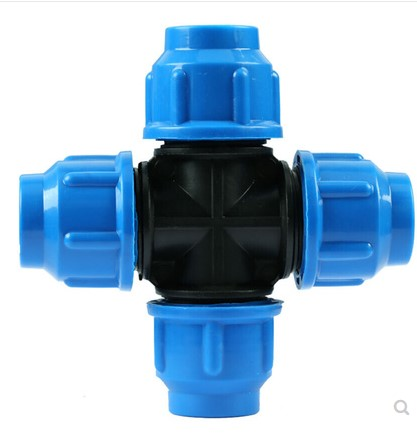
Introduction
Polypropylene Random (PPR) piping systems represent a significant advancement in fluid conveyance technology, increasingly favored across residential, commercial, and industrial applications. These systems, distinguished by their homogenous material composition and heat-fusion joining method, offer a compelling alternative to traditional metallic piping. PPR’s position in the industry chain is characterized by its role as a semi-finished product, requiring specialized extrusion and fabrication processes. Core performance characteristics center around chemical inertness, high flow capacity due to smooth internal surfaces, temperature resistance suitable for both hot and cold water distribution, and a relatively lightweight construction contributing to ease of installation. A primary industry pain point revolves around ensuring consistent weld quality and addressing long-term creep resistance under sustained pressure and temperature, critical for maintaining system integrity over its designed lifespan.
Material Science & Manufacturing
PPR piping is fabricated from polypropylene random copolymer, a thermoplastic polymer derived from propylene monomer. The “random” designation indicates a non-linear arrangement of comonomers, imparting improved impact resistance and flexibility compared to homopolymer polypropylene. Key raw material properties include a density typically between 0.905 – 0.920 g/cm³, a glass transition temperature around -10°C, and a melt flow rate (MFR) influencing processability. Manufacturing begins with polypropylene resin, often compounded with stabilizers (antioxidants, UV absorbers) and pigments. Extrusion is the dominant production process, utilizing single- or twin-screw extruders to melt and shape the polymer into pipes and fittings. Critical parameters during extrusion include barrel temperature profile (typically 190-230°C), screw speed (influencing melt homogeneity), and die geometry (determining dimensional accuracy). Heat-fusion welding – socket fusion, butt fusion, and electrofusion – forms the basis of PPR system assembly. Socket fusion requires precise temperature control (typically 130-170°C) and dwell time to ensure adequate molecular diffusion across the joining surfaces. Electrofusion, employing an electrical heating element within a fitting, offers greater control and is suitable for larger diameter pipes. The consistency of these parameters directly influences weld strength and long-term performance.

Performance & Engineering
PPR piping performance is governed by several engineering principles. Hydrostatic strength, the ability to withstand internal pressure, is a primary concern, dictated by pipe wall thickness and material properties. Stress analysis, often employing finite element modeling (FEM), is crucial for determining safe operating pressures, particularly in complex piping networks. Thermal expansion and contraction are significant considerations, necessitating the incorporation of expansion loops or flexible connectors to mitigate stress on joints. Creep, the time-dependent deformation under sustained load, is a long-term failure mechanism that must be addressed through material selection and design. PPR exhibits good chemical resistance to a wide range of fluids, including potable water, diluted acids, and bases, but compatibility must be verified for specific applications. Environmental resistance encompasses UV degradation (addressed through stabilization additives) and temperature cycling. Compliance with relevant codes and standards (e.g., EN ISO 15876, ASTM D3261) is paramount, ensuring system safety and longevity. Furthermore, the smooth internal surface of PPR pipes minimizes frictional losses, leading to reduced pumping energy requirements and improved fluid flow rates. The system's seismic performance is also a critical engineering aspect, with appropriate bracing and anchoring required in earthquake-prone regions.
Technical Specifications
| Parameter | Unit | Typical Value (DN20 Pipe) | Test Standard |
|---|---|---|---|
| Nominal Diameter | mm | 20 | ISO 1452 |
| Pressure Rating (PN) | bar | 20 | EN ISO 15876 |
| Wall Thickness | mm | 2.3 | EN ISO 15876 |
| Hydrostatic Pressure Test | bar | 40 (for 2 minutes) | EN ISO 15876 |
| Tensile Strength | MPa | 28 | ISO 6259 |
| Elongation at Break | % | 300 | ISO 6259 |
| Vicat Softening Temperature | °C | 135 | ISO 306 |
Failure Mode & Maintenance
PPR piping systems, while durable, are susceptible to specific failure modes. Fatigue cracking can occur at weld joints due to cyclic pressure and temperature fluctuations, exacerbated by improper welding techniques. Creep rupture, as previously mentioned, is a long-term concern, especially at elevated temperatures and sustained pressures. Slow Crack Growth (SCG), particularly in the presence of certain chemicals (e.g., chlorine), can initiate at stress concentrations and propagate slowly over time. Delamination can occur within the pipe wall due to material defects or UV degradation. Oxidation, although generally slow, can affect the material’s properties over extended periods. Maintenance primarily focuses on preventative measures. Regular visual inspections should be conducted to identify any signs of cracking, deformation, or leakage. Water quality monitoring is crucial to prevent chemical attack. Proper thermal insulation can mitigate temperature fluctuations and reduce stress. In the event of a leak, localized repair utilizing heat fusion welding is generally effective, provided the area is properly cleaned and prepared. For significant damage, complete pipe section replacement is recommended. Avoid mechanical stress during installation and operation, as this can initiate crack propagation.
Industry FAQ
Q: What is the impact of water hammer on PPR piping systems, and how can it be mitigated?
A: Water hammer, the pressure surge caused by sudden changes in flow velocity, can induce significant stress on PPR joints. PPR's inherent elasticity allows it to absorb some shock, but repeated or severe water hammer can lead to fatigue cracking. Mitigation strategies include installing water hammer arrestors (air chambers or spring-loaded devices) near rapidly closing valves, utilizing slow-closing valves, and ensuring proper pipe support to prevent movement during pressure surges. Careful system design to minimize flow velocity changes is also critical.
Q: How does the quality of the welding process affect the long-term performance of PPR joints?
A: Welding quality is paramount. Inconsistent heating temperatures, insufficient dwell times, or improper surface preparation lead to inadequate molecular diffusion, resulting in weak joints prone to failure. Regular calibration of welding tools, operator training, and adherence to manufacturer’s recommendations are essential. Non-destructive testing methods, such as visual inspection for complete weld beads and, in critical applications, ultrasonic testing, can verify weld integrity.
Q: What are the limitations of PPR piping in terms of chemical compatibility?
A: While PPR exhibits good resistance to many common chemicals, it is susceptible to degradation by strong oxidizing agents, aromatic hydrocarbons, and chlorinated solvents. Exposure to these substances can cause swelling, cracking, or a reduction in mechanical properties. Always consult a chemical compatibility chart before using PPR in applications involving unfamiliar fluids.
Q: How does UV exposure affect PPR piping, and what protective measures should be taken?
A: Prolonged UV exposure can cause surface degradation and embrittlement of PPR. This is primarily due to chain scission within the polymer structure. Protective measures include using UV-stabilized PPR compounds, shielding pipes from direct sunlight (e.g., by burying them or using opaque coatings), and employing UV-resistant fittings.
Q: What is the expected service life of a properly installed and maintained PPR piping system?
A: With proper installation, operation within specified temperature and pressure limits, and regular maintenance, a PPR piping system can reliably operate for 50 years or more. However, this lifespan is contingent upon factors such as water quality, UV exposure, and the absence of mechanical stress. Regular inspections and prompt repair of any identified issues are crucial for maximizing service life.
Conclusion
PPR piping systems offer a robust and cost-effective solution for fluid conveyance across diverse applications. Their inherent corrosion resistance, smooth internal surfaces, and ease of installation contribute to long-term performance and reduced maintenance costs. However, achieving optimal longevity requires diligent attention to material selection, manufacturing quality, welding procedures, and operating parameters. Addressing potential failure modes such as creep, SCG, and fatigue cracking through preventative maintenance and appropriate design considerations is essential.
Looking forward, advancements in PPR material formulations, including enhanced UV stabilizers and creep-resistant additives, will further improve system durability and expand application possibilities. The increasing adoption of smart monitoring technologies, capable of detecting pressure fluctuations, temperature variations, and potential leaks, will enable proactive maintenance and optimize system performance. Continued adherence to relevant international standards and best practices will remain crucial for ensuring the safety and reliability of PPR piping systems.
-
DN25 HDPE Compression Fitting-HORON INTERNATIONAL|Reliable Irrigation Solutions
NewsFeb.11,2026
-
china 3.5 inch pvc pipe Performance Analysis
News2026-06-03
-
china 75mm plastic pipe Performance Analysis
News2026-06-03
-
china use of ppr pipe Performance Analysis
News2026-06-03
-
china hdpe corrugated subsoil drainage pipe Performance Analysis
News2026-06-03
-
china ppr quick connector Performance Analysis
News2026-06-03
-
china hdpe pipe sizes and dimensions Performance Analysis
News2026-06-02
-
china pvc pipe supplier Performance Analysis
News2026-06-02
-
china flexible water line for kitchen sink Performance Analysis
News2026-06-02
-
china blue pvc pipe Performance Analysis
News2026-06-02
-
china hdpe pipe jain irrigation Performance Analysis
News2026-06-02
-
china hdpe coupling price Performance Analysis
News2026-06-01
-
china dual wall perforated corrugated pipe Performance Analysis
News2026-06-01
-
china ppr pipe 63mm Performance Analysis
News2026-06-01
-
china 63mm hdpe pipe price Performance Analysis
News2026-06-01
-
china ppr water pipe Performance Analysis
News2026-06-01