

Feb . 11, 2026 00:01 Back to list
ppr piping system factory Performance Analysis
Introduction
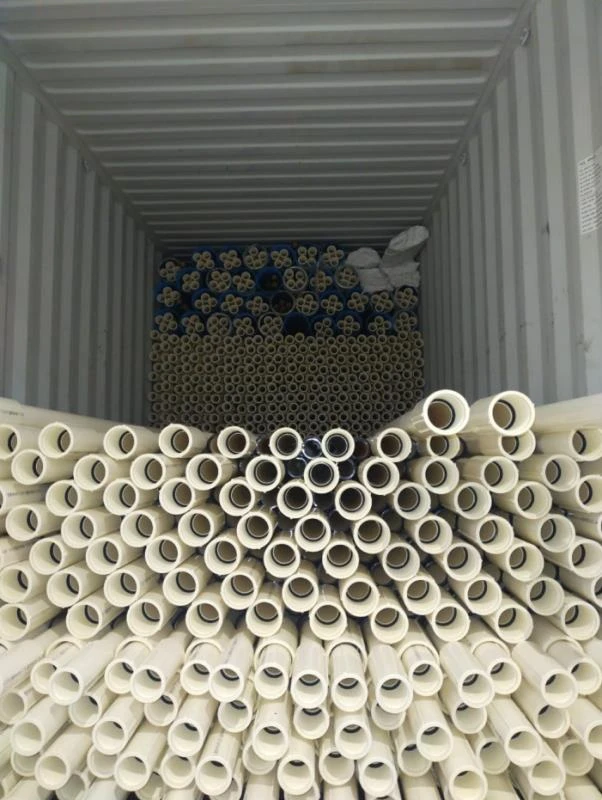
Polypropylene Random (PPR) piping systems represent a significant advancement in fluid conveyance technology, widely adopted across potable water, heating, and cooling applications. PPR systems, manufactured by facilities such as a ppr piping system factory, offer a compelling alternative to traditional metallic piping, primarily due to their corrosion resistance, thermal properties, and ease of installation. This technical guide provides an in-depth examination of PPR piping systems, encompassing material science, manufacturing processes, performance characteristics, potential failure modes, and relevant industry standards. The core performance revolves around maintaining fluid integrity, resisting pressure and temperature fluctuations, and ensuring long-term reliability in diverse operating environments. PPR systems address key industry pain points including water contamination from corrosion in metal pipes, high installation costs associated with welding or threading, and limited design flexibility. This guide is intended for engineers, procurement managers, and maintenance personnel involved in the specification, installation, and maintenance of PPR piping systems.
Material Science & Manufacturing
PPR piping is primarily composed of polypropylene random copolymer, a thermoplastic polymer. The ‘random’ designation refers to the random distribution of comonomers (typically ethylene) within the polypropylene chain. This randomization disrupts the crystallinity of the polypropylene, leading to improved impact strength, flexibility, and weldability. Raw material selection is critical, with homopolymers possessing higher tensile strength but reduced impact resistance, while random copolymers offer a balanced property profile suitable for piping applications. The manufacturing process typically involves extrusion. Polypropylene resin is fed into an extruder, melted, and forced through a die to create the pipe’s shape and dimensions. Key parameters during extrusion include melt temperature (typically 200-230°C), die pressure, and cooling rate. Maintaining consistent melt temperature is crucial to prevent degradation and ensure uniform material properties. Socket fusion fittings are manufactured via injection molding, demanding precise mold temperature control (60-80°C) and injection pressure to ensure dimensional accuracy and proper socket geometry. The cooling rate of both pipes and fittings significantly impacts crystallinity and, therefore, mechanical properties. Slow cooling promotes larger crystallite formation and increased strength, while rapid cooling results in smaller crystallites and enhanced impact resistance. Chemical compatibility is also vital; the raw material must be free from contaminants that could leach into the fluid or compromise the pipe’s integrity. Stabilizers (typically antioxidants and UV stabilizers) are added to the polypropylene to enhance its resistance to thermal degradation and UV exposure.
Performance & Engineering
The performance of PPR piping systems is fundamentally governed by its ability to withstand internal pressure, external loads, and thermal stresses. Hydrostatic pressure testing is a standard quality control procedure, subjecting pipes to pressures significantly exceeding their operating limits to verify their integrity. Force analysis, based on thin-walled cylinder theory, dictates pipe wall thickness based on operating pressure and diameter. Environmental resistance is paramount, particularly resistance to chemical attack. PPR exhibits excellent resistance to most common chemicals found in potable water and many industrial fluids; however, prolonged exposure to strong oxidizing agents or certain organic solvents can lead to degradation. Compliance requirements vary by region, but generally adhere to standards specifying pressure ratings, temperature limits, and material purity. For example, potable water systems require materials certified to NSF/ANSI 61 standards. Functional implementation necessitates careful consideration of thermal expansion and contraction. PPR has a significantly higher coefficient of thermal expansion compared to metal pipes, requiring the incorporation of expansion loops or flexible connectors to prevent stress buildup and potential failure. The system's design must also account for soil conditions if buried, including potential for settlement or corrosive elements. Furthermore, joint integrity is crucial; socket fusion welding, the primary joining method, requires skilled operators and adherence to precise welding parameters (temperature and time) to ensure a homogenous weld bead and prevent leakage. Proper support and anchoring are also critical, especially for long runs of pipe, to prevent sagging and excessive stress on joints.
Technical Specifications
| Parameter | Unit | Typical Value (PN20) | Typical Value (PN25) |
|---|---|---|---|
| Pressure Rating | Bar | 2.0 MPa | 2.5 MPa |
| Operating Temperature | °C | -20 to +95 | -20 to +95 |
| Tensile Strength | MPa | 28 - 35 | 30 - 40 |
| Elongation at Break | % | 200 - 300 | 150 - 250 |
| Water Absorption (24hr) | % | <0.1 | <0.1 |
| Thermal Conductivity | W/m·K | 0.24 | 0.24 |
Failure Mode & Maintenance
PPR piping systems, while durable, are susceptible to several failure modes. Fatigue cracking can occur due to cyclic pressure fluctuations, particularly at stress concentration points like joints or fittings. Delamination, although less common, can result from improper welding techniques or material contamination during manufacturing. Degradation from UV exposure can lead to embrittlement and reduced impact resistance, especially in exposed applications. Oxidation, triggered by high temperatures or contact with oxidizing agents, can weaken the polymer structure. A common failure mode is related to improper socket fusion welding – insufficient heating, excessive heating, or improper insertion can create weak joints prone to leakage. Slow Crack Growth (SCG), caused by sustained tensile stress in the presence of certain chemicals, is a significant concern. Maintenance should focus on regular visual inspections to identify cracks, leaks, or signs of degradation. Preventative maintenance includes protecting exposed piping from UV radiation and ensuring proper support to minimize stress on joints. For minor leaks, re-welding the joint may be feasible, provided the surrounding material is clean and undamaged. In cases of extensive degradation or cracking, pipe sections should be replaced. Avoid the use of abrasive cleaning agents, as they can scratch the surface and create stress concentration points. Periodic hydrostatic testing can verify system integrity and identify potential weaknesses before they escalate into major failures. Proper water quality management is also important, as aggressive water chemistry can accelerate corrosion of any metallic components within the system (e.g., fittings with metal inserts).
Industry FAQ
Q: What are the key advantages of PPR piping over traditional copper piping in potable water systems?
A: PPR offers several advantages over copper. Firstly, it’s inherently corrosion resistant, eliminating the risk of copper leaching into the water supply, a significant health concern. Secondly, PPR is significantly lighter than copper, simplifying installation and reducing labor costs. Thirdly, PPR’s smooth inner surface minimizes friction loss, leading to lower pumping energy consumption. Finally, PPR’s lower cost compared to copper can result in substantial overall project savings.
Q: What is the recommended welding temperature and time for socket fusion joining of PPR pipes and fittings?
A: Recommended welding parameters depend on the pipe and fitting dimensions. Generally, a welding temperature of 260-270°C is used for PN20 and PN25 systems. Welding time varies from 6-12 seconds for smaller diameters (e.g., 20mm) to 15-20 seconds for larger diameters (e.g., 63mm). It is crucial to follow the manufacturer's specific recommendations and ensure the heating tool is calibrated correctly. Consistent pressure during the welding process is also vital for achieving a strong, leak-proof joint.
Q: How does PPR piping perform in high-temperature heating applications?
A: PPR is well-suited for heating applications, with a maximum continuous operating temperature of 95°C. However, prolonged exposure to temperatures exceeding this limit can lead to softening and creep. For radiant heating systems or applications with higher temperature fluctuations, it’s essential to select PPR-HT (High Temperature) grades, specifically engineered for enhanced thermal stability. Proper insulation of the piping is also crucial to minimize heat loss and maintain consistent temperatures.
Q: What are the limitations of PPR piping concerning chemical compatibility?
A: While PPR exhibits excellent resistance to many common chemicals, it is susceptible to degradation from strong oxidizing agents, aromatic hydrocarbons, and certain chlorinated solvents. It’s crucial to verify the chemical compatibility of PPR with the fluids being conveyed in the system. Exposure to these chemicals can cause swelling, cracking, or reduced mechanical strength.
Q: What methods can be used to detect leaks in a PPR piping system?
A: Visual inspection is the first line of defense, looking for signs of water staining or dripping at joints. Pressure testing with air or water can help pinpoint leaks. Acoustic leak detection equipment can be used to listen for the sound of escaping fluid. For concealed piping, thermal imaging cameras can detect temperature differences caused by leaking water. Regular inspection and preventative maintenance are critical for early leak detection and mitigation.
Conclusion
PPR piping systems represent a robust and cost-effective solution for a wide range of fluid conveyance applications. The inherent corrosion resistance, ease of installation, and balanced mechanical properties of PPR make it a compelling alternative to traditional materials like copper and steel. Successful implementation requires a thorough understanding of material science, manufacturing processes, and engineering principles. Adhering to industry standards and best practices, particularly concerning jointing techniques and chemical compatibility, is paramount to ensuring long-term reliability and performance.
Future advancements in PPR technology will likely focus on enhancing thermal stability, improving resistance to specific chemicals, and developing more sophisticated leak detection methods. Integration with smart monitoring systems for real-time pressure and temperature data will further enhance system efficiency and safety. Continuous innovation and stringent quality control from manufacturers like a ppr piping system factory will be crucial to maintaining PPR’s position as a leading material in fluid conveyance systems.
-
DN25 HDPE Compression Fitting-HORON INTERNATIONAL|Reliable Irrigation Solutions
NewsFeb.11,2026
-
china 3.5 inch pvc pipe Performance Analysis
News2026-06-03
-
china 75mm plastic pipe Performance Analysis
News2026-06-03
-
china use of ppr pipe Performance Analysis
News2026-06-03
-
china hdpe corrugated subsoil drainage pipe Performance Analysis
News2026-06-03
-
china ppr quick connector Performance Analysis
News2026-06-03
-
china hdpe pipe sizes and dimensions Performance Analysis
News2026-06-02
-
china pvc pipe supplier Performance Analysis
News2026-06-02
-
china flexible water line for kitchen sink Performance Analysis
News2026-06-02
-
china blue pvc pipe Performance Analysis
News2026-06-02
-
china hdpe pipe jain irrigation Performance Analysis
News2026-06-02
-
china hdpe coupling price Performance Analysis
News2026-06-01
-
china dual wall perforated corrugated pipe Performance Analysis
News2026-06-01
-
china ppr pipe 63mm Performance Analysis
News2026-06-01
-
china 63mm hdpe pipe price Performance Analysis
News2026-06-01
-
china ppr water pipe Performance Analysis
News2026-06-01