

Feb . 11, 2026 00:01 Back to list
hdpe sprinkler pipe price factory Manufacturing Process and Performance Analysis
Introduction
High-Density Polyethylene (HDPE) sprinkler pipe represents a critical component in modern irrigation systems, offering a robust and cost-effective alternative to traditional materials like PVC and metal. This technical guide details the material science, manufacturing processes, performance characteristics, potential failure modes, and relevant industry standards associated with HDPE sprinkler pipe, specifically focusing on considerations crucial for procurement and long-term system reliability. HDPE sprinkler pipe is commonly utilized in agricultural irrigation, landscaping, and fire suppression systems, valued for its flexibility, durability, and resistance to chemical degradation. The 'price factory' aspect implies a direct-from-manufacturer supply chain, demanding thorough technical understanding to assess value beyond initial cost.
Material Science & Manufacturing
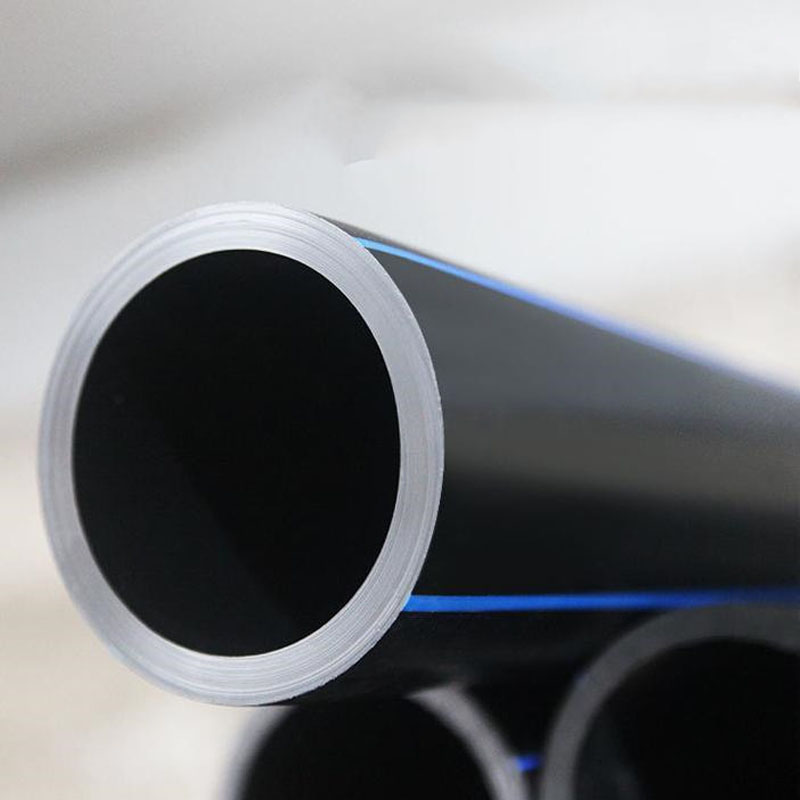
HDPE sprinkler pipe derives its properties from the polymerization of ethylene, resulting in a thermoplastic polymer with a high strength-to-density ratio. Raw material selection is paramount; virgin HDPE resins, categorized by PE100, PE80, and PE63 designations based on their minimum required strength (MRS), are most frequently employed. PE100 offers the highest long-term hydrostatic strength. Additives, such as carbon black, are incorporated for UV resistance, and stabilizers are used to prevent thermal degradation during processing.
Manufacturing typically employs extrusion processes. HDPE granules are fed into an extruder, melted, and forced through a die to create a continuous pipe. Key process parameters include melt temperature (typically 180-210°C), die pressure, and cooling rate. Precise control of these parameters is essential to maintain consistent wall thickness, diameter, and material crystallinity. The pipe is then cooled in a water bath and cut to specified lengths. Butt fusion, socket fusion, and electrofusion are common joining methods. Butt fusion, involving heating both pipe ends and pressing them together, is preferred for larger diameters and requires skilled operators to ensure proper weld integrity. Quality control includes hydrostatic testing to verify burst pressure and dimensional accuracy. The degree of crystallinity, influenced by cooling rate, dictates the pipe's long-term creep resistance and overall structural integrity.
Performance & Engineering
The performance of HDPE sprinkler pipe is governed by its ability to withstand internal hydrostatic pressure, external loads, and environmental stresses. Force analysis considers hoop stress (resulting from internal pressure) and longitudinal stress. Long-term hydrostatic strength (LTHS) is a critical design parameter, representing the maximum sustained pressure the pipe can handle over a specified service life (typically 50 years).
Environmental resistance is a significant advantage of HDPE. It exhibits excellent resistance to many chemicals commonly found in soil and water, including acids, bases, and salts. However, prolonged exposure to strong oxidizing agents should be avoided. UV degradation is mitigated by the addition of carbon black, but extended exposure to direct sunlight can still lead to embrittlement.
Compliance requirements vary by region. In North America, ASTM D1785 and ASTM F441 govern HDPE pipe dimensions and performance. European standards include EN 12201. These standards specify requirements for material properties, hydrostatic design stress (HDS), and joint integrity. Proper anchoring and support are crucial to prevent excessive bending stress, particularly in above-ground installations. Soil loading must be considered for buried pipes to avoid flattening and potential failure. The allowable bending radius is directly related to the pipe’s wall thickness and diameter; exceeding this radius can induce stress concentrations leading to cracking.
Technical Specifications
| Parameter | Unit | PE63 (Typical) | PE80 (Typical) | PE100 (Typical) |
|---|---|---|---|---|
| Minimum Required Strength (MRS) | MPa | 6.3 | 8.0 | 10.0 |
| Hydrostatic Design Stress (HDS) (50 yr) | MPa | 4.2 | 5.3 | 6.6 |
| Density | kg/m³ | 950-965 | 950-965 | 950-965 |
| Operating Temperature Range | °C | -40 to +60 | -40 to +60 | -40 to +60 |
| Outside Diameter | mm | 20-630 | 20-630 | 20-630 |
| Wall Thickness | mm | 2.3 - 20 | 2.3 - 20 | 2.3 - 20 |
Failure Mode & Maintenance
HDPE sprinkler pipe, while durable, is susceptible to several failure modes. Slow Crack Growth (SCG) is a common issue, particularly in systems experiencing sustained tensile stress combined with aggressive environmental factors. This manifests as microcracks that propagate over time, eventually leading to complete failure. Fatigue cracking can occur in areas subject to repeated pressure fluctuations. UV degradation, even with carbon black additives, can cause surface embrittlement and eventual cracking.
Joint failures are another frequent occurrence. Improper fusion techniques (insufficient heating, incorrect pressure) result in weak welds prone to leakage or catastrophic failure. Soil movement can induce stress on buried joints. Localized damage from excavation equipment or external impacts can also compromise pipe integrity.
Preventative maintenance includes regular visual inspections for cracks, leaks, or deformations. Hydrostatic testing can be performed periodically to assess overall system integrity. Proper backfilling and soil compaction around buried pipes are crucial to prevent stress concentration. UV-resistant coatings or burial can extend service life in exposed applications. For repairs, qualified technicians should perform butt fusion or electrofusion welding according to established procedures. In cases of SCG, replacement of the affected pipe section is generally recommended.
Industry FAQ
Q: What is the impact of temperature fluctuations on HDPE sprinkler pipe performance?
A: HDPE exhibits a coefficient of thermal expansion, meaning it expands and contracts with temperature changes. While this is generally not a critical concern in properly designed systems with flexible joints, significant temperature swings can induce stress in rigid sections or joints. Design calculations should account for expected temperature ranges. Extreme cold can increase brittleness, while elevated temperatures can reduce the pipe’s load-bearing capacity.
Q: How does the 'price factory' model affect quality control and traceability?
A: Direct sourcing from a 'price factory' necessitates heightened due diligence regarding quality control. Verification of ISO 9001 certification is essential, along with independent third-party testing of material properties and hydrostatic pressure ratings. Traceability of raw materials and production batches is crucial for identifying and addressing potential issues. On-site audits of the factory can provide valuable insights into manufacturing processes and quality assurance procedures.
Q: What are the key considerations when selecting HDPE pipe for a high-pressure sprinkler system?
A: For high-pressure systems, PE100 resin is recommended due to its superior long-term hydrostatic strength. Sufficient wall thickness must be selected based on the operating pressure and design factor, as defined by relevant standards (e.g., ASTM D1785). Proper jointing techniques (butt fusion or electrofusion) are critical to ensure weld integrity. Regular hydrostatic testing is advised to verify system performance.
Q: Can HDPE sprinkler pipe be used in applications involving recycled water?
A: Yes, HDPE is generally compatible with treated recycled water. However, the specific composition of the recycled water must be analyzed to ensure it does not contain aggressive chemicals that could degrade the pipe material. Monitoring water quality and periodic inspections are recommended to detect any signs of corrosion or degradation.
Q: What is the typical service life expectancy of a properly installed and maintained HDPE sprinkler pipe system?
A: With proper installation, operation within specified pressure and temperature limits, and regular maintenance, a HDPE sprinkler pipe system can have a service life of 50 years or more. However, factors such as UV exposure, soil conditions, and water quality can influence the actual lifespan. Periodic inspections and preventative maintenance can significantly extend the system’s operational life.
Conclusion
HDPE sprinkler pipe provides a compelling combination of durability, cost-effectiveness, and ease of installation, making it a preferred material for a wide range of irrigation and fluid transport applications. Understanding the material science fundamentals, manufacturing nuances, and potential failure modes is crucial for ensuring long-term system reliability and minimizing life-cycle costs. The 'price factory' model offers potential economic benefits, but necessitates a rigorous approach to quality control and traceability.
Future developments in HDPE technology are focused on enhancing UV resistance, improving SCG resistance through novel additive formulations, and developing more advanced non-destructive testing methods for assessing pipe integrity. Proper design, installation, and ongoing maintenance remain paramount to maximizing the lifespan and performance of HDPE sprinkler pipe systems. Adherence to relevant international standards is non-negotiable for ensuring compliance and safety.
-
DN25 HDPE Compression Fitting-HORON INTERNATIONAL|Reliable Irrigation Solutions
NewsFeb.11,2026
-
china pvc to hdpe connection Performance Analysis
News2026-04-24
-
china ppr pipe elbow Performance Analysis
News2026-04-24
-
china hdpe straight coupler Performance Analysis
News2026-04-24
-
china what are pvc pipes used for Performance Analysis
News2026-04-24
-
china hdpe flexible irrigation pipe Performance Analysis
News2026-04-24
-
china 40mm pvc pipe Material and Manufacturing
News2026-04-23
-
china hdpe to pvc connection Performance Analysis
News2026-04-23
-
china ppr pipe 1 price Performance Analysis
News2026-04-23
-
china colored pvc pipe Performance Analysis
News2026-04-23
-
china hdpe pipe price list pdf Performance Analysis
News2026-04-23
-
china ppr for hot water Performance Analysis
News2026-04-22
-
china bulk pvc pipe Technical Analysis
News2026-04-22
-
china pvc pipes price list Performance Analysis
News2026-04-22
-
china 20 ft pvc pipe Performance Analysis
News2026-04-22
-
china ppr cold water pipe Performance Analysis
News2026-04-22