

Feb . 11, 2026 00:01 Back to list
hdpe sprinkler pipe price factories Performance Analysis
Introduction
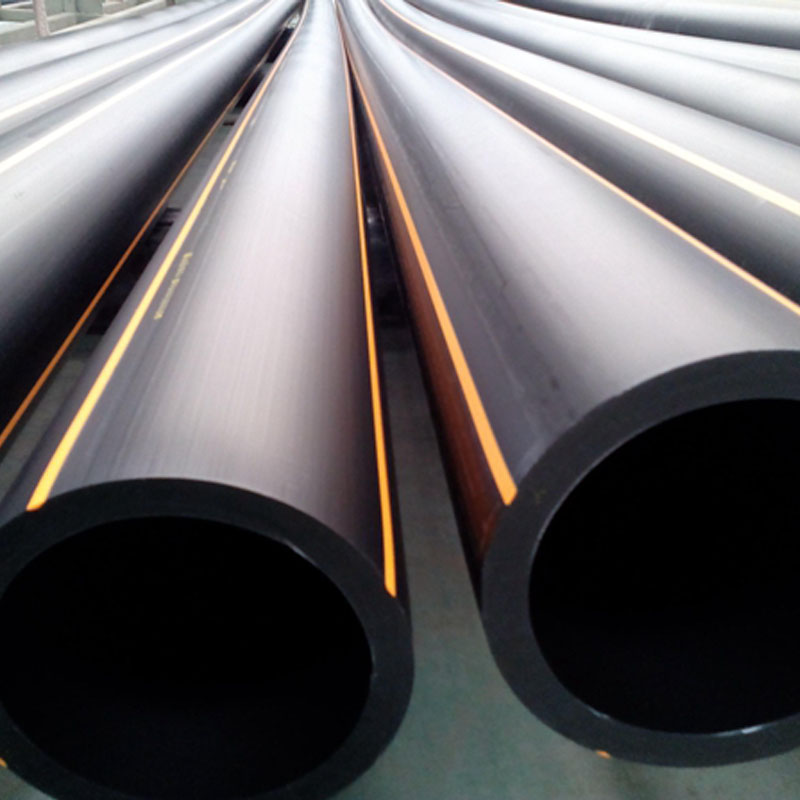
High-Density Polyethylene (HDPE) sprinkler pipe represents a critical component in modern irrigation systems, offering a robust and cost-effective alternative to traditional metal piping. Within the agricultural, landscaping, and golf course management sectors, HDPE sprinkler pipe serves as the distribution network for pressurized water, delivering essential hydration to crops and vegetation. Its position in the supply chain encompasses raw material production (polyethylene resin), extrusion into pipe form, quality control assessment, and finally, distribution to installers and end-users. Core performance characteristics center on pressure rating, flow capacity, UV resistance, and long-term durability – all significantly impacting irrigation system efficiency and operational lifespan. The competitive landscape of “hdpe sprinkler pipe price factories” is driven by economies of scale, resin pricing fluctuations, and adherence to industry standards impacting material quality and production techniques. A key pain point for purchasers is balancing initial cost with long-term system reliability and minimizing the risk of leaks or failures impacting yield or aesthetics.
Material Science & Manufacturing
HDPE sprinkler pipe is derived from polyethylene resin, specifically high-density polyethylene (HDPE) grades designated for pressure applications. The material's properties are dictated by its molecular weight distribution and density. Higher density equates to greater strength and rigidity, but also potentially reduced flexibility. Raw materials are typically sourced from petrochemical refineries, undergoing polymerization processes to create the HDPE resin. Manufacturing primarily utilizes extrusion. HDPE resin pellets are fed into an extruder, melted, and forced through a die to form a continuous pipe. Crucial parameters during extrusion include melt temperature (typically between 190°C and 210°C), screw speed, and die geometry. Controlling these parameters ensures consistent wall thickness and dimensional accuracy. Pipe diameter is determined by the die size. Cooling is a critical step, employing water baths to solidify the extruded pipe while maintaining its shape. Subsequent processes include marking (identifying size, pressure rating, and manufacturer), cutting to length, and quality control testing. The degree of branching in the polymer chain significantly impacts the pipe's resistance to slow crack growth (SCG), a primary failure mode. Stabilizers (UV inhibitors and antioxidants) are often added to the resin during compounding to enhance long-term durability and prevent degradation from sunlight exposure. The presence of carbon black contributes to UV protection but can affect weldability if concentration is too high.
Performance & Engineering
The performance of HDPE sprinkler pipe is fundamentally governed by its ability to withstand internal hydrostatic pressure. This pressure rating, expressed in PSI (pounds per square inch) or PN (nominal pressure), is determined by Barlow's Formula: P = (2 S t) / D, where P is the pressure rating, S is the hoop strength of the material, t is the wall thickness, and D is the outside diameter. Engineering considerations include force analysis to predict stress concentrations at joints, fittings, and under static and dynamic loads. Environmental resistance is crucial; HDPE exhibits excellent chemical resistance to most common irrigation chemicals, but prolonged exposure to strong oxidizers should be avoided. UV degradation is a major concern, necessitating the use of UV stabilizers in the resin. Compliance requirements vary geographically, with standards like AWWA C906 (American Water Works Association) and DIN 8074 (German Institute for Standardization) dictating pipe dimensions, pressure ratings, and material specifications. The design of the sprinkler system necessitates calculating the required flow rate and selecting pipe diameters to minimize friction losses. Friction loss is calculated using the Hazen-Williams equation, factoring in pipe roughness, flow velocity, and pipe length. Joint integrity, typically achieved through butt fusion, electrofusion, or mechanical fittings, is paramount to prevent leaks and maintain system pressure. Proper fusion parameters (temperature and pressure) are critical to achieve optimal weld strength.
Technical Specifications
| Parameter | Units | Typical Value (Schedule 40) | Typical Value (Schedule 80) |
|---|---|---|---|
| Outside Diameter | inches | 0.500 – 4.000 | 0.500 – 4.000 |
| Wall Thickness | inches | 0.062 – 0.375 | 0.083 – 0.438 |
| Pressure Rating (Hydrostatic) | PSI | 100 – 200 | 160 – 325 |
| Density | g/cm³ | 0.941 – 0.965 | 0.941 – 0.965 |
| Maximum Operating Temperature | °F | 140 | 140 |
| Tensile Strength | PSI | 4,000 – 6,000 | 4,000 – 6,000 |
Failure Mode & Maintenance
HDPE sprinkler pipe, while durable, is susceptible to several failure modes. Slow Crack Growth (SCG) is a prevalent issue, initiated by stress concentrations and exacerbated by exposure to certain chemicals and UV radiation. SCG manifests as small cracks that propagate slowly over time, eventually leading to leaks. Another failure mode is brittle fracture, particularly at low temperatures or due to impact damage. Joint failures, often occurring at butt fusion welds, can result from inadequate fusion parameters, contamination during welding, or excessive stress on the joint. Oxidation, though less common with stabilized HDPE, can degrade the material over extended periods, particularly in high-temperature environments. Regular maintenance includes visual inspection for cracks, leaks, and signs of UV degradation. Proper backfilling practices are crucial to prevent stress on the pipe. Should leaks occur, repair options include using mechanical couplings or, for larger failures, replacing the affected pipe section. Preventative measures involve protecting the pipe from direct sunlight exposure (e.g., burying it) and ensuring proper water quality to minimize chemical attack. Periodic pressure testing can help identify developing leaks before they become significant problems. For butt-fused joints, it is critical to maintain detailed records of fusion parameters for traceability and quality control.
Industry FAQ
Q: What is the impact of pipe schedule (40 vs. 80) on long-term cost of ownership?
A: While Schedule 80 pipe has a higher initial cost due to its thicker wall, it offers increased pressure rating and enhanced durability. This translates to a longer service life and reduced risk of failure, potentially lowering long-term maintenance and replacement costs, especially in high-pressure or demanding applications. A life-cycle cost analysis is recommended to determine the most economical option.
Q: How does the UV exposure affect the performance of HDPE sprinkler pipe and what mitigation strategies are recommended?
A: Prolonged UV exposure causes degradation of the HDPE material, leading to embrittlement and reduced strength. Mitigation strategies include incorporating UV stabilizers during the manufacturing process, burying the pipe, or using a protective coating. The concentration and type of UV stabilizer are critical factors in determining the pipe's UV resistance.
Q: What are the key differences between butt fusion and electrofusion welding and when should each method be employed?
A: Butt fusion is typically used for larger diameter pipes and offers a faster welding cycle, while electrofusion is preferred for smaller diameters and complex fittings. Electrofusion provides more precise control over the welding process and is often used where tighter tolerances are required. Both methods require skilled operators and adherence to established procedures.
Q: What is the significance of the PE 100 material designation in relation to sprinkler pipe performance?
A: PE 100 designates a grade of HDPE with a minimum required strength (MRS) of 10 MPa. This higher MRS translates to improved slow crack growth resistance and enhanced long-term performance, making PE 100 a preferred material for pressure applications like sprinkler systems. It’s a benchmark for material quality.
Q: What quality control tests are essential to ensure the reliability of HDPE sprinkler pipe after manufacturing?
A: Essential tests include hydrostatic pressure testing (to verify burst pressure), dimensional inspection (to ensure adherence to specifications), impact resistance testing (to assess toughness), and material identification testing (to confirm resin grade and stabilizer content). Records of these tests should be readily available for traceability.
Conclusion
HDPE sprinkler pipe provides a durable, cost-effective, and reliable solution for irrigation systems. Its performance is intrinsically linked to the material science – specifically the density and molecular weight distribution of the HDPE resin – and the precision of the manufacturing process, most notably the extrusion parameters and welding techniques. Selecting the appropriate pipe schedule, employing UV protection measures, and adhering to industry standards like AWWA C906 are crucial for maximizing the system's lifespan and minimizing maintenance costs.
Future developments in HDPE sprinkler pipe technology are likely to focus on enhancing material properties through advanced polymer blends and incorporating smart sensors for leak detection and performance monitoring. Optimizing pipe designs to reduce friction losses and improving the efficiency of welding processes will also be key areas of innovation. Continuous monitoring of industry standards and regulations is essential to ensure compliance and maintain the highest levels of system reliability.
-
DN25 HDPE Compression Fitting-HORON INTERNATIONAL|Reliable Irrigation Solutions
NewsFeb.11,2026
-
china pvc to hdpe connection Performance Analysis
News2026-04-24
-
china ppr pipe elbow Performance Analysis
News2026-04-24
-
china hdpe straight coupler Performance Analysis
News2026-04-24
-
china what are pvc pipes used for Performance Analysis
News2026-04-24
-
china hdpe flexible irrigation pipe Performance Analysis
News2026-04-24
-
china 40mm pvc pipe Material and Manufacturing
News2026-04-23
-
china hdpe to pvc connection Performance Analysis
News2026-04-23
-
china ppr pipe 1 price Performance Analysis
News2026-04-23
-
china colored pvc pipe Performance Analysis
News2026-04-23
-
china hdpe pipe price list pdf Performance Analysis
News2026-04-23
-
china ppr for hot water Performance Analysis
News2026-04-22
-
china bulk pvc pipe Technical Analysis
News2026-04-22
-
china pvc pipes price list Performance Analysis
News2026-04-22
-
china 20 ft pvc pipe Performance Analysis
News2026-04-22
-
china ppr cold water pipe Performance Analysis
News2026-04-22