

Feb . 11, 2026 00:01 Back to list
china pvc sewer pipe Technical Performance
Introduction
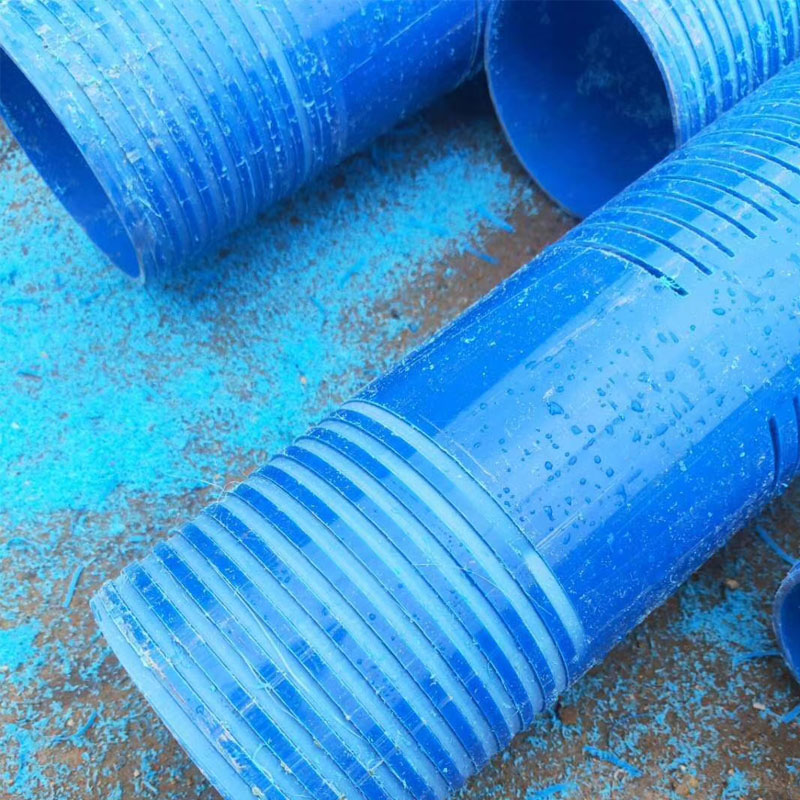
Polyvinyl chloride (PVC) sewer pipe, specifically manufactured in China, represents a significant component in modern wastewater management infrastructure. This guide provides an in-depth technical overview of Chinese-produced PVC sewer pipes, covering their material composition, manufacturing processes, performance characteristics, potential failure modes, and relevant industry standards. PVC sewer pipe systems are utilized for gravity-fed collection of domestic, commercial, and industrial wastewater, offering a cost-effective and durable solution compared to traditional materials like concrete or ductile iron. Chinese manufacturers have become dominant in this market, necessitating a detailed understanding of their product quality, compliance, and long-term performance. The core performance characteristics – hydraulic capacity, chemical resistance, structural integrity, and joint tightness – are crucial for ensuring efficient and reliable wastewater conveyance. This document targets engineers, procurement managers, and regulatory personnel involved in the specification, installation, and maintenance of PVC sewer systems.
Material Science & Manufacturing
The primary raw material for PVC sewer pipe is polyvinyl chloride resin, typically sourced as suspension PVC (S-PVC) or emulsion PVC (E-PVC). S-PVC provides higher impact resistance, vital for underground applications, while E-PVC offers a finer particle size for smoother surface finishes. Formulation includes plasticizers (typically phthalates or alternatives like DINCH), stabilizers (often based on calcium-zinc or lead-based compounds - the latter facing increasing regulatory scrutiny), lubricants, and impact modifiers (e.g., chlorinated polyethylene - CPE). The ratio of PVC to plasticizer significantly influences the pipe's flexibility and operating temperature range. Manufacturing predominantly utilizes the extrusion process. PVC compound is fed into a single or twin-screw extruder, where it is heated, melted, and homogenized. The molten PVC is then forced through a die to create the desired pipe diameter and wall thickness. Precise control of extrusion temperature (typically 180-210°C) is critical to prevent degradation and maintain material properties. Cooling is achieved using water baths or air cooling rings. Bell-and-spigot or solvent weld joints are common; bell-and-spigot require rubber gaskets for watertight seals, while solvent welding chemically bonds the pipe sections. Quality control parameters include melt flow index (MFI), tensile strength, impact resistance (Izod notched impact), and thermal stability. The material’s Vicat softening temperature (typically 75-85°C) dictates the maximum operational temperature.
Performance & Engineering
PVC sewer pipe performance is governed by its structural capacity to withstand external loads (soil cover, traffic load) and internal hydrostatic pressure. The pipe's stiffness, measured as the pipe deflection at a given load (D-load), is a key engineering parameter. Higher D-loads indicate greater resistance to deformation. Finite element analysis (FEA) is increasingly used to model stress distribution within the pipe under various loading scenarios. Chemical resistance is another critical factor. PVC exhibits good resistance to most common wastewater constituents, but prolonged exposure to aggressive chemicals (e.g., industrial solvents, high concentrations of sulfates) can cause degradation. Joint performance is paramount; gasket materials (typically synthetic rubbers like EPDM or SBR) must maintain sealing integrity over the system’s lifespan. The allowable bending radius is a function of pipe diameter and wall thickness to prevent stress concentrations and cracking. Long-term creep – the gradual deformation of the pipe under sustained load – is a concern, particularly at elevated temperatures. Corrosion resistance is inherent to PVC, unlike metallic alternatives, eliminating the need for cathodic protection or extensive coating systems. Hydraulic calculations, based on Manning’s equation, determine flow capacity and prevent solids deposition.
Technical Specifications
| Parameter | Units | ASTM D1785 Standard | Typical Chinese PVC Sewer Pipe |
|---|---|---|---|
| Nominal Pipe Size | inches | 4, 6, 8, 10, 12 | 4, 6, 8, 10, 12, 15, 18, 21, 24 |
| Pressure Rating | psi | Varies by Schedule (40, 80) | PN10 (145 psi), PN16 (232 psi) common |
| D-Load (5% deflection) | lbs/in | Dependent on size & Schedule | Typically 80-120 lbs/in for PN10 |
| Material | - | PVC Compound | PVC-U (Unplasticized PVC) |
| Wall Thickness | inches | Dependent on Schedule | Ranges from 0.177 to 0.375 inches |
| Operating Temperature Range | °F | -40 to 140 | -5 to 60 (typical operating range) |
Failure Mode & Maintenance
PVC sewer pipe failures commonly arise from several mechanisms. Mechanical damage during installation (e.g., cracking from improper handling or bedding) is a frequent cause. Long-term creep, exacerbated by elevated temperatures and sustained loads, can lead to ovalation and joint separation. Chemical attack from aggressive wastewater constituents (e.g., hydrogen sulfide, fats, oils, grease – FOG) can degrade the PVC matrix, reducing its strength and ductility. Ultraviolet (UV) degradation, though less common in buried applications, can embrittle exposed pipe sections. Joint failures often result from improper gasket installation, gasket degradation (due to chemical attack or temperature extremes), or soil movement causing stress on the joint. Delamination can occur if the PVC compound is poorly mixed or if moisture ingress compromises the interlayer adhesion. Maintenance should include regular visual inspections for cracks, leaks, and deformation. Preventative maintenance involves proper bedding and backfill procedures, avoiding excessive loads, and controlling the introduction of aggressive chemicals into the sewer system. Repair options range from localized patching to complete pipe replacement, depending on the severity of the damage. CCTV (Closed-Circuit Television) inspection is crucial for identifying internal defects and assessing pipe condition.
Industry FAQ
Q: What are the primary differences in quality between Chinese-manufactured PVC sewer pipe and pipes produced in North America or Europe?
A: Historically, there have been concerns regarding consistency in raw material quality and adherence to standards in some Chinese manufacturing facilities. While quality has significantly improved, diligent third-party inspection and verification of certifications (e.g., ISO 9001) are still crucial. Differences often lie in plasticizer formulations, stabilizer systems, and the level of process control. Reputable Chinese manufacturers now often meet or exceed international standards.
Q: How does the presence of hydrogen sulfide (H2S) affect the longevity of PVC sewer pipe?
A: H2S accelerates PVC degradation through a process called sulfidation, leading to embrittlement and cracking. The reaction forms sulfuric acid, which weakens the polymer matrix. Mitigation strategies include the use of H2S scavengers, proper ventilation, and the selection of PVC compounds with enhanced sulfide resistance.
Q: What is the importance of the D-load rating, and how should it be selected for a specific application?
A: The D-load rating indicates the pipe's ability to withstand external loads without significant deflection. Selection depends on the anticipated soil cover, traffic loads, and groundwater table. Higher D-load ratings are required for deeper burial depths and areas subject to heavy traffic. Geotechnical investigations are essential to accurately determine the soil properties and loading conditions.
Q: Are there any specific concerns regarding the use of lead-based stabilizers in Chinese PVC sewer pipe?
A: Lead-based stabilizers are increasingly being phased out due to environmental concerns. While historically common, modern Chinese manufacturers are transitioning to calcium-zinc or organic-based stabilizers. Verification of the stabilizer system used is crucial to ensure compliance with environmental regulations.
Q: What are the recommended bedding and backfill materials for PVC sewer pipe installation?
A: Proper bedding and backfill are critical for providing uniform support and preventing stress concentrations. Recommended materials include granular bedding (e.g., sand, gravel) and non-aggressive backfill (e.g., screened soil, sand). Compaction should be controlled to avoid over-compaction, which can damage the pipe.
Conclusion
China-produced PVC sewer pipe offers a cost-effective and durable solution for wastewater conveyance, but its successful implementation relies on a thorough understanding of its material properties, manufacturing processes, and potential failure modes. Rigorous quality control, adherence to international standards, and proper installation practices are essential to ensure long-term performance and reliability. The chemical resistance and structural integrity of PVC make it a viable alternative to traditional materials, however, specific environmental conditions and wastewater characteristics must be considered during material selection and system design.
Continued advancements in PVC compound formulations and manufacturing techniques are enhancing the performance and sustainability of these systems. Future trends include the development of bio-based plasticizers, the incorporation of recycled PVC content, and the use of smart monitoring technologies to detect leaks and assess pipe condition. A holistic approach, encompassing material science, engineering principles, and proactive maintenance, is crucial for maximizing the lifespan and efficiency of PVC sewer infrastructure.
-
DN25 HDPE Compression Fitting-HORON INTERNATIONAL|Reliable Irrigation Solutions
NewsFeb.11,2026
-
china ppr water pipe price Performance Analysis
News2026-06-06
-
china ppr composite pipe Performance Analysis
News2026-06-06
-
china ppr pipe 25mm price Performance Analysis
News2026-06-06
-
china ppr pipe use Performance Analysis
News2026-06-06
-
china pvc sewer pipe Technical Performance
News2026-06-06
-
china hdpe coupling joint Performance Analysis
News2026-06-05
-
china ppr pipe connector Manufacturing Analysis
News2026-06-05
-
china ppr pipe 20mm Manufacturing Analysis
News2026-06-05
-
china pvc pipe used for water supply Performance and Engineering
News2026-06-05
-
china orange pvc pipe Performance Engineering
News2026-06-05
-
china 1 2 ppr pipe in mm Performance Analysis
News2026-06-04
-
china hdpe pipe for water supply specifications Performance Analysis
News2026-06-04
-
china ppr hot water pipe insulation Thermal Performance
News2026-06-04
-
china 24 inch diameter pvc pipe Performance Analysis
News2026-06-04
-
china ppr hot water pipe Performance Analysis
News2026-06-04