

Feb . 11, 2026 00:01 Back to list
china dual wall corrugated drain pipe Performance Analysis
Introduction
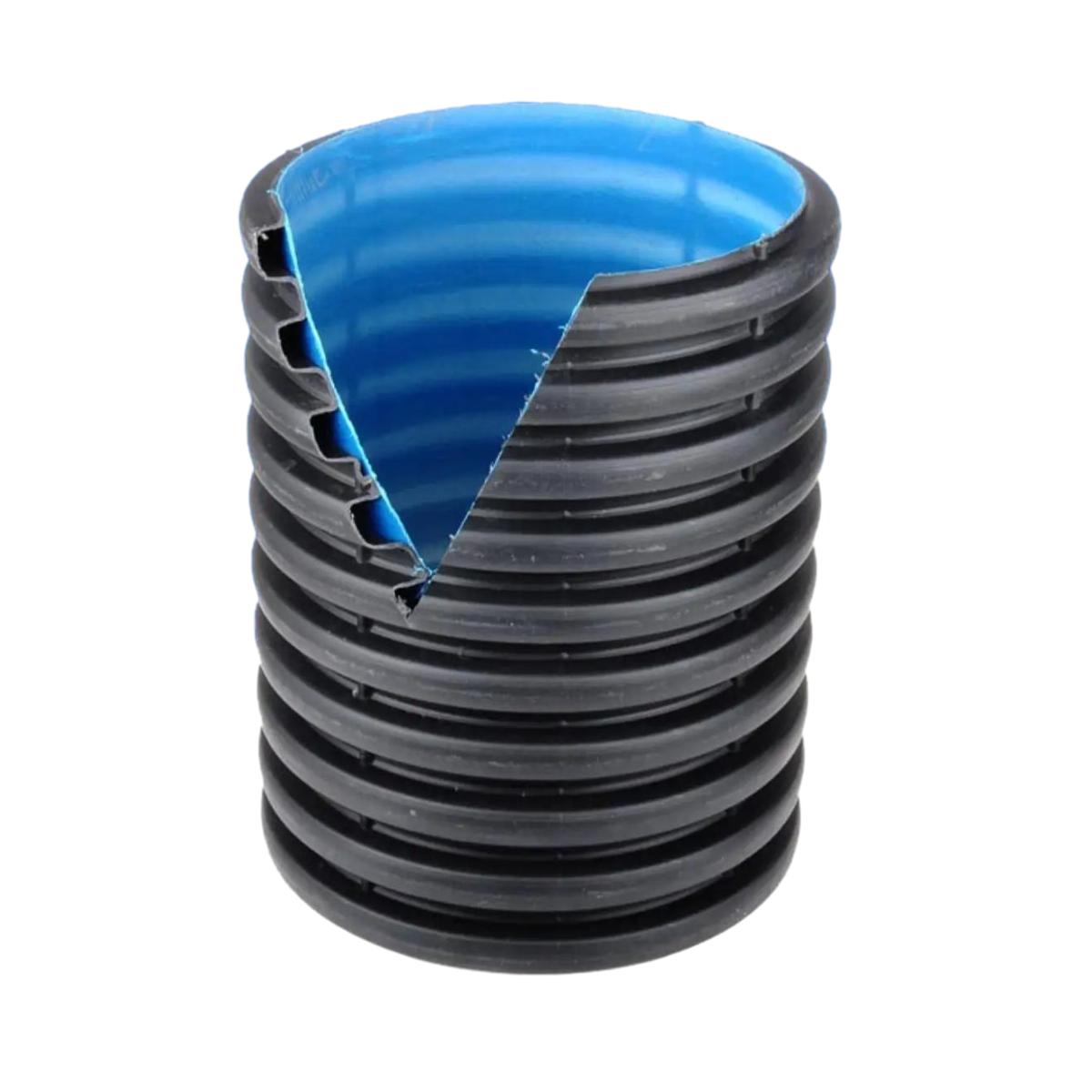
Dual wall corrugated drain pipe, manufactured extensively in China, represents a significant advancement in subsurface drainage solutions. Positioned within the broader infrastructure supply chain, this product serves as a critical component in stormwater management, agricultural drainage, and wastewater conveyance. Unlike traditional solid-wall pipe, the dual-wall design – typically comprised of a smooth inner layer and a corrugated outer layer – provides enhanced structural integrity and hydraulic efficiency. Core performance characteristics include high crush resistance, flexibility for installation in challenging terrains, and a smooth interior to minimize flow restriction. A key driver for its increasing adoption is the demand for cost-effective, durable, and lightweight drainage systems capable of meeting stringent environmental regulations and handling increased stormwater runoff due to urbanization.
Material Science & Manufacturing
The dominant material used in Chinese dual wall corrugated drain pipe production is high-density polyethylene (HDPE), specifically grades conforming to PE 100 standards. HDPE possesses excellent chemical resistance, a high strength-to-weight ratio, and maintains flexibility even at low temperatures. Raw material selection critically impacts long-term performance; factors considered include melt flow index (MFI), density, and carbon black content for UV stabilization. Manufacturing typically employs a co-extrusion process. HDPE pellets are fed into twin-screw extruders, where they are melted and mixed. The inner layer, often smooth-walled, is extruded first. Simultaneously, the outer corrugated layer is formed using a specialized shaping tool that creates the characteristic ribbed profile. Precise temperature control during extrusion is paramount – typically ranging from 180°C to 240°C – to ensure uniform wall thickness and prevent material degradation. Cooling baths utilizing water circulation rapidly solidify the extruded pipe, maintaining dimensional accuracy. Post-extrusion, the pipe undergoes quality control checks including hydrostatic pressure testing, dimensional verification, and visual inspection for defects such as surface imperfections or inconsistencies in corrugation profile. Jointing methods include bell and spigot connections with rubber gaskets, solvent welding, or electrofusion welding, each requiring specific parameter controls (temperature, pressure, dwell time) to guarantee watertight seals.
Performance & Engineering
The performance of dual wall corrugated drain pipe is fundamentally governed by its ability to withstand external loads (soil cover, traffic loads) and maintain hydraulic capacity. A key engineering consideration is the pipe's structural capacity, commonly assessed through ring stiffness and crush resistance testing. Ring stiffness, measured in psi, quantifies the pipe's resistance to deformation under radial loads. Crush resistance, expressed as a percentage of diameter reduction at a specified load, indicates the pipe's ability to withstand concentrated forces. Environmental resistance is another crucial factor. HDPE is generally resistant to most common soil chemicals, but prolonged exposure to aggressive substances (e.g., certain industrial effluents) can lead to chemical degradation. UV exposure can also cause embrittlement over time, necessitating the use of carbon black additives during manufacturing. Installation practices significantly impact long-term performance. Proper trench preparation, including adequate bedding and backfill compaction, is essential to distribute loads evenly and prevent pipe distortion. Compliance requirements vary by region, often referencing ASTM F2306 (Standard Specification for Corrugated Polyethylene (PE) Pipe for Storm Drains and Culverts) or EN 13476 (Drainage systems - Inspection chambers, gullies, surface water removal gullies and manholes for use in highway and public areas). Hydraulic analysis, employing the Manning equation, determines flow capacity based on pipe diameter, slope, and roughness coefficient, ensuring adequate drainage for anticipated runoff volumes.
Technical Specifications
| Parameter | Unit | Typical Value (DN/ID 300mm) | Testing Standard |
|---|---|---|---|
| Nominal Diameter (DN) | mm | 300 | ISO 16101-1 |
| Internal Diameter (ID) | mm | 290 | ASTM F2306 |
| Wall Thickness (Inner/Outer) | mm | 3.2 / 5.8 | ASTM D2412 |
| Ring Stiffness | psi | 60 | ASTM D2412 |
| Crush Resistance | % Diameter Reduction | < 15 (at 10% load) | ASTM F2306 |
| Longitudinal Reversion | % | < 2 | ASTM F2306 |
Failure Mode & Maintenance
Failure modes in dual wall corrugated drain pipe typically stem from external loading, material degradation, or installation deficiencies. Common failure mechanisms include ovalization (deformation under sustained loads), cracking (induced by stress concentrations or impact damage), joint failure (resulting from improper installation or gasket degradation), and creep (long-term deformation under constant stress). Fatigue cracking can occur in areas subject to repeated loading, such as at pipe connections or where the pipe transitions from smooth wall to corrugated sections. Chemical attack, though less frequent, can lead to material embrittlement and reduced structural capacity if exposed to aggressive soil conditions. Maintenance primarily focuses on preventative measures and early detection of potential problems. Regular inspection (e.g., CCTV surveys) can identify signs of ovalization, cracking, or root intrusion. Joint integrity should be periodically checked, and any leaking connections should be promptly repaired or replaced. Addressing issues like improper bedding or inadequate backfill compaction can prevent future failures. In cases of localized damage, pipe sections can be cut out and replaced using appropriate joining techniques. For severe cases of widespread degradation, complete pipe replacement may be necessary. Proper storage of pipe prior to installation is also critical; exposure to direct sunlight and extreme temperatures should be avoided to prevent material degradation.
Industry FAQ
Q: What is the impact of soil corrosivity on the long-term performance of HDPE dual wall pipe?
A: Soil corrosivity, characterized by pH levels, sulfate content, and the presence of organic matter, can influence the degradation rate of HDPE. While HDPE is generally resistant to many soil chemicals, prolonged exposure to acidic or sulfate-rich soils can accelerate material breakdown. Selecting HDPE grades with enhanced chemical resistance and implementing protective measures such as geosynthetic liners can mitigate these risks.
Q: How does bedding material affect the load-bearing capacity of the pipe?
A: Bedding material plays a critical role in distributing external loads evenly along the pipe barrel. Poorly compacted bedding or the presence of voids can create stress concentrations, leading to ovalization or cracking. Granular bedding materials, such as sand or gravel, provide superior load distribution compared to cohesive soils like clay. Proper compaction, conforming to relevant standards, is essential to ensure adequate support.
Q: What are the advantages of using bell and spigot joints versus electrofusion welding?
A: Bell and spigot joints with rubber gaskets offer a quicker and simpler installation process, particularly for smaller diameter pipes. However, electrofusion welding provides a stronger, more watertight joint, crucial for applications requiring high structural integrity or resistance to infiltration. Electrofusion is generally preferred for larger diameter pipes or in situations where long-term reliability is paramount.
Q: How does temperature affect the installation and performance of HDPE pipe?
A: HDPE becomes more flexible at higher temperatures and more brittle at lower temperatures. Installation should be avoided during extreme temperature conditions. Electrofusion welding requires specific temperature ranges for optimal joint strength. Subsurface temperatures can also influence the long-term creep behavior of the pipe, particularly in areas with significant temperature fluctuations.
Q: What methods are used to verify the quality of HDPE pipe before installation?
A: Common quality control measures include visual inspection for surface defects, dimensional verification to ensure compliance with specifications, hydrostatic pressure testing to assess joint integrity, and impact resistance testing to evaluate material toughness. Manufacturers should provide certificates of conformity verifying that the pipe meets relevant standards.
Conclusion
China-manufactured dual wall corrugated drain pipe represents a robust and cost-effective solution for a diverse range of drainage applications. Its inherent advantages – including high crush resistance, flexibility, and chemical inertness – coupled with advancements in manufacturing processes, position it as a preferred choice for infrastructure projects globally. Understanding the material science, engineering principles, and potential failure modes associated with this product is crucial for ensuring long-term performance and mitigating risks.
Continued innovation in HDPE formulations and jointing technologies will further enhance the durability and sustainability of dual wall corrugated drain pipe. Adherence to stringent quality control standards and proper installation practices are paramount to realizing its full potential and minimizing the likelihood of failures. Further research into the effects of emerging contaminants and extreme environmental conditions will be vital for optimizing pipe design and ensuring its long-term viability.
-
DN25 HDPE Compression Fitting-HORON INTERNATIONAL|Reliable Irrigation Solutions
NewsFeb.11,2026
-
china 15mm ppr pipe Performance Analysis
News2026-05-16
-
china dual wall corrugated drain pipe Performance Analysis
News2026-05-16
-
china hdpe to pvc transition coupling Performance Analysis
News2026-05-16
-
china dn25 hdpe fittings fast connect couplings for irrigation Performance Analysis
News2026-05-16
-
china 4 double wall corrugated pipe Performance Analysis
News2026-05-16
-
china corrugated pipe double wall Manufacturing Analysis
News2026-05-15
-
china ppr ct pipe Technical Analysis
News2026-05-15
-
china 32mm ppr Performance Analysis
News2026-05-15
-
china 63mm ppr pipe price Performance Analysis
News2026-05-15
-
china 1 ppr pipe price Performance Analysis
News2026-05-15
-
china 32mm ppr pipe price Performance Analysis
News2026-05-14
-
china hdpe pipe for sale Performance Analysis
News2026-05-14
-
china ppr pipe 32mm Performance Analysis
News2026-05-14
-
china pvc pipes Manufacturing and Performance Analysis
News2026-05-14
-
china hdpe n 12 corrugated dual wall pipe Performance Analysis
News2026-05-14