

Feb . 11, 2026 00:01 Back to list
pvc to hdpe connection factories Performance Engineering
Introduction
The connection of Polyvinyl Chloride (PVC) and High-Density Polyethylene (HDPE) piping systems is a common requirement across numerous industries, including water distribution, irrigation, chemical processing, and drainage. These connections present a significant engineering challenge due to the inherent differences in the materials’ physical and chemical properties, necessitating specialized transition fittings and installation techniques. PVC, a rigid thermoplastic known for its cost-effectiveness and chemical resistance, requires compatible joining methods to HDPE, a flexible thermoplastic with high tensile strength and impact resistance. This guide provides a comprehensive technical overview of PVC to HDPE connections, encompassing material science, manufacturing processes, performance characteristics, failure modes, and relevant industry standards. The increasing demand for reliable and long-lasting pipeline infrastructure drives the need for a thorough understanding of the intricacies involved in achieving robust PVC to HDPE transitions. Core industry pain points revolve around ensuring leak-proof seals, accommodating differential thermal expansion/contraction, and maintaining long-term structural integrity in varied operational environments.
Material Science & Manufacturing
PVC is produced through the polymerization of vinyl chloride monomer, resulting in a material characterized by its amorphous structure and inherent rigidity. Its glass transition temperature (Tg) is approximately 80°C, and it exhibits limited ductility. The manufacturing process typically involves suspension or emulsion polymerization followed by compounding with plasticizers, stabilizers, and lubricants to tailor its properties. HDPE, conversely, is manufactured via the catalytic polymerization of ethylene. It possesses a semi-crystalline structure, providing excellent tensile strength and chemical resistance, with a higher degree of flexibility compared to PVC. Its Tg is around -120°C.
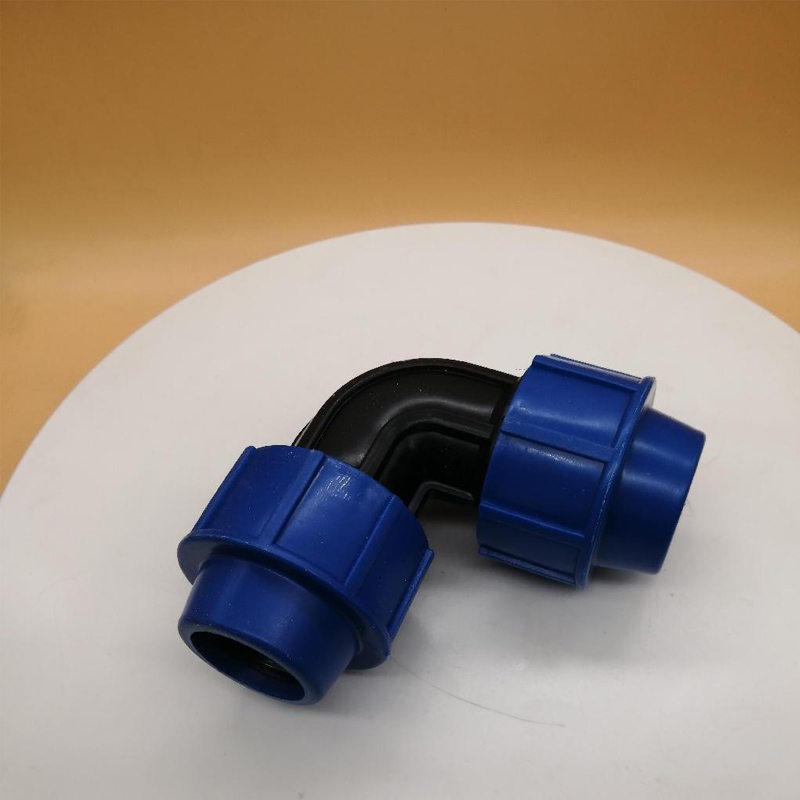
Transition fittings, the core component of PVC to HDPE connections, are commonly manufactured using injection molding. The choice of material for the fitting is crucial; often, Polypropylene (PP) or a specialized HDPE compound is employed due to its compatibility with both PVC and HDPE. The injection molding process involves precise control of melt temperature, injection pressure, and cooling rates to ensure dimensional accuracy and prevent internal stresses. Key parameters include maintaining a mold temperature within +/- 2°C of the optimal value and ensuring complete filling of the mold cavity. Rubber gaskets, frequently utilized in these connections, are typically made from Ethylene Propylene Diene Monomer (EPDM) rubber, chosen for its excellent resistance to water, chemicals, and weathering. The gasket manufacturing process involves compression molding, where the EPDM compound is shaped under heat and pressure. Proper vulcanization is vital for achieving the desired elasticity and sealing performance.
Performance & Engineering
The performance of a PVC to HDPE connection is critically dependent on its ability to withstand internal pressure, external loads, and environmental stresses. Force analysis must account for the differential thermal expansion/contraction coefficients of PVC (approximately 8 x 10⁻⁵ /°C) and HDPE (approximately 1.2 x 10⁻⁴ /°C). This differential expansion can induce significant stresses at the connection point, potentially leading to leakage or failure. Engineering designs often incorporate flexible couplings or expansion joints to mitigate these stresses.
Environmental resistance is another critical factor. Prolonged exposure to UV radiation can degrade PVC, reducing its tensile strength and impact resistance. HDPE is generally more resistant to UV degradation but can still be affected over extended periods. Chemical compatibility must also be considered, particularly in applications involving corrosive fluids. PVC exhibits good resistance to many acids and bases, while HDPE demonstrates excellent resistance to a wide range of chemicals. Compliance requirements are governed by industry standards (detailed in the footer) and local building codes. These regulations specify acceptable materials, installation procedures, and testing protocols to ensure the safety and reliability of the pipeline system. Proper installation, including correct alignment and sufficient support, is paramount to prevent undue stress on the connection.
Technical Specifications
| Parameter | PVC (Typical) | HDPE (Typical) | Transition Fitting Material (PP/HDPE) |
|---|---|---|---|
| Tensile Strength (MPa) | 55-70 | 35-45 | 25-35 |
| Flexural Modulus (GPa) | 2.5-3.5 | 0.8-1.2 | 1.2-1.8 |
| Density (kg/m3) | 1400-1450 | 950-970 | 900-950 |
| Water Absorption (% by weight, 24hr) | <0.1 | <0.1 | <0.1 |
| Operating Temperature (°C) | 0-60 | -40 to 60 | -20 to 80 |
| Coefficient of Linear Thermal Expansion (/°C) | 8 x 10⁻⁵ | 1.2 x 10⁻⁴ | 1.0 - 1.3 x 10⁻⁴ |
Failure Mode & Maintenance
Common failure modes in PVC to HDPE connections include leakage at the gasket seal, cracking of the PVC pipe due to stress concentration, and creep deformation of the HDPE pipe under sustained load. Fatigue cracking can occur in the transition fitting due to repeated thermal cycling or mechanical stress. Delamination of the gasket can also lead to leakage. Oxidation of PVC, particularly in UV-exposed environments, can compromise its structural integrity.
Preventative maintenance is crucial for ensuring long-term reliability. Regular visual inspections should be conducted to identify signs of cracking, deformation, or leakage. Gasket condition should be assessed periodically and replaced if necessary. Proper support and anchoring of the pipeline are essential to minimize stress on the connections. If leakage is detected, the affected gasket should be replaced, and the connection retightened according to the manufacturer's specifications. In cases of significant cracking or deformation, the entire connection assembly may need to be replaced. Periodic pressure testing can verify the integrity of the pipeline system. For systems exposed to harsh chemicals, regular monitoring of material compatibility is recommended.
Industry FAQ
Q: What are the primary considerations when selecting a transition fitting for a buried PVC to HDPE connection?
A: The primary considerations are soil conditions, anticipated loads (traffic, settlement), and the degree of differential thermal expansion/contraction. Fittings with flexible couplings are recommended for unstable soils or areas prone to settlement. The fitting material must be compatible with both PVC and HDPE, and the gasket material should be resistant to soil chemicals and moisture. Consideration should also be given to the long-term creep resistance of the HDPE component.
Q: How does differential thermal expansion affect the long-term performance of a PVC to HDPE connection?
A: Differential thermal expansion creates stresses at the connection point as the PVC and HDPE respond differently to temperature changes. These stresses can lead to gasket compression, leakage, or cracking of the PVC. Utilizing flexible couplings, expansion joints, or allowing for sufficient pipeline movement during installation can mitigate these effects.
Q: What type of gasket material is best suited for a PVC to HDPE transition fitting used in a potable water system?
A: EPDM rubber is generally the preferred gasket material for potable water systems due to its excellent resistance to water, chemicals, and aging. It is also non-toxic and meets the stringent requirements for potable water applications. NSF/ANSI 61 certification is essential to ensure compliance with drinking water standards.
Q: What are the key quality control checks during the manufacturing of PVC to HDPE transition fittings?
A: Key quality control checks include dimensional accuracy, material verification, hydrostatic pressure testing, and visual inspection for defects. The mold temperature and injection pressure during the molding process must be carefully controlled. Gasket sealing performance should be tested to ensure a leak-proof seal. Regular material testing is also conducted to verify compliance with relevant standards.
Q: Can PVC to HDPE connections be used in high-pressure applications, and what are the limitations?
A: PVC to HDPE connections can be used in moderate-pressure applications, but their pressure rating is typically limited by the weakest component – often the PVC pipe or the transition fitting. The maximum allowable pressure depends on the pipe diameter, wall thickness, and the fitting design. High-pressure applications may require reinforced fittings and specialized installation techniques. It is crucial to consult with a qualified engineer to determine the appropriate connection method and ensure compliance with safety regulations.
Conclusion
Successfully connecting PVC and HDPE piping requires a detailed understanding of the materials' inherent properties and the potential challenges associated with their differential behavior. The selection of appropriate transition fittings, coupled with meticulous installation practices, is paramount to achieving a reliable and long-lasting connection. Addressing the thermal expansion/contraction differences and ensuring gasket integrity are key factors in preventing failure.
Future advancements in materials science may lead to the development of new fitting materials with improved compatibility and performance characteristics. Furthermore, enhanced modeling techniques will allow for more accurate prediction of stresses and strains in these connections, enabling optimized designs. Continuous adherence to industry standards and best practices is essential to maintain the integrity and safety of PVC to HDPE pipeline systems.
-
DN25 HDPE Compression Fitting-HORON INTERNATIONAL|Reliable Irrigation Solutions
NewsFeb.11,2026
-
discount ppr 3 4 price Performance Analysis
News2026-06-17
-
discount hdpe pipe connectors Material Performance
News2026-06-17
-
discount submersible column pipe Performance Analysis
News2026-06-17
-
discount ppr flexible pipe Performance Analysis
News2026-06-17
-
discount column pipe for submersible pump Performance Analysis
News2026-06-17
-
china flexible pvc tubing Performance Analysis
News2026-06-16
-
china water pipe kitchen sink Material Performance
News2026-06-16
-
china upvc column pipes for submersible pumps Performance Analysis
News2026-06-16
-
china 36 hdpe corrugated pipe Manufacturing Analysis
News2026-06-16
-
china kitchen sink water pipe Performance Analysis
News2026-06-16
-
china 90mm pvc pipe Performance Analysis
News2026-06-15
-
china ppr polypropylene pipe Technical Analysis
News2026-06-15
-
china hdpe pipe sizes and prices Performance Analysis
News2026-06-15
-
china hdpe quick coupling Performance Analysis
News2026-06-15
-
china ppr water line Performance Analysis
News2026-06-15