

Feb . 11, 2026 00:01 Back to list
china upvc column pipes for submersible pumps Performance Analysis

Introduction
China UPVC column pipes for submersible pumps represent a critical component in well water extraction, irrigation, and dewatering applications. These pipes provide structural support and a conduit for the electrical power cable and the rising main of the submersible pump assembly. Unlike traditional metallic or flexible hose solutions, UPVC (Unplasticized Polyvinyl Chloride) offers a unique combination of cost-effectiveness, corrosion resistance, and lightweight handling. The technical position of these pipes within the industry chain lies between the pump manufacturer and the end-user, functioning as a crucial interface between the pump and the well casing. Core performance characteristics center around tensile strength, hydrostatic pressure resistance, and electrical insulation properties, all of which directly impact pump efficiency and longevity. The demand for high-quality UPVC column pipes is driven by increasing global water scarcity and the expansion of agricultural and industrial water usage. A significant pain point in the industry revolves around ensuring dimensional accuracy and consistent material quality to prevent pump jamming and potential system failure. Another key challenge is maintaining long-term resistance to UV degradation in exposed applications.
Material Science & Manufacturing
UPVC column pipes derive their properties from the polymerization of vinyl chloride monomer. The resulting polymer is a rigid thermoplastic with excellent chemical resistance. The raw material typically includes UPVC resin, impact modifiers (such as chlorinated polyethylene - CPE), thermal stabilizers (often based on organotin compounds, though increasingly replaced by calcium-zinc formulations for environmental reasons), and lubricants (stearates) to aid processing. The manufacturing process predominantly employs extrusion. UPVC resin and additives are blended and fed into a single-screw or twin-screw extruder. The extruder utilizes heat and pressure to melt and homogenize the mixture. This molten material is then forced through a die, shaping it into a continuous pipe. Critical parameters during extrusion include die temperature (typically 180-210°C), screw speed (influencing throughput and melt homogeneity), and cooling rate (affecting pipe crystallinity and dimensional stability). Post-extrusion, the pipes undergo calibration to achieve precise outer diameter and wall thickness, followed by cutting to specified lengths. Quality control measures involve regular testing of material tensile strength (ASTM D638), impact resistance (ASTM D256), and hydrostatic pressure (ASTM D1597). The presence of phthalate plasticizers is often avoided in submersible pump applications due to concerns about leaching and potential contamination of water sources. The molecular weight distribution of the UPVC resin directly impacts the final pipe’s mechanical properties, with higher molecular weight polymers generally exhibiting superior strength and creep resistance.
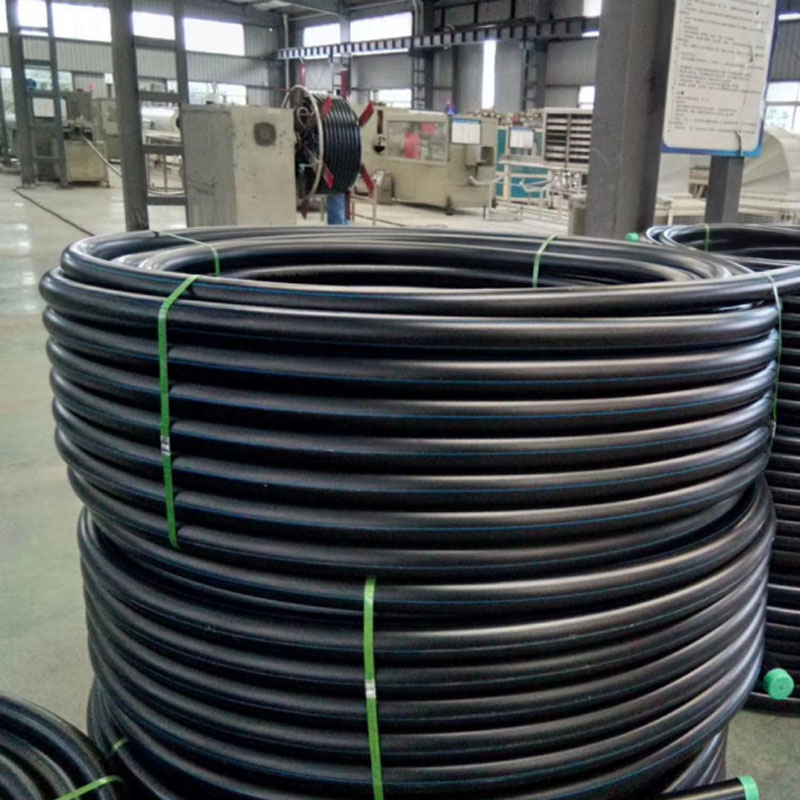
Performance & Engineering
The performance of UPVC column pipes is heavily influenced by hydrostatic pressure, tensile stress, and environmental factors. Force analysis focuses on hoop stress generated by internal water pressure and longitudinal stress arising from the weight of the pump and fluid column. The pipe must withstand these stresses without failure or significant deformation. The minimum hydrostatic pressure rating is dictated by the well depth and pump head. Environmental resistance is particularly crucial; prolonged exposure to UV radiation can cause embrittlement and reduced tensile strength. Therefore, UV stabilizers (typically benzophenones or benzotriazoles) are incorporated into the UPVC formulation. Electrical insulation properties are paramount for safety, preventing electrical leakage and potential shock hazards. UPVC inherently possesses high dielectric strength, but ensuring consistent insulation requires careful control of material purity and avoiding contaminants during manufacturing. Compliance requirements are often governed by national and international standards, focusing on material safety, dimensional accuracy, and pressure resistance. Corrosion resistance is a major advantage over metallic alternatives, eliminating the need for costly corrosion protection measures and extending the lifespan of the entire pumping system. Furthermore, the smooth inner surface of UPVC minimizes frictional losses, contributing to improved pump efficiency.
Technical Specifications
| Parameter | Unit | Standard Specification (Typical) | Testing Method |
|---|---|---|---|
| Outer Diameter | mm | 110, 125, 140 | ISO 1055-2 |
| Wall Thickness | mm | 6.0, 8.0, 10.0 | ASTM D1785 |
| Hydrostatic Pressure | MPa | ≥ 1.0 | ASTM D1597 |
| Tensile Strength | MPa | ≥ 55 | ASTM D638 |
| Impact Strength (Charpy) | kJ/m2 | ≥ 5 | ISO 145-3 |
| Dielectric Strength | kV/mm | ≥ 50 | IEC 60243-1 |
Failure Mode & Maintenance
Common failure modes for UPVC column pipes in submersible pump applications include fatigue cracking, particularly at stress concentration points (e.g., threaded connections or areas of impact). Long-term exposure to elevated temperatures can lead to thermal degradation and reduced mechanical properties. UV degradation causes embrittlement and surface cracking. Chemical attack from aggressive water constituents (e.g., high chloride concentrations) can induce stress corrosion cracking. Delamination can occur if the impact modifiers are not uniformly dispersed within the UPVC matrix. Oxidation can occur at high temperatures, leading to a loss of polymer chain integrity. Maintenance strategies revolve around regular visual inspections for cracks, deformations, or discoloration. Connections should be checked for tightness and proper sealing. UV exposure should be minimized through protective coverings or coatings. If cracking is detected, the affected pipe section should be replaced immediately. Avoid using abrasive cleaners or solvents that can damage the UPVC material. Proper storage of pipes is crucial; they should be stored in a cool, dry place away from direct sunlight. A preventative maintenance schedule including hydrostatic testing at specified intervals can help identify potential weaknesses before they lead to catastrophic failure. The selection of appropriate thread sealant compounds is critical to prevent galvanic corrosion between UPVC and any metallic components.
Industry FAQ
Q: What is the maximum operating temperature for these UPVC column pipes?
A: The maximum continuous operating temperature for standard UPVC column pipes is typically around 60°C (140°F). Exceeding this temperature can lead to softening, deformation, and reduced pressure resistance. Specialized UPVC formulations with higher temperature resistance are available, but they come at a higher cost.
Q: How does the wall thickness affect the pipe's performance?
A: Increasing wall thickness directly enhances the pipe's hydrostatic pressure rating and its resistance to external loads. However, thicker walls also increase the pipe's weight and cost. The optimal wall thickness is determined by a balance between these factors and the specific application requirements.
Q: What are the key considerations when selecting a pipe diameter?
A: Pipe diameter must be carefully selected to minimize frictional losses and ensure adequate flow velocity. A smaller diameter increases friction, reducing pump efficiency and potentially causing cavitation. A larger diameter increases material cost and may require a more powerful pump to maintain adequate velocity. Calculations should consider the pump’s flow rate, well depth, and fluid viscosity.
Q: Are these UPVC pipes suitable for use with all types of submersible pumps?
A: Generally, yes, provided the pump’s power cable diameter is compatible with the internal diameter of the pipe. It’s crucial to verify the electrical insulation properties of the pipe and ensure that it meets relevant safety standards. Consider the weight of the pump and the pipe's load-bearing capacity.
Q: How can I mitigate the risk of UV degradation in exposed applications?
A: Applying a UV-resistant coating or wrapping the exposed sections of the pipe with a protective sleeve are effective mitigation strategies. Regularly inspect the pipe for signs of degradation and replace any damaged sections promptly. Selecting a UPVC formulation with a high concentration of UV stabilizers is also recommended.
Conclusion
China UPVC column pipes for submersible pumps offer a robust and cost-effective solution for a wide range of water extraction applications. Their inherent corrosion resistance, lightweight nature, and high dielectric strength make them a compelling alternative to traditional materials. However, understanding the material's limitations, particularly regarding temperature sensitivity and UV degradation, is crucial for ensuring long-term performance and reliability.
Proper selection of pipe dimensions, wall thickness, and UV stabilization levels, coupled with regular inspection and preventative maintenance, are essential for maximizing the lifespan and minimizing the risk of failure. As environmental regulations become increasingly stringent, the adoption of environmentally friendly UPVC formulations, such as those utilizing calcium-zinc stabilizers, will likely accelerate, further enhancing the sustainability of this critical infrastructure component.
-
DN25 HDPE Compression Fitting-HORON INTERNATIONAL|Reliable Irrigation Solutions
NewsFeb.11,2026
-
china flexible pvc tubing Performance Analysis
News2026-06-16
-
china water pipe kitchen sink Material Performance
News2026-06-16
-
china upvc column pipes for submersible pumps Performance Analysis
News2026-06-16
-
china 36 hdpe corrugated pipe Manufacturing Analysis
News2026-06-16
-
china kitchen sink water pipe Performance Analysis
News2026-06-16
-
china 90mm pvc pipe Performance Analysis
News2026-06-15
-
china ppr polypropylene pipe Technical Analysis
News2026-06-15
-
china hdpe pipe sizes and prices Performance Analysis
News2026-06-15
-
china hdpe quick coupling Performance Analysis
News2026-06-15
-
china ppr water line Performance Analysis
News2026-06-15
-
china 4 hdpe to pvc coupling Performance Analysis
News2026-06-14
-
china dn500 Ductile Iron Pipe Performance Analysis
News2026-06-14
-
china hdpe corrugated pipe Performance Analysis
News2026-06-14
-
china pvc pipe dimensions Technical Analysis
News2026-06-14
-
china perforated pvc pipe for drainage Performance Analysis
News2026-06-14