

Feb . 11, 2026 00:01 Back to list
china perforated pvc pipe for drainage Performance Analysis
Introduction
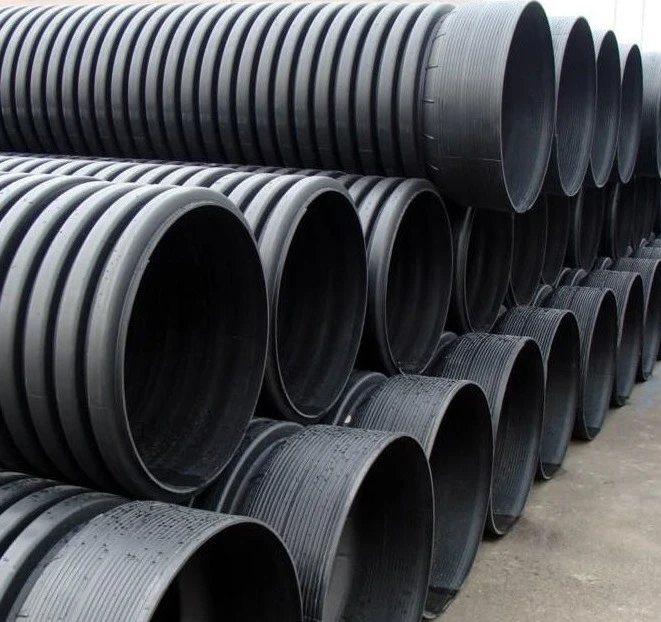
China perforated PVC pipe for drainage represents a critical component in subsurface water management systems. Positioned within the broader civil engineering and construction materials supply chain, it serves as a conduit for the removal of excess groundwater, rainwater, and other liquid effluents. Unlike solid PVC pipe used for pressure applications, perforated PVC relies on gravity and the surrounding soil’s permeability for function. Its core performance characteristics revolve around hydraulic capacity, structural integrity under load, and long-term durability in corrosive soil environments. This guide provides an in-depth technical overview of its material composition, manufacturing processes, engineering considerations, failure modes, and relevant industry standards, addressing common pain points related to soil stability, filtration effectiveness, and longevity of drainage infrastructure.
Material Science & Manufacturing
The primary raw material for perforated PVC drainage pipe is Polyvinyl Chloride (PVC) resin, typically Suspension PVC (S-PVC) selected for its balance of cost, processability, and mechanical properties. Key additives include plasticizers (primarily phthalates or alternatives like DINCH) to impart flexibility, thermal stabilizers (often based on calcium-zinc formulations to avoid lead-based compounds), lubricants to aid processing, and impact modifiers (like chlorinated polyethylene - CPE) to improve toughness. The PVC compound is formulated to achieve a target hardness, typically in the range of 70-90 Shore D, influencing its resistance to deformation under load. Manufacturing begins with extrusion, where the PVC compound is melted and forced through a die to form a continuous pipe. Perforation is commonly achieved using numerically controlled (CNC) drilling or punching operations post-extrusion. Hole diameter, spacing, and pattern (inline, spiral, or random) are critical parameters. The hole pattern is determined by the intended application and soil permeability. Quality control during extrusion and perforation is paramount, focusing on dimensional accuracy, wall thickness consistency, and the integrity of the perforations to prevent clogging. Fusion welding is often used to create larger diameter pipes, adhering to ASTM F477 standards for joint integrity. Parameter control during extrusion includes precise temperature regulation across zones, screw speed optimization, and die pressure monitoring to ensure uniform material distribution and avoid defects like melt fracture or porosity.
Performance & Engineering
The performance of perforated PVC drainage pipe is heavily influenced by hydraulic capacity and structural integrity. Hydraulic capacity is determined by Manning's equation, considering pipe diameter, slope, roughness coefficient (typically 0.011 for PVC), and flow rate. Engineers must account for potential clogging due to sediment buildup, requiring the integration of geotextile filter fabrics around the pipe to maintain permeability. Structural integrity is assessed through ring stiffness testing (ASTM D2412), which measures the pipe’s resistance to deformation under external load – crucial for applications subject to vehicular traffic or backfill compaction. Soil-structure interaction analysis is vital; the pipe’s ability to distribute loads to the surrounding soil depends on soil type, moisture content, and compaction levels. The pipe must withstand anticipated loads without excessive deflection or cracking. Compliance with local building codes and drainage regulations is essential. These codes often specify minimum pipe diameter, slope requirements, and backfill material specifications. Long-term performance is affected by environmental resistance, including UV degradation (addressed by adding UV stabilizers to the PVC compound), chemical attack from soil contaminants, and freeze-thaw cycles. The service life can be extended by selecting appropriate PVC formulations and implementing proper installation practices, such as providing adequate bedding and backfill support.
Technical Specifications
| Parameter | Units | Typical Value (DN 100 - 4" Pipe) | Test Standard |
|---|---|---|---|
| Nominal Diameter | mm | 110 | ISO 1452-2 |
| Wall Thickness | mm | 3.2 | ASTM D1785 |
| Ring Stiffness | kPa | 150 | ASTM D2412 |
| Perforation Diameter | mm | 4.5 | GB/T 19867 |
| Perforation Spacing | mm | 150 (typical) | Manufacturer Specification |
| Hydraulic Conductivity | m/s | 1 x 10^-7 – 1 x 10^-6 (with geotextile) | ASTM D2434 |
Failure Mode & Maintenance
Common failure modes in perforated PVC drainage pipes include: 1) Clogging: Sediment, root intrusion, and organic matter accumulation reduce hydraulic capacity. 2) Cracking: Caused by excessive load, impact damage, or stress cracking from exposure to aggressive chemicals. 3) Joint Failure: Occurs at welded or mechanical joints due to improper installation or material degradation. 4) Ovalization: Deformation of the pipe cross-section under sustained load, leading to reduced flow area and potential collapse. 5) UV Degradation: Prolonged exposure to sunlight causes embrittlement and reduced strength. Maintenance strategies include periodic inspection using CCTV cameras to identify blockages and structural defects. High-pressure water jetting can effectively remove sediment and root intrusion. Repair options for minor cracks include using PVC repair couplings or sleeves. For significant damage, pipe replacement is often necessary. Preventive maintenance involves ensuring proper installation with adequate bedding and backfill support, using geotextile filter fabrics to prevent sediment intrusion, and avoiding the use of heavy machinery directly over the pipe. Regular monitoring of drainage flow rates can indicate potential clogging issues before they escalate into major problems. Failure analysis should include assessing the chemical composition of the surrounding soil to identify potential corrosive agents contributing to material degradation.
Industry FAQ
Q: What is the optimal perforation pattern for a clay-rich soil with low permeability?
A: For clay-rich soils, a smaller perforation diameter (e.g., 3mm) and a closer spacing (e.g., 75-100mm) are recommended. A spiral perforation pattern often provides better distribution of inflow compared to inline patterns, minimizing localized clogging. Crucially, a high-quality geotextile filter fabric surrounding the pipe is essential to prevent fine clay particles from entering the perforations.
Q: How does temperature affect the long-term performance of PVC drainage pipe?
A: Elevated temperatures can accelerate the degradation of PVC, particularly if the formulation lacks adequate thermal stabilizers. Cold temperatures can increase brittleness and susceptibility to impact damage. Proper material selection (formulation with appropriate stabilizers) and avoiding extreme temperature fluctuations are crucial. The pipe should be designed and installed to accommodate anticipated temperature variations.
Q: What is the significance of ring stiffness, and how does it relate to load-bearing capacity?
A: Ring stiffness is a measure of the pipe’s resistance to flattening under external load. A higher ring stiffness indicates greater load-bearing capacity. It is critical for applications where the pipe is subjected to significant overburden pressure from backfill, traffic, or other structures. Selecting a pipe with adequate ring stiffness for the anticipated load prevents deformation and maintains hydraulic capacity.
Q: Are there specific regulations regarding the use of recycled PVC in drainage pipe?
A: Regulations vary by region. Some jurisdictions permit the use of recycled PVC in drainage pipe, but often with limitations on the percentage of recycled content and requirements for quality control. It's essential to verify compliance with local regulations and ensure that any recycled PVC used meets the necessary performance standards (e.g., ASTM D3212 for recycled PVC compounds).
Q: What type of geotextile is best suited for use with perforated PVC drainage pipe?
A: A non-woven geotextile with a filtration pore size appropriate for the surrounding soil is generally recommended. The geotextile should allow water to pass through while preventing soil particles from entering the perforations. Polypropylene (PP) or polyester (PET) non-woven geotextiles are commonly used, with appropriate permeability and strength characteristics. The geotextile must be fully encapsulate the pipe.
Conclusion
China perforated PVC pipe represents a cost-effective and reliable solution for subsurface drainage applications, provided it is manufactured to appropriate standards, installed correctly, and maintained proactively. Understanding the interplay between material science, manufacturing processes, and engineering principles is critical for ensuring long-term performance and preventing failures. The selection of appropriate PVC formulations, perforation patterns, and geotextile filter fabrics tailored to specific soil conditions is essential for maximizing hydraulic capacity and minimizing clogging.
Future development in this area focuses on incorporating advanced materials like reinforced PVC composites for increased strength and durability, exploring innovative perforation techniques to improve inflow characteristics, and developing smart drainage systems with integrated sensors for real-time monitoring of flow rates and potential clogging issues. These advancements will contribute to more sustainable and efficient drainage infrastructure.
-
DN25 HDPE Compression Fitting-HORON INTERNATIONAL|Reliable Irrigation Solutions
NewsFeb.11,2026
-
china 4 hdpe to pvc coupling Performance Analysis
News2026-06-14
-
china dn500 Ductile Iron Pipe Performance Analysis
News2026-06-14
-
china hdpe corrugated pipe Performance Analysis
News2026-06-14
-
china pvc pipe dimensions Technical Analysis
News2026-06-14
-
china perforated pvc pipe for drainage Performance Analysis
News2026-06-14
-
china 2.5 pvc pipe Performance Analysis
News2026-06-13
-
china ppr pipe coupling Performance Analysis
News2026-06-13
-
china hdpe pipe used for Performance Analysis
News2026-06-13
-
china 300mm pvc pipe Performance Analysis
News2026-06-13
-
china ppr pipe 40mm Performance Analysis
News2026-06-13
-
china ppr pipes in full Performance Engineering
News2026-06-12
-
china 63mm ppr pipe Technical Analysis
News2026-06-12
-
china pvc pipe is used for Performance Analysis
News2026-06-12
-
china hdpe pipe price list Performance Analysis
News2026-06-12
-
china ppr hot and cold water pipe Performance Analysis
News2026-06-12