

Feb . 11, 2026 00:01 Back to list
PPR Plumbing Manufacturers Technical Performance Analysis
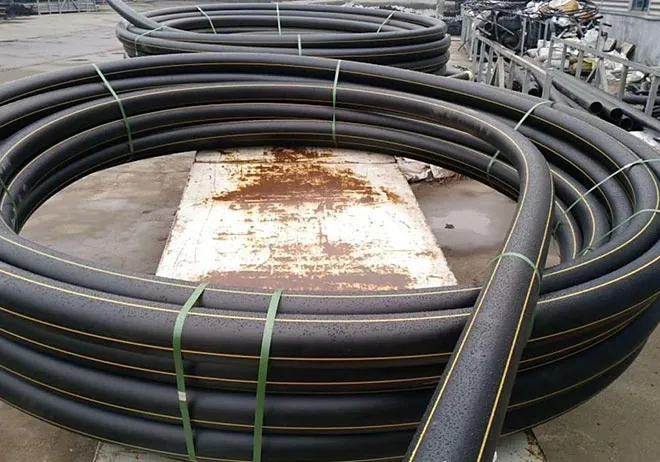
Introduction
Polypropylene Random (PPR) plumbing systems represent a significant advancement in fluid conveyance technology, particularly within building infrastructure and industrial processes. PPR, a thermoplastic produced from the polymerization of propylene, has gained prominence as a replacement for traditional metal piping due to its corrosion resistance, lightweight nature, and ease of installation. This guide provides an in-depth technical analysis of PPR plumbing systems, covering material science, manufacturing processes, performance characteristics, failure modes, and relevant industry standards. The core performance advantage of PPR lies in its ability to handle both hot and cold water, resisting scaling and maintaining consistent flow rates. Understanding these technical aspects is critical for procurement managers, engineers, and installers seeking reliable and long-lasting plumbing solutions. The industry faces persistent challenges relating to long-term creep resistance under sustained thermal stress, UV degradation in exposed applications, and ensuring consistent weld quality during installation.
Material Science & Manufacturing
PPR’s fundamental properties are dictated by its semi-crystalline morphology. The raw material, polypropylene homopolymer or copolymer, is selected based on the desired application. Random copolymers, incorporating ethylene comonomers, exhibit enhanced impact strength and flexibility, crucial for plumbing applications. The material boasts a density of approximately 0.90 – 0.92 g/cm³, a relatively low coefficient of thermal expansion (typically 1.5 x 10⁻⁴ /°C), and excellent chemical resistance to a wide range of substances, excluding strong oxidizing agents. Manufacturing begins with the polymerization of propylene using Ziegler-Natta or metallocene catalysts, dictating the polymer’s molecular weight distribution and tacticity. PPR pipes are primarily produced via extrusion molding. The polypropylene granules are melted and forced through a die, defining the pipe’s outer diameter and wall thickness. Critical parameters during extrusion include melt temperature (190-230°C), screw speed, and die geometry. Fittings are commonly manufactured using injection molding. Precise control of mold temperature (30-60°C) and injection pressure is essential to prevent warpage and ensure dimensional accuracy. Socket fusion and electrofusion are the predominant joining methods. Socket fusion relies on heating both the pipe and fitting surfaces to a controlled temperature (130-170°C) and pressing them together, creating a homogenous weld. Electrofusion utilizes a heating element embedded within the fitting to melt the pipe and fitting surfaces, offering greater control and suitability for larger diameters. Quality control involves rigorous testing of hydrostatic pressure, impact resistance, and weld strength.
Performance & Engineering
The performance of PPR plumbing systems is governed by several key engineering principles. Hydrostatic strength, the ability to withstand internal pressure, is paramount. PPR pipes are typically designed to withstand pressures ranging from 1.0 MPa to 2.5 MPa, depending on wall thickness and pipe diameter. Stress analysis reveals that hoop stress (tangential stress) is the dominant stress component under internal pressure, dictating the minimum required wall thickness. Temperature-pressure derating curves are critical for safe operation, as PPR’s mechanical properties degrade at elevated temperatures. Long-term creep resistance is a significant concern. Under sustained hydrostatic pressure and temperature, PPR can exhibit time-dependent deformation, leading to dimensional instability and potential leaks. This is mitigated by using higher molecular weight polypropylene grades and optimizing weld parameters. The coefficient of thermal expansion necessitates careful consideration during installation to accommodate expansion and contraction. Expansion loops or flexible connectors are often incorporated into the system design to prevent stress build-up. Chemical compatibility is another critical factor. While PPR exhibits excellent resistance to many common chemicals, prolonged exposure to strong oxidizing agents, such as chlorine, can cause degradation. UV exposure can also lead to embrittlement and cracking. Protective coatings or burial are recommended for outdoor applications. Compliance with relevant plumbing codes, such as those established by the International Plumbing Code (IPC) and European standards (EN), is essential for ensuring safe and reliable performance.
Technical Specifications
| Parameter | Unit | Typical Value (PN20) | Typical Value (PN25) |
|---|---|---|---|
| Nominal Pressure | MPa | 2.0 | 2.5 |
| Hydrostatic Pressure Test | MPa | 3.0 | 3.75 |
| Operating Temperature (Water) | °C | -20 to +95 | -20 to +95 |
| Density | g/cm³ | 0.90 - 0.92 | 0.90 - 0.92 |
| Tensile Strength | MPa | 20 - 25 | 22 - 28 |
| Elongation at Break | % | 200 - 300 | 250 - 350 |
Failure Mode & Maintenance
PPR plumbing systems, while durable, are susceptible to several failure modes. Hydrostatic failure, resulting from excessive internal pressure or material defects, manifests as catastrophic rupture. Creep rupture, a time-dependent failure, occurs under sustained pressure and temperature, leading to slow crack propagation and eventual leakage. Weld defects, such as incomplete fusion or excessive weld bead size, are common failure points. These defects are often caused by improper heating temperatures or insufficient pressure during the joining process. Environmental stress cracking (ESC) can occur due to exposure to certain chemicals or prolonged UV radiation, causing brittle fracture. Oxidation, particularly at elevated temperatures, can degrade the polymer matrix, reducing its mechanical strength. Maintenance primarily involves visual inspection for leaks, cracks, and deformation. Regular pressure testing can identify potential weaknesses before catastrophic failure occurs. For minor leaks, patching with a compatible PPR adhesive may provide a temporary solution, but complete replacement of the affected section is generally recommended. Proper water quality management is crucial to prevent scaling and corrosion. Periodic flushing of the system can remove sediment and debris. Avoid using abrasive cleaners that can damage the pipe surface. Proper support and anchoring of the piping system are essential to prevent stress concentration and vibration-induced fatigue.
Industry FAQ
Q: What is the long-term impact of sustained temperature fluctuations on PPR pipe integrity?
A: Sustained temperature fluctuations induce thermal stress within the PPR material, accelerating creep deformation. This can lead to dimensional changes, joint weakening, and eventual leakage. Utilizing higher grade PPR compounds with enhanced creep resistance, proper expansion loop design, and maintaining operating temperatures within specified limits are critical mitigation strategies.
Q: How does water hardness affect PPR pipe lifespan and what preventative measures are recommended?
A: High water hardness leads to scale buildup within the PPR pipes, reducing flow capacity and potentially creating stress points. While PPR is generally resistant to scale adhesion, heavy scaling can contribute to localized corrosion. Water softening systems or periodic descaling procedures are recommended preventative measures.
Q: What are the key indicators of a compromised socket fusion weld?
A: Indicators of a compromised socket fusion weld include incomplete fusion (visible gap between pipe and fitting), excessive weld bead size or asymmetry, burn marks on the pipe or fitting surface, and a brittle or uneven weld surface. Non-destructive testing methods, such as ultrasonic inspection, can be used to verify weld integrity.
Q: What specific chemicals are known to accelerate degradation of PPR piping, and what are acceptable alternatives?
A: Strong oxidizing agents, such as concentrated chlorine bleach and certain industrial solvents, can accelerate the degradation of PPR. Acceptable alternatives include using chlorine-free disinfectants and selecting piping materials with higher chemical resistance for specific applications.
Q: What is the recommended maximum unsupported span length for different PPR pipe diameters to prevent sagging and stress cracking?
A: Unsupported span length is directly related to pipe diameter and wall thickness. For PN20 pipes, a general guideline is to limit unsupported spans to 1 meter for diameters up to 50mm, 0.8 meters for 63mm, and 0.6 meters for larger diameters. Adequate support brackets and hangers must be installed at regular intervals to prevent sagging and stress cracking.
Conclusion
PPR plumbing systems offer a compelling combination of corrosion resistance, ease of installation, and cost-effectiveness, establishing them as a dominant material in modern plumbing infrastructure. However, achieving long-term reliability requires a thorough understanding of the material's properties, manufacturing processes, and potential failure modes. Critical aspects include careful selection of PPR grades based on application requirements, meticulous control of welding parameters, and implementation of proactive maintenance strategies to mitigate creep, ESC, and oxidation.
Future advancements in PPR technology will likely focus on developing enhanced formulations with improved creep resistance, UV stability, and chemical compatibility. Integration of smart sensors for real-time pressure and temperature monitoring will enable predictive maintenance and early detection of potential failures. Adherence to stringent industry standards and best practices remains paramount to ensuring the safe and sustainable operation of PPR plumbing systems.
-
DN25 HDPE Compression Fitting-HORON INTERNATIONAL|Reliable Irrigation Solutions
NewsFeb.11,2026
-
china water lines under kitchen sink Performance Analysis
News2026-05-26
-
china hdpe conduit coupling Performance Analysis
News2026-05-26
-
china pvc irrigation pipe Performance Analysis
News2026-05-26
-
china all types of pvc pipes Performance Analysis
News2026-05-26
-
china hdpe reducing coupler Performance Analysis
News2026-05-26
-
china type of ppr pipe Manufacturing Analysis
News2026-05-25
-
china plumbing ppr pipe Performance Analysis
News2026-05-25
-
china 20mm ppr pipe Material Science
News2026-05-25
-
china pvc sprinkler pipe Performance and Engineering
News2026-05-25
-
china dn500 hdpe double wall corrugated pipe for sewage drain Performance Analysis
News2026-05-25
-
china use of pvc pipe Performance Analysis
News2026-05-24
-
china 50mm pvc pipe price Performance Analysis
News2026-05-24
-
china ppr pipe 50mm price Performance Analysis
News2026-05-24
-
china hdpe coupler price Performance Analysis
News2026-05-24
-
china white pvc pipe Performance Analysis
News2026-05-24