

Feb . 11, 2026 00:01 Back to list
pipe hdpe size service Performance Analysis
Introduction
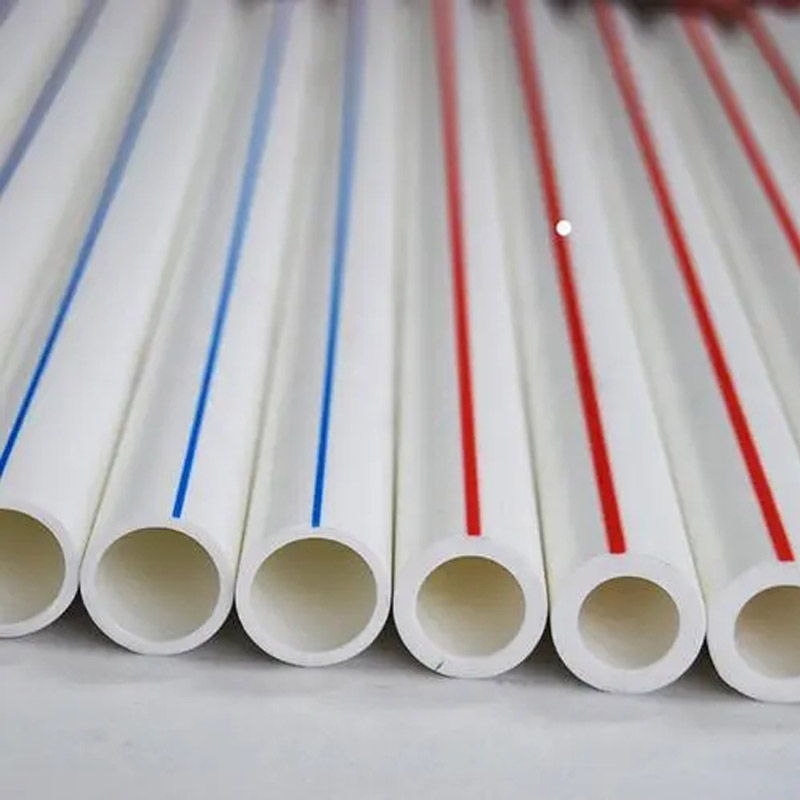
High-Density Polyethylene (HDPE) pipe, categorized by size and service application, represents a critical component in fluid and gas transmission systems across various industries. This technical guide provides an in-depth exploration of HDPE pipe, focusing on its material properties, manufacturing processes, performance characteristics, potential failure modes, and relevant industry standards. HDPE pipe’s increasing prominence stems from its advantages over traditional materials like ductile iron and steel, including corrosion resistance, lightweight nature, and cost-effectiveness. Its application spans water distribution, gas transmission, drainage, and industrial piping. Understanding the nuances of HDPE pipe sizing and its suitability for specific service conditions is paramount for ensuring long-term system integrity and operational efficiency. Core performance metrics include pressure rating, flow capacity, and long-term hydrostatic strength (LTHS), dictated by pipe dimensions and material grade.
Material Science & Manufacturing
HDPE is a thermoplastic polymer derived from the polymerization of ethylene. Its high density, typically ranging from 0.941 to 0.965 g/cm³, contributes to its strength and rigidity. The raw material, polyethylene resin, is characterized by its molecular weight distribution and density, impacting its processing characteristics and final product properties. Manufacturing HDPE pipe commonly employs extrusion processes. Resin pellets are fed into an extruder, melted, and forced through a die to create a continuous pipe profile. Critical process parameters include melt temperature (typically 180-210°C), die pressure, and cooling rate. Butt fusion, electrofusion, and socket fusion are prevalent joining methods. Butt fusion involves heating and pressing pipe ends together, creating a homogenous weld. Electrofusion utilizes an electrical heating element embedded within a fitting to melt and fuse the pipe and fitting. Socket fusion utilizes a heating tool to melt both the pipe and fitting socket prior to assembly. Parameter control during these joining processes – temperature, pressure, and dwell time – is crucial to ensure weld integrity and prevent defects like insufficient fusion or burn-through. The addition of carbon black provides UV resistance, although long-term exposure still necessitates protective measures. PE100, PE80, and PE63 grades are common, representing minimum hydrostatic strength (MRS) values in MPa, defining the material’s long-term pressure-bearing capability.

Performance & Engineering
The performance of HDPE pipe is heavily influenced by its size, pressure rating (PN – nominal pressure), and operating temperature. Force analysis considers both internal pressure and external loads, including soil load, traffic load, and hydrostatic pressure. According to Barlow’s formula (S = P D / 2t, where S = stress, P = pressure, D = diameter, and t = wall thickness), larger diameter pipes require thicker walls to withstand the same internal pressure. The creep resistance of HDPE is a key engineering consideration. Under sustained load, HDPE exhibits time-dependent deformation (creep). LTHS (Long Term Hydrostatic Strength) is a critical parameter, calculated based on MRS and a design factor, accounting for creep behavior over the pipe’s expected service life. Environmental resistance is another crucial aspect. While HDPE is inherently corrosion resistant, it is susceptible to degradation from UV exposure and certain chemicals. UV stabilizers are commonly added to the material, but protective coatings or burial are recommended for prolonged outdoor exposure. Compliance requirements are dictated by industry-specific regulations and standards (detailed in the footer). For potable water applications, compliance with NSF/ANSI 61 ensures the pipe does not leach harmful contaminants into the water supply. For gas distribution, compliance with DOT regulations is mandatory.
Technical Specifications
| Parameter | Unit | PE80 (Typical) | PE100 (Typical) |
|---|---|---|---|
| Minimum Hydrostatic Strength (MRS) | MPa | 8.0 | 10.0 |
| Density | g/cm³ | 0.953 | 0.965 |
| Operating Temperature | °C | -40 to +60 | -40 to +60 |
| Burst Pressure | MPa | 24 | 30 |
| Wall Thickness | mm | Variable (depending on PN and diameter) | Variable (depending on PN and diameter) |
| Outside Diameter | mm | 20 – 630 | 20 – 1600 |
Failure Mode & Maintenance
HDPE pipe failures can arise from several mechanisms. Slow Crack Growth (SCG) is a primary concern, particularly in applications involving sustained tensile stress and exposure to aggressive chemicals. SCG initiates at stress concentrators (e.g., scratches, gouges) and propagates slowly through the material. Fatigue cracking can occur under cyclic loading, such as from traffic loads or water hammer. Oxidation, while relatively slow, can degrade the polymer over extended periods, especially at elevated temperatures. Joint failures are common, often attributed to improper fusion parameters (insufficient heat, incorrect pressure, or dwell time). Third-party damage during installation (e.g., excavation damage) is a significant contributor to failures. Maintenance practices include regular visual inspections for cracks, deformations, and leaks. Hydrostatic testing can verify the integrity of the system. For SCG prevention, avoiding stress concentrators and minimizing exposure to aggressive chemicals is crucial. Proper backfilling procedures and soil compaction are essential to prevent external loading failures. Periodic assessment of joint integrity through non-destructive testing (e.g., ultrasonic testing) can identify potential weaknesses before they lead to catastrophic failure.
Industry FAQ
Q: What is the impact of temperature on HDPE pipe performance?
A: Elevated temperatures reduce the LTHS of HDPE, increasing the risk of creep and failure. Conversely, low temperatures can increase brittleness. Design calculations must account for the expected operating temperature range. The temperature derating factors outlined in relevant standards (e.g., ISO 4427) should be applied.
Q: How do I determine the correct HDPE pipe size for a given flow rate?
A: Pipe sizing involves considering flow rate, fluid velocity, pressure drop, and friction losses. The Hazen-Williams equation or Darcy-Weisbach equation can be used to calculate pressure drop. Higher flow rates require larger diameter pipes to maintain acceptable velocities and minimize friction losses. Software tools are available to simplify these calculations.
Q: What are the advantages of PE100 over PE80?
A: PE100 offers a higher MRS, providing greater long-term strength and allowing for thinner walls or higher pressure ratings compared to PE80 for the same application. This can result in cost savings due to reduced material usage and easier installation.
Q: What are the best practices for joining HDPE pipe?
A: Proper surface preparation, adherence to manufacturer's recommended fusion parameters (temperature, pressure, dwell time), and operator training are crucial. Fusion equipment should be regularly calibrated. Joints should be visually inspected for defects. Documentation of fusion parameters is recommended for quality control.
Q: How does soil corrosivity affect HDPE pipe?
A: While HDPE itself is not corroded by most soils, aggressive soils (e.g., those with high sulfate content or acidity) can potentially accelerate degradation over the long term. Protective coatings or cathodic protection may be considered in highly corrosive environments. Proper bedding and backfilling practices are essential.
Conclusion
HDPE pipe represents a versatile and durable solution for a wide range of fluid and gas transmission applications. Its inherent corrosion resistance, lightweight nature, and ease of installation contribute to its growing popularity. However, successful implementation necessitates a thorough understanding of material properties, manufacturing processes, and engineering principles. Careful consideration of factors like operating temperature, pressure rating, soil conditions, and potential failure modes is critical for ensuring long-term system reliability.
Looking forward, advancements in HDPE resin technology and fusion techniques will further enhance the performance and lifespan of HDPE pipe systems. Continued research into SCG mechanisms and mitigation strategies will be essential. The adoption of smart monitoring technologies, such as embedded sensors for pressure and strain monitoring, will enable proactive maintenance and prevent catastrophic failures. Proper specification, installation, and maintenance practices remain paramount for maximizing the benefits of this valuable material.
-
DN25 HDPE Compression Fitting-HORON INTERNATIONAL|Reliable Irrigation Solutions
NewsFeb.11,2026
-
china ppr water pipe price Performance Analysis
News2026-06-06
-
china ppr composite pipe Performance Analysis
News2026-06-06
-
china ppr pipe 25mm price Performance Analysis
News2026-06-06
-
china ppr pipe use Performance Analysis
News2026-06-06
-
china pvc sewer pipe Technical Performance
News2026-06-06
-
china hdpe coupling joint Performance Analysis
News2026-06-05
-
china ppr pipe connector Manufacturing Analysis
News2026-06-05
-
china ppr pipe 20mm Manufacturing Analysis
News2026-06-05
-
china pvc pipe used for water supply Performance and Engineering
News2026-06-05
-
china orange pvc pipe Performance Engineering
News2026-06-05
-
china 1 2 ppr pipe in mm Performance Analysis
News2026-06-04
-
china hdpe pipe for water supply specifications Performance Analysis
News2026-06-04
-
china ppr hot water pipe insulation Thermal Performance
News2026-06-04
-
china 24 inch diameter pvc pipe Performance Analysis
News2026-06-04
-
china ppr hot water pipe Performance Analysis
News2026-06-04