

Feb . 11, 2026 00:01 Back to list
hdpe corrugated sewer pipe manufacturers Performance Engineering
Introduction
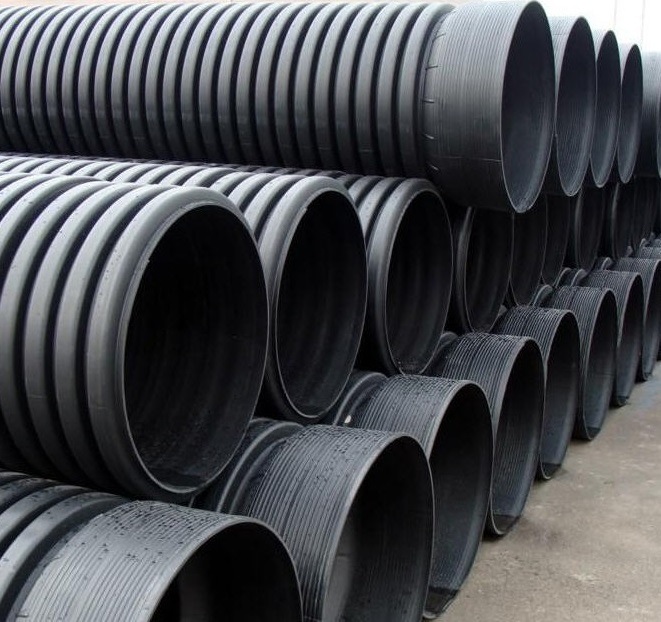
High-Density Polyethylene (HDPE) corrugated sewer pipe represents a significant advancement in subsurface drainage and wastewater management infrastructure. Situated within the broader realm of plastic pipe technologies, it addresses critical shortcomings of traditional materials like concrete, ductile iron, and PVC. These pipes are specifically engineered for gravity flow applications – sanitary sewers, stormwater drainage, and agricultural drainage – offering a lightweight, durable, and cost-effective alternative. Their corrugated outer profile provides substantial ring stiffness, enabling them to withstand soil loads and heavy traffic. Core performance characteristics include long-term hydraulic capacity, resistance to corrosion and chemical attack, ease of installation, and extended service life, making them a preferred choice for municipalities, developers, and construction professionals. The increasing adoption of HDPE corrugated sewer pipe reflects a growing emphasis on sustainable infrastructure solutions focused on minimizing life-cycle costs and environmental impact. A primary industry pain point lies in ensuring consistent material quality across manufacturers to guarantee long-term performance and avoid premature failure, particularly regarding UV resistance and weld integrity.
Material Science & Manufacturing
The foundational material, HDPE, is a thermoplastic polymer created from the polymerization of ethylene. Key physical properties critical to performance include a density ranging from 0.941 to 0.965 g/cm³, a tensile strength typically between 20-30 MPa, and a relatively high impact resistance, even at low temperatures. Chemical resistance is exceptionally good; HDPE is inert to most acids, bases, and solvents commonly found in wastewater. The manufacturing process for corrugated sewer pipe generally involves extrusion, corrugation, and, often, subsequent welding to create longer lengths. Extrusion converts HDPE resin into a continuous profile. This profile then passes through a corrugation die, forming the characteristic ribbed exterior. Critical process parameters during extrusion include maintaining precise temperature control (melt temperature, die temperature) to ensure consistent material density and prevent degradation. Corrugation parameters, such as die speed and rib profile depth, are adjusted to achieve the desired ring stiffness. Welting, typically butt fusion, is employed to join sections of pipe, creating watertight seams. Butt fusion requires meticulous control of heating plate temperature, pressure, and cooling time to achieve optimal weld strength. Quality control at each stage—resin batch testing, dimensional inspection of the extruded profile, and non-destructive testing of welds—is paramount to ensuring compliance with industry standards. Long-term creep resistance is a crucial material property influenced by the degree of polymerization and the addition of stabilizing additives.
Performance & Engineering
The performance of HDPE corrugated sewer pipe is governed by several engineering considerations. Ring stiffness, measured in psi, is a primary indicator of the pipe's ability to resist deformation under external loads (soil cover, traffic). Higher ring stiffness values correspond to greater load-bearing capacity. Hydraulic performance is determined by the Manning’s equation, considering the pipe’s internal diameter, roughness coefficient, and slope. HDPE’s smooth interior surface results in a lower roughness coefficient, maximizing flow capacity. The pipe’s ability to withstand hydrostatic pressure – the pressure exerted by groundwater – is critical, especially in areas with high water tables. Long-term performance is influenced by creep, the gradual deformation of the pipe under sustained load. UV degradation is a significant concern, especially during storage and installation. HDPE is susceptible to UV radiation, leading to embrittlement and reduced mechanical properties. Therefore, UV stabilizers are incorporated into the resin formulation, and proper storage practices (covering pipes) are essential. Compliance requirements are dictated by regional and national standards (detailed in the standards section), which specify minimum ring stiffness values, material quality, and testing procedures. Force analysis, including hoop stress and longitudinal stress, is performed during design to ensure the pipe can withstand anticipated loads without failure. Environmental factors like soil corrosivity and temperature fluctuations also impact long-term performance and must be considered during the design phase.
Technical Specifications
| Parameter | Unit | Typical Value (12” Pipe) | Testing Standard |
|---|---|---|---|
| Nominal Diameter | inches | 12 | ASTM D3212 |
| Ring Stiffness | psi | 60 | ASTM D2412 |
| Wall Thickness | inches | 0.75 | ASTM D3212 |
| Manning’s Roughness Coefficient | - | 0.011 | ASTM D3212 |
| Long-Term Creep Strain | % | ≤ 5 | ASTM F477 |
| Hydrostatic Design Pressure | psi | 150 | ASTM D2837 |
Failure Mode & Maintenance
HDPE corrugated sewer pipe, while durable, is susceptible to specific failure modes. Fatigue cracking can occur due to repeated loading and unloading, particularly in areas with heavy traffic or unstable soil conditions. This is often initiated at stress concentrators, such as weld seams or corrugation peaks. Delamination, or the separation of layers within the pipe wall, can result from material defects or improper welding. Degradation due to UV exposure leads to embrittlement and cracking, especially in areas left uncovered for extended periods. Oxidation, caused by exposure to oxygen and heat, can also degrade the material over time, reducing its mechanical properties. Poor installation practices, such as improper bedding or excessive bending radius, can induce stress and contribute to failure. Maintenance typically involves regular inspection using CCTV cameras to identify cracks, deformations, or blockages. Point repairs can be made using specialized couplings or sleeves. For significant damage, sections of pipe may need to be replaced. Preventative maintenance includes ensuring proper bedding and backfill, protecting pipes from UV exposure during storage and installation, and avoiding excessive loads. Failure analysis should include visual inspection, material testing (tensile strength, impact resistance), and weld inspection (visual, ultrasonic) to determine the root cause of the failure.
Industry FAQ
Q: What are the advantages of HDPE corrugated pipe over concrete pipe in terms of long-term cost?
A: While concrete pipe may have a lower initial material cost, HDPE corrugated pipe offers significantly lower life-cycle costs. Concrete is susceptible to corrosion, requiring costly repairs or replacements. HDPE is corrosion-resistant, drastically reducing maintenance needs. Additionally, HDPE’s lighter weight reduces installation costs (labor and equipment) and transportation costs. The extended service life of HDPE—often exceeding 100 years—further contributes to long-term cost savings.
Q: How does the corrugated design contribute to the pipe’s performance?
A: The corrugated profile enhances the pipe’s ring stiffness, providing greater resistance to soil loads and surface traffic. This allows for shallower burial depths and reduces the need for costly and disruptive excavation. The corrugations also increase the pipe’s buckling resistance, improving its structural integrity.
Q: What quality control measures are crucial during HDPE corrugated pipe manufacturing?
A: Strict quality control is essential at every stage of manufacturing. Resin batch testing ensures the HDPE meets specified properties. Dimensional inspection of the extruded profile verifies correct wall thickness and corrugation dimensions. Weld inspection, utilizing non-destructive testing methods like ultrasonic testing, confirms weld integrity. Hydrostatic pressure testing verifies the pipe’s ability to withstand internal pressure.
Q: What is the recommended bedding and backfill material for HDPE corrugated pipe?
A: Bedding and backfill materials should be granular and free of sharp objects. Well-graded sand or gravel is generally recommended. Proper compaction is critical to provide uniform support and prevent pipe deformation. Geotextile fabric should be used to separate the bedding material from the surrounding soil and prevent migration of fines.
Q: What standards govern the performance and testing of HDPE corrugated sewer pipe?
A: Several standards are applicable, including ASTM D3212 (Corrugated Polyethylene (PE) Tubing for Gravity Flow Drain and Sewer Applications), ASTM D2412 (Ring Stiffness of Plastic Pipe), ASTM F477 (Hydrostatic Design Basis for Polyethylene (PE) Pressure Pipes and Fittings), and ASTM D2837 (Hydrostatic Pressure Testing of Thermoplastic Pipe and Fittings). Regional and national regulations may also impose additional requirements.
Conclusion
HDPE corrugated sewer pipe represents a robust and cost-effective solution for gravity-flow drainage applications. Its inherent material properties – durability, chemical resistance, and lightweight nature – coupled with optimized manufacturing processes and adherence to stringent industry standards, ensure long-term performance and reliability. The increasing adoption of this technology demonstrates a shift towards sustainable infrastructure practices, prioritizing reduced life-cycle costs and minimal environmental impact.
Looking forward, continued advancements in HDPE resin formulations, particularly in UV stabilization and creep resistance, will further enhance the performance and longevity of these systems. The integration of smart technologies, such as sensors embedded within the pipe to monitor flow rates and structural integrity, represents a promising avenue for proactive maintenance and optimized asset management. Ultimately, a thorough understanding of the material science, engineering principles, and performance characteristics outlined in this guide is essential for specifying, installing, and maintaining HDPE corrugated sewer pipe systems effectively.
-
DN25 HDPE Compression Fitting-HORON INTERNATIONAL|Reliable Irrigation Solutions
NewsFeb.11,2026
-
china 48 hdpe pipe for sale Performance Analysis
News2026-05-28
-
china perforated land drainage pipe Performance Analysis
News2026-05-28
-
china clear pvc hose Performance Analysis
News2026-05-28
-
china kitchen sink hot cold water lines Performance Analysis
News2026-05-28
-
china 110 mm pvc pipe Performance Analysis
News2026-05-28
-
china upvc column pipes for submersible pumps price list Performance Analysis
News2026-05-27
-
china ppr pipe for water supply Performance Analysis
News2026-05-27
-
china 20mm ppr pipe price Performance Analysis
News2026-05-27
-
china hdpe pipe 24 inch Performance Analysis
News2026-05-27
-
china hdpe to steel coupling Performance Analysis
News2026-05-27
-
china water lines under kitchen sink Performance Analysis
News2026-05-26
-
china hdpe conduit coupling Performance Analysis
News2026-05-26
-
china pvc irrigation pipe Performance Analysis
News2026-05-26
-
china all types of pvc pipes Performance Analysis
News2026-05-26
-
china hdpe reducing coupler Performance Analysis
News2026-05-26