

Feb . 11, 2026 00:01 Back to list
hdpe corrugated sewer pipe factory Performance Analysis

Introduction
High-Density Polyethylene (HDPE) corrugated sewer pipe represents a significant advancement in gravity flow sanitary sewer and storm drainage systems. Positioned within the broader infrastructure supply chain, this product serves as a direct replacement for traditional materials like concrete, ductile iron, and PVC, offering notable advantages in terms of weight, installation speed, and long-term durability. HDPE corrugated pipe systems are characterized by a corrugated outer wall fused to a smooth inner liner, providing a balance between structural strength and hydraulic efficiency. Core performance characteristics include high ring stiffness for load support, excellent chemical resistance to wastewater components, and a lightweight construction that reduces handling and installation costs. The primary function is the safe and efficient conveyance of wastewater and stormwater, minimizing infiltration and exfiltration, and contributing to environmental protection.
Material Science & Manufacturing
The foundational material, HDPE, is a thermoplastic polymer produced from the polymerization of ethylene. Its key physical properties relevant to sewer pipe applications include a density between 0.941 and 0.965 g/cm³, tensile strength ranging from 8 to 20 MPa, and a relatively high ductility. Chemical resistance is excellent, demonstrating stability against acids, bases, and common industrial solvents found in wastewater. Manufacturing begins with the extrusion of both the corrugated outer layer and the smooth inner liner. The corrugated profile is typically created using a helical extrusion process, forming a series of ridges and grooves. Simultaneously, the inner liner is extruded to provide a smooth, consistent hydraulic surface. These two components are then fused together using a synchronous winding and thermal welding process. Critical parameters during manufacturing include maintaining precise temperature control during extrusion to ensure consistent material properties, regulating the corrugation profile dimensions to achieve specified ring stiffness, and guaranteeing a robust weld between the outer and inner layers to prevent separation and maintain structural integrity. Quality control involves rigorous testing of material density, melt flow index, weld strength, and dimensional accuracy according to established standards.
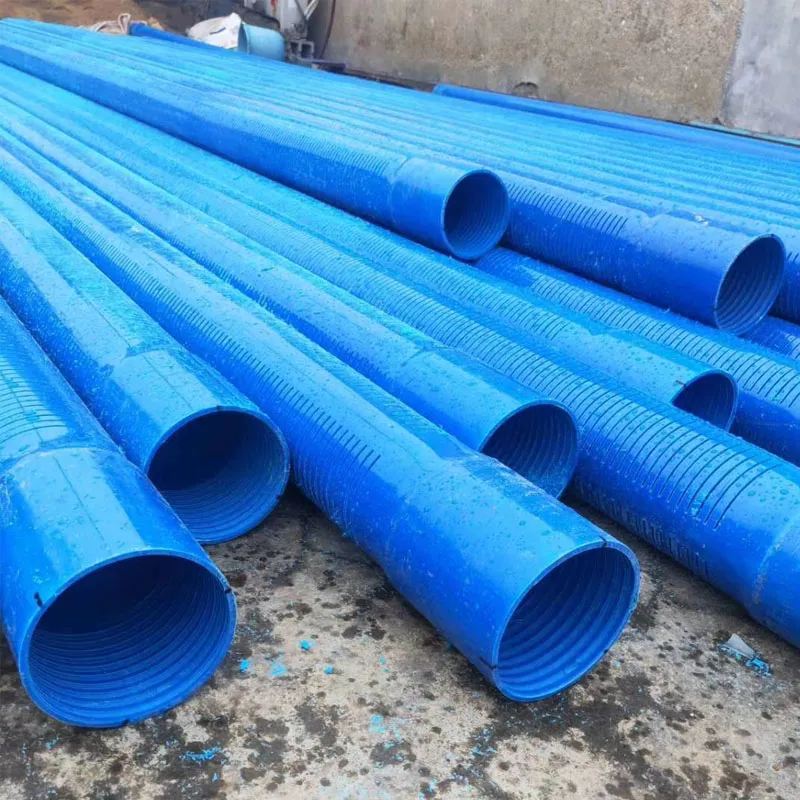
Performance & Engineering
The performance of HDPE corrugated sewer pipe is governed by several key engineering principles. Ring stiffness, a measure of the pipe’s resistance to deformation under external loads, is critical for ensuring long-term structural integrity, particularly in buried applications. This is determined by the pipe’s geometry (corrugation profile and wall thickness) and the material properties of HDPE. Force analysis considers vertical loads from soil cover and traffic, as well as hydrostatic pressure from groundwater. The pipe must be capable of withstanding these loads without significant deflection or failure. Environmental resistance is another crucial factor. HDPE exhibits excellent resistance to UV degradation, but long-term exposure can still lead to embrittlement. Proper bedding and backfill materials are essential to protect the pipe from excessive stress and abrasion. Compliance requirements are dictated by local and national regulations, often referencing standards established by ASTM (American Society for Testing and Materials) and other organizations. Functional implementation involves careful consideration of hydraulic gradient, flow velocity, and potential for sediment accumulation. The smooth inner liner minimizes friction losses and promotes efficient flow, while proper joint design prevents infiltration and exfiltration, protecting groundwater resources.
Technical Specifications
| Nominal Pipe Size (inches) | Outside Diameter (mm) | Ring Stiffness (psi) | Wall Thickness (mm) - Corrugated |
|---|---|---|---|
| 12 | 305 | 38 | 6.1 |
| 15 | 375 | 45 | 6.4 |
| 18 | 450 | 52 | 7.1 |
| 24 | 600 | 60 | 8.4 |
| 30 | 750 | 68 | 9.5 |
| 36 | 900 | 75 | 10.6 |
Failure Mode & Maintenance
HDPE corrugated sewer pipe, while durable, is susceptible to certain failure modes. Fatigue cracking can occur due to repeated loading and unloading, particularly in areas with concentrated stress (e.g., joints). Delamination, the separation of the corrugated outer layer from the smooth inner liner, is often caused by inadequate welding during manufacturing or damage during installation. Degradation from prolonged UV exposure can lead to embrittlement and reduced impact resistance. Oxidation can occur due to chemical attack, particularly in environments with high concentrations of oxidizing agents. Common causes of failure include improper installation techniques (e.g., inadequate bedding), excessive loading from heavy traffic, and the presence of aggressive chemicals in the wastewater. Maintenance primarily involves regular inspection for signs of cracking, deformation, or leakage. Preventative maintenance includes ensuring proper bedding and backfill materials, avoiding excessive loading, and implementing corrosion protection measures where necessary. For minor cracks, repair sleeves can be used to reinforce the damaged area. In cases of severe damage or delamination, pipe replacement may be required. Joint integrity should be routinely checked utilizing pressure testing or visual inspection.
Industry FAQ
Q: What are the advantages of HDPE corrugated pipe over concrete pipe in terms of installation?
A: HDPE corrugated pipe is significantly lighter than concrete pipe, reducing the need for heavy lifting equipment and decreasing installation time. The pipe’s flexibility allows for easier alignment and connection, and the use of gasketed joints minimizes infiltration and exfiltration. Furthermore, HDPE’s longer lengths reduce the number of joints required, accelerating the installation process.
Q: How does HDPE pipe handle chemical corrosion compared to PVC?
A: HDPE exhibits superior chemical resistance compared to PVC, particularly against aggressive chemicals commonly found in industrial wastewater. HDPE is less susceptible to degradation from acids, bases, and solvents, resulting in a longer service life in corrosive environments. PVC can become brittle and crack under similar conditions.
Q: What is the typical lifespan of an HDPE corrugated sewer pipe system?
A: Properly installed and maintained HDPE corrugated sewer pipe systems can have a lifespan exceeding 50 years, and potentially exceeding 100 years. This longevity is due to the inherent corrosion resistance of HDPE and its ability to withstand repeated loading and unloading.
Q: What bedding and backfill materials are recommended for HDPE corrugated pipe installations?
A: Granular materials such as sand, gravel, or crushed stone are recommended for bedding and backfill. These materials provide uniform support to the pipe and minimize the risk of deformation. Compaction should be controlled to avoid over-compaction, which can damage the pipe. Geotextile fabrics can be used to prevent soil intrusion and provide additional protection.
Q: How does the corrugated design contribute to the pipe’s structural integrity?
A: The corrugated outer wall significantly increases the pipe’s ring stiffness, providing resistance to external loads. The corrugations act as reinforcing ribs, distributing stress and preventing deformation. The combination of a corrugated outer wall and a smooth inner liner optimizes the balance between structural strength and hydraulic efficiency.
Conclusion
HDPE corrugated sewer pipe represents a robust and cost-effective solution for gravity flow sanitary and storm sewer applications. Its superior chemical resistance, lightweight construction, and ease of installation provide significant advantages over traditional materials. Understanding the material science, manufacturing processes, and engineering principles governing its performance is critical for ensuring long-term reliability and minimizing the risk of failure.
The future of sewer infrastructure is leaning towards lighter, more durable, and environmentally conscious materials. Continued innovation in HDPE formulations and manufacturing techniques will further enhance the performance and sustainability of corrugated pipe systems. Adherence to relevant industry standards and best practices in installation and maintenance will be essential for maximizing the lifespan and minimizing the environmental impact of these critical infrastructure components.
-
DN25 HDPE Compression Fitting-HORON INTERNATIONAL|Reliable Irrigation Solutions
NewsFeb.11,2026
-
china upvc column pipes for submersible pumps price list Performance Analysis
News2026-05-27
-
china ppr pipe for water supply Performance Analysis
News2026-05-27
-
china 20mm ppr pipe price Performance Analysis
News2026-05-27
-
china hdpe pipe 24 inch Performance Analysis
News2026-05-27
-
china hdpe to steel coupling Performance Analysis
News2026-05-27
-
china water lines under kitchen sink Performance Analysis
News2026-05-26
-
china hdpe conduit coupling Performance Analysis
News2026-05-26
-
china pvc irrigation pipe Performance Analysis
News2026-05-26
-
china all types of pvc pipes Performance Analysis
News2026-05-26
-
china hdpe reducing coupler Performance Analysis
News2026-05-26
-
china type of ppr pipe Manufacturing Analysis
News2026-05-25
-
china plumbing ppr pipe Performance Analysis
News2026-05-25
-
china 20mm ppr pipe Material Science
News2026-05-25
-
china pvc sprinkler pipe Performance and Engineering
News2026-05-25
-
china dn500 hdpe double wall corrugated pipe for sewage drain Performance Analysis
News2026-05-25