

Feb . 11, 2026 00:01 Back to list
dn500 hdpe double wall corrugated pipe for sewage drain service Performance Analysis
Introduction
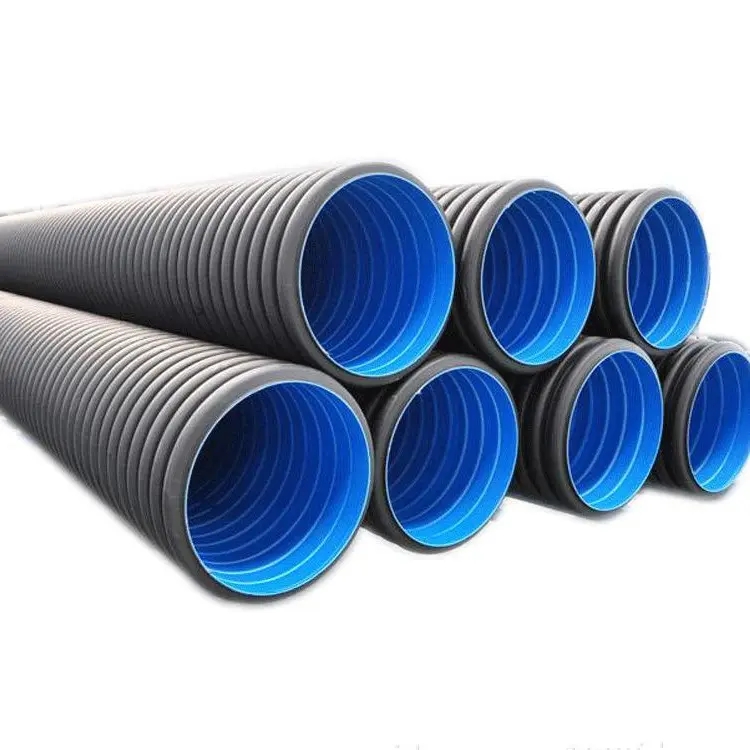
DN500 High-Density Polyethylene (HDPE) double-wall corrugated pipe is a widely utilized solution for gravity-fed sewage drain service applications. Positioned as a critical component in modern underground infrastructure, it represents a significant advancement over traditional pipe materials like concrete and ductile iron. This pipe system is designed for the conveyance of wastewater, stormwater, and industrial effluent, offering a balance of structural integrity, chemical resistance, and cost-effectiveness. The double-wall corrugated design enhances ring stiffness and load-bearing capacity, making it suitable for burial depths and traffic loading. Core performance characteristics include hydraulic capacity (determined by the 500mm internal diameter), long-term durability in corrosive soil conditions, and ease of installation due to lightweight construction and pre-fabricated jointing systems. Understanding the material science, manufacturing processes, and engineering considerations behind this product is crucial for effective specification and long-term system reliability. This guide provides a comprehensive technical overview for engineers, procurement managers, and installers involved in sewage drain service projects.
Material Science & Manufacturing
The primary material for DN500 HDPE double-wall corrugated pipe is high-density polyethylene (HDPE), conforming to standards like PE100. HDPE is a thermoplastic polymer known for its high strength-to-density ratio, excellent chemical resistance, and flexibility. Key physical properties include a density of approximately 0.953 - 0.965 g/cm³, a tensile strength ranging from 20-30 MPa, and a ductile failure mode. The raw material’s molecular weight distribution significantly impacts its long-term creep resistance and environmental stress cracking resistance (ESCR). The corrugated pipe structure consists of an inner and outer layer. The inner layer provides a smooth hydraulic surface, minimizing friction losses, while the outer layer offers structural support. Manufacturing typically involves a co-extrusion process. Granulated HDPE material is fed into a single or twin-screw extruder where it’s heated and melted. The molten HDPE is then formed into the corrugated profile using a specialized mold. Critical process parameters include extrusion temperature (typically 180-220°C), screw speed, and cooling rate. The cooling process is vital to ensure dimensional stability and prevent warping. Jointing is commonly achieved through socket and spigot connections with rubber gasket seals, ensuring watertight integrity. Quality control throughout the manufacturing process includes rigorous testing of material properties, dimensional accuracy, and joint seal performance. Furthermore, UV stabilizers are incorporated into the HDPE compound to prevent degradation during storage and installation.
Performance & Engineering
The performance of DN500 HDPE double-wall corrugated pipe is governed by several engineering principles. Ring stiffness (measured in kPa) is a critical parameter indicating the pipe's ability to resist deformation under load. Higher ring stiffness values are required for deeper burial depths and heavier traffic loads. The pipe's structural integrity is analyzed using finite element analysis (FEA) to predict stress distribution under various loading scenarios, including soil overburden, hydrostatic pressure, and live loads. The corrugated profile contributes significantly to the pipe’s bending strength. Hydraulic performance is determined by the Manning’s equation, which considers the pipe’s internal diameter, roughness coefficient, and slope. HDPE’s smooth inner surface results in a lower roughness coefficient, minimizing energy losses and maximizing flow capacity. Chemical resistance is paramount in sewage applications. HDPE is largely inert to most chemicals commonly found in wastewater, including acids, alkalis, and organic solvents. However, prolonged exposure to highly concentrated solvents or fats, oils, and grease (FOG) can potentially lead to degradation. Environmental resistance includes resistance to UV radiation (addressed through UV stabilizers in the HDPE compound) and temperature fluctuations. The pipe's performance can be negatively impacted by extreme temperatures, potentially leading to embrittlement or creep. Compliance with relevant standards (detailed in the footer) is essential to ensure the pipe meets specified performance criteria. Long-term creep behavior, the gradual deformation of the pipe under sustained load, is a critical consideration for design life estimation.
Technical Specifications
| Parameter | Unit | DN500 HDPE Specification | Testing Standard |
|---|---|---|---|
| Nominal Diameter | mm | 500 | ISO 4437 |
| Ring Stiffness | kPa | ≥ 7.0 | EN 1295-1 |
| Tensile Strength | MPa | ≥ 20 | ISO 527-2 |
| Elongation at Break | % | ≥ 300 | ISO 527-2 |
| Impact Resistance (Charpy) | kJ/m² | ≥ 8 | ISO 148-1 |
| Hydrostatic Design Pressure (HDP) | bar | ≥ 1.0 | ISO 1167 |
Failure Mode & Maintenance
DN500 HDPE double-wall corrugated pipe, while durable, is susceptible to several failure modes. Fatigue cracking can occur due to repeated stress cycles, particularly in areas around joints or indentations. This is often accelerated by improper installation or excessive loading. Environmental stress cracking (ESC) can occur when the pipe is exposed to sustained tensile stress in the presence of certain chemicals. Poor soil conditions, such as highly acidic or alkaline soils, can also contribute to ESC. Delamination, the separation of the inner and outer layers, can occur due to manufacturing defects or damage during handling and installation. Oxidation, caused by prolonged exposure to UV radiation or high temperatures, can lead to material degradation and reduced strength. Joint failures are common, often resulting from improper installation, gasket degradation, or settlement causing misalignment. Maintenance primarily focuses on preventative measures. Regular inspections are crucial to identify potential issues early on. Ensure proper backfilling and compaction to provide adequate support and prevent excessive stress on the pipe. Avoid point loads from heavy equipment. Implement a cleaning schedule to remove debris and sediment buildup, which can reduce hydraulic capacity and contribute to corrosion. In the event of a failure, repair options include localized patching with HDPE welding materials or complete pipe replacement. Thorough soil analysis prior to installation is crucial to mitigate risks associated with chemical attack and ESC.
Industry FAQ
Q: What is the expected service life of DN500 HDPE pipe in a typical sewage application?
A: The expected service life is typically 50+ years, assuming proper installation, loading conditions within design parameters, and a relatively stable soil environment. Accelerated aging tests and long-term field data support this estimate. However, aggressive soil chemistry or consistently exceeding design loads can reduce the service life.
Q: How does HDPE pipe compare to concrete pipe in terms of installation costs?
A: HDPE pipe generally offers lower installation costs due to its lightweight nature, requiring less heavy equipment and manpower. The pre-fabricated jointing systems also significantly reduce installation time compared to the more labor-intensive jointing procedures associated with concrete pipe.
Q: What is the acceptable range of burial depth for DN500 HDPE pipe?
A: The acceptable burial depth depends on the ring stiffness of the pipe and the anticipated load. Generally, a maximum burial depth of 6 meters is acceptable for DN500 HDPE pipe with a ring stiffness of ≥ 7.0 kPa. Detailed calculations should be performed based on site-specific conditions.
Q: What precautions should be taken to prevent environmental stress cracking?
A: Avoid contact with aggressive chemicals, especially solvents and concentrated oils. Ensure proper backfilling and compaction to minimize stress on the pipe. Select a grade of HDPE with high ESCR resistance. Consider using a protective barrier layer in areas with highly corrosive soil.
Q: How is the watertight integrity of the joints verified?
A: Watertight integrity is verified through a combination of visual inspection, pressure testing, and gasket conformity checks. Air or water pressure tests are conducted to ensure the joints are leak-free. The gaskets are inspected for proper seating and compression.
Conclusion
DN500 HDPE double-wall corrugated pipe provides a robust and cost-effective solution for sewage drain service applications. Its inherent material properties, coupled with the optimized corrugated design, ensure long-term durability, hydraulic efficiency, and ease of installation. Understanding the nuances of material science, manufacturing processes, and potential failure modes is critical for successful project implementation and sustained system performance.
As infrastructure demands evolve, HDPE pipe continues to offer advantages over traditional materials, particularly in challenging soil conditions and high-traffic areas. Continued advancements in HDPE compound formulations and manufacturing techniques will further enhance its performance and longevity. Careful consideration of site-specific conditions, adherence to relevant standards, and proper installation practices are paramount to realizing the full potential of this valuable infrastructure component.
-
DN25 HDPE Compression Fitting-HORON INTERNATIONAL|Reliable Irrigation Solutions
NewsFeb.11,2026
-
china corrugated pipe double wall Manufacturing Analysis
News2026-05-15
-
china ppr ct pipe Technical Analysis
News2026-05-15
-
china 32mm ppr Performance Analysis
News2026-05-15
-
china 63mm ppr pipe price Performance Analysis
News2026-05-15
-
china 1 ppr pipe price Performance Analysis
News2026-05-15
-
china 32mm ppr pipe price Performance Analysis
News2026-05-14
-
china hdpe pipe for sale Performance Analysis
News2026-05-14
-
china ppr pipe 32mm Performance Analysis
News2026-05-14
-
china pvc pipes Manufacturing and Performance Analysis
News2026-05-14
-
china hdpe n 12 corrugated dual wall pipe Performance Analysis
News2026-05-14
-
china hdpe corrugated pipe sizes Performance Analysis
News2026-05-13
-
china ppr pipe for hot and cold water Technical Overview
News2026-05-13
-
china 150mm pvc pipe Performance Analysis
News2026-05-13
-
china 60mm pvc pipe Performance Analysis
News2026-05-13
-
china 12 inch diameter pvc pipe Performance Analysis
News2026-05-13