

Feb . 11, 2026 00:01 Back to list
dn500 hdpe double wall corrugated pipe for sewage drain product Performance Analysis
Introduction
DN500 High-Density Polyethylene (HDPE) double-wall corrugated pipe is a robust and widely utilized drainage solution specifically engineered for sewage and stormwater management. Positioned within the broader infrastructure sector, these pipes represent a significant advancement over traditional concrete and PVC alternatives due to their lightweight nature, superior corrosion resistance, and ease of installation. Their primary function is the efficient and safe conveyance of wastewater and stormwater, complying with stringent environmental regulations. Core performance characteristics include high ring stiffness for load-bearing capacity, smooth internal surfaces to minimize flow restriction, and watertight joints to prevent leakage and ground contamination. The increasing demand for sustainable and durable infrastructure is driving the adoption of DN500 HDPE double-wall corrugated pipe as a preferred material in modern sewage drain systems. The product operates as a pressure pipe when properly installed and backfilled, designed to withstand both external loads from soil and traffic, and internal pressures from fluid flow.
Material Science & Manufacturing
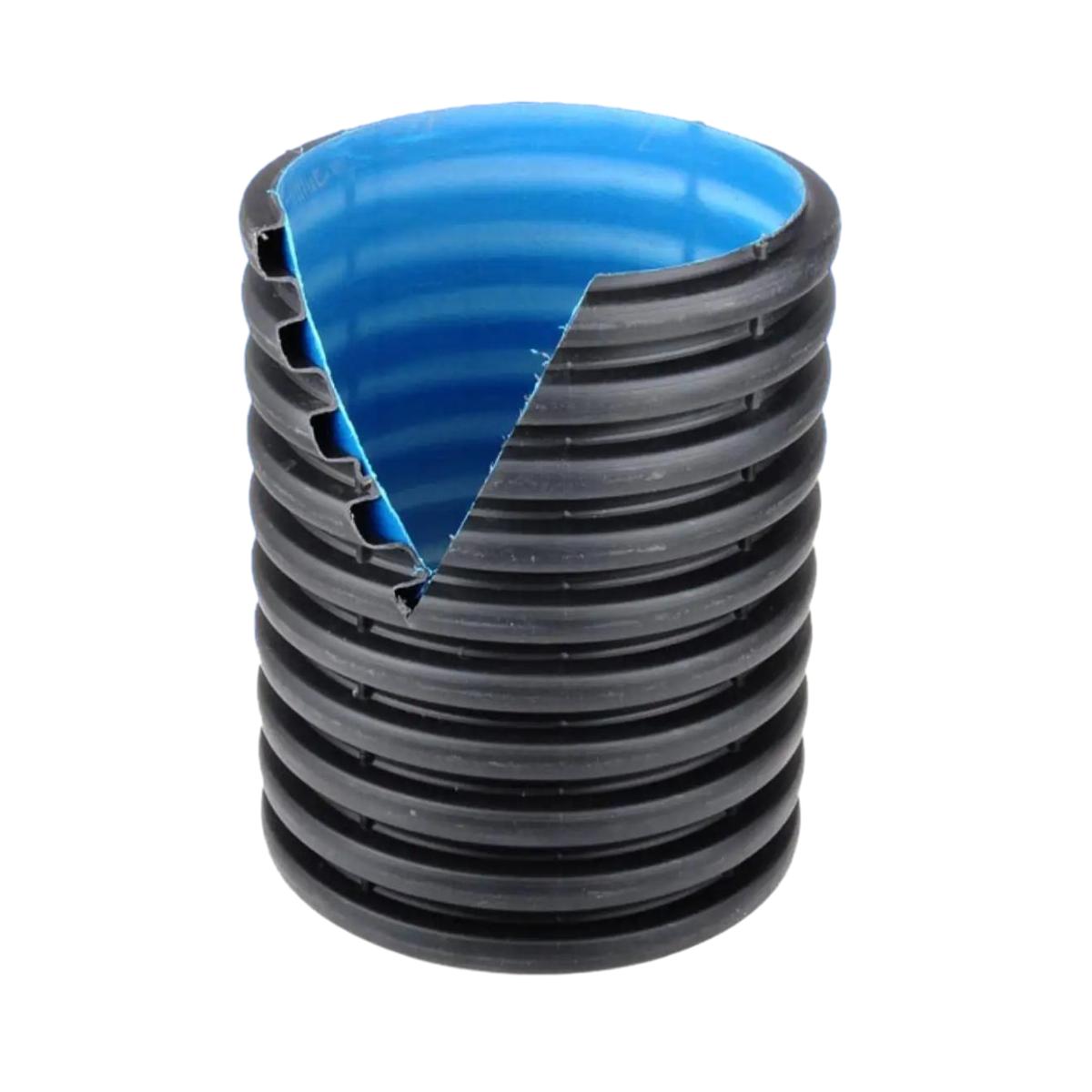
The primary material for DN500 HDPE double-wall corrugated pipe is high-density polyethylene (HDPE), a thermoplastic polymer known for its excellent chemical resistance, toughness, and flexibility. HDPE resin used in these pipes typically conforms to PE100 or PE80 standards, indicating minimum long-term hydrostatic strength. The material exhibits a density ranging from 0.93 to 0.97 g/cm³, a tensile strength of 20-35 MPa, and a relatively low coefficient of friction, promoting efficient fluid flow. Manufacturing involves a complex extrusion process. Initially, the HDPE resin is melted and formed into two layers: an inner and an outer wall. The outer wall is corrugated to provide structural rigidity and resistance to external loads. The inner wall remains smooth to ensure optimal hydraulic performance. These two layers are then joined using a patented co-extrusion technique, creating a structurally sound and watertight pipe. Critical process parameters include extrusion temperature (typically 180-220°C), screw speed, die design, and cooling rate. Maintaining precise control over these parameters is crucial to ensure consistent wall thickness, corrugation profile, and overall pipe quality. Quality control measures involve rigorous testing of the HDPE resin, dimensional checks of the pipe, and hydrostatic pressure testing to verify its structural integrity. The pipe’s ability to handle substantial loads is directly related to the melt flow index (MFI) and molecular weight distribution of the HDPE used.
Performance & Engineering
The performance of DN500 HDPE double-wall corrugated pipe is dictated by several key engineering principles. Firstly, the corrugated outer wall provides significant ring stiffness, resisting both vertical loads from soil overburden and horizontal loads from surface traffic. Ring stiffness, measured in kN/m², is a critical parameter for determining the pipe's ability to maintain its shape under pressure. Secondly, the smooth inner wall minimizes friction loss, maximizing flow capacity and reducing energy consumption in pumping applications. Manning's equation is frequently used to calculate flow rates based on pipe diameter, slope, and roughness coefficient. Thirdly, the watertight joints, typically achieved through rubber gasket connections or electrofusion welding, prevent infiltration and exfiltration, protecting groundwater resources and preventing soil contamination. The pipe’s long-term performance is also affected by creep, the tendency of the HDPE material to deform under sustained stress. Design considerations must account for creep by applying appropriate safety factors and selecting HDPE grades with high long-term hydrostatic strength. Compliance requirements include adherence to local building codes, environmental regulations, and industry standards such as ASTM F2306 and EN 13476. The structural integrity is analyzed using Finite Element Analysis (FEA) to simulate loading conditions and optimize the pipe’s design for specific applications. The impact resistance, particularly important during installation, is assessed using impact testing methods.
Technical Specifications
| Parameter | Unit | Value (Typical) | Test Method |
|---|---|---|---|
| Nominal Diameter | mm | 500 | ISO 16101-1 |
| Ring Stiffness | kN/m² | 8.0 | ASTM F2412 |
| Tensile Strength | MPa | 28 | ISO 527-2 |
| Impact Resistance (Charpy) | kJ/m² | 10 | ISO 145-3 |
| Long-Term Hydrostatic Strength | MPa | 12.5 | ISO 1167 |
| Water Absorption | % | <0.3 | ASTM D570 |
Failure Mode & Maintenance
DN500 HDPE double-wall corrugated pipe, while durable, is susceptible to specific failure modes. Long-term creep, as previously mentioned, can lead to ovalization and reduced flow capacity, particularly under sustained loading. Environmental Stress Cracking (ESC) can occur due to exposure to certain chemicals or ultraviolet (UV) radiation, resulting in crack initiation and propagation. Fatigue cracking can develop at joints or stress concentrators due to repeated loading and unloading. Damage during installation, such as punctures or crushing, is a common failure point. Ground movement or settlement can also induce stress on the pipe, leading to cracking or joint failure. Regular inspection is crucial for early detection of potential problems. Visual inspections should focus on identifying cracks, deformations, or joint separations. Non-destructive testing methods, such as CCTV inspection, can be used to assess the internal condition of the pipe. Maintenance typically involves repairing minor cracks with specialized HDPE welding equipment or replacing damaged sections of pipe. Preventive measures include proper bedding and backfilling procedures, avoiding the use of heavy machinery directly over the pipe, and implementing a regular inspection and maintenance program. Protection from UV exposure, through adequate burial depth or the application of UV stabilizers, is also essential to prevent degradation. Ensuring proper joint construction and quality control during installation are vital to minimizing long-term failure risks.
Industry FAQ
Q: What are the advantages of using DN500 HDPE pipe over traditional concrete pipe for sewage applications?
A: HDPE pipe offers several advantages. It is significantly lighter, reducing installation costs and time. It is highly corrosion resistant, eliminating the need for costly cathodic protection. It has a smoother inner surface, resulting in higher flow capacity and reduced energy consumption. It is more flexible, allowing it to accommodate ground movement without cracking. And it is fully recyclable, contributing to sustainability efforts.
Q: How does temperature affect the performance of DN500 HDPE pipe?
A: While HDPE is generally stable across a wide temperature range, extreme temperatures can affect its performance. High temperatures can reduce its stiffness and increase its susceptibility to creep. Low temperatures can make it more brittle. However, DN500 HDPE pipe is designed to operate effectively within typical soil temperatures found in most environments. Specific performance data is available from the manufacturer based on temperature extremes.
Q: What is the expected service life of DN500 HDPE pipe installed in a sewage system?
A: With proper installation and maintenance, DN500 HDPE pipe can have a service life exceeding 50 years. The actual service life depends on factors such as soil conditions, chemical exposure, and loading conditions. Regular inspections and preventive maintenance can help maximize its lifespan.
Q: What types of joints are commonly used with DN500 HDPE pipe, and what are their advantages and disadvantages?
A: Common joint types include rubber gasket joints and electrofusion welding. Rubber gasket joints are quick and easy to install, but may be more prone to leakage over time if not properly installed. Electrofusion welding creates a permanent, watertight joint with high strength, but requires specialized equipment and skilled operators.
Q: What are the key considerations for bedding and backfilling DN500 HDPE pipe to ensure its long-term performance?
A: Proper bedding and backfilling are critical. The pipe should be bedded on a smooth, stable base of granular material. Backfill material should be non-aggressive and free of sharp objects. Compaction should be controlled to avoid over-compaction, which can damage the pipe. Adequate cover depth is essential to protect the pipe from UV exposure and external loads.
Conclusion
DN500 HDPE double-wall corrugated pipe represents a significant advancement in sewage drain technology, offering a durable, lightweight, and cost-effective solution for wastewater management. Its superior performance characteristics, including high ring stiffness, smooth internal surfaces, and watertight joints, contribute to increased efficiency, reduced maintenance costs, and environmental protection. Careful consideration of material science, manufacturing processes, engineering principles, and potential failure modes is crucial for ensuring its long-term reliability.
The continued adoption of DN500 HDPE pipe is anticipated to be driven by the increasing demand for sustainable infrastructure solutions and stringent environmental regulations. Future developments may focus on enhancing the pipe’s creep resistance, improving its impact resistance, and developing more efficient installation techniques. A comprehensive understanding of its technical specifications and performance characteristics is essential for engineers, procurement managers, and contractors involved in sewage drain system projects.
-
DN25 HDPE Compression Fitting-HORON INTERNATIONAL|Reliable Irrigation Solutions
NewsFeb.11,2026
-
china corrugated pipe double wall Manufacturing Analysis
News2026-05-15
-
china ppr ct pipe Technical Analysis
News2026-05-15
-
china 32mm ppr Performance Analysis
News2026-05-15
-
china 63mm ppr pipe price Performance Analysis
News2026-05-15
-
china 1 ppr pipe price Performance Analysis
News2026-05-15
-
china 32mm ppr pipe price Performance Analysis
News2026-05-14
-
china hdpe pipe for sale Performance Analysis
News2026-05-14
-
china ppr pipe 32mm Performance Analysis
News2026-05-14
-
china pvc pipes Manufacturing and Performance Analysis
News2026-05-14
-
china hdpe n 12 corrugated dual wall pipe Performance Analysis
News2026-05-14
-
china hdpe corrugated pipe sizes Performance Analysis
News2026-05-13
-
china ppr pipe for hot and cold water Technical Overview
News2026-05-13
-
china 150mm pvc pipe Performance Analysis
News2026-05-13
-
china 60mm pvc pipe Performance Analysis
News2026-05-13
-
china 12 inch diameter pvc pipe Performance Analysis
News2026-05-13