

Feb . 11, 2026 00:01 Back to list
china ppr water pipes Performance Analysis
Introduction
Polypropylene Random (PPR) water pipes manufactured in China have become a dominant force in global plumbing infrastructure, particularly for potable water systems. This technical guide provides an in-depth examination of PPR pipes, detailing their material composition, manufacturing processes, performance characteristics, potential failure modes, and relevant industry standards. PPR pipes offer a cost-effective alternative to traditional metallic piping systems, boasting advantages in corrosion resistance, thermal insulation, and ease of installation. However, understanding their limitations regarding temperature and pressure ratings, as well as potential long-term degradation mechanisms, is crucial for ensuring system reliability and longevity. Their position within the industry chain is as a direct replacement for PVC, CPVC, copper, and galvanized steel, often driven by cost optimization in large-scale construction projects. Core performance revolves around delivering potable water safely and efficiently, minimizing pressure loss, and resisting chemical attack from common water treatments.
Material Science & Manufacturing
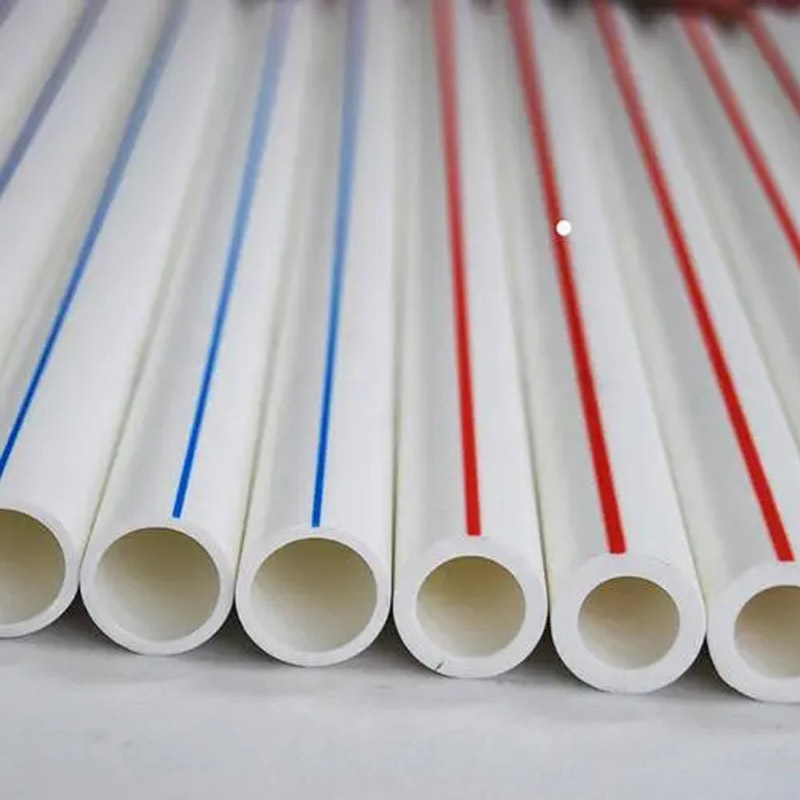
PPR pipes are constructed from polypropylene random copolymer, a thermoplastic polymer derived from propylene monomer. The 'random' designation indicates the random distribution of comonomers, enhancing the material’s impact resistance and flexibility compared to homopolymer polypropylene. Raw materials typically include polypropylene resin, stabilizers (often phenolic or phosphite-based antioxidants), and pigments for identification purposes (typically color-coded for temperature and pressure ratings). Manufacturing begins with the melting of the polypropylene resin, followed by extrusion through a circular die to form the pipe’s cylindrical shape. Critical parameters during extrusion include melt temperature (typically 190-230°C), extrusion pressure (controlled to maintain dimensional accuracy), and cooling rate (influencing crystallinity and mechanical properties). The pipe is then cut to the desired length and undergoes hydrostatic testing to verify its pressure resistance. Socket fusion welding is the most common joining method, relying on heating both the pipe and fitting to a specific temperature (typically 260-270°C) and then rapidly joining them, creating a homogenous weld. Parameter control during socket fusion is paramount; insufficient heating leads to incomplete fusion, while overheating can degrade the material. The degree of crystallinity in the PPR material, influenced by cooling rates during extrusion, directly affects its tensile strength, stiffness, and resistance to creep.
Performance & Engineering
The performance of PPR pipes is heavily influenced by hydrostatic pressure, water temperature, and long-term creep resistance. Force analysis under pressure dictates wall thickness requirements based on design pressure and safety factors, often calculated using Barlow's formula or similar methodologies. Environmental resistance is a key consideration; PPR exhibits good resistance to many common chemicals found in potable water, but prolonged exposure to certain solvents or oxidizing agents can cause degradation. Compliance requirements are stringent, particularly concerning potable water contact; materials must adhere to regulations regarding leachable substances and biocompatibility. The long-term performance is dependent on the resistance to creep, which is the tendency of a solid material to slowly deform permanently under the influence of persistent mechanical stresses. Elevated temperatures accelerate creep, therefore the maximum operating temperature specified by the manufacturer must be strictly observed. Thermal expansion is another critical engineering factor. PPR has a significantly higher coefficient of thermal expansion than metallic pipes, necessitating the inclusion of expansion loops or flexible connectors in long pipe runs to prevent stress cracking at joints. Furthermore, the pipe’s resistance to water hammer (pressure surges) must be considered in system design; appropriate surge arrestors may be required.
Technical Specifications
| Parameter | Unit | PN16 (S3.2) | PN20 (S4) |
|---|---|---|---|
| Nominal Pressure Rating | MPa | 1.6 | 2.0 |
| Operating Temperature | °C | -20 to +70 | -20 to +90 |
| Short-Term Hydrostatic Pressure Test | MPa | 2.4 | 3.0 |
| Long-Term Hydrostatic Pressure Test | MPa | 1.6 | 2.0 |
| Tensile Strength | MPa | >20 | >22 |
| Elongation at Break | % | >200 | >250 |
Failure Mode & Maintenance
PPR pipes are susceptible to several failure modes in practical applications. Fatigue cracking can occur at socket joints due to repeated thermal cycling and pressure fluctuations. Delamination can occur if the weld is improperly executed, leading to separation of the pipe wall. Oxidation can degrade the material over prolonged exposure to high temperatures and ultraviolet radiation. Creep, as discussed previously, can cause slow deformation and eventual rupture, particularly at elevated temperatures. Chemical attack from aggressive water chemistry (e.g., high chlorine levels, acidic pH) can also lead to material degradation. Maintenance primarily involves visual inspection for leaks, cracks, and deformation. Regular pressure testing can help identify potential weaknesses before catastrophic failure occurs. If leaks are detected, the damaged section should be cut out and replaced using socket fusion welding, ensuring proper surface preparation and welding parameters. Preventative maintenance includes controlling water chemistry to minimize corrosion and implementing surge protection to mitigate water hammer. Avoid mechanical stress on the pipes during installation and avoid exceeding the maximum operating temperature specified by the manufacturer. Periodic inspection of support structures is also critical to ensure proper load distribution and prevent excessive stress on the pipes.
Industry FAQ
Q: What is the impact of varying water quality on the lifespan of PPR pipes?
A: Water quality significantly impacts lifespan. High levels of chlorine, pH imbalances (particularly acidity), and the presence of aggressive ions (e.g., sulfates) can accelerate degradation. Regular water testing and appropriate water treatment are crucial. Specifically, high chlorine concentrations can lead to oxidative degradation of the polypropylene.
Q: Can PPR pipes be used in buried applications, and if so, what precautions should be taken?
A: Yes, PPR pipes can be used buried, but require proper bedding and backfill materials to prevent mechanical damage and ensure uniform load distribution. A sand or fine gravel bedding layer is recommended. Furthermore, the pipes should be protected from corrosion by surrounding soil conditions.
Q: What are the limitations of using PPR pipes for hot water applications?
A: While certain PPR formulations (e.g., PN20) are designed for higher temperatures, prolonged exposure to temperatures exceeding the manufacturer's recommendations can lead to creep deformation and reduced pressure resistance. Careful consideration of operating temperatures and the selection of appropriate pipe grades are essential.
Q: How does the socket fusion welding process affect the long-term integrity of the joints?
A: Proper socket fusion welding is critical. Insufficient heating results in incomplete fusion and weak joints. Overheating can degrade the material, reducing its strength. Strict adherence to recommended welding parameters (temperature, dwell time, pressure) and operator training are essential for ensuring long-term joint integrity.
Q: What is the expected service life of a properly installed and maintained PPR water system?
A: With proper installation, maintenance, and operating conditions within specified parameters, a properly installed PPR water system can have a service life of 50 years or more. However, this is highly dependent on water quality, temperature, pressure, and the quality of the welding process.
Conclusion
China-manufactured PPR water pipes represent a viable and cost-effective solution for potable water distribution systems. Their inherent corrosion resistance, ease of installation, and favorable thermal properties make them attractive alternatives to traditional materials. However, realizing their full potential requires a thorough understanding of their material properties, manufacturing processes, and potential failure modes. Careful consideration of operating conditions, proper installation techniques, and diligent maintenance are critical for ensuring long-term system reliability and preventing premature failure.
Looking ahead, advancements in PPR formulations, such as the incorporation of enhanced UV stabilizers and improved creep resistance additives, will further expand their application range. Continued adherence to international standards and rigorous quality control measures are essential for maintaining consumer confidence and promoting the sustainable use of PPR piping systems. Furthermore, research into non-destructive testing methods for evaluating weld integrity will play a key role in enhancing system safety and extending service life.
-
DN25 HDPE Compression Fitting-HORON INTERNATIONAL|Reliable Irrigation Solutions
NewsFeb.11,2026
-
china 100mm pvc pipe price Performance Analysis
News2026-05-23
-
china pvc pipe used for Performance Analysis
News2026-05-23
-
china ppr water pipe fittings Performance Analysis
News2026-05-23
-
china hdpe pipe couplings Performance Analysis
News2026-05-23
-
china 50mm ppr pipe price Performance Analysis
News2026-05-23
-
china corrugated hdpe pipe fittings Performance Analysis
News2026-05-22
-
china ppr pipe for hot water Performance Analysis
News2026-05-22
-
china ppr Technical Performance Analysis
News2026-05-22
-
china corrugated dual wall pipe Performance Analysis
News2026-05-22
-
china sink inlet pipe Material Performance Analysis
News2026-05-22
-
china 1 2 inch pvc Performance Analysis
News2026-05-21
-
china hdpe pipe joint coupler Performance Analysis
News2026-05-21
-
china ppr pipes and fittings price list Technical Analysis
News2026-05-21
-
china 9 inch pvc pipe price Performance Analysis
News2026-05-21
-
china 2 inch borewell column pipe price Performance Engineering
News2026-05-21