

Feb . 11, 2026 00:01 Back to list
china ppr plumbing pipe Manufacturing Analysis
Introduction
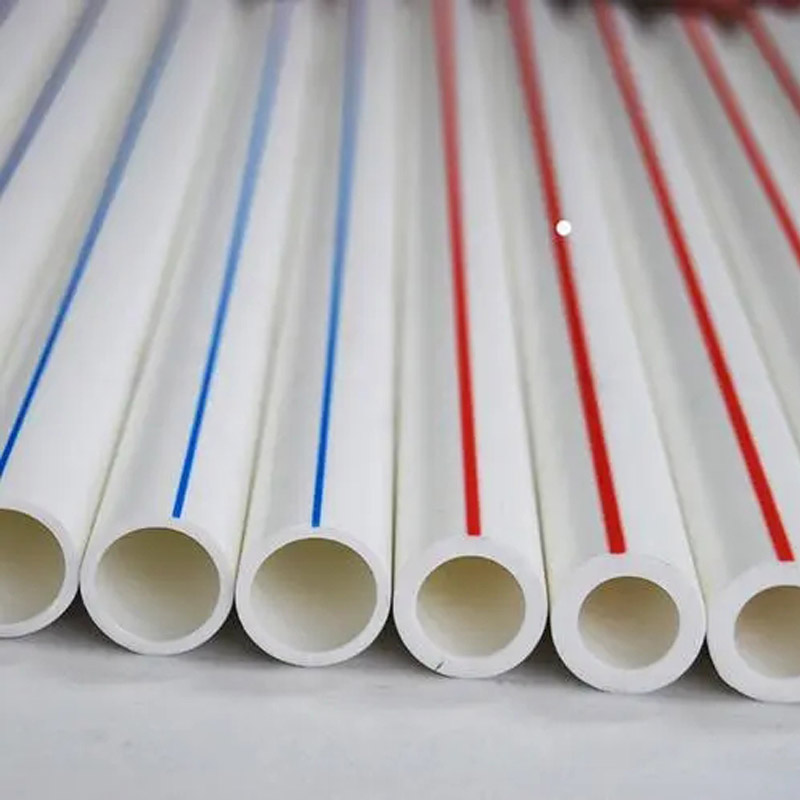
Polypropylene Random (PPR) plumbing pipe represents a significant advancement in fluid conveyance systems, particularly within residential and commercial construction. Originating as a cost-effective alternative to traditional metal piping – copper, galvanized steel, and cast iron – PPR pipes have gained substantial market share due to their lightweight nature, corrosion resistance, and ease of installation. Manufactured primarily in China, these pipes are integral to hot and cold water distribution networks, as well as heating systems. Their position in the supply chain encompasses raw material production (polypropylene resin), extrusion processes, fitting manufacturing, and final distribution to construction projects. Core performance characteristics include pressure resistance, temperature stability, and hygienic fluid transfer, addressing key pain points related to long-term reliability and water quality.
Material Science & Manufacturing
PPR pipes are constructed from polypropylene random copolymer, a thermoplastic polymer distinguished by its amorphous cellular structure. The raw material, polypropylene homopolymer or copolymer, undergoes a controlled polymerization process. Critical properties of the polypropylene resin include melt flow index (MFI), which dictates processability during extrusion; density, impacting strength and rigidity; and molecular weight distribution, influencing long-term creep resistance. Manufacturing involves extrusion, where the molten polymer is forced through a die to create the pipe’s cylindrical form. Key parameters during extrusion include barrel temperature profiles (typically ranging from 190°C to 240°C), screw speed (controlling material throughput), and die pressure (affecting dimensional accuracy). Subsequent cooling – utilizing water baths – and sizing ensure the pipe meets dimensional specifications (OD, wall thickness). Hydrostatic testing is routinely conducted to verify pressure resistance. Fitting production often employs injection molding, utilizing the same PPR material to guarantee compatibility and prevent galvanic corrosion. Maintaining precise control over resin quality, extrusion parameters, and cooling rates is paramount to ensure consistent mechanical properties and prevent defects such as voids or delamination.
Performance & Engineering
The performance of PPR plumbing pipes is governed by several engineering principles. Hydrostatic pressure testing, conducted according to international standards, determines the pipe’s ability to withstand internal pressure without failure. Stress analysis, utilizing Finite Element Analysis (FEA), is employed to predict pipe behavior under various loading conditions – including water hammer effects and thermal expansion. PPR’s relatively low Young's modulus necessitates careful consideration of pipe support intervals to prevent sagging or deformation. The coefficient of linear thermal expansion (approximately 0.15 mm/m°C) requires incorporation of expansion loops or flexible connectors to accommodate temperature fluctuations and prevent stress buildup at joints. Chemical compatibility is critical; PPR demonstrates excellent resistance to a wide range of chemicals commonly found in potable water, but prolonged exposure to strong oxidizers or certain solvents can lead to degradation. Environmental resistance includes UV stability; prolonged exposure to direct sunlight can cause embrittlement. Compliance requirements, such as NSF/ANSI 61 for drinking water system components, ensure the materials used are safe for human consumption and do not leach harmful substances into the water supply.
Technical Specifications
| Dimension | Metric (mm) | Imperial (inches) | Standard Reference |
|---|---|---|---|
| Outer Diameter (OD) – PN16 | 20, 25, 32, 40, 50, 63 | 0.8, 1, 1.25, 1.5, 2, 2.5 | DIN 8077/8078 |
| Wall Thickness (PN16) | 2.3, 2.8, 3.2, 3.7, 4.2, 5.0 | 0.09, 0.11, 0.13, 0.15, 0.17, 0.20 | DIN 8077/8078 |
| Burst Pressure (PN16) | 1.6 MPa | 232 psi | DIN 8077/8078 |
| Maximum Operating Temperature | +70°C | +158°F | DIN 8077/8078 |
| Maximum Operating Pressure | 1.6 MPa | 232 psi | DIN 8077/8078 |
| Tensile Strength | >20 MPa | >2900 psi | ISO 6259 |
Failure Mode & Maintenance
PPR plumbing pipe, while durable, is susceptible to specific failure modes. Long-term hydrostatic stress can induce creep rupture, particularly at elevated temperatures. Improper installation – insufficient support, excessive bending radius, or inadequate fusion welding – can create stress concentrators and lead to premature failure. Water hammer, resulting from sudden changes in flow velocity, generates pressure surges exceeding the pipe’s capacity. Chemical attack from aggressive substances (e.g., certain cleaning agents) can cause degradation and cracking. UV exposure, especially in exposed installations, promotes embrittlement. Failure analysis often reveals defects originating during manufacturing (e.g., voids, inclusions) or arising from thermal cycling. Maintenance involves regular inspection for leaks, proper support to prevent sagging, and the use of compatible jointing compounds. For minor leaks at fused joints, patching with compatible PPR material can provide a temporary repair, but complete replacement of the affected section is generally recommended for long-term reliability. Periodic flushing of the system can remove sediment buildup that could contribute to erosion or corrosion.
Industry FAQ
Q: What are the key advantages of PPR over traditional copper piping in terms of cost and installation?
A: PPR offers significant cost savings over copper, primarily due to lower material costs and reduced labor expenses. Installation is considerably faster as PPR pipes are lightweight and joined using heat fusion welding, eliminating the need for soldering. This translates to lower installation time and reduced skill requirements.
Q: How does the long-term performance of PPR compare to PEX (cross-linked polyethylene) in terms of creep resistance and temperature stability?
A: While both PPR and PEX are viable alternatives to metal piping, PPR generally exhibits superior creep resistance at elevated temperatures. PEX, while flexible, is more prone to creep over time under constant stress, particularly at temperatures exceeding 60°C. PPR maintains its dimensional stability better under sustained thermal and mechanical loads.
Q: What are the critical considerations for ensuring a proper heat fusion weld between PPR pipes and fittings?
A: Achieving a reliable heat fusion weld requires precise control of heating tool temperature, insertion depth, and holding time. Surfaces must be clean, dry, and free from contaminants. Proper alignment is crucial, ensuring complete fusion without gaps or overlaps. The weld bead should be uniform and consistent in appearance.
Q: What are the limitations of PPR concerning exposure to specific chemicals or solvents commonly found in industrial or commercial settings?
A: PPR is generally resistant to many common chemicals, but prolonged exposure to strong oxidizers (e.g., chlorine, hydrogen peroxide), aromatic hydrocarbons, and certain ketones can cause swelling, cracking, or degradation. Compatibility charts should be consulted before using PPR in environments with potentially aggressive chemicals.
Q: What are the relevant international standards governing the quality and performance of PPR plumbing pipes and fittings?
A: Key international standards include DIN 8077/8078 (Germany), ISO 15876 (International), EN 14879 (Europe), and NSF/ANSI 61 (North America). These standards specify requirements for material properties, dimensional accuracy, hydrostatic pressure testing, and chemical resistance.
Conclusion
China PPR plumbing pipe has established itself as a competitive and reliable solution for fluid conveyance in diverse applications. Its favorable combination of cost-effectiveness, ease of installation, and corrosion resistance makes it a compelling alternative to traditional metallic piping systems. However, successful implementation hinges on a thorough understanding of material properties, manufacturing processes, and potential failure modes.
Adherence to relevant international standards, meticulous installation practices, and proactive maintenance are essential to ensure the long-term integrity and performance of PPR systems. Ongoing advancements in polypropylene resin technology and extrusion processes will continue to enhance the durability and expand the application scope of PPR plumbing pipe.
-
DN25 HDPE Compression Fitting-HORON INTERNATIONAL|Reliable Irrigation Solutions
NewsFeb.11,2026
-
china 100mm pvc pipe price Performance Analysis
News2026-05-23
-
china pvc pipe used for Performance Analysis
News2026-05-23
-
china ppr water pipe fittings Performance Analysis
News2026-05-23
-
china hdpe pipe couplings Performance Analysis
News2026-05-23
-
china 50mm ppr pipe price Performance Analysis
News2026-05-23
-
china corrugated hdpe pipe fittings Performance Analysis
News2026-05-22
-
china ppr pipe for hot water Performance Analysis
News2026-05-22
-
china ppr Technical Performance Analysis
News2026-05-22
-
china corrugated dual wall pipe Performance Analysis
News2026-05-22
-
china sink inlet pipe Material Performance Analysis
News2026-05-22
-
china 1 2 inch pvc Performance Analysis
News2026-05-21
-
china hdpe pipe joint coupler Performance Analysis
News2026-05-21
-
china ppr pipes and fittings price list Technical Analysis
News2026-05-21
-
china 9 inch pvc pipe price Performance Analysis
News2026-05-21
-
china 2 inch borewell column pipe price Performance Engineering
News2026-05-21