

Feb . 11, 2026 00:01 Back to list
china hdpe pipe size chart pdf Performance Analysis
Introduction
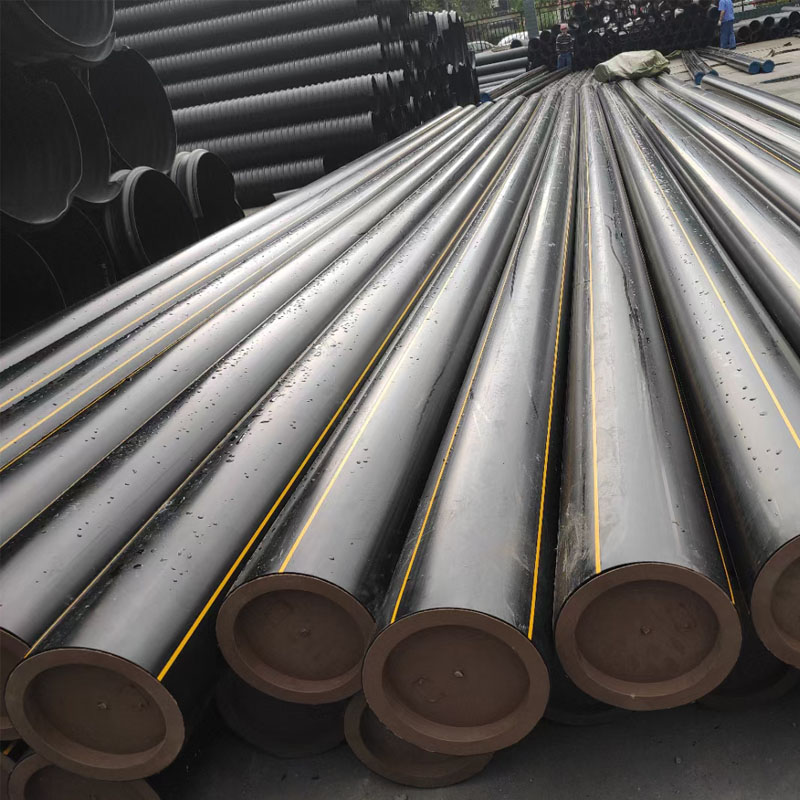
High-Density Polyethylene (HDPE) pipe represents a critical component in modern infrastructure, serving diverse applications including water distribution, gas transmission, irrigation, and drainage. The “china hdpe pipe size chart pdf” refers to standardized documentation detailing the dimensions, pressure ratings, and material specifications of HDPE pipes manufactured in China, adhering to both national (GB) and international standards. These charts are fundamental for engineers, procurement managers, and contractors involved in pipeline projects, ensuring compatibility and system integrity. HDPE’s selection stems from its inherent properties – high strength-to-density ratio, excellent chemical resistance, flexibility, and relatively low cost – making it superior to traditional materials like ductile iron or steel in many scenarios. Understanding the specific sizing conventions, particularly as outlined in these charts, is vital for accurate system design and efficient material sourcing. The proliferation of HDPE pipe in infrastructure projects is driven by a need for durable, corrosion-resistant, and sustainable piping solutions.
Material Science & Manufacturing
HDPE pipes are produced from polyethylene resins, typically utilizing high-density polyethylene grades possessing a molecular weight distribution conducive to long-term performance. The raw material's density, measured in g/cm³, directly correlates to its strength and resistance to environmental stress cracking (ESCR). The manufacturing process predominantly involves extrusion. Polyethylene granules are fed into an extruder, melted, and forced through a die that shapes the pipe to the desired diameter and wall thickness. Critical parameters during extrusion include melt temperature (typically 180-210°C), die pressure, haul-off speed, and cooling rate. Precise control of these parameters is essential to prevent defects such as voids, surface irregularities, and dimensional inconsistencies. Different extrusion methods exist – conventional extrusion, spiral winding, and bimodal PE extrusion – each offering varying degrees of control over pipe properties. Furthermore, the addition of carbon black provides UV protection, preventing degradation from sunlight exposure. The degree of carbon black concentration impacts the pipe’s resistance to UV radiation. Pipe markings, including size, pressure rating (PN), material designation (PE100, PE80), and manufacturer details, are typically applied in-line during extrusion to ensure traceability and compliance.
Performance & Engineering
The performance of HDPE pipes is governed by several key engineering principles. Firstly, hydrostatic design stress (HDS) dictates the maximum allowable internal pressure a pipe can withstand, determined by factors like pipe diameter, wall thickness, and material’s minimum yield strength. This is usually calculated according to ISO 1167 or similar standards. Secondly, soil loading considerations are paramount, especially for buried pipelines. The pipe’s ability to resist external loads from soil overburden, traffic, and accidental impact is evaluated using finite element analysis (FEA) and established design methodologies. Ring stiffness (S), a measure of a pipe's resistance to flattening, is a crucial parameter in determining its suitability for specific burial depths and soil conditions. Furthermore, HDPE's flexibility allows it to accommodate ground movement and seismic activity, reducing the risk of pipeline failure. Jointing methods – butt fusion, electrofusion, and compression fittings – significantly impact overall system performance. Butt fusion, creating a homogenous weld, offers the highest strength and leak-proof integrity. Electrofusion utilizes electrical resistance heating to melt and fuse the pipe ends. Proper jointing procedures, including surface preparation and temperature control, are critical to achieving optimal performance. Long-term creep resistance, the tendency of a material to deform under sustained stress, is a critical factor in HDPE pipe design, especially for pressurized applications.
Technical Specifications
| Nominal Pipe Size (DN/inches) | Outside Diameter (OD) (mm) | Wall Thickness (SDR) (mm) | Pressure Rating (PN) (bar) |
|---|---|---|---|
| DN 63 / 2.5" | 63.0 | SDR 17 (3.7mm) | 10 |
| DN 90 / 3.5" | 90.0 | SDR 17 (5.3mm) | 10 |
| DN 110 / 4.3" | 110.0 | SDR 17 (6.5mm) | 10 |
| DN 125 / 5.0" | 125.0 | SDR 17 (7.4mm) | 10 |
| DN 160 / 6.3" | 160.0 | SDR 17 (9.4mm) | 10 |
| DN 200 / 8.0" | 200.0 | SDR 17 (11.8mm) | 10 |
Failure Mode & Maintenance
HDPE pipe, while durable, is susceptible to several failure modes. Slow Crack Growth (SCG), induced by sustained tensile stress in the presence of aggressive chemicals, is a common concern. This is mitigated by selecting appropriate PE grades (e.g., PE100 with higher ESCR resistance) and avoiding prolonged exposure to incompatible substances. Environmental Stress Cracking (ESC) can also occur, particularly in areas with poor backfill compaction or sharp bends. Fatigue cracking can develop under cyclic loading, such as from traffic or seismic activity. Oxidation, although slow, can degrade the polymer over time, particularly at elevated temperatures. Joint failures are frequently attributable to inadequate fusion parameters (temperature, pressure, cooling time) or contamination during the welding process. Regular inspection programs, utilizing non-destructive testing (NDT) methods like ultrasonic testing (UT) and visual inspection, are crucial for identifying potential defects before they escalate. Maintenance practices include proper backfilling procedures to provide uniform support, avoiding sharp bends or abrupt changes in direction, and implementing cathodic protection in corrosive environments. Repair of HDPE pipes typically involves cutting out the damaged section and fusing in a new piece using butt fusion or electrofusion techniques.
Industry FAQ
Q: What is the significance of SDR (Standard Dimension Ratio) in HDPE pipe selection?
A: SDR represents the ratio of a pipe’s outside diameter to its wall thickness. A lower SDR indicates a thicker wall and, consequently, a higher pressure rating. SDR is a critical parameter for determining a pipe's ability to withstand internal pressure and external loads. Different applications require different SDR values; for instance, pressurized water systems typically demand lower SDRs than gravity-fed drainage systems.
Q: How does temperature affect the performance of HDPE pipe?
A: Temperature significantly impacts HDPE’s mechanical properties. Higher temperatures reduce its strength and stiffness, making it more susceptible to creep and failure. Lower temperatures can increase brittleness. Designers must consider the operating temperature range and potential temperature fluctuations when selecting pipe materials and determining pressure ratings. Thermal expansion and contraction also need to be accounted for in the pipeline design to prevent stress build-up.
Q: What are the common causes of joint failures in HDPE pipelines?
A: Joint failures commonly arise from improper fusion parameters – insufficient heating temperature, inadequate pressure during butt fusion, or incorrect cooling times. Contamination of the fusion surfaces with dirt, moisture, or other foreign materials can also compromise joint integrity. Improper operator training and lack of adherence to established welding procedures are frequent contributors. Thorough visual inspection and non-destructive testing (NDT) of joints are essential to identify potential defects.
Q: What is the role of carbon black in HDPE pipe?
A: Carbon black is added to HDPE to provide UV protection. Polyethylene is inherently susceptible to degradation from ultraviolet radiation, which causes chain scission and embrittlement. Carbon black absorbs UV radiation, preventing it from reaching the polymer chains and slowing down the degradation process. The concentration of carbon black directly impacts the level of UV resistance provided.
Q: How do you mitigate the risk of Environmental Stress Cracking (ESC) in HDPE pipelines?
A: Mitigating ESC involves several strategies. Selecting a PE grade with high ESCR resistance (e.g., PE100) is paramount. Avoiding contact with aggressive chemicals that can accelerate ESC is also critical. Proper backfilling and support are essential to minimize tensile stress on the pipe. Careful consideration of soil conditions and potential sources of stress concentration (sharp bends, rocks) is also necessary.
Conclusion
HDPE piping systems represent a robust and cost-effective solution for a wide range of fluid transport applications. A thorough understanding of the material science, manufacturing processes, performance characteristics, and potential failure modes – as detailed within china hdpe pipe size chart pdf and related technical literature – is essential for ensuring long-term reliability and system integrity. Proper design, material selection, installation procedures, and regular maintenance are crucial elements in maximizing the lifespan and minimizing the risk of failure.
Looking forward, advancements in HDPE resin technology and fusion techniques will continue to enhance the performance and expand the application scope of these pipelines. Increasing emphasis on sustainable infrastructure and the need for corrosion-resistant materials will further drive the adoption of HDPE in various industries. Continued research into the long-term behavior of HDPE under different environmental conditions will also be vital for optimizing design practices and extending service life.
-
DN25 HDPE Compression Fitting-HORON INTERNATIONAL|Reliable Irrigation Solutions
NewsFeb.11,2026
-
china 100mm pvc pipe price Performance Analysis
News2026-05-23
-
china pvc pipe used for Performance Analysis
News2026-05-23
-
china ppr water pipe fittings Performance Analysis
News2026-05-23
-
china hdpe pipe couplings Performance Analysis
News2026-05-23
-
china 50mm ppr pipe price Performance Analysis
News2026-05-23
-
china corrugated hdpe pipe fittings Performance Analysis
News2026-05-22
-
china ppr pipe for hot water Performance Analysis
News2026-05-22
-
china ppr Technical Performance Analysis
News2026-05-22
-
china corrugated dual wall pipe Performance Analysis
News2026-05-22
-
china sink inlet pipe Material Performance Analysis
News2026-05-22
-
china 1 2 inch pvc Performance Analysis
News2026-05-21
-
china hdpe pipe joint coupler Performance Analysis
News2026-05-21
-
china ppr pipes and fittings price list Technical Analysis
News2026-05-21
-
china 9 inch pvc pipe price Performance Analysis
News2026-05-21
-
china 2 inch borewell column pipe price Performance Engineering
News2026-05-21