

Feb . 11, 2026 00:01 Back to list
china hdpe corrugated pipe catalogue Performance Analysis
Introduction
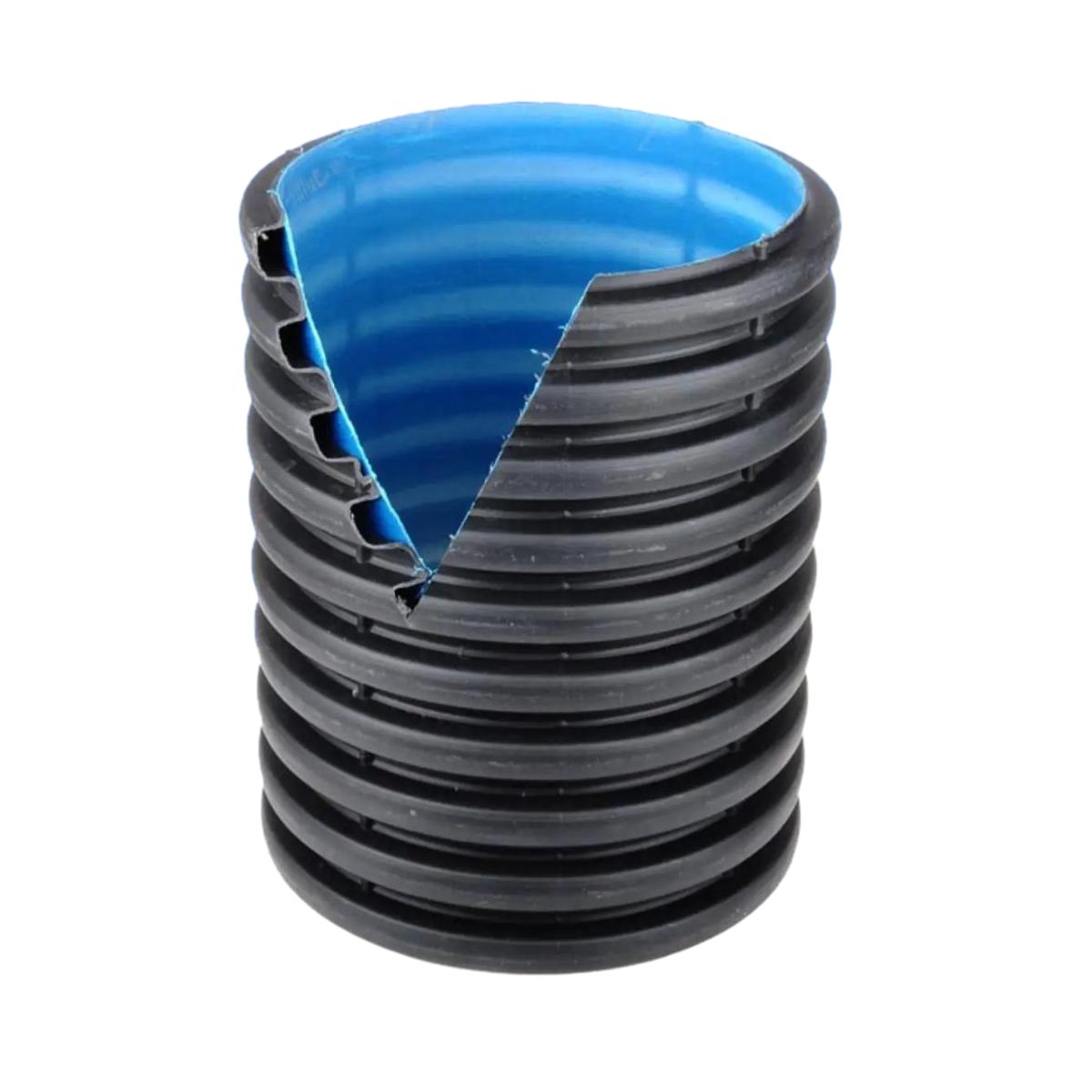
High-Density Polyethylene (HDPE) corrugated pipe represents a significant advancement in subsurface drainage and infrastructure solutions. Positioned within the broader landscape of pipe materials—competing with PVC, concrete, and steel—HDPE corrugated pipe distinguishes itself through a compelling combination of lightweight construction, exceptional durability, and cost-effectiveness. Its primary application lies in stormwater management, sanitary sewer systems, culverts, and agricultural drainage. The corrugated profile enhances ring stiffness, allowing the pipe to withstand substantial backfill loads and resist deformation. Chinese manufacturers have become a dominant force in the global HDPE corrugated pipe market, offering a wide range of diameters, stiffness classes, and accessory fittings. This guide provides a comprehensive technical overview of these pipes, encompassing material science, manufacturing processes, performance characteristics, potential failure modes, and relevant industry standards. A key pain point in the industry is ensuring consistent product quality and adherence to stringent performance requirements, particularly given the variety of manufacturers and the evolving regulatory landscape. Understanding the nuances of HDPE resin grades, proper installation techniques, and long-term performance prediction are crucial for successful project implementation.
Material Science & Manufacturing
The core material for HDPE corrugated pipe is high-density polyethylene (HDPE), a thermoplastic polymer produced from the polymerization of ethylene. HDPE is chosen for its excellent chemical resistance, high strength-to-density ratio, and flexibility. Different grades of HDPE resin are utilized, categorized by density and molecular weight. Higher density HDPE (typically 0.941 – 0.965 g/cm³) provides enhanced stiffness and resistance to environmental stress cracking. Molecular weight distribution influences processing characteristics and the final product's mechanical properties; a broader distribution generally improves impact resistance. The manufacturing process typically involves extrusion. HDPE resin is melted and extruded through a circular die, forming a continuous pipe profile. Simultaneously, a corrugating unit shapes the pipe’s exterior, creating the characteristic rings and grooves. Precise control of extrusion temperature, die pressure, and corrugating speed is critical for maintaining dimensional accuracy and consistent wall thickness. Cooling is achieved through water baths, followed by dimensional stabilization. Post-extrusion processes include cutting the pipe to specified lengths, bell-and-spigot forming (for joined connections), and quality control inspections. A critical parameter is the Pipe Stiffness (PSI), which directly relates to the pipe’s ability to withstand external loads without significant deflection. Poor control of temperature during extrusion can lead to variations in crystallinity, impacting long-term creep resistance and reducing the overall lifespan of the pipe.
Performance & Engineering
The performance of HDPE corrugated pipe is governed by several engineering principles. Ring stiffness, as previously mentioned, is paramount. This is determined through a short-term deflection test, measuring the pipe’s resistance to flattening under a concentrated load. The pipe’s ability to withstand burial depths and traffic loads is directly dependent on its ring stiffness and the surrounding soil characteristics. Backfill material must be properly compacted to provide uniform support. Another crucial aspect is long-term creep resistance, which refers to the pipe's tendency to slowly deform under sustained load. HDPE exhibits creep behavior, and its rate is influenced by temperature, stress levels, and the grade of HDPE used. Finite element analysis (FEA) is frequently employed to model the structural behavior of HDPE corrugated pipe under various loading scenarios. Environmental resistance is also critical. HDPE is generally resistant to most chemicals encountered in subsurface environments, but prolonged exposure to strong acids or oxidizing agents can lead to degradation. UV exposure can also cause embrittlement; therefore, proper backfilling and protection from sunlight are essential. Compliance with relevant standards (ASTM F2306, AASHTO M294) ensures that the pipe meets minimum performance requirements for strength, durability, and joint integrity. The long-term hydraulic performance of the pipe should also be considered, with careful attention paid to the potential for sediment build-up and flow restrictions.
Technical Specifications
| Parameter | Unit | Typical Value (DN/ID 1200mm) | Testing Standard |
|---|---|---|---|
| Nominal Diameter (DN) | mm | 1200 | ISO 4427 |
| Internal Diameter (ID) | mm | 1140 | ASTM F2306 |
| Pipe Stiffness (PSI) | psi | 56 | ASTM D2412 |
| Crush Strength | N | 18000 | ASTM D2412 |
| Long-Term Creep Resistance | % Deflection @ 10 years | <5% | ASTM F2306 |
| Resin Density | g/cm³ | 0.955 | ASTM D1505 |
Failure Mode & Maintenance
HDPE corrugated pipe, while durable, is susceptible to several failure modes. One common issue is ovalization, or deformation of the pipe's circular cross-section, often caused by uneven backfill compaction or excessive external loads. This can lead to reduced flow capacity and potential joint failures. Another frequent failure mode is cracking, particularly in areas of stress concentration, such as bell-and-spigot joints or around penetrations. This can be initiated by impact damage during installation or by fatigue loading over time. Environmental stress cracking (ESC) can occur due to exposure to aggressive chemicals or sustained tensile stress in the presence of certain environmental factors. UV degradation, if the pipe is not adequately protected, can cause embrittlement and loss of impact resistance. Joint failures are also common, often resulting from improper installation, insufficient joint engagement, or settlement of the surrounding soil. Maintenance primarily focuses on preventative measures. Regular inspections are recommended to identify signs of ovalization, cracking, or joint separation. Proper backfill compaction is crucial during installation. Addressing any soil settlement issues promptly is essential to prevent excessive stress on the pipe. For minor cracks, HDPE repair sleeves can be used to provide localized reinforcement. In cases of significant damage, pipe replacement may be necessary. Long-term monitoring of pipe deflection and flow capacity can help identify potential problems before they escalate into major failures.
Industry FAQ
Q: What is the impact of soil corrosivity on the long-term performance of HDPE corrugated pipe?
A: Soil corrosivity, specifically the presence of sulfates, chlorides, and acidic conditions, can accelerate the degradation of HDPE over time. While HDPE itself is highly chemically resistant, prolonged exposure to aggressive soil conditions can lead to environmental stress cracking and reduced mechanical properties. Proper selection of HDPE resin grades with enhanced resistance to chemical attack and the use of protective geotextiles can mitigate this risk. Regular soil testing and analysis are recommended to assess the corrosivity potential.
Q: How does temperature affect the allowable burial depth of HDPE corrugated pipe?
A: Higher temperatures reduce the creep resistance of HDPE, meaning the pipe is more susceptible to deformation under sustained load. Consequently, the allowable burial depth must be reduced at higher soil temperatures. Manufacturers typically provide derating factors that adjust the maximum burial depth based on anticipated soil temperatures. Accurate assessment of soil temperature profiles is crucial for ensuring structural integrity.
Q: What are the key considerations for ensuring proper joint integrity in HDPE corrugated pipe installations?
A: Proper joint integrity is paramount for preventing infiltration and exfiltration. Bell-and-spigot joints must be fully engaged, with the spigot fully inserted into the bell. Gaskets must be correctly positioned and free from damage. Lubrication should be applied according to the manufacturer's recommendations. Proper backfill compaction around the joints is critical to provide uniform support. Following the manufacturer's installation guidelines meticulously is essential.
Q: How do I determine the appropriate ring stiffness for a given application?
A: The required ring stiffness is determined by the anticipated external loads, including soil cover, traffic loads, and hydrostatic pressure. A geotechnical investigation should be conducted to characterize the soil properties and determine the design loads. Calculations based on established engineering principles (e.g., Boussinesq's equation for soil pressure) are used to determine the minimum ring stiffness required to prevent excessive deflection and ensure structural stability.
Q: What are the advantages of using HDPE corrugated pipe over traditional concrete pipe?
A: HDPE corrugated pipe offers several advantages over concrete pipe. It is significantly lighter, simplifying handling and installation. It is more flexible, allowing it to conform to ground movements and reducing the risk of cracking. It is highly corrosion-resistant, requiring minimal maintenance. HDPE is also more cost-effective in many applications, particularly considering the reduced installation costs. While concrete pipe offers superior structural strength in certain demanding applications, HDPE provides a compelling alternative for a wide range of drainage and infrastructure projects.
Conclusion
China-manufactured HDPE corrugated pipe represents a robust and cost-effective solution for a diverse range of subsurface drainage and infrastructure applications. Its inherent material properties – flexibility, chemical resistance, and lightweight construction – combined with precise manufacturing processes, position it as a strong contender against traditional materials like concrete and steel. However, realizing its full potential necessitates a thorough understanding of its performance characteristics, potential failure modes, and adherence to relevant industry standards.
Successful implementation demands careful consideration of factors such as soil corrosivity, temperature effects, proper joint integrity, and accurate ring stiffness calculations. Continued research and development focused on enhancing creep resistance, UV stability, and long-term durability will further solidify HDPE corrugated pipe's position as a leading material in the infrastructure landscape. Prioritizing quality control, adhering to stringent testing protocols, and providing comprehensive installation guidelines are paramount for ensuring the long-term reliability and performance of these vital infrastructure components.
-
DN25 HDPE Compression Fitting-HORON INTERNATIONAL|Reliable Irrigation Solutions
NewsFeb.11,2026
-
china 100mm pvc pipe price Performance Analysis
News2026-05-23
-
china pvc pipe used for Performance Analysis
News2026-05-23
-
china ppr water pipe fittings Performance Analysis
News2026-05-23
-
china hdpe pipe couplings Performance Analysis
News2026-05-23
-
china 50mm ppr pipe price Performance Analysis
News2026-05-23
-
china corrugated hdpe pipe fittings Performance Analysis
News2026-05-22
-
china ppr pipe for hot water Performance Analysis
News2026-05-22
-
china ppr Technical Performance Analysis
News2026-05-22
-
china corrugated dual wall pipe Performance Analysis
News2026-05-22
-
china sink inlet pipe Material Performance Analysis
News2026-05-22
-
china 1 2 inch pvc Performance Analysis
News2026-05-21
-
china hdpe pipe joint coupler Performance Analysis
News2026-05-21
-
china ppr pipes and fittings price list Technical Analysis
News2026-05-21
-
china 9 inch pvc pipe price Performance Analysis
News2026-05-21
-
china 2 inch borewell column pipe price Performance Engineering
News2026-05-21