

Feb . 11, 2026 00:01 Back to list
china dn150 hdpe Performance Analysis
Introduction
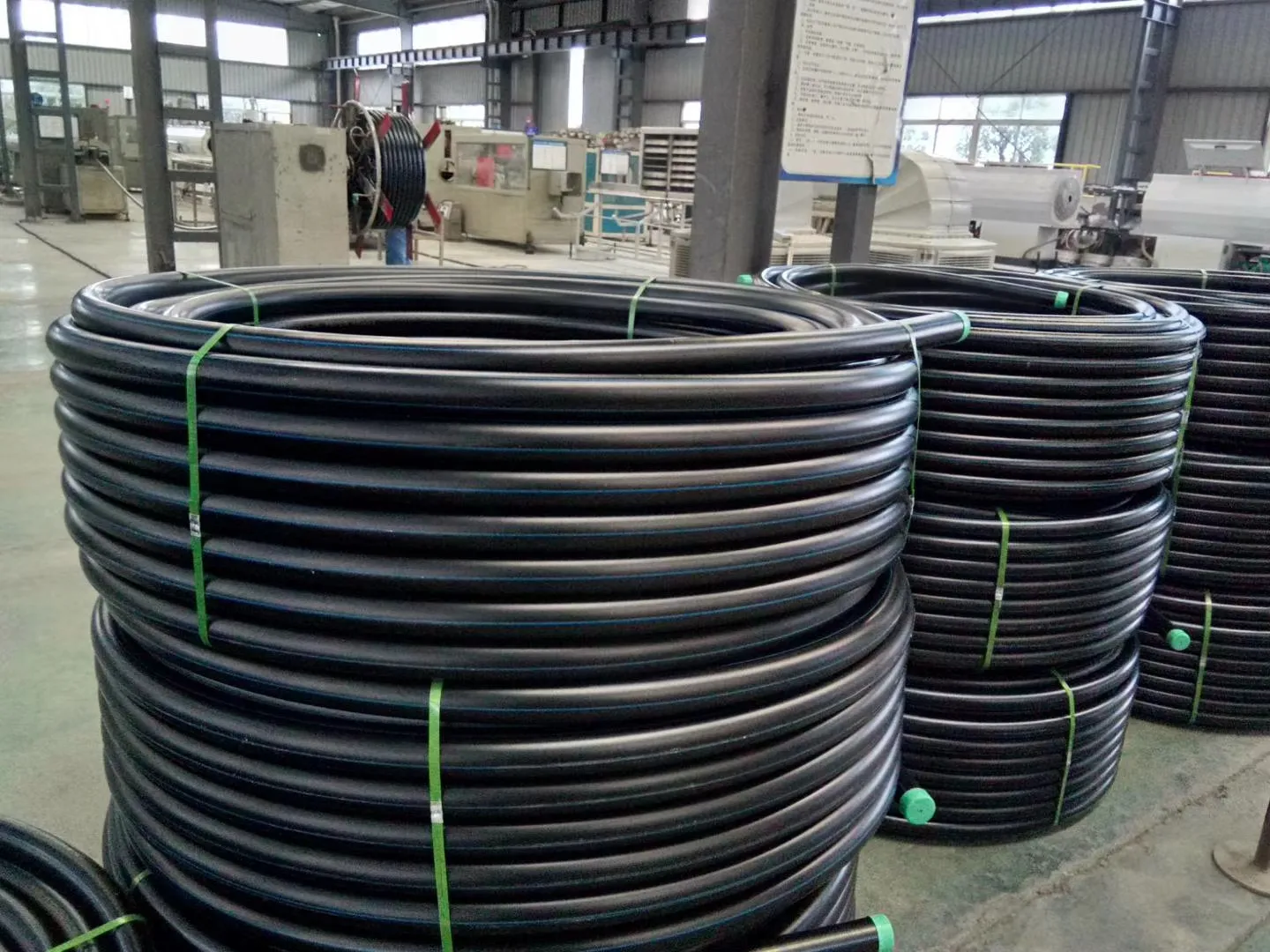
DN150 High-Density Polyethylene (HDPE) pipe, manufactured in China, represents a significant component in fluid transfer systems across diverse industrial applications. Positioned within the broader polyethylene pipe family, DN150 HDPE distinguishes itself through its nominal diameter of 150mm and the utilization of high-density polyethylene resin, imparting superior mechanical strength and chemical resistance compared to lower-density alternatives. This specification is prevalent in water distribution, irrigation, drainage, sewerage, and industrial process piping. The pipe’s technical importance lies in its balance of cost-effectiveness, durability, and ease of installation – typically using butt fusion welding or electrofusion welding – making it a viable alternative to traditional materials like ductile iron or steel. Core performance characteristics include pressure bearing capacity, impact resistance, and long-term hydrostatic strength, critical parameters influencing operational lifespan and system reliability. The Chinese manufacturing sector provides a large-scale, cost-competitive source for this standardized pipe dimension, adhering to evolving international standards and addressing critical infrastructure needs globally.
Material Science & Manufacturing
DN150 HDPE pipe production begins with the raw material: high-density polyethylene (HDPE) resin, typically grades such as PE100 or PE80, defined by their minimum required strength (MRS) and density. PE100 offers superior long-term hydrostatic strength and crack resistance. The resin's molecular weight distribution (MWD) impacts processing characteristics and final product properties; a broader MWD generally enhances processability. Manufacturing commonly employs extrusion processes. Raw HDPE pellets are fed into a hopper, then conveyed through a single-screw extruder. This extruder consists of a heating zone, a compression zone, and a metering zone, progressively melting and homogenizing the resin. Die design is crucial for maintaining dimensional accuracy of the 150mm diameter and wall thickness. Cooling is typically achieved through water baths, controlling the rate to prevent warping or internal stresses. Key parameters during extrusion include melt temperature (typically 180-210°C), screw speed, and die pressure. Post-extrusion, pipes undergo dimensional checks, hydrostatic testing to verify pressure resistance (typically 1.5x the design pressure for a specified duration), and marking for traceability (standard, manufacturer, size, pressure rating, material grade). Quality control measures include monitoring melt flow index (MFI) of the resin to ensure consistent processability, and performing Fourier Transform Infrared Spectroscopy (FTIR) to verify material composition. Butt fusion welding, a common joining method, requires precise temperature control (typically 130-180°C) and pressure to create a homogenous weld without significant oxidation or degradation of the HDPE material.
Performance & Engineering
The performance of DN150 HDPE pipe is fundamentally governed by its mechanical and chemical properties. Stress analysis under internal pressure, particularly utilizing Barlow's formula (S = PT/2t, where S=stress, P=pressure, T=wall thickness, t=radius), is critical for determining the pipe’s burst pressure and allowable operating pressure. The long-term hydrostatic strength (LTHS) is a crucial design parameter, accounting for the gradual reduction in strength over time due to creep and environmental factors. HDPE exhibits excellent resistance to a wide range of chemicals, including acids, bases, and salts, making it suitable for various industrial applications. However, prolonged exposure to strong oxidizing agents or certain solvents can lead to degradation. Environmental resistance is also significant; UV degradation can be mitigated through the inclusion of carbon black additives during the manufacturing process. Temperature considerations are paramount. While HDPE can operate within a broad temperature range (-40°C to +60°C), its mechanical properties change with temperature. Soil loading, particularly external pressure from backfill, requires careful consideration in buried applications. The pipe’s ability to withstand buckling or collapse under load is dependent on the soil’s properties, the depth of burial, and the pipe’s stiffness. Compliance with relevant standards (detailed in the footer) dictates minimum performance requirements, including burst pressure, leak tightness, and material properties. Fatigue analysis is important for applications involving repeated pressure cycles or mechanical stress.
Technical Specifications
| Parameter | PE80 (Typical) | PE100 (Typical) | Unit |
|---|---|---|---|
| Nominal Diameter | 150 | 150 | mm |
| Standard Dimension Ratio (SDR) | SDR17 | SDR17 | - |
| Wall Thickness (approx.) | 6.6 | 5.8 | mm |
| Minimum Required Strength (MRS) | 8.0 | 10.0 | MPa |
| Density | 950 | 960 | kg/m³ |
| Burst Pressure (20°C) | 12.5 | 15.5 | MPa |
| Long-Term Hydrostatic Strength (50 years, 20°C) | 6.3 | 7.75 | MPa |
Failure Mode & Maintenance
DN150 HDPE pipe, while durable, is susceptible to specific failure modes. Slow Crack Growth (SCG) is a primary concern, particularly in elevated stress environments and exposure to certain chemicals. This occurs due to the slow propagation of cracks initiated at stress concentrations. Rapid Crack Propagation (RCP) is a brittle failure mode that can occur in HDPE pipes under sudden pressure surges or impact loads. Environmental Stress Cracking (ESC) is another potential failure mechanism, influenced by factors like UV exposure, chemical attack, and temperature. Oxidation, while slowed by carbon black additives, can still occur over extended periods, leading to embrittlement. Joint failures, specifically at butt fusion welds, can occur due to improper welding procedures (insufficient heating, inadequate pressure, contamination). Maintenance primarily focuses on preventative measures. Regular visual inspections are crucial for identifying signs of damage, such as cracks, deformations, or discoloration. Pressure testing can identify leaks or areas of weakness. For buried pipelines, proper bedding and backfill compaction are essential to prevent external loads from causing damage. In areas with potential chemical exposure, protective coatings or alternative materials may be considered. Repair options for minor damage include patching or localized welding. For significant damage, pipe replacement is often the most reliable solution. Thorough cleaning of weld surfaces before fusion is critical. Maintaining records of installation and maintenance activities aids in identifying potential problem areas and optimizing pipeline performance.
Industry FAQ
Q: What is the impact of varying soil conditions on the long-term performance of DN150 HDPE pipe used in underground drainage applications?
A: Varying soil conditions significantly impact performance. Highly corrosive soils can accelerate degradation, while poorly compacted soils can lead to excessive bending stresses and potential pipe failure. Soil with high clay content can exert significant external pressure, increasing the risk of buckling. Proper bedding and backfill procedures, using appropriately graded materials and ensuring adequate compaction, are crucial to mitigate these risks. Geotechnical investigations prior to installation are recommended to assess soil properties.
Q: How does the choice between PE80 and PE100 material grades affect the lifecycle cost of a DN150 HDPE pipeline for potable water distribution?
A: PE100 offers superior long-term hydrostatic strength, translating to a longer service life and reduced risk of failure compared to PE80. While PE100 typically has a higher initial material cost, its extended lifespan and lower maintenance requirements often result in a lower lifecycle cost. The increased reliability of PE100 also minimizes the potential for costly water losses due to leaks.
Q: What are the critical parameters to monitor during butt fusion welding of DN150 HDPE pipe to ensure weld integrity and prevent premature failure?
A: Critical parameters include consistent heating temperatures (typically 130-180°C), adequate welding pressure, precise welding time, and ensuring clean weld surfaces free from contamination. Maintaining proper alignment of the pipe ends is also essential. Regular calibration of welding equipment and adherence to qualified welding procedures are crucial for achieving reliable welds.
Q: What is the recommended method for mitigating the risk of Slow Crack Growth (SCG) in DN150 HDPE pipe exposed to specific chemical environments?
A: Mitigating SCG involves selecting the appropriate HDPE grade (PE100 offers superior resistance), minimizing stress concentrations through proper installation and support, and avoiding exposure to chemicals known to promote SCG. Using chemical-resistant coatings or liners can provide an additional barrier. Regular inspections for early signs of cracking are also important.
Q: What are the specific requirements of ASTM D3261 for pressure testing DN150 HDPE pipe and what do the test results signify?
A: ASTM D3261 outlines procedures for hydrostatic testing of plastic pipe. The pipe is pressurized with water to a specified test pressure (typically 1.5x the design pressure) for a defined duration (usually several hours). The test results signify the pipe’s ability to withstand the hydrostatic pressure without leakage or failure, verifying its structural integrity and confirming compliance with performance standards.
Conclusion
DN150 HDPE pipe, as manufactured in China, presents a robust and cost-effective solution for a diverse range of fluid conveyance applications. Its performance is intrinsically linked to material science – the choice between PE80 and PE100 directly impacting longevity and reliability. The manufacturing process, centered on extrusion and meticulous quality control, is critical for achieving consistent dimensional accuracy and pressure resistance. Understanding potential failure modes, such as SCG and RCP, and implementing appropriate preventative maintenance strategies are paramount for maximizing service life and minimizing operational disruptions.
The continued adoption of DN150 HDPE pipe depends on adherence to stringent international standards and best practices in installation and maintenance. Further research and development focusing on enhanced material formulations and improved welding techniques will undoubtedly contribute to even greater performance and durability in the future. The scalable production capabilities within China's manufacturing sector continue to drive down costs, making this a competitive and increasingly preferred alternative to traditional piping materials globally.
-
DN25 HDPE Compression Fitting-HORON INTERNATIONAL|Reliable Irrigation Solutions
NewsFeb.11,2026
-
china ppr for hot water Performance Analysis
News2026-04-22
-
china bulk pvc pipe Technical Analysis
News2026-04-22
-
china pvc pipes price list Performance Analysis
News2026-04-22
-
china 20 ft pvc pipe Performance Analysis
News2026-04-22
-
china ppr cold water pipe Performance Analysis
News2026-04-22
-
china double wall hdpe pipe Performance Analysis
News2026-04-21
-
china transition coupling hdpe to pvc Performance Analysis
News2026-04-21
-
china water pipe ppr Performance Analysis
News2026-04-21
-
china dn150 hdpe Performance Analysis
News2026-04-21
-
china sprinkler hdpe pipe Material Performance
News2026-04-21
-
china underground pvc pipe price Performance Analysis
News2026-04-10
-
china water pipes under sink Material Science
News2026-04-10
-
china 40mm ppr pipe price Performance Analysis
News2026-04-10
-
china hdpe transition coupling Performance Analysis
News2026-04-10
-
china bulk pvc pipe for sale Performance Analysis
News2026-04-10