

Feb . 11, 2026 00:01 Back to list
china 6 hdpe corrugated pipe Performance Analysis
Introduction
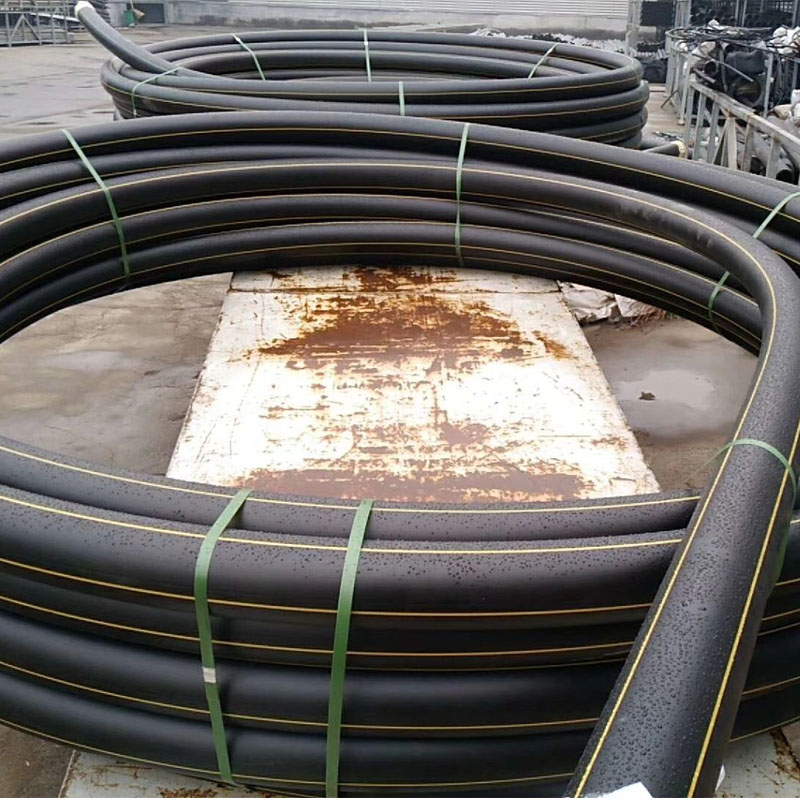
China 6 HDPE corrugated pipe refers to High-Density Polyethylene (HDPE) corrugated drainage pipe with a nominal diameter of 6 inches, manufactured in China. This product occupies a critical position in subsurface drainage infrastructure, predominantly utilized in stormwater management, agricultural drainage, and wastewater conveyance. Its core performance characteristics – specifically its lightweight nature, high crush resistance, and durability – address key pain points in the construction and infrastructure sectors, namely reducing installation costs, minimizing maintenance frequency, and extending service life. The increasing urbanization and agricultural intensification within China and globally have driven demand for efficient and reliable drainage solutions, positioning China 6 HDPE corrugated pipe as a significant commodity in the B2B industrial landscape. Its performance relies on a combination of resin grade, corrugation profile geometry, and manufacturing quality control, differentiating products based on long-term hydraulic capacity, structural integrity under load, and resistance to environmental degradation.
Material Science & Manufacturing
The primary raw material for China 6 HDPE corrugated pipe is high-density polyethylene (HDPE) resin, typically conforming to standards like ASTM D3350 or equivalent GB standards (GB/T 18173). HDPE is chosen for its exceptional chemical resistance, tensile strength (ranging from 20-30 MPa depending on grade), and low moisture absorption. Manufacturing begins with HDPE resin pellets undergoing extrusion. This involves melting the resin and forcing it through a die to create a continuous sheet. The sheet is then formed into a corrugated profile using a corrugation machine. Critical parameters include die temperature (180-220°C), extrusion pressure (20-40 MPa), and cooling rate, all impacting the uniformity and structural integrity of the corrugations. Subsequently, the corrugated sheet is longitudinally welded to form the pipe. Welding methods commonly employed include butt fusion and socket fusion. Butt fusion requires precise temperature control (typically 130-160°C) and pressure (0.2-0.5 MPa) to ensure a homogenous weld seam. Quality control focuses on weld strength, dimensional accuracy (diameter, corrugation pitch), and material density. The addition of UV stabilizers (e.g., carbon black) is crucial to enhance resistance to sunlight degradation, particularly for exposed applications. Pipe stiffness, a measure of the pipe’s ability to resist deformation under load, is controlled by the corrugation profile and wall thickness.
Performance & Engineering
The performance of China 6 HDPE corrugated pipe is heavily dictated by its structural capacity to withstand external loads and maintain hydraulic efficiency. Force analysis focuses on soil load, traffic load (for applications under roadways), and hydrostatic pressure. The pipe’s corrugated structure provides significant ring stiffness, resisting flattening and deformation under these loads. Engineering calculations, based on AASHTO M294 or equivalent Chinese standards, determine the minimum required pipe stiffness for a given application. Environmental resistance is paramount; HDPE exhibits excellent resistance to most acids, bases, and common soil chemicals, preventing corrosion and extending service life. However, long-term exposure to concentrated oxidizing agents or solvents should be avoided. Compliance requirements include adherence to local drainage regulations, typically specifying minimum pipe diameter, slope, and joint integrity. Hydraulic performance is determined by the Manning’s equation, factoring in pipe diameter, roughness coefficient, and flow velocity. Proper installation, including adequate bedding and backfill compaction, is critical to ensure optimal performance and prevent premature failure. Specific attention must be paid to avoiding differential settlement, which can induce stress on the pipe and joints.
Technical Specifications
| Parameter | Unit | Typical Value (China 6 HDPE) | Test Standard |
|---|---|---|---|
| Nominal Diameter | inches | 6 | ASTM D3212 / GB/T 18173 |
| Pipe Stiffness | psi | 48-60 | ASTM D2412 / GB/T 18173 |
| Crush Resistance | psi | 1600-2000 | ASTM D2412 / GB/T 18173 |
| Tensile Strength at Yield | MPa | 20-30 | ASTM D638 / GB/T 1043 |
| Elongation at Break | % | >300 | ASTM D638 / GB/T 1043 |
| Hydrostatic Design Head | feet | 20-30 | ASTM D2837 / GB/T 18173 |
Failure Mode & Maintenance
Common failure modes for China 6 HDPE corrugated pipe include ovalization (deformation due to excessive load), cracking (caused by stress concentrations or material defects), joint failure (resulting from improper welding or installation), and UV degradation (leading to embrittlement). Fatigue cracking can occur under cyclic loading, particularly in areas around corrugation peaks. Delamination can occur if the HDPE material is contaminated during manufacturing or exposed to incompatible chemicals. Oxidation, though less common due to HDPE’s inherent resistance, can occur with prolonged exposure to high temperatures and oxygen. Preventive maintenance involves regular visual inspections to identify signs of deformation, cracking, or joint leakage. Backfill compaction should be verified periodically to ensure adequate support. For minor cracks, HDPE repair sleeves can be used to restore structural integrity. Joint failures require re-welding or replacement of the affected section. UV-damaged sections should be replaced, and future installations should incorporate UV stabilizers or protective coverings. Cleaning debris and vegetation from inlets and outlets is critical to maintain hydraulic capacity and prevent blockages, thereby reducing stress on the pipe system. Long-term monitoring of pipe deflection can provide early warning signs of potential structural issues.
Industry FAQ
Q: What is the impact of soil corrosivity on the lifespan of China 6 HDPE corrugated pipe?
A: HDPE is inherently resistant to most soil chemicals, but highly corrosive soils (e.g., those with high sulfate or chloride content) can potentially degrade the pipe over extended periods. Proper backfill material selection is crucial; non-corrosive, well-compacted fill minimizes contact between the pipe and aggressive soil components. Geotextile wrapping can also provide an additional barrier against chemical attack.
Q: How does temperature affect the performance of HDPE corrugated pipe, particularly in freezing climates?
A: HDPE becomes more brittle at low temperatures, increasing the risk of cracking under load. While HDPE doesn't typically shatter, repeated freeze-thaw cycles can induce stress. Proper bedding and backfill installation, providing adequate thermal insulation, can mitigate this risk. Pipe depth should be sufficient to prevent freezing. In extreme climates, thermal sleeves or heating cables may be considered.
Q: What are the critical considerations for selecting the appropriate bedding material for China 6 HDPE corrugated pipe?
A: Bedding material should be granular, free-draining, and angular to provide adequate support and prevent pipe deformation. Materials like gravel or crushed stone are preferred. Avoid using clay-rich soils, as they can retain moisture and exert excessive pressure on the pipe. Proper compaction is essential to ensure uniform support along the entire pipe length.
Q: What quality control measures should be implemented during the manufacturing process to ensure consistent pipe stiffness?
A: Stringent quality control includes monitoring resin melt flow index, die temperature, extrusion pressure, cooling rate, and corrugation profile dimensions. Regular testing of pipe stiffness according to ASTM D2412 or GB/T 18173 is essential. Statistical process control (SPC) should be employed to identify and address any deviations from established specifications.
Q: What is the recommended minimum burial depth for China 6 HDPE corrugated pipe in a typical roadway application?
A: The recommended minimum burial depth varies depending on traffic load and local regulations, but typically ranges from 0.9 to 1.2 meters (3 to 4 feet). Adequate cover provides sufficient soil overburden to distribute traffic loads and protect the pipe from damage. Geotextiles are often used to separate the pipe from the surrounding soil and provide additional cushioning.
Conclusion
China 6 HDPE corrugated pipe represents a robust and cost-effective solution for a wide range of drainage applications. Its performance is fundamentally rooted in the material properties of HDPE, optimized manufacturing processes, and adherence to relevant engineering standards. The selection of appropriate pipe stiffness, coupled with proper installation techniques—including careful consideration of bedding materials and load distribution—are critical determinants of long-term durability and reliability.
Future advancements in HDPE resin technology, potentially incorporating enhanced UV resistance and improved impact strength, will further extend the service life and broaden the application scope of this essential drainage infrastructure component. Continuous monitoring of industry standards and best practices, alongside rigorous quality control measures, will ensure that China 6 HDPE corrugated pipe continues to meet the evolving demands of the B2B construction and infrastructure markets.
-
DN25 HDPE Compression Fitting-HORON INTERNATIONAL|Reliable Irrigation Solutions
NewsFeb.11,2026
-
china 100mm pvc pipe price Performance Analysis
News2026-05-23
-
china pvc pipe used for Performance Analysis
News2026-05-23
-
china ppr water pipe fittings Performance Analysis
News2026-05-23
-
china hdpe pipe couplings Performance Analysis
News2026-05-23
-
china 50mm ppr pipe price Performance Analysis
News2026-05-23
-
china corrugated hdpe pipe fittings Performance Analysis
News2026-05-22
-
china ppr pipe for hot water Performance Analysis
News2026-05-22
-
china ppr Technical Performance Analysis
News2026-05-22
-
china corrugated dual wall pipe Performance Analysis
News2026-05-22
-
china sink inlet pipe Material Performance Analysis
News2026-05-22
-
china 1 2 inch pvc Performance Analysis
News2026-05-21
-
china hdpe pipe joint coupler Performance Analysis
News2026-05-21
-
china ppr pipes and fittings price list Technical Analysis
News2026-05-21
-
china 9 inch pvc pipe price Performance Analysis
News2026-05-21
-
china 2 inch borewell column pipe price Performance Engineering
News2026-05-21