

Feb . 11, 2026 00:01 Back to list
china 40mm ppr pipe Performance Engineering
Introduction
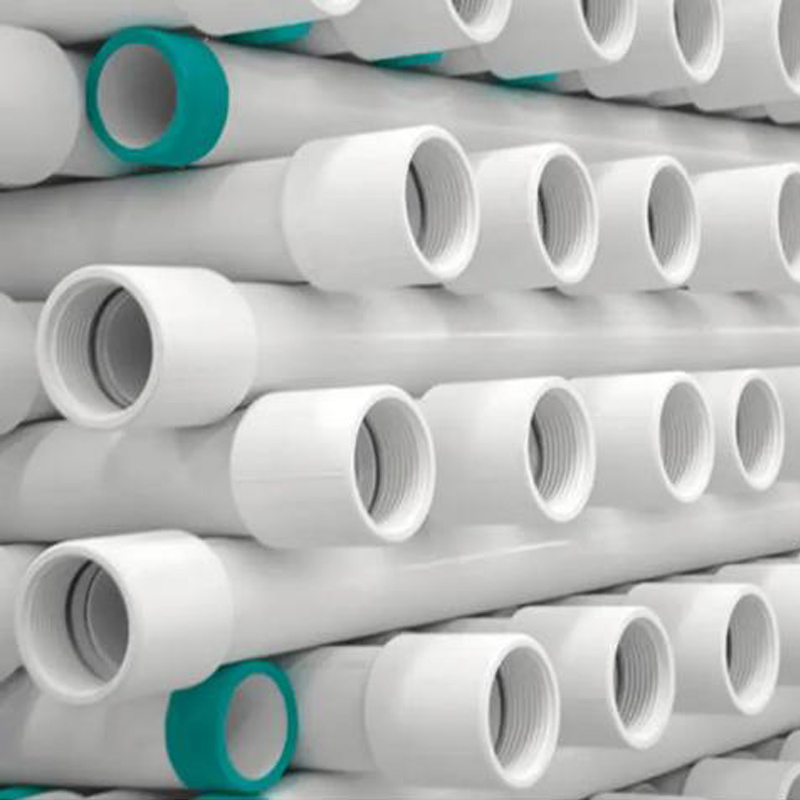
Polypropylene Random (PPR) pipe, specifically the 40mm variant manufactured in China, represents a significant advancement in thermoplastic piping systems for fluid conveyance. Positioned within the broader landscape of industrial piping – encompassing materials like PVC, CPVC, PEX, and metal alloys – PPR offers a unique combination of properties suited for diverse applications, including potable water distribution, industrial fluid transport, and heating/cooling systems. Its technical significance lies in its homopolymer polypropylene matrix, which delivers corrosion resistance, thermal stability, and hygienic fluid transfer. The 40mm diameter is a commonly utilized size, balancing flow capacity with material cost and installation complexity. Core performance characteristics of china 40mm PPR pipe include pressure rating, temperature resistance (both short-term and long-term), chemical compatibility, and adherence to international standards, all of which dictate its suitability for specific engineering applications. A key industry pain point is ensuring consistent material quality and adherence to rigorous testing protocols to avoid premature failure and maintain system integrity.
Material Science & Manufacturing
The primary raw material for 40mm PPR pipe is polypropylene homopolymer, selected for its specific molecular structure and resulting properties. Polypropylene is a thermoplastic polymer produced through the polymerization of propylene monomer. Key physical properties include a density of approximately 0.90 – 0.91 g/cm³, a glass transition temperature (Tg) around -10°C to 0°C, and a melting point ranging from 130°C to 171°C depending on the specific grade. The molecular weight distribution (MWD) is critical; a narrow MWD ensures consistent processing and mechanical properties. Manufacturing processes begin with the compounding of polypropylene resin with stabilizers (typically antioxidants and UV stabilizers to prevent degradation), and often with colorants. Extrusion is the dominant production method. Polypropylene granules are fed into an extruder, where they are heated and melted. A helical screw conveys the molten polymer through a die, shaping it into a continuous pipe. Critical parameters during extrusion include barrel temperature profile (maintained between 190°C and 240°C), screw speed, and die pressure. Precise control of these parameters is crucial to avoid thermal degradation, ensure dimensional accuracy (40mm outer diameter with specified wall thickness), and minimize internal stresses. Following extrusion, the pipe is cooled in a water bath, calibrated to maintain precise dimensions, and then cut to length. Socket fusion welding is the standard joining method, requiring both pipe and fitting surfaces to be heated to a precise temperature (typically around 260°C) and then rapidly joined to create a homogenous weld. Proper heating temperature and welding time are paramount to achieving a strong, leak-proof joint.
Performance & Engineering
The performance of 40mm PPR pipe is governed by several engineering principles. Hydrostatic pressure testing is crucial to verify the pipe’s ability to withstand internal fluid pressure without failure. This testing, typically conducted at 1.5 times the rated working pressure for a specified duration (e.g., 24 hours), assesses the pipe's burst strength and long-term creep resistance. Force analysis involves considering hoop stress (generated by internal pressure) and longitudinal stress (resulting from temperature changes and external loads). The pipe's wall thickness and material properties directly influence its ability to withstand these stresses. Environmental resistance is a key consideration. PPR exhibits good resistance to many common chemicals, but prolonged exposure to strong oxidizing agents or aromatic hydrocarbons can cause degradation. UV exposure can also lead to embrittlement; therefore, UV stabilizers are added during compounding, and pipelines are often covered or buried to minimize direct sunlight exposure. Compliance requirements vary by region but generally align with standards like EN 1610 (European standard for PPR piping systems) and DIN 8077 (German standard). Thermal expansion and contraction are significant factors in installation design. PPR has a coefficient of thermal expansion approximately 10 times higher than that of steel, necessitating the incorporation of expansion loops or flexible connections to accommodate temperature fluctuations and prevent stress buildup. Furthermore, the flow characteristics of fluids within the pipe are governed by the Darcy-Weisbach equation, considering factors such as fluid viscosity, flow rate, and pipe roughness (although PPR pipe has a relatively smooth internal surface, minimizing friction losses).
Technical Specifications
| Parameter | Unit | Specification (Typical) | Testing Standard |
|---|---|---|---|
| Outer Diameter | mm | 40 | GB/T 19472.2 |
| Wall Thickness | mm | 2.3 – 4.2 (depending on pressure class) | GB/T 19472.2 |
| Pressure Rating (PN) | bar | PN10, PN16, PN20 | EN 1610 |
| Burst Pressure | bar | >60 (for PN16) | ISO 1167 |
| Maximum Operating Temperature | °C | 95 (long-term), 110 (short-term) | DIN 8077 |
| Minimum Operating Temperature | °C | -20 | EN 1610 |
Failure Mode & Maintenance
Failure modes in china 40mm PPR pipe systems are diverse. Common issues include: 1) Fatigue Cracking: Repeated pressure cycling and thermal expansion/contraction can induce fatigue cracks, particularly at stress concentrators (e.g., near fittings). 2) Thermal Degradation: Prolonged exposure to elevated temperatures above the maximum operating limit can cause the polymer to degrade, leading to embrittlement and reduced strength. 3) UV Degradation: UV radiation breaks down the polymer chains, causing surface cracking and loss of mechanical properties. 4) Hydrostatic Failure: Excessive internal pressure exceeding the pipe's burst strength results in catastrophic failure. 5) Poor Joint Integrity: Improperly executed socket fusion welds – resulting from insufficient heating, incorrect welding time, or contamination – are a frequent cause of leaks. 6) Chemical Attack: Exposure to incompatible chemicals can cause swelling, softening, or dissolution of the pipe material. Maintenance strategies include: Regular visual inspections for signs of cracking, discoloration, or leakage. Pressure testing to identify leaks and assess system integrity. Preventative maintenance involving covering exposed pipelines to protect against UV radiation. Implementing a flushing program to remove sediment buildup that could contribute to corrosion or blockages. For socket fusion joints, ensure proper operator training and adherence to established welding procedures. In the event of a leak, the affected pipe section and fitting should be cut out and replaced with new components, ensuring a properly executed fusion weld. The use of compatible thread sealants is also vital for threaded connections.
Industry FAQ
Q: What is the long-term impact of chlorine in potable water on the lifespan of PPR pipe?
A: While PPR is generally resistant to chlorine, prolonged exposure to high concentrations of chlorine (especially in conjunction with elevated temperatures) can lead to slow degradation of the polymer matrix, reducing its long-term strength and potentially causing brittle failure. The extent of this degradation depends on chlorine concentration, water temperature, and the specific grade of PPR used. Utilizing PPR formulations with enhanced chlorine resistance, and monitoring chlorine levels within acceptable limits (typically <5 ppm), are critical mitigation strategies.
Q: How does the wall thickness of a 40mm PPR pipe affect its pressure rating?
A: The wall thickness is directly proportional to the pipe’s ability to withstand internal pressure. Thicker walls provide greater resistance to hoop stress, resulting in a higher pressure rating (e.g., PN20 pipes have thicker walls than PN10 pipes). The relationship is governed by the Barlow's formula, which considers the pipe's diameter, wall thickness, and material strength. Increasing wall thickness improves the pipe’s burst pressure and long-term creep resistance.
Q: What are the key differences between PPR Type 1, Type 2, and Type 3 materials?
A: PPR Type 1 is a homopolymer polypropylene with high stiffness and good pressure resistance, suitable for cold water applications. PPR Type 2 is a random copolymer polypropylene offering improved impact resistance and flexibility, making it suitable for hot and cold water. PPR Type 3 is also a random copolymer, but it includes enhanced thermal stability and is specifically designed for hot water applications, exceeding the performance of Type 2 at elevated temperatures. The choice of PPR type depends on the specific application and operating conditions.
Q: What is the acceptable level of ovality in a 40mm PPR pipe, and how does it impact performance?
A: Ovality refers to the deviation from a perfectly circular cross-section. Generally, an ovality exceeding 5% of the outer diameter is considered unacceptable. Significant ovality can reduce the pipe's pressure rating, increase flow resistance, and create stress concentrations that can lead to premature failure. Regular dimensional checks during installation are crucial to ensure compliance with specifications.
Q: Can PPR pipe be used in buried applications, and what considerations are necessary?
A: Yes, PPR pipe can be used in buried applications. However, appropriate bedding and backfill materials are essential to provide adequate support and protection against external loads and soil corrosion. The pipe should be surrounded by a layer of sand or other cushioning material to prevent damage during installation and operation. It's also important to consider the thermal expansion and contraction of the pipe and provide adequate allowance for movement.
Conclusion
China 40mm PPR pipe represents a cost-effective and reliable solution for a wide array of fluid conveyance applications, particularly in potable water distribution, heating, and cooling systems. Its robust material properties, coupled with established manufacturing and joining techniques, deliver significant advantages over traditional metal piping. However, realizing these benefits necessitates meticulous attention to detail throughout the entire lifecycle – from material selection and manufacturing quality control, to proper installation practices and ongoing maintenance.
Future developments in PPR technology are likely to focus on enhancing material properties – such as improved chlorine resistance and increased temperature stability – and optimizing manufacturing processes to reduce material costs and environmental impact. Continued adherence to international standards, coupled with rigorous quality assurance protocols, will be essential to maintain the integrity and reliability of PPR piping systems and ensure long-term performance in demanding industrial environments.
-
DN25 HDPE Compression Fitting-HORON INTERNATIONAL|Reliable Irrigation Solutions
NewsFeb.11,2026
-
china use of pvc pipe Performance Analysis
News2026-05-24
-
china 50mm pvc pipe price Performance Analysis
News2026-05-24
-
china ppr pipe 50mm price Performance Analysis
News2026-05-24
-
china hdpe coupler price Performance Analysis
News2026-05-24
-
china white pvc pipe Performance Analysis
News2026-05-24
-
china 100mm pvc pipe price Performance Analysis
News2026-05-23
-
china pvc pipe used for Performance Analysis
News2026-05-23
-
china ppr water pipe fittings Performance Analysis
News2026-05-23
-
china hdpe pipe couplings Performance Analysis
News2026-05-23
-
china 50mm ppr pipe price Performance Analysis
News2026-05-23
-
china corrugated hdpe pipe fittings Performance Analysis
News2026-05-22
-
china ppr pipe for hot water Performance Analysis
News2026-05-22
-
china ppr Technical Performance Analysis
News2026-05-22
-
china corrugated dual wall pipe Performance Analysis
News2026-05-22
-
china sink inlet pipe Material Performance Analysis
News2026-05-22