

Feb . 11, 2026 00:01 Back to list
ppr pipe use product Performance Analysis
Introduction
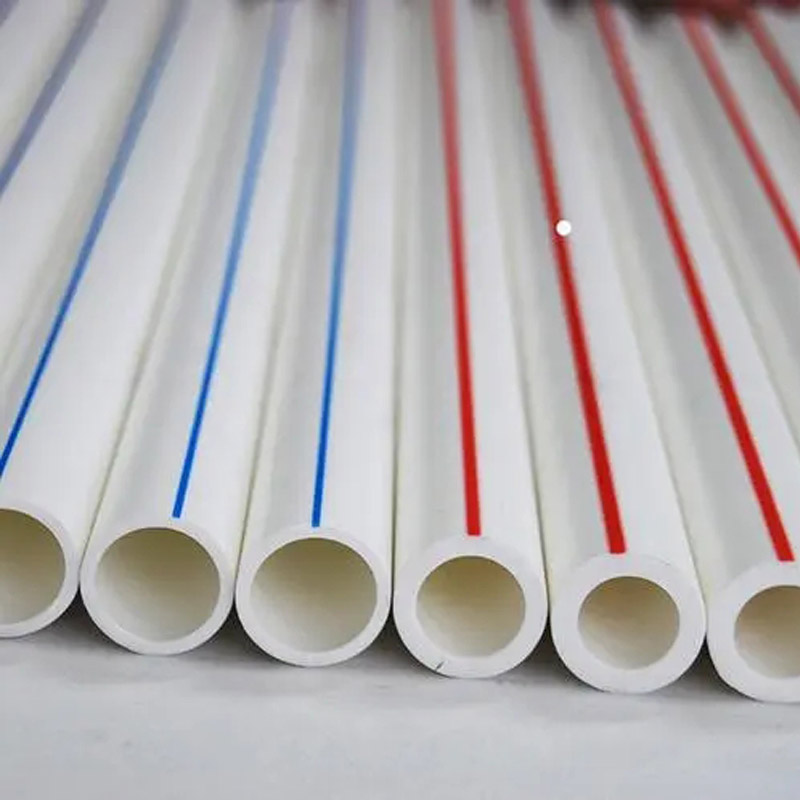
Polypropylene Random Copolymer (PPR) pipe represents a significant advancement in fluid conveyance systems, particularly within building infrastructure and industrial applications. Positioned as a direct replacement for traditional metallic piping – galvanized steel, copper, and cast iron – PPR offers a compelling combination of corrosion resistance, thermal stability, and cost-effectiveness. Its primary function lies in the distribution of potable water, heating systems (including underfloor heating), and industrial fluid transport where chemical compatibility allows. The core performance characteristics revolve around its ability to withstand pressure, temperature fluctuations, and resist chemical degradation, mitigating common issues like scaling, corrosion, and leakage inherent in older piping materials. A key industry pain point addressed by PPR is the long-term maintenance and replacement costs associated with metallic systems; PPR's inherent durability and lack of corrosion significantly reduce lifecycle expenditures. This guide provides an in-depth technical examination of PPR pipe, encompassing material science, manufacturing processes, performance analysis, failure modes, and relevant international standards.
Material Science & Manufacturing
PPR pipe is manufactured from polypropylene random copolymer, a thermoplastic polymer derived from propylene monomer. The "random" designation signifies the random distribution of comonomers (typically ethylene) along the polypropylene chain. This randomization disrupts the polymer's crystallinity, leading to enhanced flexibility and impact resistance compared to homopolymer polypropylene. The raw material exhibits a density between 0.905 – 0.92 g/cm³, a glass transition temperature (Tg) of approximately -18°C, and a melting point ranging from 130°C to 171°C, depending on the specific comonomer content. Manufacturing begins with the polymerization of propylene and ethylene using Ziegler-Natta or metallocene catalysts. The resulting copolymer resin is then processed via extrusion. The extrusion process involves melting the resin and forcing it through a die to create the pipe's cylindrical shape. Key parameters rigorously controlled during extrusion include melt temperature (typically 190-240°C), die pressure, and cooling rate. Proper cooling is crucial to prevent warping and ensure dimensional stability. Socket fusion and electrofusion are common joining methods, relying on the polymer's inherent weldability. Socket fusion utilizes heat to soften both the pipe and fitting, creating a homogenous weld upon joining. Electrofusion employs a resistance heating element within the fitting to achieve a similar result but with more precise control and suitability for larger diameter pipes. The quality of the weld is heavily influenced by heating time, temperature, and applied pressure. The presence of internal stress in the weld is a critical factor impacting long-term performance. Ensuring consistent wall thickness and a smooth inner surface during extrusion is paramount for minimizing flow resistance and preventing bacterial colonization in potable water applications.
Performance & Engineering
PPR pipe performance is dictated by its ability to withstand hydrostatic pressure, temperature variations, and chemical exposure. Hydrostatic pressure testing, conducted according to standards like ISO 1167, determines the short-term and long-term burst pressure capabilities. The pipe’s strength is governed by its dimensions (diameter and wall thickness) and the material’s inherent tensile strength (typically 20-30 MPa). Thermal expansion and contraction are significant considerations, particularly in hot water systems. The coefficient of linear thermal expansion for PPR is approximately 0.15 mm/m°C. This necessitates the incorporation of expansion loops or flexible connectors in long pipe runs to prevent stress buildup and potential cracking. Chemical resistance is generally excellent against a wide range of common fluids, including acids, alkalis, and salts. However, prolonged exposure to strong oxidizing agents (e.g., chlorine, concentrated nitric acid) can lead to degradation. The pipe’s resistance to slow crack growth (SCG) is a critical performance parameter, particularly in potable water applications where residual chlorine is present. SCG occurs under sustained tensile stress and can lead to premature failure. Formulation modifications, including the addition of stabilizers, are employed to enhance SCG resistance. Force analysis under various loading conditions (e.g., internal pressure, external loads from soil or structures) is crucial during system design to ensure structural integrity. Finite element analysis (FEA) is often utilized to model stress distribution and optimize pipe support spacing. Compliance with relevant building codes and plumbing regulations (e.g., UPC, IPC) is mandatory to ensure safe and reliable installation. Pressure drop calculations, based on Darcy-Weisbach equation and Hazen-Williams formula, are essential for proper sizing of the piping system and minimizing energy consumption.
Technical Specifications
| Parameter | Unit | Standard (DIN 8077/8078) | Typical Value |
|---|---|---|---|
| Nominal Diameter | mm | 20 – 160 | 20, 25, 32, 40, 50, 63, 75, 90, 110, 160 |
| Pressure Rating (PN) | bar | PN10, PN16, PN20, PN25 | 10, 16, 20, 25 |
| Operating Temperature | °C | -40 to +95 | -40 to +95 (short-term up to +110) |
| Tensile Strength | MPa | ISO 527 | 20-30 |
| Elongation at Break | % | ISO 527 | 200-400 |
| Water Absorption | % (24h) | ISO 62 | <0.5 |
Failure Mode & Maintenance
Common failure modes in PPR piping systems include slow crack growth (SCG), thermal stress cracking, and joint failures. SCG, as previously mentioned, is initiated by sustained tensile stress in the presence of chlorine or other oxidizing agents. This manifests as small cracks that propagate slowly over time, ultimately leading to leakage. Thermal stress cracking occurs due to excessive thermal expansion or contraction without adequate provision for movement. Joints are vulnerable to failure due to improper fusion techniques, contamination during welding, or inadequate cooling. Oxidation can occur at elevated temperatures, particularly if the PPR compound lacks sufficient stabilizers. Failure analysis typically involves visual inspection, microscopic examination of fractured surfaces, and chemical analysis to identify the root cause. Maintenance involves periodic visual inspections to identify any signs of cracking, deformation, or leakage. Regular pressure testing can help detect hidden leaks. For minor cracks, repair sleeves can be used, but complete replacement of the affected section is often recommended for significant damage. Proper support and anchoring of the piping system are crucial to minimize stress and prevent failure. Water quality monitoring is important to ensure that chlorine levels are within acceptable limits. Avoid exposing PPR pipes to direct sunlight for prolonged periods, as UV radiation can cause degradation. Implementing a preventative maintenance schedule, including periodic inspections and pressure testing, is crucial for maximizing the lifespan of the system. Furthermore, training installers in proper fusion techniques is paramount to ensure the integrity of the joints.
Industry FAQ
Q: What is the long-term impact of chlorine on PPR pipe systems used for potable water?
A: Long-term exposure to chlorine, even at residual concentrations, can induce Slow Crack Growth (SCG) in PPR pipe. This is a significant concern. Modern PPR formulations incorporate stabilizers to enhance SCG resistance, but consistent monitoring of water chemistry and adherence to recommended chlorine levels (typically below 1 ppm) are crucial. Regular inspections for micro-cracks are also advised.
Q: How does PPR pipe compare to CPVC in terms of temperature resistance?
A: CPVC (Chlorinated Polyvinyl Chloride) generally exhibits higher temperature resistance than standard PPR, with a maximum operating temperature around 93°C compared to PPR’s 95°C. However, specialized high-temperature PPR formulations (PPR-HT) can achieve comparable temperature ratings. CPVC is also more rigid, which can impact its resistance to thermal shock and vibration.
Q: What are the key considerations when designing a PPR piping system for underfloor heating?
A: Underfloor heating requires careful consideration of thermal expansion. PPR’s coefficient of linear expansion necessitates the use of expansion loops or flexible connectors at regular intervals to prevent stress cracking. Proper insulation is crucial to minimize heat loss. The pipe must be compatible with the heating medium (typically water with glycol). Manifold design and flow balancing are also critical for optimal performance.
Q: What are the best practices for ensuring a leak-proof joint when using electrofusion welding?
A: Electrofusion welding requires meticulous surface preparation: ensuring the pipe end and fitting are clean, dry, and free of debris. Proper alignment of the pipe and fitting is essential. The correct welding time and voltage must be selected based on the pipe diameter and fitting type, following the manufacturer's recommendations. Visual inspection of the weld bead is crucial to verify complete fusion.
Q: What type of soil conditions should be avoided when burying PPR pipe directly in the ground?
A: PPR pipe should not be directly buried in highly corrosive soils (e.g., soils with high sulfate content or acidic pH). Aggressive soil conditions can accelerate degradation. The pipe should be adequately protected by a protective sleeve or concrete encasement in such environments. Rocky soils that could cause mechanical damage should also be avoided, or the pipe should be cushioned with suitable bedding material.
Conclusion
PPR pipe represents a robust and cost-effective solution for a wide range of fluid conveyance applications. Its inherent corrosion resistance, thermal stability, and ease of installation offer significant advantages over traditional metallic piping systems. Understanding the material science underpinning PPR’s performance, meticulously controlling manufacturing parameters, and adhering to industry standards are crucial for ensuring long-term reliability and minimizing the risk of failure.
The successful implementation of a PPR piping system relies not only on selecting the appropriate materials and components but also on proper system design, installation, and maintenance. Ongoing monitoring of water quality, regular inspections, and preventative maintenance procedures are essential for maximizing the lifespan of the system and preventing costly repairs. Future advancements in PPR formulation, particularly in areas like SCG resistance and high-temperature performance, will further solidify its position as a leading material in the fluid conveyance industry.
-
DN25 HDPE Compression Fitting-HORON INTERNATIONAL|Reliable Irrigation Solutions
NewsFeb.11,2026
-
china 100mm pvc pipe price Performance Analysis
News2026-05-23
-
china pvc pipe used for Performance Analysis
News2026-05-23
-
china ppr water pipe fittings Performance Analysis
News2026-05-23
-
china hdpe pipe couplings Performance Analysis
News2026-05-23
-
china 50mm ppr pipe price Performance Analysis
News2026-05-23
-
china corrugated hdpe pipe fittings Performance Analysis
News2026-05-22
-
china ppr pipe for hot water Performance Analysis
News2026-05-22
-
china ppr Technical Performance Analysis
News2026-05-22
-
china corrugated dual wall pipe Performance Analysis
News2026-05-22
-
china sink inlet pipe Material Performance Analysis
News2026-05-22
-
china 1 2 inch pvc Performance Analysis
News2026-05-21
-
china hdpe pipe joint coupler Performance Analysis
News2026-05-21
-
china ppr pipes and fittings price list Technical Analysis
News2026-05-21
-
china 9 inch pvc pipe price Performance Analysis
News2026-05-21
-
china 2 inch borewell column pipe price Performance Engineering
News2026-05-21