

Feb . 11, 2026 00:01 Back to list
hdpe pipe use products Manufacturing Analysis
Introduction
High-Density Polyethylene (HDPE) pipe is a thermoplastic polyethylene pipe used for a wide range of pressure and non-pressure applications. Its position within the fluid transport industry chain is critical, replacing traditional materials like ductile iron, concrete, and steel in numerous scenarios. HDPE pipes are valued for their corrosion resistance, long service life, and relatively lightweight nature, contributing to reduced installation costs. Core performance characteristics include its ability to handle varying temperatures and pressures, its fusion-welded joints providing leak-free connections, and its flexibility which allows for installation in challenging terrains. The growing demand for durable, sustainable infrastructure solutions has driven increasing adoption of HDPE pipe across municipal, industrial, and agricultural sectors. A key pain point addressed by HDPE is the significant lifecycle cost associated with metallic pipe systems, driven by corrosion maintenance, and eventual replacement.
Material Science & Manufacturing
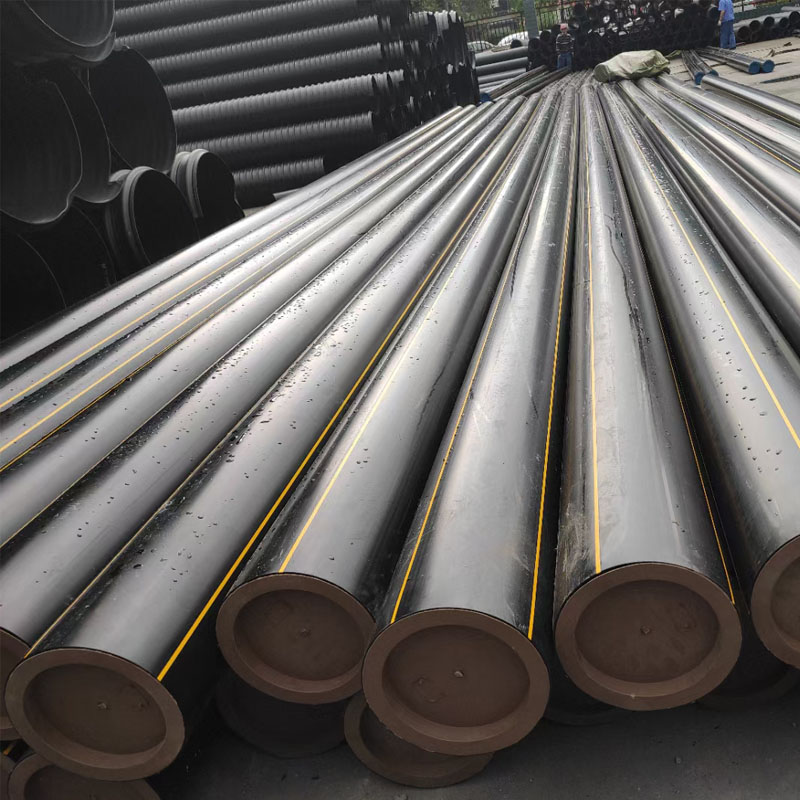
HDPE pipe production begins with ethylene, a hydrocarbon gas typically derived from natural gas or crude oil. Through a polymerization process, ethylene molecules are linked together to form polyethylene chains. The density is controlled to achieve “high-density” polyethylene, characterized by minimal branching in the polymer structure. This branching impacts crystallinity and thus, mechanical properties. Raw material properties are crucial; molecular weight distribution (MWD) significantly affects melt flow index (MFI) and ultimately, the pipe’s processability and long-term performance. Manufacturing primarily employs extrusion processes. The HDPE resin is melted and forced through a die, shaping the pipe to its desired dimensions. Key parameters under strict control include melt temperature (typically 180-210°C), die pressure, and cooling rates. Cooling is critical to achieving dimensional stability and preventing deformation. Various pipe manufacturing techniques are used, including conventional extrusion, spiral winding, and co-extrusion for creating multi-layer pipes with different properties (e.g., striped HDPE for tracer wire identification). Post-extrusion, pipes undergo quality control checks for dimensions, pressure ratings, and material homogeneity. The polyethylene used must adhere to standards like PE 100, PE 80 and PE 63, signifying minimum hydrostatic strength.
Performance & Engineering
HDPE pipe performance is governed by its mechanical and chemical properties. Stress analysis is central to design; hydrostatic pressure, external loads (soil cover, traffic loads), and surge pressures must be accounted for. The pipe's flexibility allows it to accommodate differential settlement and seismic activity, reducing the risk of joint failures. Environmental resistance is a key advantage; HDPE exhibits excellent resistance to most chemicals, including acids, bases, and solvents. However, prolonged exposure to oxidizing agents can lead to degradation. Compliance with industry standards dictates minimum performance requirements, including hydrostatic pressure testing (typically 2.25 times the design pressure for a specified duration). Jointing methods are critical to the system’s integrity. Butt fusion is the most common method, creating a weld stronger than the base material. Electrofusion welding is used for smaller diameters and complex fittings. Socket fusion is another option for smaller pipes. Proper welding procedures, including surface preparation and temperature control, are essential for achieving reliable joints. The long-term creep resistance of HDPE is a critical design consideration, particularly in applications involving sustained pressure.
Technical Specifications
| Parameter | Units | PE 100 | PE 80 |
|---|---|---|---|
| Hydrostatic Design Stress (HDS) | MPa | 12.5 | 10.0 |
| Minimum Required Strength (MRS) | MPa | 10.0 | 8.0 |
| Density | g/cm³ | 0.955 – 0.965 | 0.941 – 0.955 |
| Melt Flow Index (MFI) | g/10 min | Varies based on pipe dimensions & application | Varies based on pipe dimensions & application |
| Operating Temperature Range | °C | -40 to +60 | -40 to +40 |
| Tensile Strength at Yield | MPa | >8.0 | >6.3 |
Failure Mode & Maintenance
HDPE pipe, while durable, is susceptible to specific failure modes. Slow Crack Growth (SCG) is a primary concern, caused by sustained stress in conjunction with aggressive environmental factors. This manifests as brittle fractures, often initiated at stress concentrators like welds or imperfections. Oxidative degradation can occur with prolonged exposure to high temperatures and oxidizing agents, leading to embrittlement. UV degradation can cause surface cracking and loss of mechanical properties if the pipe isn’t appropriately protected (e.g., by coating or burial). Fatigue cracking can occur in applications with cyclic pressure or external loads. Joint failures, particularly in improperly executed welds, are a common issue. Maintenance primarily focuses on prevention. Regular inspections for signs of SCG, UV damage, and corrosion are crucial. Protecting exposed pipe sections with UV-resistant coatings or burial is essential. Periodic pressure testing can identify leaks and potential weaknesses. For damaged sections, cut and replace the affected segment using appropriate fusion welding techniques. Proper backfilling and compaction around buried pipes are vital to prevent external stress and potential damage from soil settlement.
Industry FAQ
Q: What is the expected service life of HDPE pipe compared to ductile iron?
A: Properly installed and protected HDPE pipe can realistically achieve a service life exceeding 50 years, and potentially exceeding 100 years. Ductile iron, while initially robust, is susceptible to corrosion, requiring ongoing maintenance and eventually replacement, typically within 70-80 years under favorable conditions, and significantly less in aggressive soil environments. The absence of corrosion in HDPE contributes to its extended lifespan and reduced lifecycle costs.
Q: How does temperature affect the performance of HDPE pipe?
A: HDPE's performance is temperature-dependent. While it maintains ductility at low temperatures (down to -40°C), elevated temperatures can reduce its strength and creep resistance. The operating temperature range is typically -40°C to +60°C, but exceeding these limits can lead to deformation or failure. Design considerations must account for anticipated temperature fluctuations and potential thermal expansion/contraction.
Q: What are the key considerations for welding HDPE pipe?
A: Proper surface preparation is paramount – surfaces must be clean, dry, and free of contamination. Correct welding parameters (temperature, pressure, time) must be applied according to the specific HDPE grade and pipe dimensions. Welding operators must be properly trained and certified. Regular inspection of welds, using visual and non-destructive testing methods, is crucial to ensure joint integrity.
Q: Is HDPE pipe suitable for potable water applications?
A: Yes, HDPE pipe is widely used for potable water distribution. It is non-toxic, does not leach chemicals into the water, and is resistant to corrosion, preventing the introduction of harmful contaminants. It must comply with relevant standards for potable water contact materials, such as NSF/ANSI 61.
Q: How does HDPE pipe perform in seismic regions?
A: HDPE pipe’s flexibility and fusion-welded joints provide excellent resistance to seismic activity. The pipe can accommodate ground movement and differential settlement without fracturing. This is a significant advantage over rigid pipe materials like ductile iron, which are more prone to failure during earthquakes.
Conclusion
HDPE pipe represents a significant advancement in fluid transport technology, offering a compelling combination of durability, cost-effectiveness, and sustainability. Its inherent resistance to corrosion, coupled with the reliability of fusion-welded joints, provides a long-term solution that minimizes lifecycle costs. Understanding the material science, manufacturing processes, and potential failure modes is crucial for successful implementation and maximizing the lifespan of HDPE pipe systems.
As infrastructure demands continue to evolve, HDPE pipe is poised to play an increasingly important role in various applications, from municipal water distribution to industrial fluid handling. Further research and development focusing on enhancing creep resistance and UV protection will continue to expand its capabilities and broaden its applicability. Proactive maintenance and adherence to industry standards are vital for ensuring the long-term performance and reliability of these systems.
-
DN25 HDPE Compression Fitting-HORON INTERNATIONAL|Reliable Irrigation Solutions
NewsFeb.11,2026
-
china 40mm pvc pipe Material and Manufacturing
News2026-04-23
-
china hdpe to pvc connection Performance Analysis
News2026-04-23
-
china ppr pipe 1 price Performance Analysis
News2026-04-23
-
china colored pvc pipe Performance Analysis
News2026-04-23
-
china hdpe pipe price list pdf Performance Analysis
News2026-04-23
-
china ppr for hot water Performance Analysis
News2026-04-22
-
china bulk pvc pipe Technical Analysis
News2026-04-22
-
china pvc pipes price list Performance Analysis
News2026-04-22
-
china 20 ft pvc pipe Performance Analysis
News2026-04-22
-
china ppr cold water pipe Performance Analysis
News2026-04-22
-
china double wall hdpe pipe Performance Analysis
News2026-04-21
-
china transition coupling hdpe to pvc Performance Analysis
News2026-04-21
-
china water pipe ppr Performance Analysis
News2026-04-21
-
china dn150 hdpe Performance Analysis
News2026-04-21
-
china sprinkler hdpe pipe Material Performance
News2026-04-21