

Feb . 11, 2026 00:01 Back to list
hdpe pipe use manufacturer Performance Analysis
Introduction
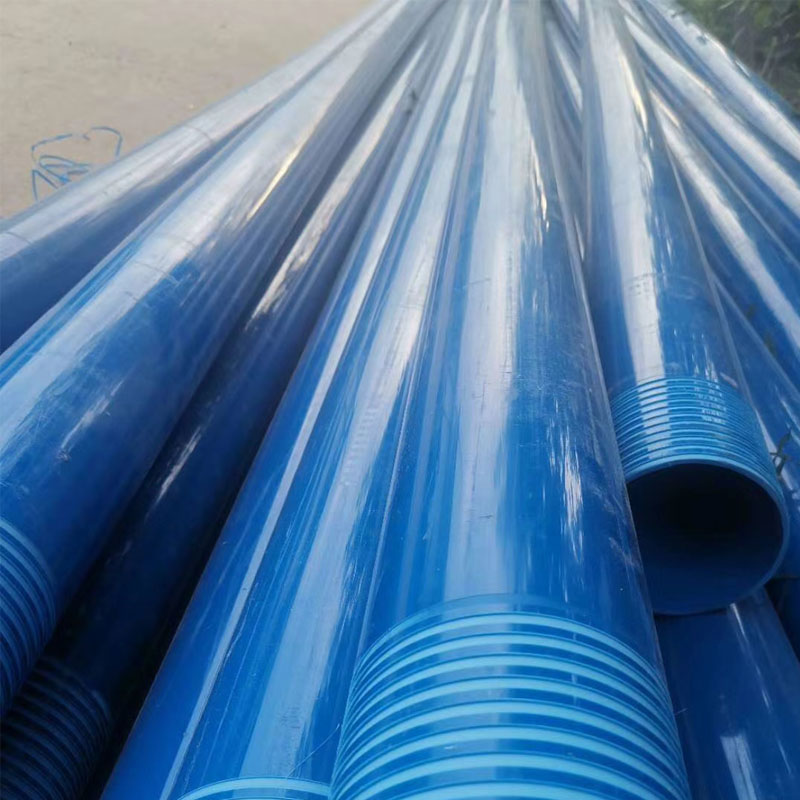
High-Density Polyethylene (HDPE) pipe represents a significant advancement in fluid transfer technology, employed extensively across municipal, industrial, and agricultural sectors. Positioned as a direct alternative to traditional materials like ductile iron, concrete, and PVC, HDPE pipe’s inherent properties offer a compelling balance of durability, cost-effectiveness, and installation flexibility. This guide provides an in-depth technical examination of HDPE pipe, encompassing material science, manufacturing processes, performance characteristics, potential failure modes, and relevant industry standards. A key industry pain point centers around long-term performance prediction in demanding applications; understanding creep resistance, stress cracking susceptibility, and the influence of environmental factors are critical for ensuring system integrity and minimizing lifecycle costs. HDPE pipe’s growing prominence is driven by increasingly stringent environmental regulations and the demand for sustainable infrastructure solutions.
Material Science & Manufacturing
HDPE pipe is fabricated from a thermoplastic polymer derived from the polymerization of ethylene. The raw material, polyethylene resin, is categorized based on its density; HDPE exhibits a density range of 0.931 to 0.953 g/cm³, contributing to its high tensile strength-to-density ratio. Critical material properties include its semi-crystalline structure, influencing impact resistance and chemical inertness. Manufacturing primarily utilizes extrusion processes. The polyethylene resin is melted and forced through a die, shaping it into a continuous pipe form. Key process parameters – melt temperature (typically 180-210°C), die pressure, and cooling rate – dictate the final pipe dimensions and crystalline structure. Precise control of these parameters is crucial for achieving uniform wall thickness and minimizing residual stresses. Pipe diameters ranging from ½ inch to 63 inches are common, with Schedule 40 and Schedule 80 designations indicating varying wall thicknesses and pressure-bearing capacities. Post-extrusion processes include dimensional stabilization through cooling and sizing, and quality control checks including hydrostatic testing to verify pressure integrity. Chemical compatibility considerations are paramount; HDPE demonstrates excellent resistance to acids, alkalis, and many solvents, however prolonged exposure to strong oxidizing agents can lead to degradation.
Performance & Engineering
The performance of HDPE pipe is heavily influenced by its mechanical and environmental resistance characteristics. Force analysis focuses on hoop stress due to internal pressure and longitudinal stress from buried loads. The Barlow formula (S = P D / 2t, where S=hoop stress, P=internal pressure, D=pipe diameter, t=wall thickness) is fundamental to pressure-rating calculations. Long-term hydrostatic strength is a crucial consideration; HDPE exhibits creep behavior – a time-dependent deformation under sustained stress. This creep is accelerated by elevated temperatures. Therefore, design must incorporate appropriate safety factors and consider the operating temperature range. Environmental resistance encompasses UV degradation, chemical attack, and soil stress. UV stabilizers are often incorporated into the HDPE formulation to mitigate degradation from sunlight exposure. Buried HDPE pipe requires adequate soil cover for protection from UV radiation and mechanical damage. Furthermore, understanding soil corrosivity is vital; while HDPE itself is corrosion-resistant, aggressive soil conditions can contribute to external loads and induce stress cracking. Compliance requirements are governed by standards such as ASTM D3261 (polyethylene pipes for pressure applications) and AWWA C906 (HDPE pipe for potable water distribution), dictating material specifications, testing procedures, and installation guidelines. Fatigue analysis is important in applications involving cyclical pressure changes or external loading.
Technical Specifications
| Parameter | Unit | Typical Value (Schedule 40) | Typical Value (Schedule 80) |
|---|---|---|---|
| Density | g/cm³ | 0.953 | 0.953 |
| Hydrostatic Design Stress (HDS) @ 73°F (23°C) | psi | 1600 | 2100 |
| Burst Pressure | psi | 6400 | 8400 |
| Tensile Strength | psi | 4000-5000 | 4000-5000 |
| Elongation at Break | % | 300-500 | 300-500 |
| Vicat Softening Point | °C | 125-135 | 125-135 |
Failure Mode & Maintenance
HDPE pipe, while durable, is susceptible to several failure modes. Slow Crack Growth (SCG), also known as Environmental Stress Cracking (ESC), is a primary concern, initiated by tensile stress combined with aggressive chemical environments. This manifests as brittle cracking perpendicular to the stress direction. Another potential failure is Rapid Crack Propagation (RCP), a catastrophic failure occurring when an existing crack propagates rapidly under pressure. This is often linked to defects introduced during manufacturing or installation. Fatigue cracking can occur in applications with cyclic pressure fluctuations. UV degradation, if not adequately addressed, leads to surface embrittlement and reduced mechanical properties. Joint failures are also common, stemming from improper fusion welding techniques or inadequate preparation of the pipe ends. Maintenance involves periodic inspections for visual defects (cracks, deformations). Hydrostatic testing can assess pressure integrity over time. For SCG mitigation, proper material selection (PE resins with higher molecular weight distribution) and avoidance of contact with incompatible chemicals are crucial. For RCP prevention, strict quality control during manufacturing and installation, along with surge protection, are essential. Regular monitoring of soil conditions surrounding buried pipelines is recommended to detect potential corrosion issues. Fusion welding should be performed by certified technicians adhering to established procedures (e.g., ASTM F2620).
Industry FAQ
Q: What is the long-term performance difference between HDPE and ductile iron pipe in potable water applications, considering corrosion potential?
A: Ductile iron, despite protective coatings, is susceptible to corrosion over time, particularly in aggressive soil conditions, leading to tuberculation and reduced flow capacity. HDPE inherently resists corrosion, maintaining consistent internal diameter and flow rates throughout its service life. While HDPE is subject to SCG, proper material selection and operating conditions can mitigate this risk, resulting in a significantly longer service life and lower lifecycle costs compared to ductile iron.
Q: How does HDPE pipe handle thermal expansion and contraction compared to PVC?
A: HDPE has a significantly higher coefficient of thermal expansion than PVC. This necessitates careful design considerations, particularly for long pipeline runs, to accommodate expansion and contraction. Expansion loops, thrust blocks, and flexible joints are commonly employed to manage thermal stresses and prevent joint separation or pipe buckling. PVC's lower coefficient of thermal expansion makes it less sensitive to temperature variations, but it is also more brittle.
Q: What are the critical factors to consider when butt fusing HDPE pipe?
A: Proper surface preparation (cleaning and removal of contaminants), precise temperature control of the heating elements, appropriate fusion time and pressure, and qualified personnel are critical. Insufficient fusion results in weak joints, while excessive fusion can lead to material degradation. Adherence to ASTM F2620 guidelines is paramount. Post-fusion inspection to verify weld quality is also essential.
Q: What is the impact of soil corrosivity on HDPE pipe performance?
A: While HDPE is chemically inert, highly corrosive soils can indirectly impact its performance. Corrosion of nearby metallic structures can create stray currents that induce stress corrosion cracking in the HDPE pipe. Aggressive soil chemicals can also contribute to external loading and increase the susceptibility to SCG. Proper soil assessment and mitigation strategies (e.g., cathodic protection for nearby metallic structures) are essential.
Q: How does HDPE pipe compare to stainless steel in terms of chemical resistance for industrial applications?
A: Stainless steel generally exhibits broader chemical resistance, particularly to strong oxidizing acids. However, HDPE is resistant to a wide range of chemicals, including many acids, bases, and solvents. The choice depends on the specific chemical exposure. HDPE is often a more cost-effective option for less demanding chemical environments, offering excellent resistance to many industrial effluents.
Conclusion
HDPE pipe represents a robust and versatile solution for a wide array of fluid transfer applications. Its inherent material properties—high strength-to-density ratio, excellent chemical resistance, and flexibility—position it as a compelling alternative to traditional piping materials. However, successful implementation necessitates a thorough understanding of its performance characteristics, potential failure modes, and relevant industry standards. Careful attention to design considerations, including creep analysis, thermal expansion management, and joint integrity, is critical for maximizing long-term reliability and minimizing lifecycle costs.
Moving forward, advancements in polyethylene resin technology, coupled with improved installation techniques and monitoring systems, will further enhance the performance and sustainability of HDPE piping systems. The continued focus on standardization and adherence to best practices will be crucial for driving wider adoption and ensuring the long-term integrity of critical infrastructure. The integration of smart technologies for leak detection and condition monitoring will become increasingly prevalent, allowing for proactive maintenance and optimized system performance.
-
DN25 HDPE Compression Fitting-HORON INTERNATIONAL|Reliable Irrigation Solutions
NewsFeb.11,2026
-
china ppr for hot water Performance Analysis
News2026-04-22
-
china bulk pvc pipe Technical Analysis
News2026-04-22
-
china pvc pipes price list Performance Analysis
News2026-04-22
-
china 20 ft pvc pipe Performance Analysis
News2026-04-22
-
china ppr cold water pipe Performance Analysis
News2026-04-22
-
china double wall hdpe pipe Performance Analysis
News2026-04-21
-
china transition coupling hdpe to pvc Performance Analysis
News2026-04-21
-
china water pipe ppr Performance Analysis
News2026-04-21
-
china dn150 hdpe Performance Analysis
News2026-04-21
-
china sprinkler hdpe pipe Material Performance
News2026-04-21
-
china underground pvc pipe price Performance Analysis
News2026-04-10
-
china water pipes under sink Material Science
News2026-04-10
-
china 40mm ppr pipe price Performance Analysis
News2026-04-10
-
china hdpe transition coupling Performance Analysis
News2026-04-10
-
china bulk pvc pipe for sale Performance Analysis
News2026-04-10