

Feb . 11, 2026 00:01 Back to list
hdpe pipe sizes manufacturers Performance Analysis
Introduction
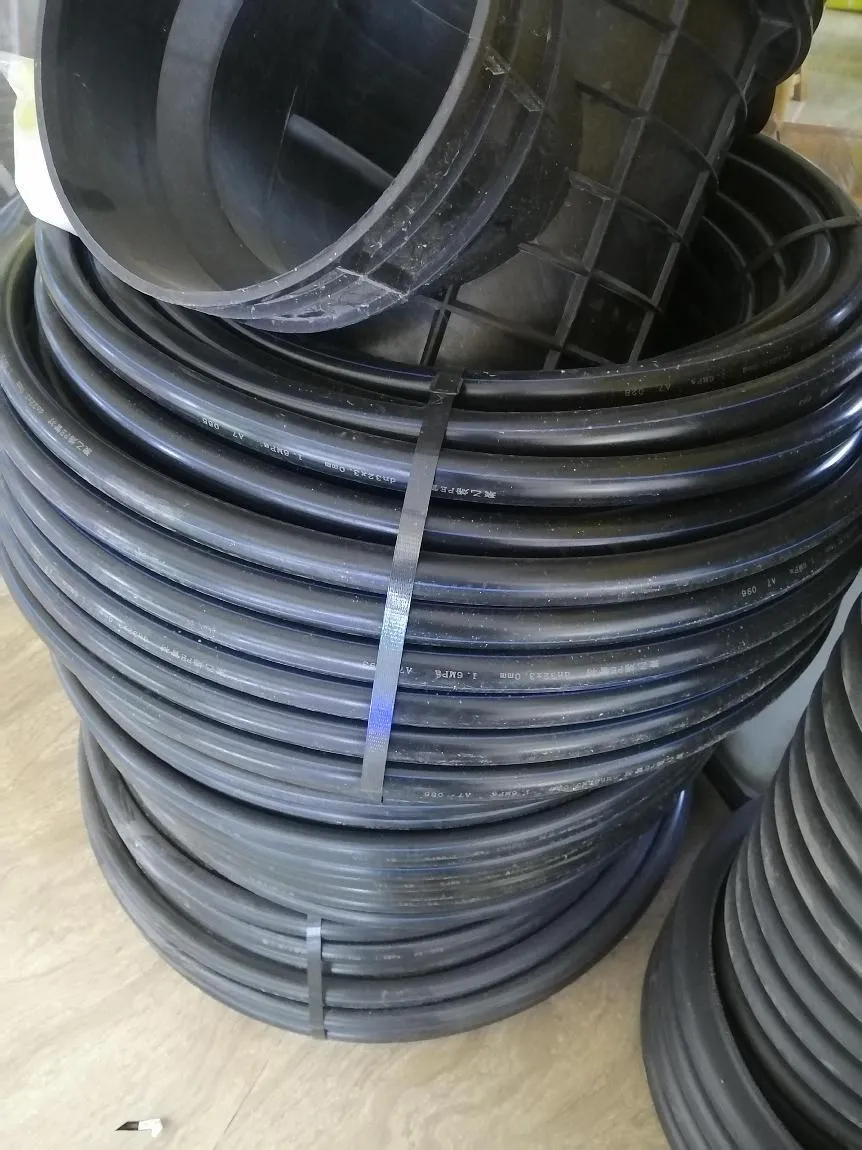
High-Density Polyethylene (HDPE) pipes are thermoplastic pipes manufactured from polyethylene material. Within the broader landscape of piping solutions, HDPE occupies a critical position, particularly in applications demanding corrosion resistance, durability, and long-term performance. HDPE pipe sizes manufacturers specialize in producing pipes conforming to stringent dimensional and performance standards, servicing diverse sectors including water distribution, gas transmission, sewer systems, industrial fluid handling, and agricultural irrigation. Core performance characteristics hinge on factors such as pressure rating (PN), pipe diameter, Schedule number, and material density, all directly impacting a pipe’s ability to withstand internal and external stresses. This guide provides a comprehensive technical overview of HDPE pipe sizing, manufacturing processes, performance characteristics, failure modes, and relevant industry standards.
Material Science & Manufacturing
HDPE is a linear polymer produced via the catalytic polymerization of ethylene. The raw material's physical properties are fundamental to the pipe's final performance. Key characteristics include a density range of 0.93 to 0.97 g/cm³, tensile strength between 20-30 MPa, and a relatively low coefficient of friction. Manufacturing commonly employs extrusion processes. High-molecular-weight polyethylene resin is melted and forced through a die to create the pipe shape. Crucially, parameter control during extrusion is paramount. Die temperature, extrusion pressure, and cooling rate influence the pipe’s wall thickness uniformity, ovality, and overall dimensional accuracy. Butt fusion, electrofusion, and socket fusion are primary joining methods. Butt fusion, favored for larger diameters, involves heating the pipe ends and forcing them together under controlled pressure. Electrofusion uses electrical resistance heating. Quality control involves rigorous testing, including hydrostatic pressure testing to verify burst pressure, dimensional checks, and material property verification using techniques like Differential Scanning Calorimetry (DSC) to assess crystallinity and melt flow index to determine processability. The PE100 material is the most common grade used today, offering superior slow crack growth resistance.
Performance & Engineering
HDPE pipe performance is dictated by its ability to withstand internal pressure, external loads, and environmental stressors. Force analysis involves calculating hoop stress (σh = PD/2t, where P is pressure, D is diameter, and t is wall thickness) and longitudinal stress. The pipe’s pressure rating (PN) directly correlates to its ability to contain fluids at specified pressures. External loads, such as soil overburden in buried applications or traffic loads, require careful consideration. Engineering designs must account for soil modulus, trench width, and bedding material to prevent pipe deformation or failure. Environmental resistance is a key benefit of HDPE. It exhibits excellent resistance to most chemicals, including acids, bases, and solvents. However, prolonged exposure to oxidizing agents and UV radiation can lead to degradation. Compliance requirements are governed by standards such as AWWA C906 for potable water distribution and ASTM F441 for corrugated HDPE drainage pipes. Furthermore, creep resistance, the tendency of the pipe to deform under sustained stress, is a critical performance parameter, especially at elevated temperatures. Finite Element Analysis (FEA) is frequently employed to model stress distribution and optimize pipe designs for specific applications.
Technical Specifications
| Nominal Pipe Size (inches) | Schedule Number | Outside Diameter (mm) | Wall Thickness (mm) |
|---|---|---|---|
| 1/2 | 40 | 12.7 | 2.4 |
| 3/4 | 40 | 19.05 | 2.8 |
| 1 | 40 | 25.4 | 3.2 |
| 1 1/2 | 40 | 38.1 | 4.2 |
| 2 | 40 | 50.8 | 5.4 |
| 4 | 40 | 114.3 | 10.2 |
Failure Mode & Maintenance
HDPE pipes, while durable, are susceptible to specific failure modes. Slow Crack Growth (SCG) is a prevalent issue, particularly in applications involving sustained tensile stress and exposure to aggressive chemicals. SCG initiates at stress concentrators and propagates slowly over time, leading to brittle failure. Fatigue cracking can occur under cyclic loading, such as that experienced in pump lines or areas subject to vibration. Oxidation, induced by prolonged exposure to high temperatures and oxygen, can embrittle the material. UV degradation, although minimized by additives, can still contribute to surface cracking. Improper installation, such as inadequate bedding support or excessive bending radius, can also induce stress and accelerate failure. Maintenance strategies include regular visual inspections for cracks or deformation, pressure testing to detect leaks, and proper joint inspection. Cathodic protection may be considered in specific environments to mitigate corrosion of metallic components used in conjunction with HDPE pipes. Preventive measures, such as utilizing surge protection devices to prevent water hammer and implementing proper bedding procedures, are crucial for maximizing pipe lifespan. A comprehensive failure analysis, including fractography and chemical analysis, is essential for determining the root cause of failures and implementing corrective actions.
Industry FAQ
Q: What is the impact of temperature on the performance of HDPE pipe?
A: Temperature significantly affects HDPE's mechanical properties. Elevated temperatures reduce the pipe’s tensile strength and creep resistance, while lowering the hydrostatic design basis (HDB). Conversely, low temperatures can increase brittleness. Manufacturers provide temperature derating factors to adjust allowable pressures based on operating temperatures.
Q: How does the pipe’s SDR (Standard Dimension Ratio) affect its pressure rating?
A: SDR is the ratio of pipe outside diameter to wall thickness (D/t). A lower SDR indicates a thicker wall, resulting in a higher pressure rating. Higher SDR pipes are suitable for lower-pressure applications and are generally more cost-effective. Manufacturers publish SDR-based pressure rating charts.
Q: What are the considerations when using HDPE pipe for trenchless installation methods like horizontal directional drilling (HDD)?
A: HDD requires specialized HDPE pipe formulations with enhanced abrasion resistance. Proper lubrication is crucial to minimize friction between the pipe and the surrounding soil. Bending radii must adhere to manufacturer specifications to avoid kinking or damage. Soil conditions must be carefully assessed to prevent excessive drag forces.
Q: What is the role of UV stabilizers in HDPE pipe formulations?
A: UV stabilizers, typically carbon black or other UV absorbing additives, are incorporated into the HDPE resin to protect the pipe from degradation caused by ultraviolet radiation. The concentration of UV stabilizers determines the level of protection and the expected service life in exposed environments.
Q: How can I ensure proper fusion joint integrity?
A: Proper fusion requires adherence to manufacturer’s recommended procedures, including surface preparation, heating times, cooling times, and fusion pressures. Qualified fusion operators are essential. Regular calibration of fusion equipment and thorough visual inspection of completed joints are critical quality control measures.
Conclusion
HDPE pipes represent a robust and versatile piping solution, offering advantages in corrosion resistance, durability, and ease of installation. Understanding the underlying material science, manufacturing processes, and performance characteristics is vital for engineers and procurement professionals. Careful consideration of design parameters, including pressure rating, temperature, and external loads, is paramount to ensuring long-term reliability.
The continued development of HDPE formulations and manufacturing techniques promises further enhancements in performance and cost-effectiveness. Future trends likely include the incorporation of advanced additives for improved UV resistance and mechanical properties, as well as the adoption of smart monitoring systems for real-time pipeline health assessment. Proper selection, installation, and maintenance are key to maximizing the lifecycle of HDPE piping systems and mitigating potential failure modes.
-
DN25 HDPE Compression Fitting-HORON INTERNATIONAL|Reliable Irrigation Solutions
NewsFeb.11,2026
-
china 100mm pvc pipe price Performance Analysis
News2026-05-23
-
china pvc pipe used for Performance Analysis
News2026-05-23
-
china ppr water pipe fittings Performance Analysis
News2026-05-23
-
china hdpe pipe couplings Performance Analysis
News2026-05-23
-
china 50mm ppr pipe price Performance Analysis
News2026-05-23
-
china corrugated hdpe pipe fittings Performance Analysis
News2026-05-22
-
china ppr pipe for hot water Performance Analysis
News2026-05-22
-
china ppr Technical Performance Analysis
News2026-05-22
-
china corrugated dual wall pipe Performance Analysis
News2026-05-22
-
china sink inlet pipe Material Performance Analysis
News2026-05-22
-
china 1 2 inch pvc Performance Analysis
News2026-05-21
-
china hdpe pipe joint coupler Performance Analysis
News2026-05-21
-
china ppr pipes and fittings price list Technical Analysis
News2026-05-21
-
china 9 inch pvc pipe price Performance Analysis
News2026-05-21
-
china 2 inch borewell column pipe price Performance Engineering
News2026-05-21