

Feb . 11, 2026 00:01 Back to list
HDPE Pipe Dimensions Service
Introduction
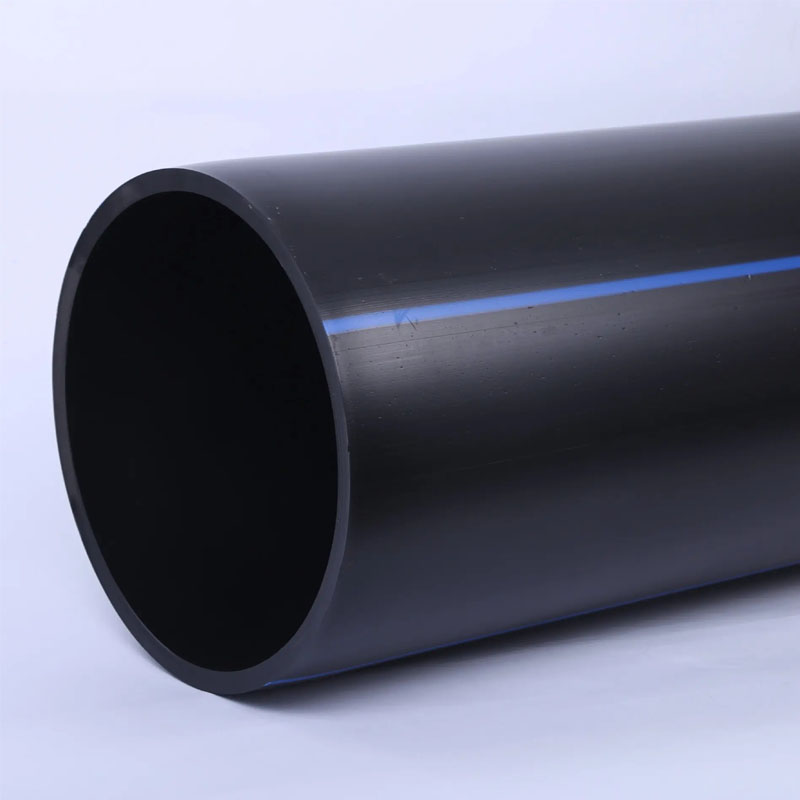
High-Density Polyethylene (HDPE) pipe is a thermoplastic pipe commonly used for fluid and gas transfer applications. Its selection is fundamentally tied to dimensional specifications, dictated by the intended service, pressure requirements, and applicable industry standards. HDPE pipe dimensions service encompasses the precise specification, manufacturing, and quality control of these dimensions – including outer diameter (OD), wall thickness, and pipe schedule – to ensure optimal performance and longevity. The industry faces critical challenges including maintaining consistent dimensional tolerances during production, ensuring long-term hydrostatic strength, and minimizing joint failure rates, all heavily influenced by the accurate application of dimensional standards. This guide details the material science, manufacturing processes, performance characteristics, failure modes, and maintenance practices associated with HDPE pipe dimensions service, providing a comprehensive resource for engineers, procurement specialists, and field personnel.
Material Science & Manufacturing
HDPE pipes are manufactured from polyethylene resin, typically utilizing high-density grades defined by their density (0.941–0.965 g/cm³) and molecular weight distribution. The resin's characteristics directly impact the pipe’s physical properties, including tensile strength, impact resistance, and chemical inertness. Manufacturing processes are primarily categorized into extrusion methods: conventional extrusion, spiral winding, and bimodal PE extrusion. Conventional extrusion involves melting the HDPE resin and forcing it through a die to create a continuous pipe. Precise control of the die temperature, screw speed, and cooling rate is crucial for maintaining dimensional accuracy. Spiral winding utilizes a heated strip of HDPE, spirally wound and fused to form the pipe. Bimodal PE extrusion employs resins with differing molecular weight distributions to enhance stress crack resistance and slow crack growth (SCR). Key parameters during manufacturing include melt temperature (180-220°C), extrusion pressure (20-40 MPa), and cooling water temperature (15-25°C). Improper control can lead to dimensional variations, residual stresses, and compromised weldability. Material compatibility is also critical; additives like carbon black for UV protection and antioxidants are incorporated, requiring careful consideration to avoid impacting dimensional stability or compromising long-term performance. Raw material batch consistency and stringent quality control measures are paramount throughout the manufacturing process to guarantee adherence to dimensional tolerances.
Performance & Engineering
The performance of HDPE pipes is intimately linked to their dimensional integrity. Hydrostatic pressure testing, conducted according to standards like ASTM D1597, verifies the pipe's ability to withstand internal pressure without failure. This pressure rating is directly influenced by the pipe's OD, wall thickness, and the material’s Minimum Required Strength (MRS). Force analysis involves assessing hoop stress (σ = PD/2t, where P is pressure, D is OD, and t is wall thickness) to ensure it remains below the allowable stress limit for HDPE. Environmental resistance is a key consideration. HDPE exhibits excellent chemical resistance, but prolonged exposure to UV radiation can cause degradation, reducing its mechanical properties and affecting dimensional stability. Furthermore, slow crack growth (SCR) can occur under sustained tensile stress in the presence of certain chemicals. Compliance requirements vary depending on the application and region. For potable water systems, NSF/ANSI 61 certification ensures the pipe does not leach harmful contaminants. For gas distribution, standards like DOT 192 (USA) and EN 1555-1 (Europe) dictate specific dimensional and performance requirements. Finite element analysis (FEA) is increasingly used to model the behavior of HDPE pipes under various loading conditions, optimizing designs for specific applications and predicting long-term performance based on dimensional accuracy.
Technical Specifications
| Nominal Pipe Size (NPS) | Outer Diameter (OD) (inches) | Schedule 40 Wall Thickness (inches) | Schedule 80 Wall Thickness (inches) |
|---|---|---|---|
| 1/2" | 0.625 | 0.065 | 0.095 |
| 3/4" | 0.840 | 0.083 | 0.113 |
| 1" | 1.050 | 0.095 | 0.138 |
| 1 1/2" | 1.250 | 0.113 | 0.154 |
| 2" | 2.067 | 0.147 | 0.187 |
| 4" | 4.500 | 0.218 | 0.280 |
Failure Mode & Maintenance
HDPE pipe failures related to dimensions are diverse. Ovalization, a distortion of the circular cross-section, can occur during installation or due to external loads, reducing flow capacity and increasing stress concentrations. Longitudinal cracking can result from manufacturing defects, excessive tensile stress, or SCR. Joint failures are common, often stemming from improper fusion welding parameters (temperature, pressure, dwell time) resulting in inadequate weld penetration or dimensional mismatch. Oxidation, though slow, can embrittle the material over time, decreasing its resistance to cracking. Fatigue cracking can occur under cyclic loading, particularly at stress concentrators like fittings or weld seams. Maintenance involves regular visual inspections for cracks, deformations, and leaks. Hydrostatic testing can be performed periodically to assess the pipe’s integrity. For fusion-welded joints, non-destructive testing (NDT) methods, such as ultrasonic testing, can detect subsurface defects. Proper backfilling and support are critical to prevent external loads from inducing stress and dimensional changes. Preventive maintenance programs should incorporate cleaning procedures to remove debris and prevent blockage, and UV protection measures for exposed sections.
Industry FAQ
Q: What is the significance of SDR (Standard Dimension Ratio) in HDPE pipe selection?
A: SDR is the ratio of a pipe’s outside diameter to its wall thickness (SDR = OD/t). A lower SDR indicates a thicker wall and therefore higher pressure rating. SDR is commonly used to categorize HDPE pipes for different service applications, providing a standardized method for specifying pressure capability. Selecting the correct SDR is paramount for ensuring the pipe can safely handle the operating pressure and maintain dimensional stability over its service life.
Q: How does temperature affect the dimensional stability of HDPE pipe?
A: HDPE is a thermoplastic material, meaning it’s susceptible to thermal expansion and contraction. Increasing temperatures cause the pipe to expand, while decreasing temperatures cause it to contract. These dimensional changes must be accounted for during installation, especially in long runs, to prevent buckling or excessive stress on joints. Coefficient of thermal expansion values are readily available and should be integrated into engineering designs.
Q: What are the best practices for ensuring dimensional accuracy during HDPE pipe fusion welding?
A: Maintaining dimensional accuracy during fusion welding requires precise control of welding parameters. This includes proper surface preparation, consistent heating temperatures, appropriate welding pressure, and sufficient cooling time. Using calibrated welding equipment and adhering to established welding procedures (e.g., DVS 3221) is crucial. Post-weld inspection using ultrasonic testing or visual examination helps detect dimensional discrepancies and defects.
Q: How does the grade of HDPE resin impact dimensional stability?
A: Different grades of HDPE resin exhibit varying degrees of dimensional stability. Bimodal HDPE resins, with their broader molecular weight distribution, generally offer superior SCR resistance and improved long-term dimensional stability compared to unimodal resins. Selecting the appropriate resin grade for the specific application and environmental conditions is essential.
Q: What is the role of hydrostatic testing in verifying HDPE pipe dimensions and integrity?
A: Hydrostatic testing subjects the pipe to internal pressure exceeding its normal operating pressure. This test verifies that the pipe can withstand the pressure without failure, confirming its dimensional integrity and the soundness of its joints. Any significant pressure drop or leakage indicates a dimensional defect or compromised weld, requiring further investigation and corrective action.
Conclusion
Maintaining precise HDPE pipe dimensions is fundamental to ensuring long-term performance, reliability, and safety in diverse applications. This guide has detailed the critical interplay between material science, manufacturing processes, performance engineering, and potential failure modes. A thorough understanding of these elements, coupled with adherence to relevant industry standards and best practices, is crucial for optimizing pipe selection, installation, and maintenance.
Looking forward, advancements in HDPE resin technology, coupled with the increasing adoption of predictive maintenance techniques leveraging sensor data and FEA modeling, will further enhance the durability and operational efficiency of HDPE pipeline systems. Prioritizing dimensional control throughout the entire lifecycle of the pipe—from raw material selection to decommissioning—remains paramount for minimizing risk and maximizing return on investment.
-
DN25 HDPE Compression Fitting-HORON INTERNATIONAL|Reliable Irrigation Solutions
NewsFeb.11,2026
-
china 100mm pvc pipe price Performance Analysis
News2026-05-23
-
china pvc pipe used for Performance Analysis
News2026-05-23
-
china ppr water pipe fittings Performance Analysis
News2026-05-23
-
china hdpe pipe couplings Performance Analysis
News2026-05-23
-
china 50mm ppr pipe price Performance Analysis
News2026-05-23
-
china corrugated hdpe pipe fittings Performance Analysis
News2026-05-22
-
china ppr pipe for hot water Performance Analysis
News2026-05-22
-
china ppr Technical Performance Analysis
News2026-05-22
-
china corrugated dual wall pipe Performance Analysis
News2026-05-22
-
china sink inlet pipe Material Performance Analysis
News2026-05-22
-
china 1 2 inch pvc Performance Analysis
News2026-05-21
-
china hdpe pipe joint coupler Performance Analysis
News2026-05-21
-
china ppr pipes and fittings price list Technical Analysis
News2026-05-21
-
china 9 inch pvc pipe price Performance Analysis
News2026-05-21
-
china 2 inch borewell column pipe price Performance Engineering
News2026-05-21