

Feb . 11, 2026 00:01 Back to list
grey pvc pipe service Performance Analysis
Introduction
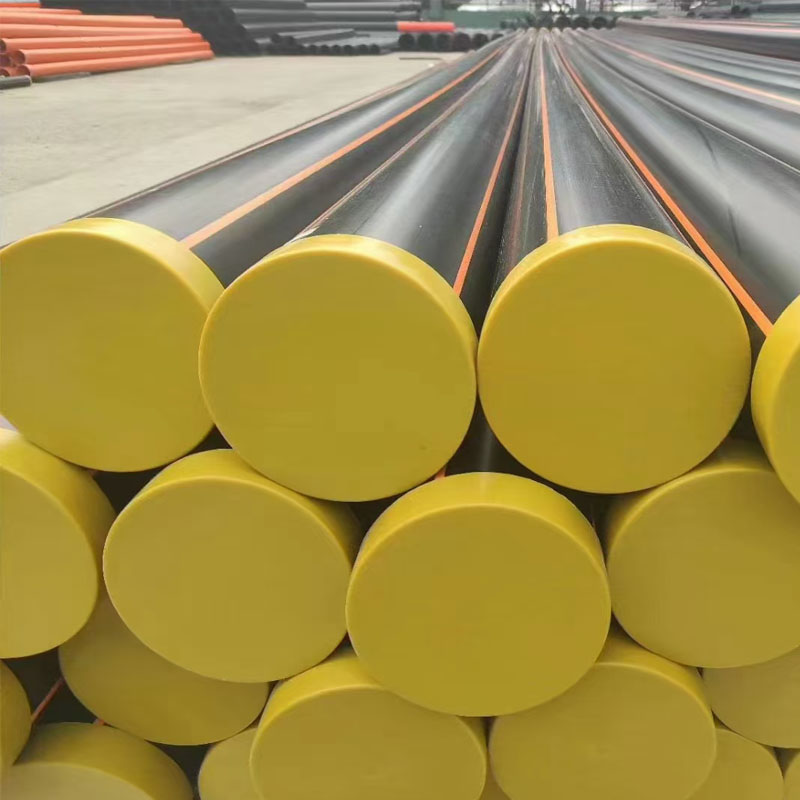
Grey Polyvinyl Chloride (PVC) pipe for service applications represents a critical component within potable water, irrigation, and drainage infrastructure. Positioned as a cost-effective alternative to metal piping systems, its prevalence stems from its inherent corrosion resistance, lightweight nature, and ease of installation. This technical guide details the material science, manufacturing processes, performance characteristics, potential failure modes, and maintenance protocols for grey PVC service pipe. Understanding these elements is paramount for engineers, procurement professionals, and maintenance personnel involved in the lifecycle management of these systems. Core performance criteria revolve around pressure containment, long-term durability, resistance to chemical degradation from typical soil conditions and transported fluids, and adherence to relevant regulatory standards. The shift towards grey PVC reflects a balance between cost-efficiency and reliable service life, making it a mainstay in municipal and private infrastructure projects. A major industry pain point lies in accurately predicting long-term performance based on varying installation conditions and fluid compositions, demanding robust material selection and quality control protocols.
Material Science & Manufacturing
Grey PVC service pipe is primarily composed of PVC resin, typically a copolymer of vinyl chloride monomer (VCM). The 'grey' coloration is achieved through the addition of UV stabilizers and pigments, enhancing resistance to sunlight degradation. The raw material exhibits amorphous characteristics, resulting in inherent brittleness. Plasticizers, such as phthalates or more recently, bio-based alternatives, are incorporated to improve flexibility and impact resistance. Fillers, commonly calcium carbonate, are added to reduce cost and enhance stiffness. The key physical properties include a density of approximately 1.4 g/cm³, a tensile strength ranging from 50-70 MPa, and a glass transition temperature (Tg) around 80-85°C. Chemical compatibility is excellent with most water treatments and common soil constituents, however, prolonged exposure to certain solvents or hydrocarbons can cause swelling and degradation.
Manufacturing involves several critical stages. PVC resin, plasticizers, stabilizers, lubricants, and pigments are compounded in a high-intensity mixer. This homogenous mixture is then fed into an extruder. Extrusion uses a rotating screw to melt and force the PVC compound through a die, forming a continuous pipe profile. Precise temperature control within the extruder barrel (typically 180-220°C) is vital to prevent thermal degradation and ensure consistent material properties. The extruded pipe is cooled rapidly in a water bath to solidify the shape and maintain dimensional stability. Following cooling, the pipe is cut to specified lengths, tested for dimensional accuracy and hydrostatic pressure, and marked with relevant information (size, schedule, pressure rating, manufacturer’s identification). Quality control focuses on melt flow index (MFI), tensile strength, impact resistance (Izod notched impact test), and hydrostatic pressure testing. Hydrostatic testing, performed per ASTM D1785, is crucial for identifying defects in the pipe wall.
Performance & Engineering
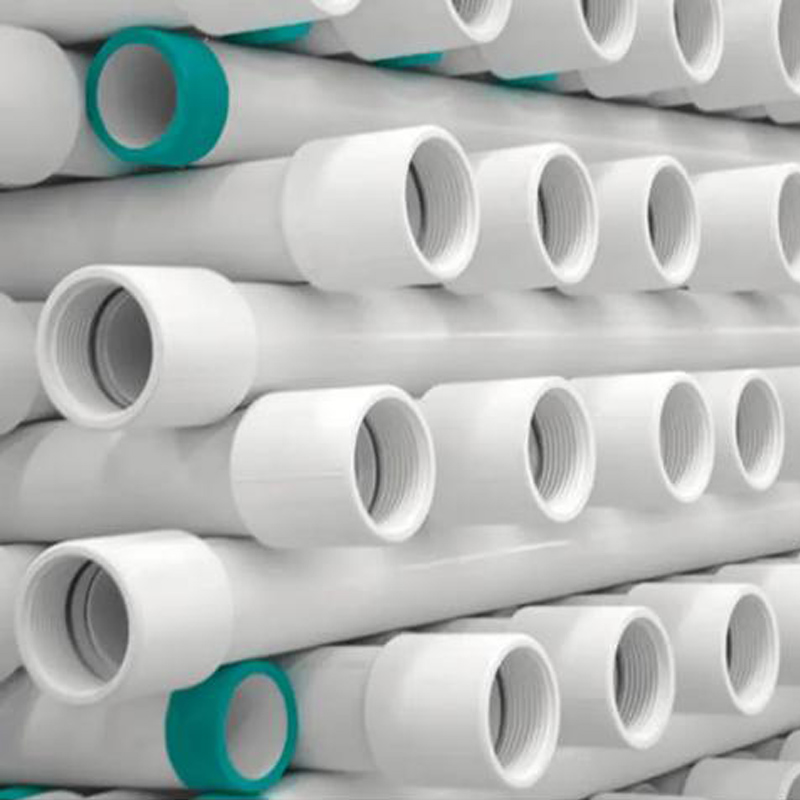
The performance of grey PVC pipe is dictated by its ability to withstand internal hydrostatic pressure and external loads imposed by soil and traffic. Force analysis relies on the Hoop Stress Equation (σ = PD/2t), where P is the internal pressure, D is the pipe diameter, and t is the pipe wall thickness. This equation demonstrates the inverse relationship between wall thickness and stress – increasing wall thickness provides greater pressure resistance. Environmental resistance is a key consideration. While PVC exhibits excellent resistance to most chemicals found in soil and water, prolonged exposure to UV radiation and extreme temperatures can induce degradation. UV stabilizers mitigate radiation damage, but their effectiveness diminishes over time. Temperature fluctuations cause thermal expansion and contraction, which must be accounted for in installation design to prevent stress cracking at joints.
Compliance with standards is essential. AWWA C900 (American Water Works Association) specifies requirements for PVC pressure pipe, covering material properties, manufacturing processes, and testing procedures. ASTM D1785 defines the standard test method for hydrostatic testing of plastic pipe. SDR (Standard Dimension Ratio) is a crucial parameter indicating the pipe’s pressure rating. A lower SDR indicates a thicker wall and higher pressure capacity. Installation practices, including proper bedding and backfilling, significantly impact long-term performance. Inadequate bedding can lead to localized stress concentrations and premature failure. Proper jointing techniques, utilizing solvent cementing, are critical for maintaining a watertight seal. The design must consider soil corrosivity and potential for ground movement, incorporating appropriate protective measures where necessary.
Technical Specifications
| Parameter | Unit | Typical Value (Schedule 40) | Typical Value (Schedule 80) |
|---|---|---|---|
| Nominal Pipe Size | inch | 0.5 - 12 | 0.5 - 12 |
| Outside Diameter | inch | 0.625 - 12.75 | 0.840 - 13.50 |
| Wall Thickness | inch | 0.065 - 0.438 | 0.083 - 0.551 |
| Pressure Rating (Hydrostatic) | psi | Up to 350 | Up to 600 |
| SDR (Standard Dimension Ratio) | - | 16 | 12.6 |
| Tensile Strength | MPa | 55-65 | 55-65 |
Failure Mode & Maintenance
Grey PVC pipe is susceptible to several failure modes. Brittle Fracture: Occurs due to impact loads or excessive stress, particularly at low temperatures. This is exacerbated by material defects or improper installation. Stress Cracking: Results from prolonged exposure to sustained tensile stress in the presence of corrosive substances. Soil chemicals, residual chlorine in water, and certain solvents can contribute. UV Degradation: Prolonged exposure to sunlight causes chain scission and embrittlement, reducing impact resistance. Slow Crack Growth (SCG): A time-dependent failure mechanism caused by sustained stress and the ingress of water. Joint Failure: Poor solvent cementing techniques or improper surface preparation can lead to leaks and complete joint separation. Fatigue Cracking: Repeated pressure fluctuations can induce crack initiation and propagation, particularly in areas of stress concentration.
Maintenance involves regular visual inspections for cracks, leaks, and signs of degradation. Hydrostatic testing can be performed to assess the integrity of the pipeline. For minor leaks, repairs can be made using PVC repair couplings or epoxy-based patching compounds. For significant damage or widespread degradation, pipe replacement is necessary. Preventive maintenance includes ensuring proper bedding and backfilling, controlling corrosion in the surrounding soil, and maintaining appropriate water chemistry. Periodic flushing of the pipeline can remove sediment buildup and reduce the risk of microbial influenced corrosion. The use of corrosion inhibitors may be considered in aggressive soil environments. A preventative maintenance schedule, outlining inspection intervals and repair protocols, is crucial for maximizing the service life of the pipeline.
Industry FAQ
Q: What is the impact of soil acidity on the long-term performance of grey PVC pipe?
A: Elevated soil acidity can accelerate the degradation of PVC through hydrolytic chain scission. Acidic soils often contain high concentrations of sulfates, which can also contribute to stress cracking. In highly acidic environments, the use of a protective bedding material (e.g., sand or gravel) and/or a corrosion-resistant outer coating on the pipe is recommended.
Q: How does the presence of chlorine in potable water affect the longevity of grey PVC pipe?
A: While PVC is generally resistant to chlorine, prolonged exposure to high chlorine concentrations can lead to oxidative degradation and embrittlement. Maintaining optimal chlorine residual levels within established regulatory limits (e.g., 4 mg/L) is crucial. Regular monitoring of water quality and adjustments to disinfection protocols can minimize the risk of chlorine-induced degradation.
Q: What is the recommended procedure for solvent cementing grey PVC pipe?
A: Proper solvent cementing is critical for ensuring leak-free joints. The surfaces must be clean, dry, and free of debris. A primer is applied to soften the PVC surfaces, followed by a liberal application of solvent cement. The pipe and fitting should be immediately joined with a slight twisting motion to ensure uniform cement distribution. Allow sufficient curing time (typically 24 hours) before pressurizing the pipeline.
Q: What is the role of SDR in determining the suitability of PVC pipe for a specific application?
A: SDR (Standard Dimension Ratio) is a dimensionless number representing the ratio of the pipe's outside diameter to its wall thickness. A lower SDR indicates a thicker wall and higher pressure rating. The appropriate SDR is determined based on the operating pressure, temperature, and soil conditions. Selecting a pipe with an inadequate SDR can lead to catastrophic failure.
Q: Can grey PVC pipe be used in applications involving the transport of wastewater?
A: While grey PVC is suitable for many wastewater applications, it's essential to consider the composition of the wastewater. Aggressive chemicals, abrasive solids, and high temperatures can accelerate degradation. For highly corrosive wastewater, alternative materials such as HDPE or ductile iron may be more appropriate. Check for compatibility of specific wastewater composition with PVC resin.
Conclusion
Grey PVC service pipe provides a cost-effective and durable solution for a wide range of fluid conveyance applications. Its success relies on a comprehensive understanding of its material properties, manufacturing processes, and potential failure modes. Proper installation practices, including careful jointing, appropriate bedding, and adherence to relevant industry standards, are crucial for maximizing its service life. The ongoing development of improved PVC formulations with enhanced UV resistance and impact strength further expands its applicability in challenging environments.
Future advancements in PVC technology are focused on incorporating bio-based plasticizers and developing recycling strategies to minimize environmental impact. Continued research into SCG mechanisms and improved testing methods will contribute to more accurate predictions of long-term performance. The adoption of smart monitoring systems, incorporating sensors to detect stress, pressure, and temperature fluctuations, will enable proactive maintenance and prevent catastrophic failures, ultimately extending the lifespan of PVC infrastructure.
-
DN25 HDPE Compression Fitting-HORON INTERNATIONAL|Reliable Irrigation Solutions
NewsFeb.11,2026
-
china ppr for hot water Performance Analysis
News2026-04-22
-
china bulk pvc pipe Technical Analysis
News2026-04-22
-
china pvc pipes price list Performance Analysis
News2026-04-22
-
china 20 ft pvc pipe Performance Analysis
News2026-04-22
-
china ppr cold water pipe Performance Analysis
News2026-04-22
-
china double wall hdpe pipe Performance Analysis
News2026-04-21
-
china transition coupling hdpe to pvc Performance Analysis
News2026-04-21
-
china water pipe ppr Performance Analysis
News2026-04-21
-
china dn150 hdpe Performance Analysis
News2026-04-21
-
china sprinkler hdpe pipe Material Performance
News2026-04-21
-
china underground pvc pipe price Performance Analysis
News2026-04-10
-
china water pipes under sink Material Science
News2026-04-10
-
china 40mm ppr pipe price Performance Analysis
News2026-04-10
-
china hdpe transition coupling Performance Analysis
News2026-04-10
-
china bulk pvc pipe for sale Performance Analysis
News2026-04-10